Why I Stopped Trying to Be Consistent and Started Being Forgiving
There’s a particular kind of failure that’s hard to talk about because it looks so much like a character flaw.
You decide to build a habit. You start well. You miss a day. You tell yourself it’s fine, one day doesn’t matter. You miss another. You feel the guilt accumulate. You skip the next day because you’ve already broken the streak and what’s the point now. And then a week has passed and the habit is gone, and you’re back where you started, slightly worse off because now you have evidence that you can’t follow through.
I did this cycle so many times that I started to wonder if consistency was simply a trait I lacked. Other people seemed to be able to build habits and keep them. I’d read their accounts and feel a low-level shame — not dramatic, just the persistent background hum of someone who keeps not following through on their own intentions.
It took a long time to realize that the cycle itself was the problem. Not my lack of consistency. The way I was thinking about consistency.
The Myth of the Unbroken Chain
The standard model of habit building is streak-based. Don’t break the chain. Every day, another link. A broken chain means starting over.
This model has real appeal. Streaks are motivating, at least while they’re intact. They create a visible record of progress. They’re easy to track. And the “don’t break the chain” framing — famously attributed to Jerry Seinfeld, though he’s disputed it — has the satisfying simplicity of a rule you can actually follow.
The problem is that streaks are fragile by design. An unbroken chain only works until it breaks. And chains break, because life is not streak-compatible. Illness, travel, work crises, family emergencies, plain exhaustion — these aren’t failures of discipline. They’re the ordinary texture of an ordinary life.
When the chain breaks under streak-based thinking, the psychological cost is significant. You haven’t just missed a day. You’ve lost something — the accumulated record, the visible proof of consistency, the narrative of being someone who follows through. Starting over feels like a loss, and losses are demotivating in a way that simple difficulty isn’t.
So you wait. You wait for the right moment to restart, because restarting without the streak feels like building on sand. The waiting extends. The habit dies.
I lived this cycle with journaling specifically, but also with exercise, with reading, with every voluntary practice I tried to build through the power of not missing a day. The streak model worked until it didn’t, and when it didn’t, it failed badly.
What I Tried Instead
The shift didn’t come from reading about self-compassion, though I’d read plenty. It came from a specific moment of frustration after a particularly discouraging gap in my voice journaling practice.
I’d gone nine days without recording — a family situation, a hard week at work, the kind of stretch where you’re in survival mode and reflective practices feel like a luxury you can’t afford. When I came out the other side and thought about coming back to journaling, I felt the familiar resistance: you’ve broken it, you’d have to start over, what’s the point.
And then I thought: what if I just didn’t do that? What if I treated the nine-day gap as exactly what it was — nine days when I didn’t record — and came back without any of the accounting?
So I pressed record. I talked for four minutes about the week. I didn’t mention the gap. I didn’t apologize to future me for the silence. I just picked up where I’d left off, as if the gap was unremarkable, because in some important sense it was.
That recording felt different from any return-after-gap I’d done before. There was no weight of shame to push through. The practice was just there, available, ready to be picked up. And I picked it up.
That was the beginning of understanding that forgiveness — not consistency — was the load-bearing concept in sustainable habits.
The Research Behind the Feeling
I want to be precise about what I mean by self-forgiveness in a habit context, because it’s easy to hear “be forgiving with yourself” as permission to be lax, which isn’t what I mean.
A 2010 study by Kristin Neff and colleagues found that self-compassion after failure — treating yourself with the same kindness you’d extend to a friend — was associated with greater motivation to correct the failure and try again, not with reduced motivation. People who practiced self-criticism after setbacks were less likely to persist, not more, because the self-criticism added an additional burden on top of the original failure.
The counterintuitive result: being harder on yourself after a gap doesn’t produce better habits. It produces shame, which produces avoidance, which produces longer gaps.
What produces better habits, according to this line of research, is what one study called “self-compassionate motivation” — the capacity to acknowledge that you missed, understand why, and return without treating the gap as evidence of permanent character deficit.
This matched my lived experience so precisely that when I first read it, I had the slightly odd feeling of research confirming something I’d already discovered by accident.
The Practical Version: Never Miss Twice
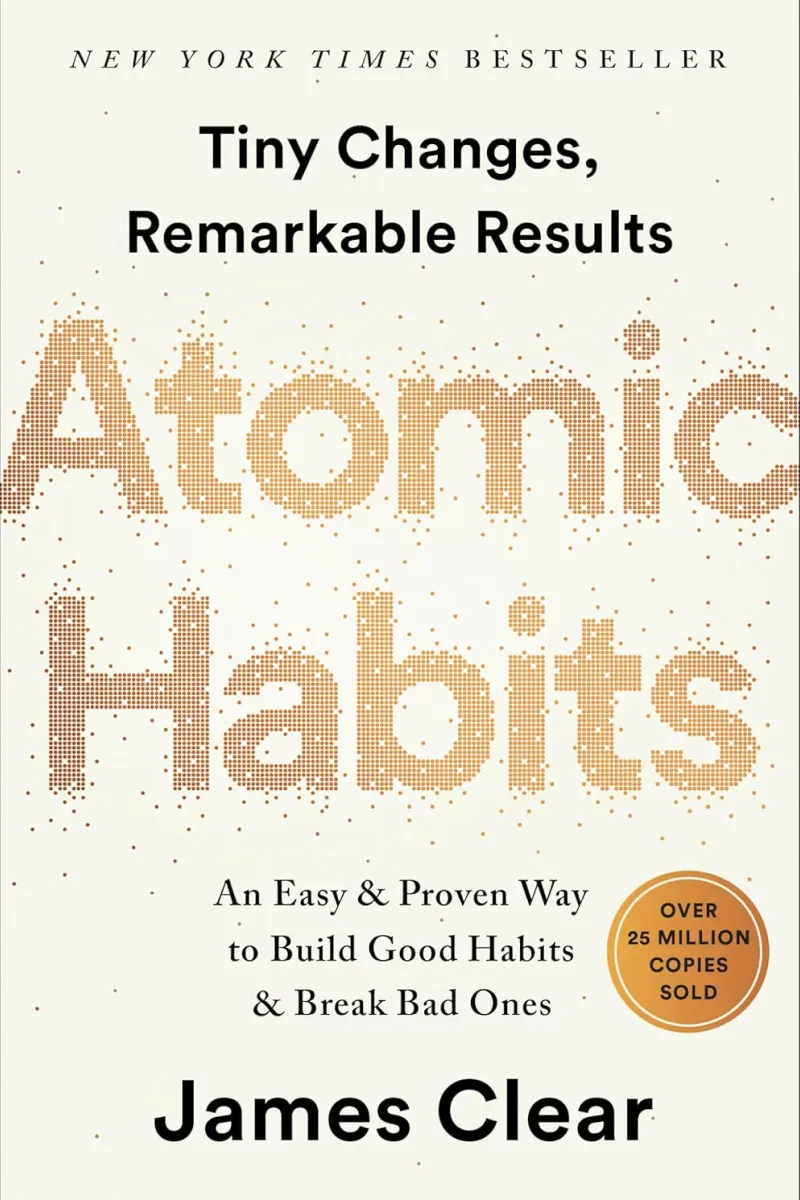
The most useful tactical framing I found came from James Clear’s writing on habit recovery: the goal isn’t never missing. The goal is never missing twice in a row.
This reframe does several things at once.
It accepts that missing will happen — not as permission, but as acknowledgment of reality. Habits exist in a life. Lives have disruptions. Designing a habit system that treats disruption as failure is designing for failure.
It creates a clear, achievable standard for recovery. Not “get back to perfect consistency.” Just: don’t let one miss become two. The bar for return is low enough that returning feels possible rather than daunting.
And it shifts the identity narrative from “I’m someone who maintains streaks” (fragile, because streaks break) to “I’m someone who comes back after gaps” (resilient, because coming back is always possible).
This last shift matters more than it looks like it does. Identity-based habit building — the idea that habits are most durable when they’re connected to who you believe yourself to be — requires an identity that can survive imperfection. “I’m a consistent journaler” fails the moment you miss a week. “I’m someone who always comes back to journaling” survives any gap, because the definition includes the return.
I applied this directly to my voice journaling practice, and it changed the recovery pattern completely. Before, a gap felt like a failure with a specific weight. After, a gap was just a gap, and the question wasn’t how do I repair the damage but simply when do I pick it up again?
The answer was always: now. Today. Without ceremony.
What Forgiveness Looks Like in Practice
I want to be concrete, because “be forgiving with yourself” can feel like advice that sounds right but doesn’t translate into behavior.
Here’s what it actually looked like for me:
After a one or two day gap: Nothing. No mental accounting, no brief acknowledgment in the recording, no plan to make up for it. Just record today’s entry. The gap happened; it’s done.
After a week-long gap: One brief acknowledgment in the first recording back — not an apology, just a factual note. “It’s been a while. Hard week. Starting again now.” That’s the entirety of the processing. Then the next entry is normal.
After a multi-week gap: Same thing, maybe with slightly more context about what happened. Then: normal entries. The gap doesn’t need to be compensated for. There’s no debt to the practice.
What I specifically stopped doing: writing or recording “sorry for the gap” entries. Long processing entries about why I failed. Promises to do better going forward. Any entry whose primary purpose was to manage the guilt about the gap rather than to actually journal.
Those entries were doing the opposite of what they seemed to do. They were keeping the gap alive rather than closing it, treating the absence as something that needed to be addressed before normal practice could resume. By treating it as something to move past rather than through, I found that the return was faster and more durable.
This connects directly to what I learned about minimum viable habits in The Smallest Habit I’ve Ever Built (And Why It Stuck). The minimum viable entry — ten seconds, one sentence — is the practical tool. Self-forgiveness is the psychological framework that makes it possible to use that tool after a gap without the weight of the gap making it harder than it should be.
The Difference Between Forgiveness and Indifference
One thing I want to address directly: there’s a difference between self-forgiveness and not caring.
Self-forgiveness means: you care about the practice, you want it to continue, and when it’s interrupted, you return to it without treating the interruption as a referendum on your character or the value of the practice.
Indifference means: it doesn’t really matter whether you do it or not.
These feel similar from the outside — both result in low-drama responses to gaps — but they’re fundamentally different. Indifference doesn’t build a practice. Self-forgiveness does.
The way I distinguish them internally: after a gap, do I actually want to come back? If yes, and the resistance is about the psychological weight of the gap rather than genuine lack of interest in the practice, that’s the territory where self-forgiveness does its work. If the honest answer is that I don’t particularly want to come back, that’s a different question — maybe the practice isn’t right, or the form needs to change, or this isn’t actually a priority right now.
I wrote about that different question in I Failed at Journaling Four Times. Here’s What Finally Worked. — the distinction between a practice that isn’t working because of gap-shame and one that isn’t working because the design is wrong. Both produce gaps; the solutions are different.
How This Changed My Relationship With Habits Generally
The forgiveness framework didn’t just save my voice journaling practice. It changed how I approach voluntary habit-building in general.
I stopped thinking about habits as things you maintain or lose. I started thinking about them as things you return to. The question shifted from am I keeping this habit? — which requires an unbroken record — to do I keep coming back to this? — which only requires that the return remains possible.
This sounds like a semantic difference. It isn’t. It changes the entire emotional landscape around a habit.
Under the maintenance model, a gap is damage. Every day of non-practice is deterioration of something built. The longer the gap, the more has been lost, and the harder it becomes to return because the gap has accumulated meaning.
Under the return model, a gap is neutral. Nothing has been lost except the days themselves, which were always going to pass regardless. The practice is waiting, exactly where you left it, with no accounting required.
I keep the voice journaling archive in a simple app — monthly folders, timestamps, nothing complicated. When I come back after a gap, there’s no visual record of the gap. The recordings end, there’s a period of silence, and then they begin again. The app doesn’t know about the gap. In some sense, neither does the practice.
Only I know. And I’ve learned to treat what I know the way I’d treat a friend’s missed week at the gym: with mild acknowledgment and the assumption that they’ll be back, because of course they will, because the practice matters to them and missing a week doesn’t change that.
For the documentation angle of what this looks like in a real archive — the actual experience of coming back after the nine-day gap and finding the practice still there, unchanged — What Six Months of Voice Journaling Actually Looks Like has the honest account.
For Anyone Currently in a Gap
If you’re reading this and you have a practice you’ve let slide — a journal you haven’t opened, a recording habit that went quiet, a daily check-in that’s been months since you last did it — I want to say something directly.
The gap doesn’t mean anything about you. It means you had a period where the practice didn’t happen. That period is over when you decide it is, not when you’ve adequately processed it or apologized for it or rebuilt enough consistency to deserve returning.
You can pick it up today. Right now. Without any of the accounting.
The practice is still there. It’s not waiting for you to earn your way back. It’s just waiting.
Press record. Say something. Put the date on it. That’s the return, and the return is the whole thing.
How I Built a Life Archive in the Margins of a Busy Day is the practical companion to this piece — the structural side of fitting a documentation practice into an actual life. And What I Wish Someone Had Told Me Before I Started Journaling covers the psychological preparation that would have made my early attempts more resilient. Both are worth reading if you’re rebuilding rather than starting fresh.
But first: today’s entry. That’s all.
Common Questions About Habit Recovery and Self-Forgiveness
Does self-compassion actually help with habit building, or does it just feel good?
Research supports it. Studies on self-compassion and motivation consistently find that self-compassionate responses to failure are associated with greater persistence, not less. The mechanism appears to be that self-criticism adds a psychological burden on top of the original failure, making recovery harder. Self-compassion removes that secondary burden and makes returning to the practice feel possible rather than daunting.
How do you stop the guilt spiral after missing multiple days?
By treating the return as a fresh start rather than a repair. Don’t try to process the gap, explain it, or compensate for it. Just make today’s entry normal — as if the gap didn’t carry particular meaning. The guilt spiral feeds on attention; the fastest way to end it is to stop giving the gap significance and give the practice significance instead.
Is there ever a point where a gap is too long to come back from?
No. You can return after a week, a month, a year. The practice doesn’t expire. What changes with longer gaps is that more material has been lost — more days that won’t be documented — but that loss is already done regardless of whether you return or not. Returning today doesn’t recover what was missed; it prevents tomorrow from being missed as well.
How do you stay motivated when the streak is gone?
Reframe what you’re maintaining. Instead of a streak, you’re maintaining a practice — something you keep returning to, regardless of the gaps. The motivation comes from the value of the practice itself, not from the number on the streak counter. If the practice’s value isn’t intrinsically motivating, the streak won’t save it anyway.
What if you feel like you need accountability rather than self-forgiveness?
Both can coexist. External accountability — a friend, a partner who knows about the practice, even a public commitment — can provide the social motivation that some people need. Self-forgiveness is what you apply when the accountability fails or when the gap happens anyway. They’re not competing approaches; they’re for different parts of the challenge.
How do you rebuild after a very long gap without feeling like you’re starting over?
By not starting over. A very long gap is still just a gap. Your history with the practice hasn’t been erased — you’ve built knowledge of what works for you, you’ve had the experience of the practice at its best, you understand why it matters to you. That’s all still there. The return is a return, not a beginning.
Is there a point where repeated gaps mean the habit just isn’t right for you?
If the gaps keep happening for the same reason — if you keep bumping into the same design problem, the same time obstacle, the same form mismatch — that’s worth examining honestly. Repeated gaps might mean the design needs to change: different format, different time, different minimum. Self-forgiveness doesn’t mean avoiding the question of whether the practice needs adjustment. It means not treating that question as a referendum on your character.
The Two Years Since
My voice journaling practice is now over two years old. It has gaps. It has weeks where the average entry was twenty seconds and weeks where I recorded something substantial every day. It has that nine-day silence in month four and a few other periods of quiet I couldn’t always fully explain.
What it doesn’t have is a breaking point. There was never a gap I didn’t come back from. Not because I have exceptional consistency — I clearly don’t — but because I stopped treating the return as something that required exceptional effort.
Consistency, as I now understand it, isn’t about never missing. It’s about the gap between missing and returning. When that gap is short — when there’s no psychological weight making the return harder than it needs to be — the practice survives everything.
That’s the thing I’d want everyone building a habit to know: the forgiveness isn’t the soft option. It’s the durable one.
This section contains affiliate links.
Go Deeper
You've been thinking about this long enough.
Ten seconds. Your voice. That's all it takes.
Inner Dispatch turns a single daily recording into something you can actually see - a living reflection of where you've been.
Start free. No writing required. →