
What to Include in a Life Documentation Practice
Most people who want to document their lives don’t fail because they lack commitment. They fail because they don’t have a clear enough picture of what they’re actually trying to capture. Without that clarity, the practice either becomes overly ambitious — trying to document everything, which is unsustainable — or too narrow, producing records that look like event logs rather than an honest picture of a life.
A life documentation practice that lasts needs a defined scope: what you’re including, in what formats, on what rhythms. Not so narrow that it misses what matters, not so broad that it collapses under its own weight.
This guide answers the core practical questions: what belongs in a life documentation practice, what doesn’t, and how to build something that actually works over time.
The Core Question: What Are You Documenting?
Before the specific contents, the organizing question. A life documentation practice can serve different purposes, and the purpose shapes what belongs in it.
Memory preservation: Capturing the texture of your life so that future versions of yourself (and potentially future generations) can recover what it was like. The audience is your future self.
Self-knowledge: Building a record that helps you understand your own patterns, changes, and development over time. The audience is primarily the current version of you.
Processing and reflection: Using the documentation act itself to work through experience, understand it, and integrate it. The audience is your present self.
Legacy and connection: Creating a record that others — family, friends, future descendants — might someday value. The audience is people beyond yourself.
Most people’s life documentation serves a mix of these purposes, but knowing which one matters most helps you make content decisions. The person primarily interested in memory preservation should document more broadly, including ordinary days that don’t feel worth capturing. The person primarily interested in self-knowledge should include more internal reflection and less factual narrative. The person building a legacy should include more context, explanation, and connection to the lives of others.
What to Include: The Core Content Categories
Daily Life and Routines
What your ordinary days actually look like: how you spend your time, what your routines are, what the structure of a regular week feels like. This category is almost always underrepresented in documentation practices because routines seem too obvious to record — you’ll always remember how your days were structured.
You won’t. The routines of a particular period of life change without being noticed as changing, and they’re often exactly what you’d want to recover when trying to remember what a period was like.
Practical inclusion: a brief periodic description of what an ordinary week looks like. Not a diary of every day — a description of the pattern. What time you wake up, where you work, how you move through the day, what your evenings are like. Updated seasonally or when life changes significantly.
Significant Events and Milestones
The events that punctuate ordinary life: beginnings and endings, transitions, achievements, losses, occasions. These feel obviously worth documenting and usually are.
The documentation trap: only documenting the highlight version of significant events — the external facts without the internal experience. A record that says “I started a new job on March 15th” is less valuable than a record that says “I started the new job. I’m more anxious than I expected to be, and I’m not sure yet whether I made the right choice.”
Practical inclusion: for each significant event, capture both what happened and what it felt like. The internal experience is what memory will compress or distort; the external facts are more durable.
Internal Experience: Emotions, Thoughts, and Preoccupations
What you’re feeling, what you’re thinking about, what’s preoccupying you — the internal weather of your life, day to day. This category is the hardest to capture and the most irreplaceable.
The internal experience of a period is precisely what retrospective accounts cannot recover. You can reconstruct the external events of your life from calendars, photos, other people’s memories. You cannot reconstruct what it felt like to be you during those events unless you captured it at the time.
Practical inclusion: in any documentation entry — whether daily, weekly, or event-based — make space for “what I’m thinking and feeling” alongside “what happened.” Even brief: “I’m more anxious about X than I’m letting on” or “something shifted this week and I feel lighter, though I can’t fully explain why.” Brief, honest internal notes build a record of inner life that external documentation cannot supply.
People
The people who populate your life, in ordinary and significant contexts: who they are, what your relationships with them are like, what they say and do, what they mean to you at different stages.
People are often underrepresented in documentation because we assume we’ll always know who the significant people were and what they were like. Time and distance change both what we remember and who we have access to. A record that captures the specific quality of a relationship during a particular period — the texture of daily contact, not just the fact of the relationship — is something nothing else can supply.
Practical inclusion: periodically note the people who are most central to your life right now. Not just their names — something about what the relationship is like, what they’re going through, what ordinary time with them is like. This doesn’t need to be long. A paragraph, once a season, about a person who matters most to you at this moment.
Context and Environment
The world around you: the physical environment of your life (where you live, where you spend time, what those places are like), the cultural and historical moment (what’s happening in the world that’s shaping your experience), the broader circumstances that provide the backdrop for everything else.
Context deteriorates fastest from memory. You remember what happened; you forget what surrounded it. A record that includes context — “this was during the period when…” — is recoverable in a way that context-free records aren’t.
Practical inclusion: brief environmental and contextual notes in regular entries. What the season is, where you are, what’s happening around you that’s relevant to your experience. Not comprehensive world history — the specific context that matters to understanding the entry.
Creative and Intellectual Life
What you’re reading, watching, thinking about intellectually. What ideas are engaging you. What you’re making or creating. The creative and intellectual texture of your life, which shapes your development in ways that aren’t visible without documentation.
Practical inclusion: a running record of what you’re reading and engaging with, with brief notes about what mattered and why. Not a complete list — the things that actually affected you. An annual “what I read and thought about” entry has high long-term value relative to the effort it takes.
Dreams, Aspirations, and Plans
What you’re hoping for, working toward, planning. What you want your life to look like. These belong in documentation for a specific reason: they’re almost impossible to recover accurately in retrospect. Memory of what you wanted tends to be revised by what happened — if the dream was achieved, you remember wanting it more clearly than you wanted something else; if it wasn’t, you may unconsciously revise the wanting.
The documented record of what you actually hoped for at a given time is a more accurate account than the retrospective memory of it.
What to Include by Format
Voice Recordings
Voice recordings are best for: daily and near-daily capture, immediate emotional processing, observational notes made close to the moment of experience, the internal experience layer, honest unedited reflection.
What makes a good voice entry: specificity (concrete details rather than abstractions), honesty (what’s actually true, including difficult material), some context (when and where), and the question being answered (what happened, what I’m feeling, what I’m thinking about).
What voice recordings don’t need to include: polish, structure, complete thoughts, anything that would require editing before being shared. The roughness of an honest voice recording is part of its value.
A complete daily voice entry: “It’s [date]. Today I [one or two things that happened]. I’m thinking about [one thing that’s occupying me]. [Something honest about how I feel right now].” Two to three minutes. Everything that needs to be there.
Written Entries
Written entries are best for: extended reflection on significant events, self-examination that requires the slower thinking that writing provides, complex emotional material that benefits from articulation through language, the analytical and interpretive layer.
What makes a good written entry: genuine reflection rather than narrative summary, the internal experience alongside external events, enough context that the entry is recoverable years later, something honest that required some care to articulate.
What written entries don’t need to be: long, literary, comprehensive. A three-paragraph entry that genuinely reflects on a significant experience contains more value than a two-page event log.
Photos and Visual Documentation
Photos are best for: preserving appearance (how things and people looked), significant occasions, environmental documentation (how places looked), the visual record of change.
What makes photos useful in a documentation practice: context. A photo without any associated note, caption, or voice recording is often meaningless five years later. Photos with brief context — a sentence about what they capture and why they were taken — become genuinely archival material.
Collections and Records
Running collections of things that shaped you: books read, films and experiences that mattered, places visited. These collections don’t require detailed annotation — brief notes about what mattered are sufficient. Their value is in the aggregate: reading back through what you engaged with over a period reveals the intellectual and cultural texture of your life in a way that isolated entries don’t.
What to Leave Out
A life documentation practice benefits from a clear exclusion policy as much as from a clear inclusion policy.
Other People’s Private Material
Documentation of your life will naturally include information about the people in it. The line between honest personal documentation and inappropriate recording of other people’s private lives requires ongoing judgment. General guidance: document what’s yours to document — your experience of relationships, your reactions to people, what they mean to you — without recording things that would violate the privacy of others if the record were ever read by them or by someone else.
Real-Time Processing Designed to Be Revisited Immediately
Some people use documentation for in-the-moment emotional processing — working through something in writing or recording right as it’s happening. This is legitimate and valuable. What’s less useful is treating this kind of entry as archival material meant to be revisited regularly. Raw processing entries are for getting something out, not for building a retrospective record. Keep them if they’re useful to you, but don’t confuse them with the documentation entries meant for the longer archive.
The External Without the Internal
An events log without any internal layer — what happened, without how it felt or what you thought — has historical value but limited documentary value. The documentation practice that includes only external facts produces a calendar with notes rather than a record of a life. Not necessarily wrong, but a missed opportunity if the internal layer was available and just not captured.
The Rhythm Question: How Often to Document
The right rhythm depends on the purpose and on what’s sustainable. A few principles:
Daily for the internal experience layer. The internal experience of a day is most accurately captured at or near that day. Daily brief capture — two to three minutes of voice recording or a few sentences of writing — is the most reliable way to preserve the internal texture of a period.
Weekly for the pattern layer. The week’s shape, what happened in aggregate, what you’re carrying into the next week. Weekly reflection is more sustainable than daily for extended entries and captures a different kind of information — the arc of a week, not just the moments within it.
Seasonally or annually for the context layer. What life looks like from a wider view, what has changed and stayed the same, what the period has been about. Seasonal or annual entries step back from the day-to-day and capture the larger pattern.
Event-triggered for significant experiences. When something significant happens — a transition, a loss, a major change — documentation that captures the experience in some depth, regardless of the regular rhythm.
These rhythms can overlap and reinforce each other without requiring separate systems. A daily voice recording might include both the daily layer and the weekly pattern layer. An annual review entry captures both the annual context and reflections on the year’s events.
Common Questions About What to Include
Should I document things that are embarrassing or that I’m not proud of?
Yes — these are often the most valuable entries. The record that includes difficulty, failure, and ambivalence alongside success and clarity is a more honest account than the one that curates toward the positive. Future versions of yourself will find the honest record more useful and more meaningful than the edited one. The private nature of a well-secured documentation practice is what makes this honesty possible; the record doesn’t need to be shareable to be worth making.
How specific should I be about other people?
Specific enough to capture what mattered about the relationship and the person at this moment, without recording things that belong to them rather than to you. Your experience of a relationship is yours to document; their private disclosures, their struggles, their private behavior are theirs. The line isn’t always clear, but the test is: if this person read this entry, would they feel that you’d documented your experience of them (acceptable) or exposed private material about them (not acceptable)?
Should I date every entry?
Yes. The date is the single most important metadata for any documentation entry. Without it, entries lose their temporal context and become nearly impossible to locate or sequence. Even approximate dating (“sometime in the summer of 2024”) is better than nothing, but precise dating is easy and worth doing consistently.
What if I don’t want to document something because it’s too painful?
You don’t have to document everything. Some experiences are genuinely not ready to be documented close to their occurrence, and forcing documentation of something overwhelming can produce entries that are more harmful than helpful. The documentation practice can wait for some material — the entry made six months or a year after an experience, when some processing has happened, is often more useful than the entry made in the acute phase. The choice of when to document difficult material is yours.
How do I handle periods when I wasn’t documenting?
Accept the gap and move on. You can make a brief note acknowledging the undocumented period — “I wasn’t documenting for the past four months; here’s a brief summary of what happened” — but don’t try to comprehensively reconstruct what was lost. Reconstruction from memory has much lower fidelity than documentation at the time. The gap is part of the archive, honestly representing a period when documentation wasn’t happening.
Should my documentation practice include goals and intentions for the future?
Yes — with the understanding that they belong to the period when they were recorded, not to the future they were projecting. The record of what you hoped for and planned at a given time is valuable precisely because memory of intentions gets revised by outcomes. The documented hope, unchanged, preserves what you actually wanted before you knew how things would turn out.
The Bottom Line
A life documentation practice that works over time includes: the ordinary days alongside the significant ones, the internal experience alongside the external events, the people in ordinary contexts alongside the people at occasions, the context that surrounds the experience, and the honest difficult material alongside the easier content.
It doesn’t need to be comprehensive. It needs to be honest, dated, and maintained with enough regularity that it produces a continuous record rather than scattered snapshots.
The simplest starting point: a brief daily voice recording that answers three questions — what happened, what I’m thinking about, how I feel right now. Everything else — the longer entries, the photos, the collections, the periodic reflections — is built around that foundation.
Start with the foundation. The rest follows.
This section contains affiliate links.
Go Deeper
You've been thinking about this long enough.
Ten seconds. Your voice. That's all it takes.
Inner Dispatch turns a single daily recording into something you can actually see - a living reflection of where you've been.
Start free. No writing required. →Related articles
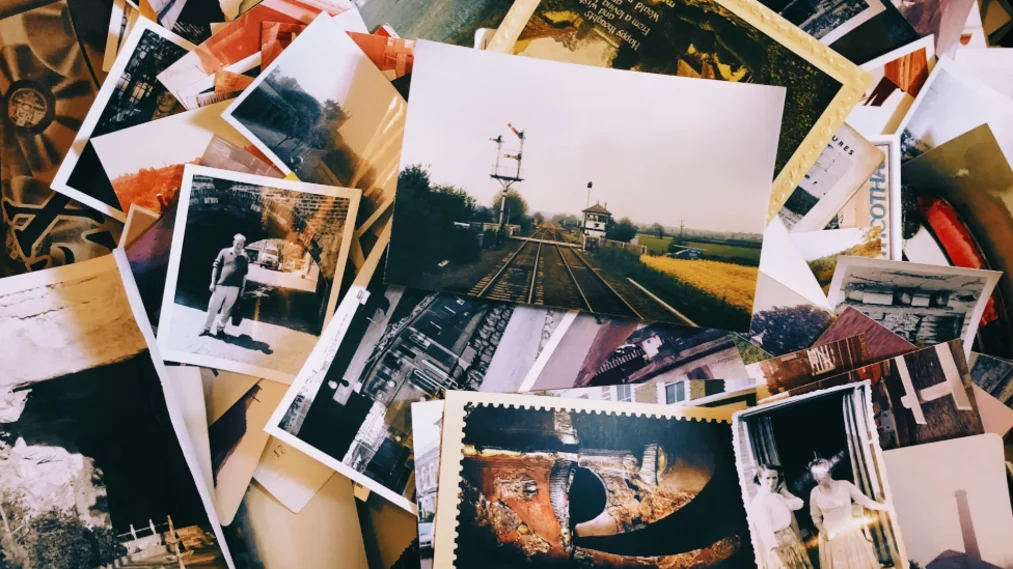
How to Document Your Life: A Simple System for Capturing Memories
A complete guide to documenting your life — covering what to capture, how to capture it, and how to build a system that preserves memories without becoming a second job.

How to Create a Daily Life Archive That You'll Actually Keep
A daily life archive doesn't have to be complicated. Here's how to build one that captures what matters, stays manageable, and actually survives past the first month.