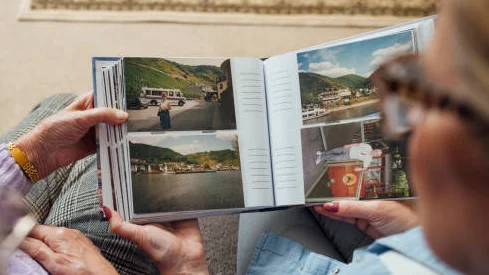
What Makes a Memory Worth Saving?
Every time you decide whether to take a photo, make a recording, or write something down, you’re answering a question you probably haven’t examined directly: what makes this worth saving?
The implicit answer most people operate with is something like significance. A moment is worth documenting if it’s significant — if something notable happened, if an occasion is being marked, if the moment is one you’ll want to look back on. This is why people document birthdays and vacations and milestones, and why they don’t document Tuesday afternoons or ordinary conversations or the way a particular kitchen smelled during a particular period of their life.
The problem with significance as the criterion is that it systematically misidentifies what’s worth preserving. The moments that are obviously significant in the moment are often not the ones that prove most valuable in retrospect. And the moments that seem too ordinary to be worth documenting are often exactly the ones you’ll most want to recover when they’re gone.
There’s a better framework for thinking about what makes a memory worth saving. It requires stepping back from the instinct of in-the-moment significance and asking a different set of questions — about what memory is for, what it loses, and what documentation actually provides.
The Wrong Criterion: Significance in the Moment
Significance-in-the-moment is an unreliable guide to preservation value for several specific reasons.
Significance Is Retrospectively Assigned
What seems significant when it’s happening often turns out to be less significant in the long run. The big presentation, the dramatic conversation, the milestone event — these feel significant and get documented. But they’re also the events that memory reliably holds, at least in outline. You’ll remember the wedding; you don’t need a photograph to know the wedding happened.
What seems insignificant when it’s happening often turns out to be deeply significant in retrospect. The last ordinary dinner with someone before they became ill. The final week in a home before a move. The specific way your child laughed at something when they were four. None of these announced themselves as significant at the time. They were just what was happening.
Significance, in other words, is often more visible in retrospect than in the moment. Documenting based on in-the-moment significance captures exactly the events that memory would have preserved anyway, and misses exactly the events that memory won’t.
Significance Is Skewed Toward the Positive
The events we intuitively feel are worth documenting tend to be the positive, celebratory, presentable ones — and the criterion of significance, applied through a social lens, amplifies this. We document the occasions worth sharing; we don’t document the difficult periods, the ambivalent transitions, the ordinary struggles.
But the difficult periods, the genuine struggles, the ambivalent times — these are often what we most want to understand in retrospect. The record of how a difficult period actually felt from the inside, made at the time, is genuinely irreplaceable. The record of only the positive moments is a curated performance of a life, not a document of one.
Significance Excludes the Ordinary
The most systematic problem with significance as the criterion: ordinary moments, by definition, don’t meet it. And ordinary moments constitute most of what life is. The significance filter ensures that most of lived experience goes undocumented — not because it wasn’t worth preserving, but because it didn’t feel significant enough to document at the time.
A Better Framework: What’s Worth Saving?
If not significance, what? Here are the questions that actually reveal whether something is worth documenting.
Will Memory Preserve This on Its Own?
The question that reframes preservation value entirely: not “is this significant?” but “will memory preserve this without documentation?”
Memory is highly reliable for the gist of significant events — the fact that they happened, the general outline, the emotional impression. It’s highly unreliable for specific sensory details, specific language, the texture of ordinary experience, the internal experience of living through a period, and the specific quality of how people were at a particular time.
If memory will preserve it on its own, documentation is supplementary — nice to have, not essential. If memory won’t preserve it, documentation is the only thing that makes it recoverable.
By this criterion: the wedding is less urgently in need of documentation than the ordinary Tuesday before the wedding. The milestone is less urgently in need of documentation than the specific feeling of the period leading up to it. The significant occasion is less urgently in need of documentation than the ordinary life that surrounded it.
This doesn’t mean not documenting the wedding. It means that the Tuesday deserves documentation as much as the wedding does — and gets it far less often.
Would You Want This If Someone You Loved Had Made It?
One of the most powerful tests for whether something is worth documenting: would you want this if someone you loved — who is no longer here — had made it?
Almost certainly, the answer is yes. Not the posed photos from the occasions. Not the curated versions of themselves they presented publicly. You’d want the ordinary recordings, the unremarkable conversations, the specific way they sounded when they were just talking, the record of who they actually were on ordinary days.
If you would want that from them, it follows that the people who will one day look back at the records you’ve left will want the same from you. The ordinary recording made today is exactly the recording they’ll want in twenty years.
Is This Something That Will Change?
Another useful criterion: will this change? If so, the window for documenting this specific version of it is limited.
Children change fast. Relationships evolve. Homes are left behind. Cities change. You change. All of these — the current version of the child, the current texture of the relationship, the current appearance of a place, who you currently are — are temporary configurations that will be replaced by different ones. The documentary window for each is finite and sometimes short.
This criterion applies urgency to documentation that the significance criterion doesn’t. The moment isn’t significant; it’s temporary. Its temporariness is what makes it worth preserving.
Does This Capture Something Memory Will Revise?
Memory doesn’t just fade — it revises. The memory of a difficult relationship, five years later, is shaped by everything that happened in those five years: subsequent events, changed understanding, the story you’ve told yourself and others. The documentation made at the time captures the version that existed before revision.
If you’re documenting something that you suspect you’ll understand differently later — a complicated relationship, a significant decision, a difficult period — the documentation is valuable specifically because it preserves the pre-revision version. Future you, with different perspective and different context, will encounter the past version of yourself and of the situation in a form that memory would have changed.
Complicated feelings, ambivalent moments, unresolved experiences — these are especially worth documenting because memory will simplify them in ways that documentation resists.
What This Framework Implies
The questions above point toward a different documentation practice than significance-based instinct does.
Document the ordinary more than the exceptional. The exceptional will be preserved by memory and by cultural pressure toward documentation. The ordinary won’t.
Document the difficult as well as the positive. The difficult periods have the most to offer in retrospect and are most vulnerable to retrospective revision.
Document the temporary. Whatever is currently the case — the child at this age, the home you currently live in, the person you currently are — will change. Document it while it exists in this form.
Document internal experience alongside external events. The external events are the gist, which memory preserves. The internal experience is the texture, which memory loses.
Document what will lose meaning without context. The photo that makes complete sense today will be puzzling in twenty years without a sentence of context. The voice recording that’s obviously about a specific situation will be opaque without a note about what the situation was.
The Paradox of Documentation and Living
There is a genuine tension here worth acknowledging: the framework above implies documenting almost everything, which conflicts with the experience of living. You cannot be fully present to an experience while also documenting it. You cannot capture every ordinary moment without the capture itself disrupting the ordinariness.
The resolution isn’t to eliminate the tension but to navigate it.
Some documentation disrupts experience less than others. A two-minute voice recording at the end of the day captures the day without having disrupted any moment within it. An ambient recording in a space — letting the microphone run while life happens — captures the environment without requiring the recorder to step out of life to operate it.
Some documentation is worth the disruption. The deliberate photograph taken to preserve how someone looks at a specific age, the voice note made in the moment of an observation you want to keep, the written sentence captured in the middle of an experience that’s producing something worth holding — these involve a brief step out of pure presence, but produce something recoverable.
The practice isn’t about documenting everything. It’s about lowering the threshold for what’s worth documenting — from “this is significant enough” to “this will be gone and I’ll be glad I captured it.” Within that lower threshold, the question of how to capture it without disrupting the living of it becomes practical and manageable.
The Deepest Reason to Document
Beyond the instrumental reasons — memory is unreliable, ordinary moments are worth preserving, voice recordings are irreplaceable — there’s a deeper reason that the framework above is gesturing toward.
Documentation is a form of attention. The act of deciding that something is worth preserving is the act of paying it genuine attention — of registering that it matters, that you want it to continue to exist for you in some form, that it’s not simply to be experienced and discarded.
This attention has value beyond the document produced. The person who makes brief notes at the end of each day about what happened and what mattered is practicing a form of daily attentiveness — a habit of taking stock, of noticing, of engaging with experience as something worth examining rather than just something to get through.
The document is evidence of the attention, but the attention itself is the practice. The memory worth saving is worth saving partly because it was worth attending to — and the act of saving it is the act of acknowledging that it was.
Common Questions About What Makes a Memory Worth Saving
What if I document something and later feel it wasn’t worth it?
No documentation is wasted in the sense of producing something harmful. At worst, you’ve made a recording or written an entry about something that proves less meaningful in retrospect than it seemed in the moment. The cost is small. The alternative — not documenting because you might judge it unworthy later — has a much higher expected cost: the things that prove genuinely worth preserving, that you didn’t document, can’t be recovered. Err toward capture.
Is there such a thing as overdocumentation?
Overdocumentation exists as a problem when documentation displaces experience rather than supplementing it — when the act of recording a moment prevents full presence to it, or when the habit of capturing becomes so constant that life starts to feel like raw material for documentation rather than something to be lived. But most people are nowhere near this threshold. The more common problem is systematic underdocumentation of ordinary experience. The “too much” problem is rarer than it appears, and usually involves specific practices (constant photo-taking at the expense of presence) rather than the broader documentation practice.
Should I document things I’m not proud of, or only things I want to remember positively?
Things you’re not proud of — mistakes, failures, low points, things you said or did that you later regret — are among the most valuable documentation targets. They’re the material most likely to be revised by memory, most likely to produce useful self-knowledge in retrospect, and most likely to feel like a genuine encounter with a past self when revisited. Documentation that includes only the version of yourself you want to present is a curated performance; documentation that includes the full range is a genuine record.
What’s the difference between a memory worth saving and one worth reflecting on?
A memory worth saving is one you want external documentation of — a record outside your own memory that will be recoverable regardless of how memory changes. A memory worth reflecting on is one that has something to offer your current understanding, whether or not you document it. These often overlap but aren’t identical. You can reflect on a memory without documenting it; you can document a memory without extended reflection. Both practices are valuable; they serve different purposes. Documentation preserves; reflection processes.
Does documenting a memory change how you experience it?
Yes — and in both directions. Documenting an experience can deepen engagement with it by requiring you to articulate what was significant, to notice specific details, to translate the experience into language. This engagement can actually enhance the memory of the experience. At the same time, the act of documentation can partly displace the experience itself — when the camera is raised, you’re partly in photographer mode rather than fully in presence mode. The balance is navigable with attention: brief documentation practices that don’t interrupt presence, versus extended documentation that requires stepping out of the experience.
How do I help children or family members understand what’s worth saving?
By modeling the practice rather than explaining it. Children who grow up in households where documentation of ordinary moments is normal — where a parent sometimes makes a voice recording about the day, or keeps a brief written journal, or has conversations about what happened and why it mattered — absorb the practice through exposure. Explicit teaching about what’s worth saving tends to be less effective than the embodied practice of treating ordinary moments as worth preserving.
The Bottom Line
The question of what makes a memory worth saving doesn’t have a clean answer. But the wrong answer — “only significant occasions” — is clear, and most people are operating with it.
The better framework: document what memory won’t preserve on its own, what you’d want if someone you loved had made it, what’s changing and temporary, and what will be revised by later understanding. These criteria point toward the ordinary, the difficult, the internal, and the voiced — exactly the material that significance-based instinct leaves undocumented.
And underneath all of it: documentation is attention. The memory worth saving is the one you chose to pay attention to. That choice is its own form of value, regardless of what the document eventually becomes.
This section contains affiliate links.
Go Deeper
You've been thinking about this long enough.
Ten seconds. Your voice. That's all it takes.
Inner Dispatch turns a single daily recording into something you can actually see - a living reflection of where you've been.
Start free. No writing required. →Related articles
How to Document Your Life: A Simple System for Capturing Memories
A complete guide to documenting your life — covering what to capture, how to capture it, and how to build a system that preserves memories without becoming a second job.

How to Create a Personal Archive of Your Life
A personal life archive captures who you were, not just what you did. Here's a practical system for building one — without the overwhelm of trying to document everything.