
The Two-Minute Rule for Building Habits
The two-minute rule is one of those ideas that sounds too simple to be useful, until you try it and discover that simplicity is precisely what makes it work.
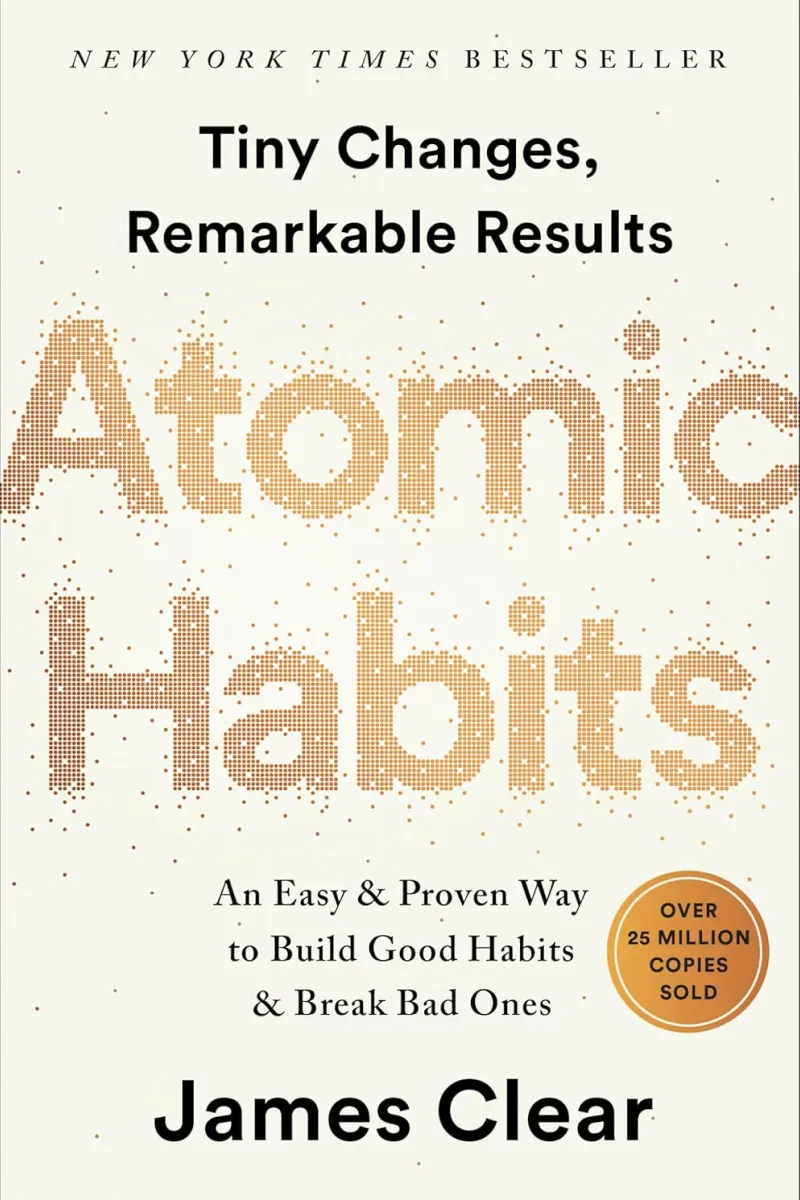
The concept, popularized by James Clear in Atomic Habits and adapted from David Allen’s Getting Things Done, is this: when starting a new habit, it should take less than two minutes to do. Not the full practice — the beginning of the practice. The journaling habit starts as “open journal and write one sentence.” The exercise habit starts as “put on running shoes.” The meditation habit starts as “sit down and take one breath.”
The logic behind this is not that two-minute versions of habits are the goal. It’s that the biggest obstacle to most habits is not sustaining them — it’s starting them. Once you’ve opened the journal, you usually write more than one sentence. Once you’ve put on the running shoes, you usually go for the run. Once you’ve sat down to meditate, you usually meditate for longer than one breath. The two-minute version is a gateway, not the destination.
But the technique has some important nuances that are frequently missed, and some failure modes that explain why many people try it, find it doesn’t stick, and conclude it doesn’t work for them. This guide covers the full picture.
Where the Two-Minute Rule Comes From
David Allen’s Original Version
Allen’s original formulation in Getting Things Done addresses procrastination on tasks rather than habit formation. His rule: if a task will take less than two minutes to complete, do it immediately rather than putting it on a list. The logic is that the overhead of tracking, remembering, and returning to a small task exceeds the effort of just doing it.
This version is about productivity efficiency: small tasks that get added to a list generate maintenance overhead that small tasks done immediately don’t.
James Clear’s Adaptation for Habits
Clear adapted the two-minute rule specifically for habit formation, with a different focus: new habits should begin with a version of the practice that takes two minutes or less. This version is about reducing the initiation barrier for behaviors you want to become automatic.
The two versions are related but distinct. Allen’s rule is about efficiency in task management. Clear’s rule is about removing friction at the beginning of habit formation. This article focuses primarily on Clear’s adaptation, since it’s the version most relevant to building practices like journaling, reflection, and daily check-ins.
Why the Two-Minute Rule Works (The Psychology)
The Initiation Problem
The most consistent finding in habit formation research is that the hardest part of most habits is starting. The actual experience of journaling, once begun, is usually fine — even enjoyable. The experience of exercising, once you’re doing it, is manageable. The resistance that stops people is the friction between intention and initiation: the gap between deciding to do something and actually beginning it.
This gap is where most habits die. Not during the practice — at the threshold of beginning.
The two-minute rule addresses the initiation problem directly by collapsing the initial threshold. “I’m going to journal” requires crossing a significant psychological threshold: settling in, choosing what to write about, committing to producing something meaningful, writing for however long feels right. “I’m going to open my journal and write one sentence” requires crossing a much smaller threshold — small enough that the resistance is often insufficient to prevent it.
The Momentum Effect
There’s a reason that once you’ve started, you usually continue. Action changes state: physically, cognitively, and motivationally. The person who sits down to journal is in a different state from the person who was considering sitting down to journal. The resistance that was stopping them from beginning has been navigated; the behavior has momentum.
Behavioral psychologists sometimes describe this as “behavioral activation” — the observation that engaging in a behavior tends to produce the motivation to continue it, rather than motivation being required to begin. This is counterintuitive but well-supported: the feeling of motivation typically follows action, not precedes it.
The two-minute rule is a behavioral activation technique: start small enough to begin, and let the action generate the motivation and momentum that sustains it.
Identity Formation
Clear’s larger argument in Atomic Habits is that habits are most durably built when they’re grounded in identity — becoming the kind of person who does the thing — rather than in outcomes or willpower.
The two-minute rule serves identity formation by making it possible to maintain the identity even on the hardest days. “I’m someone who journals daily” requires, on the very worst days, only that you open the journal and write one sentence. The identity is preserved, the streak continues, and the evidence that you’re the kind of person who journals accumulates — even when the practice doesn’t take its full form.
This matters because identity is built from evidence: small actions that are consistent with the identity add up to the internal sense that you are that kind of person. A single two-minute version of the practice, made when the full version wasn’t possible, contributes to the identity in a way that skipping entirely doesn’t.
How to Apply the Two-Minute Rule Correctly
Step 1: Identify the Gateway Action
For any habit, the first step is identifying the specific action that reliably begins the practice — the action that, once taken, makes continuing natural.
For journaling: opening the notebook or tapping “new entry” in the app. Not the writing — the opening. For voice journaling: pressing record and saying the date. Not the full reflection — the first spoken word.
For exercise: putting on workout clothes. Or, more specifically, putting on the first shoe — a genuinely tiny action that begins the sequence.
For meditation: sitting in the specific chair or spot designated for the practice.
The gateway action should be:
- Immediate — completable in seconds, not minutes
- The genuine beginning of the full practice, not a simulated version of it
- Reliably followed by the continuation of the practice when you do it with full capacity
Step 2: Commit to Only the Gateway Action
The crucial step that many people skip: committing, in advance, to only the two-minute version. Not “I’ll start with two minutes and then do more” — that’s still targeting the full practice. The commitment is to the two-minute version as the complete obligation for that day.
This feels insufficient. It’s supposed to. The discomfort of the very small commitment is part of what makes it effective: it removes the psychological weight of the full practice from the threshold of beginning. Once you’ve committed only to opening the journal, opening the journal becomes trivially easy. Once you’ve opened it, continuing is a choice — but a choice made from inside the practice, where momentum is available.
Step 3: Let Continuation Happen Naturally (Without Requiring It)
Once you’ve completed the two-minute action, continue if and only if you genuinely want to. Don’t force the extension; don’t guilt yourself into doing more because you’ve already started. If you open the journal, write one sentence, and that’s all you have — that’s the complete entry for today.
The two-minute rule doesn’t work if it becomes a ruse: “I told myself just one sentence but I know I’ll write more.” That converts the technique back into a commitment to the full practice with self-deception as scaffolding. It works when you genuinely mean it: the two-minute version is today’s complete obligation, and anything beyond it is extra.
Step 4: Raise the Standard Slowly
Once the two-minute habit is genuinely automatic — it happens without deliberation, without resistance, without needing to remind yourself — the standard can be raised. From “open journal and write one sentence” to “open journal and write for three minutes.” From “put on running shoes” to “put on running shoes and walk to the end of the block.”
Each increment should be small enough that it doesn’t reintroduce significant resistance. The goal is progressive increases in the standard, each small enough to maintain automaticity, until the practice reaches its intended full form.
This process is slower than it sounds. Genuine automaticity — the behavior happening without deliberate effort — typically takes six to twelve weeks of consistent daily repetition. Raising the standard too quickly reintroduces the initiation problem you were trying to solve.
Where the Two-Minute Rule Fails (And Why)
The two-minute rule is frequently tried and abandoned. The reasons are instructive.
Failure Mode 1: Using It As a Trick Rather Than a Commitment
The most common failure: using “just two minutes” as a motivational trick to get yourself to do the full practice, rather than genuinely committing to two minutes as the complete obligation.
The tell: you feel like you’re cheating when you actually stop at two minutes, rather than feeling like you’ve fulfilled your commitment.
When the two-minute version is a trick, the underlying practice is still experienced as the full obligation, with a deceptive preamble. This resolves the initiation problem on the days you have full capacity (the trick works — you “just” start and then continue) but not on the days you don’t (you know the trick is a trick, so its psychological effect is diminished exactly when you need it most).
Failure Mode 2: Choosing the Wrong Gateway Action
A two-minute action that isn’t a genuine gateway to the full practice doesn’t produce the momentum effect. “Reading one page” as the gateway to a reading habit works if reading one page naturally leads to reading more. It doesn’t work if you genuinely stop at one page and the habit never takes its full form.
Similarly, “opening the journaling app” as a gateway works if you naturally write once you’ve opened it. If you typically open the app and then close it without writing, you’ve identified the wrong two-minute action — the actual threshold isn’t opening the app, it’s something later in the sequence.
Failure Mode 3: Staying in Two-Minute Mode Indefinitely
The two-minute rule is not the end state — it’s the entry point. A journaling habit that never develops beyond one sentence per day may not be delivering much of what journaling offers. The rule works as an entry and a maintenance floor; it doesn’t work as the permanent standard for a meaningful practice.
The fix: raise the standard once automaticity is established. If you’ve been doing the two-minute version for two months and haven’t naturally drifted into longer sessions, deliberately increment the commitment.
Failure Mode 4: Two Minutes Isn’t Actually Low Enough
For some people in some circumstances — active depression, intense life demands, physical illness, significant time constraints — even a two-minute commitment feels like too much to reliably fulfill. In these cases, the minimum needs to be lower: thirty seconds, ten seconds, “I opened the app and closed it — that counts today.”
The principle of the two-minute rule is that the threshold should be low enough to preserve the identity and the streak during difficult periods. If two minutes isn’t low enough to serve that function for you right now, reduce further.
Applying the Two-Minute Rule to Journaling and Reflection Practices
For Written Journaling
The gateway action: open the journal (physical or digital) to a new page or new entry.
The two-minute commitment: write one honest sentence. Not an insightful sentence, not a complete entry — one sentence that captures something true about the current moment.
“Today was very hard.” “I don’t have words for how tired I am.” “Something good happened today and I want to remember it.”
These are complete two-minute entries. They’re not profound. They preserve the habit, they document the day, they maintain the identity. On the days when you have more — which will be most days, once you’ve opened the journal — write more. On the days when this is all you have, this is enough.
For Voice Journaling
The gateway action: press record.
The two-minute commitment: say the date and one thing. “It’s [date]. Today I’m [one observation about the current state or the day].” Press stop.
The thirty-second entry is a complete voice journal entry. It has a date. It has content. It captures something of the moment. The recording preserves your voice, the quality of it, the specific words you chose.
For many people, voice journaling specifically benefits from the two-minute rule because the initiation is the hardest part: starting to speak into a recorder when you don’t know what you’re going to say. Once you’ve spoken the date and the first observation, the recording continues naturally. The “press record and say the date” two-minute action is often enough to produce a full entry.
For Meditation
The gateway action: sit in the specific location for meditation.
The two-minute commitment: sit for sixty seconds with eyes closed. Not guided, not structured — just sixty seconds of presence in the body.
For Exercise
The gateway action: put on the first running shoe (specifically the first shoe, not both — a deliberately absurd level of specificity that collapses the threshold to essentially zero).
The two-minute commitment: step outside the door. Not a workout — outside the door.
The Relationship Between the Two-Minute Rule and Minimum Viable Entry
The two-minute rule and the minimum viable entry concept (the smallest version of the practice that still counts) are related but distinct.
The two-minute rule is about initiation — reducing the threshold of beginning a practice.
The minimum viable entry is about maintenance during difficult periods — the floor below which you’re not obligated to go, even on the hardest days.
In practice, the two-minute action often becomes the minimum viable entry: the one sentence, the thirty-second recording, the one pushup. They converge on the same behavior, but from different directions. The two-minute rule reduces friction to start; the minimum viable entry provides permission to stop at the minimum when you need to.
Both are useful. Both prevent the all-or-nothing thinking that leads to abandonment. Together, they define the lower boundary of the practice: the thing that, done consistently, maintains the habit even when the full practice isn’t possible.
Common Questions About the Two-Minute Rule
Does the two-minute rule work for everyone?
No technique works for everyone. The two-minute rule works best for people whose primary obstacle is initiation — the gap between intending to do something and actually starting it. For people whose primary obstacle is a different problem (not having identified the right habit, not having the time even for two minutes, not having a trigger that reliably cues the habit), the two-minute rule addresses the wrong problem and won’t be effective on its own.
Is it okay if I almost always continue past two minutes?
Yes — this is the ideal outcome. The goal is that the two-minute commitment gets you started, and then you continue naturally because you’re already doing it. The two-minute commitment being fulfilled in two minutes every day would suggest either that two minutes is the right length for the practice, or that the practice isn’t self-sustaining once begun (in which case the two-minute version may be the wrong gateway action).
How is the two-minute rule different from micro-habits?
Related but distinct. Micro-habits are permanently small habits — the practice is designed to stay minimal. The two-minute rule is a temporary entry point — the practice is designed to grow. The one pushup micro-habit is the practice. The two-minute rule applied to exercise starts with one pushup and builds toward something larger. The distinction matters for expectations: the two-minute rule produces a starter habit that graduates to the full practice; a micro-habit is the full practice.
Should I use the two-minute rule for habits I’ve already established?
It’s most useful for new habits or habits being rebuilt after a disruption. For established habits, it can serve as a maintenance floor on difficult days — the permission to do the minimum when the full practice isn’t possible. On normal days, established habits don’t need the two-minute scaffolding; on difficult days, having the minimum pre-defined prevents full abandonment.
What if two minutes is too long for me to commit to right now?
Reduce further. The principle is that the commitment should be low enough to be virtually guaranteed even on your worst days. If two minutes isn’t guaranteed, find what is: thirty seconds, pressing record and saying one word, opening the app and looking at a new entry page. The floor should be below what you can fail to do.
Can I use the two-minute rule for habits I’m trying to break?
Yes, with inversion. Instead of reducing the two-minute commitment for the habit you want to build, increase the friction for the habit you want to break. The inverse two-minute rule: make the unwanted behavior take more than two minutes to begin. Delete the app and require re-downloading. Move the snack to a less accessible location. Put the phone in another room. The friction addition doesn’t prevent the behavior, but it converts an automatic behavior into a deliberate choice — and deliberate choices can be made according to actual values rather than default patterns.
The Bottom Line
The two-minute rule works because starting is harder than continuing, and the threshold of beginning is where most habits die. Reducing that threshold to something absurdly small — one sentence, one breath, the first shoe — removes the psychological weight that blocks initiation.
The technique’s value is not in what two minutes produces. It’s in the momentum, identity, and behavioral pattern that two minutes consistently completed builds over time. The one sentence journal entry made every day for a year produces an archive, a practice, and an identity that the perfect journal entry made occasionally never could.
Start with two minutes. Let it be enough for today. Tomorrow, let it be enough again. The full practice builds from there.
This section contains affiliate links.
Go Deeper
You've been thinking about this long enough.
Ten seconds. Your voice. That's all it takes.
Inner Dispatch turns a single daily recording into something you can actually see - a living reflection of where you've been.
Start free. No writing required. →Related articles

How to Build a Daily Habit That Actually Sticks
A science-backed guide to building daily habits that last — covering the psychology of habit formation, why most habits fail, and the specific techniques that actually work.
The Science of Habit Formation: How Habits Actually Form (and Why They Break)
What does behavioral science actually say about how habits form? The real research on habit loops, timelines, context, and why most habits fail — and how to fix them.