
The Smallest Habit I've Ever Built (And Why It Stuck)
For most of my adult life, I approached habit-building the way I approached most things: with ambition and a detailed plan.
I would decide I wanted to build a journaling habit, and I would design a thirty-minute morning practice with a specific notebook, a specific prompt structure, and a specific time. I would commit fully. I would start strong. And then, somewhere between week two and week four, the habit would quietly collapse under the weight of its own requirements.
This happened enough times that I started to wonder if I was just a person who couldn’t build habits. Not dramatically — I held a job, maintained relationships, showed up reliably for things that mattered. But the voluntary self-improvement habits, the ones that required sustained daily effort without external accountability, kept not lasting.
It took an embarrassingly small experiment to figure out why.
The Experiment I Almost Didn’t Try
About two years ago, I was in a phase of genuine frustration with my inability to make a voice journaling practice stick. I’d been recording sporadically for a few months — sometimes three days in a row, then nothing for a week, then a burst of enthusiasm, then another gap. The practice existed but wasn’t stable.
I’d read something about minimum viable habits — the idea that you could reduce a behavior to its smallest possible version and use that as the anchor point for a larger practice. The theory made sense intellectually, but the examples always felt almost insultingly small. “Floss one tooth.” “Do one pushup.” “Write one sentence.”
One sentence felt pointless. If the goal was to build a meaningful journaling practice, what was the point of committing to one sentence? That wasn’t journaling. That was barely anything.
I almost dismissed it. Instead, in a moment of genuine desperation after another collapsed attempt, I tried it.
My commitment: one voice recording per day. Minimum ten seconds. No maximum. No content requirements. Just press record, say something, stop.
That was the whole habit.
What Happened When the Bar Was That Low
The first week felt almost fraudulent. I’d record ten seconds — “Tuesday, drove home in rain, daughter had a good day” — and think: that doesn’t count. It was too easy. The bar was so low that meeting it didn’t feel like an accomplishment.
But I met it every day. And then I met it the next week. And the week after that.
What I started to notice was that the ten-second minimum was functioning as something I hadn’t anticipated: a permission structure. On days when I was tired and had nothing interesting to say, I didn’t have to decide whether today was a “good enough” day to journal. The bar was already cleared. I just had to press record.
And something else happened, which I hadn’t predicted at all: most of the time, once I pressed record, I recorded more than ten seconds. The minimum wasn’t a ceiling — it was a starting gate. On the days I had things to say, I’d record for two or three minutes. The ten-second commitment just ensured I showed up, and showing up was usually enough to find something worth saying.
This is the thing about minimum viable habits that the literature explains but that I had to experience to actually believe: the resistance isn’t to the habit itself. The resistance is to starting. Once you’ve started, the activation energy is gone. The minimum gets you past the resistance. What follows is often more than the minimum, automatically.
Why My Bigger Habits Kept Failing
Looking back at my previous attempts with this new understanding, the failure pattern became obvious.
Every ambitious habit I’d tried to build had one thing in common: it required a version of me that only existed sometimes. The thirty-minute morning journaling practice required a morning when I wasn’t rushed, a mind that was clear, an energy level that supported reflection. On good days, all of those conditions were met. On bad days — tired days, disrupted days, days when my daughter was sick or work had spilled into the evening — one or more conditions failed.
And when conditions failed, I’d skip. One skip became two. Two became a week. A week felt like a broken habit. A broken habit felt like starting over. Starting over felt exhausting, so I’d wait for a better moment that often took weeks to arrive.
The problem wasn’t my willpower or my intentions. The problem was that I’d designed a habit that could only survive optimal conditions, and optimal conditions are rare.
A minimum viable habit, by contrast, survives almost anything. Ten seconds is achievable when you’re exhausted. It’s achievable when the day fell apart. It’s achievable when you’re sick, when you’re traveling, when everything is hard. The version of me who could manage ten seconds existed on every day, not just the good ones.
This is the design principle I now think of as the most important one in habit building: design for your worst days, not your best. The best days will take care of themselves. The practice lives or dies on the worst ones.
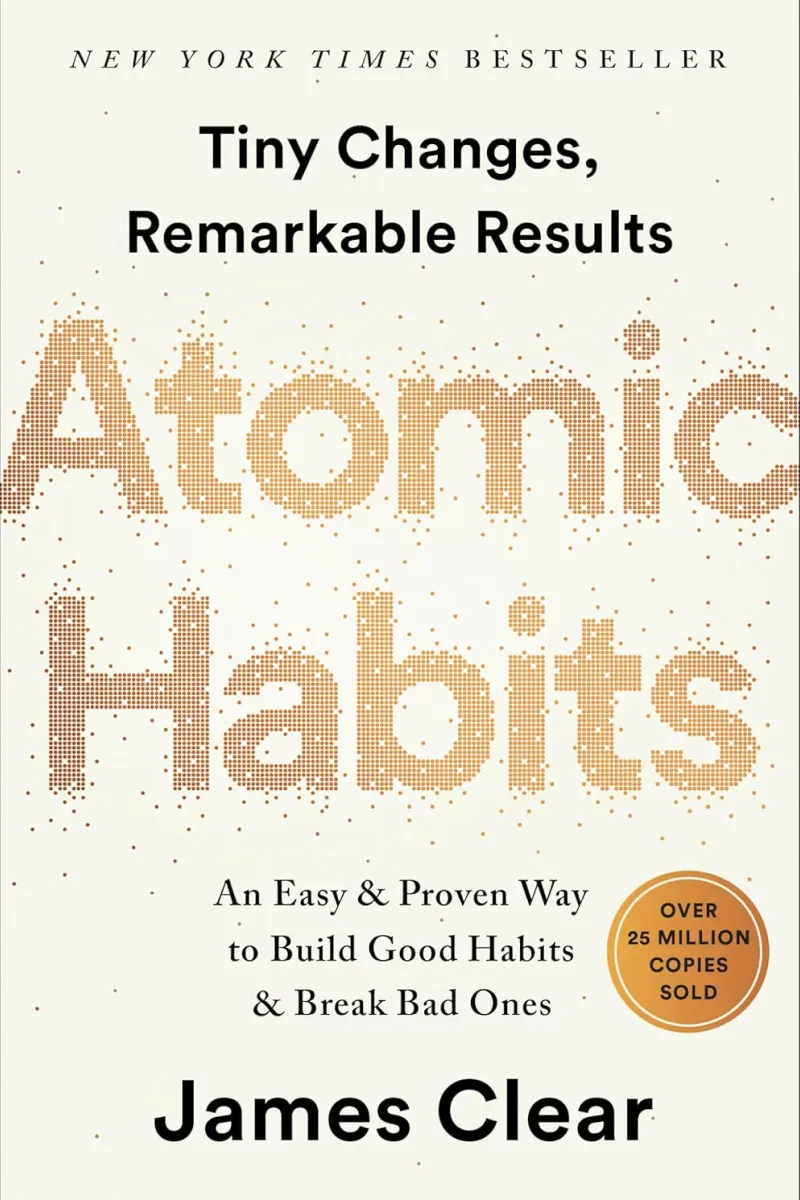
I’d arrived at this principle through failure, but it shows up everywhere in the behavior change literature. BJ Fogg calls it “tiny habits.” James Clear talks about never missing twice rather than building perfect streaks. The underlying insight is the same: sustainability requires designing around human imperfection, not against it.
The Slow Expansion
The ten-second habit didn’t stay ten seconds. But it expanded on its own timeline, not mine.
After about six weeks of the minimum, I noticed that my average recording had settled at around ninety seconds. I wasn’t trying to record more — it just happened naturally, because once the resistance to starting was gone, I usually had something to say. The minimum had established the slot, the slot had become automatic, and the content filled in organically.
At around the three-month mark, I had what felt like a genuine practice: recording most days, averaging one to two minutes per entry, with the occasional longer session when something significant had happened. The practice looked like what I’d been trying to build for years — but I hadn’t tried to build it. I’d tried to build ten seconds, and the rest had followed.
This expansion pattern is, I now believe, how most durable habits actually form. You don’t build the habit you want. You build the smallest possible version of it, and then you let the expansion happen naturally as the slot becomes established and the behavior becomes automatic. Trying to build the final version from the start is like trying to jump to the top of a staircase instead of taking the first step.
For the specific application to voice journaling, I Talk to Myself for 10 Seconds Every Morning. Here’s What Changed goes deeper into what the ten-second practice looks like as a daily reality — and what actually changes when you hold to it over time. The changes are quieter than you’d expect, but they’re real.
What I Mean by “The Smallest Possible Version”
When I say the smallest possible version of a habit, I mean: the version that could be completed on your absolute worst day, in your most depleted state, with the least possible time and energy.
For voice journaling, that was ten seconds. One sentence. The date and one observation.
For other habits, the minimum looks different:
A reading habit: one page. Not a chapter, not thirty minutes. One page. On bad days, you read one page and stop. On good days, you read ten pages because you’ve already started.
An exercise habit: put on your workout clothes. Not a full workout. Just the clothes. The friction is in the transition, not the exercise itself. Once you’re dressed, you usually go.
A meditation habit: one conscious breath. Set a timer for sixty seconds if you want, or just sit for one breath and stop. On most days, one breath becomes five minutes. On genuinely impossible days, one breath is enough.
The pattern is the same: identify where the real resistance lives (usually the transition, not the behavior itself), and make the minimum commitment just large enough to get you past it.
What I notice when I explain this to people is that the minimum always feels too small. It feels like cheating, or like it doesn’t count, or like it’s not worth doing. That feeling is the point. The minimum should feel so easy that skipping it would be embarrassing. If your minimum feels like an accomplishment, it’s too large.
The Identity Shift That Happens Quietly
There’s something else that happens with a minimum viable habit that I didn’t expect and that I think is underappreciated in most accounts of habit building.
About three months in, I stopped thinking of voice journaling as something I was trying to do and started thinking of it as something I did. The identity shifted before I noticed it shifting.
This matters more than it sounds. When a behavior is something you’re trying to do, every missed day is evidence that you haven’t fully succeeded. When it’s something you do, a missed day is just a missed day — an anomaly in an established pattern rather than a data point in an ongoing struggle.
The identity shift is what makes habits resilient. And the minimum viable version accelerates it, because it makes the behavior so achievable that you do it consistently enough that “I do this” becomes factually true before you realize it is.
James Clear writes about this in terms of casting votes for your identity — each repetition of a behavior is evidence of who you are, and enough evidence changes the story you tell about yourself. The minimum viable habit is particularly good at accumulating these votes quickly, because the barrier is low enough that you rarely miss.
For the practical side of what this identity shift looks like in a journaling context, What Six Months of Voice Journaling Actually Looks Like traces the arc honestly — including the point in month three where the practice stopped feeling like something I was building and started feeling like something I had.
When the Minimum Isn’t Enough
I want to be honest about the limits of this approach, because no single principle works for every situation.
The minimum viable habit works well for practices that benefit from consistency above all else — journaling, meditation, reading, any practice where showing up repeatedly is more important than any individual session being substantial. The minimum ensures you show up. That’s its job.
It works less well for practices that require a minimum threshold of engagement to produce any benefit. You can’t build a fitness practice on one pushup if the goal is cardiovascular improvement — at some point, the minimum has to expand to an effective dose. The minimum viable habit gets you to the gym; it doesn’t replace progressive training.
It also requires some patience with the expansion phase. If you commit to ten seconds of voice journaling and it stays at ten seconds for three months, that’s probably not enough to build the archive you’re hoping for. The expansion should happen naturally, but it needs some help — occasional deliberate stretching, a bit of honest self-assessment about whether the practice is serving its purpose.
For the habit-formation principles that go beyond the minimum viable approach, Why I Stopped Trying to Be Consistent and Started Being Forgiving covers the self-compassion and recovery side, which is the other half of sustainable habit building. The minimum gets you past the resistance. Self-forgiveness gets you back after the gaps. Together, they’re the system.
What I’d Tell Someone Starting Out
If you’re trying to build any reflective practice — journaling, voice journaling, meditation, any form of regular self-check-in — and you’ve tried before without success, I’d offer this:
The practice you tried was probably designed for a version of you that only shows up sometimes. The version of you that has thirty minutes, a clear head, and genuine motivation. That version of you is real and valuable, but she’s not the one who needs to build the habit. The one who needs to build the habit is the tired version, the overwhelmed version, the version who has exactly ten minutes before bed and nothing particularly interesting to report.
Design for her. Make the minimum so small that she can do it without effort. Then trust that the better version of the practice will emerge from the consistency she provides.
The ten-second voice note that feels embarrassingly small is doing more work than the thirty-minute journal entry that rarely happens. That’s counterintuitive. It’s also, in my experience, reliably true.
If you want to understand the specific mechanics of why the tiniest habits accumulate into something real, I’d start with I Failed at Journaling Four Times. Here’s What Finally Worked. — because the failures illuminate the principle more clearly than the success does. And if the voice journaling angle is what you’re exploring, What I Wish Someone Had Told Me Before I Started Journaling is the preparation I wish I’d had before any of my attempts.
Common Questions About Building Small Habits
Is a habit that takes only ten seconds really a habit?
Yes. A habit is a behavior that has become automatic in response to a specific cue — the definition doesn’t include a minimum duration. Ten seconds of voice journaling, done reliably every day in response to a consistent cue like getting into the car, is a genuine habit. It’s also a platform: once the automaticity is established, the behavior can expand while preserving the reliability.
How do you know when to expand beyond the minimum?
When the minimum feels genuinely effortless — not easy, but automatic — and you notice that you’re often doing more than the minimum anyway, that’s the signal that the habit is established and expansion is possible. Don’t rush this. Let the minimum become fully automatic before you increase the requirement. Adding difficulty too early is one of the most common ways that small-habit approaches fail.
What if you’re someone who needs challenge to stay motivated?
The minimum viable approach and a need for challenge aren’t incompatible. You can commit to the minimum and challenge yourself to exceed it — the minimum is a floor, not a ceiling. Some people find it helpful to track their average rather than their minimum: the commitment is ten seconds, but they notice and feel good about sessions that run longer. The challenge lives in the surplus, while the minimum provides the safety net.
Does the type of cue matter?
Significantly. The most reliable cues are existing behaviors you already do consistently — getting in the car, making coffee, putting your phone on the charger. Attaching a new habit to an existing one (what researchers call habit stacking) is consistently more effective than scheduling a new habit at an arbitrary time, because the cue is automatic rather than remembered.
What’s the difference between a minimum viable habit and just doing something occasionally?
Regularity and intentionality. An occasional behavior becomes a habit when it’s reliably triggered by a specific cue and when there’s a committed minimum — even a tiny one — that you return to after gaps. The commitment, even to something small, is what creates the structure that occasional behavior lacks.
How long does it take for a minimum viable habit to feel automatic?
Research on habit automaticity suggests somewhere between 18 and 254 days, with a median around 66 days for simple behaviors. For a very low-barrier behavior like a ten-second voice note, automaticity tends to come faster — often within four to six weeks of daily practice. The feeling you’re looking for is that skipping the behavior feels slightly wrong, like forgetting to brush your teeth.
Can this approach work for habits beyond journaling?
Yes. The minimum viable approach is domain-general — it works for any behavior where consistency matters more than any individual session’s quality. Reading, exercise, creative work, learning a language, maintaining social connections. The principle scales. The minimum for each will be different, but the logic is the same: make the commitment small enough that your worst self can keep it.
The Ten Seconds That Changed the Trajectory
I’m now more than two years past that first ten-second commitment, and I have something I didn’t have before: a practice. A real one, with a genuine archive behind it, imperfect and gappy and unmistakably mine.
I didn’t build it by trying harder or wanting it more or designing a better system. I built it by making the minimum so small that I couldn’t fail on the bad days — and then trusting that the good days would add up into something.
They did. Slowly, unremarkably, without any single breakthrough moment. The habit built itself out of enough ten-second commitments that the practice eventually became just a thing I did.
That’s the whole story of the smallest habit I’ve ever built. It doesn’t make for a dramatic arc. But it’s the truest account I have of how change actually happens — not in a moment of resolution, but in the accumulation of starts small enough to always be possible.
This section contains affiliate links.
Go Deeper
You've been thinking about this long enough.
Ten seconds. Your voice. That's all it takes.
Inner Dispatch turns a single daily recording into something you can actually see - a living reflection of where you've been.
Start free. No writing required. →