
The Science of Habit Formation: How Habits Actually Form (and Why They Break)
You’ve tried to build a habit and watched it fall apart. Most people have — repeatedly. The frustrating part isn’t the failure itself. It’s that the advice you followed sounded reasonable, and it still didn’t work.
The reason is usually this: most popular habit advice is built on an incomplete reading of the science. The “21 days to form a habit” claim is still repeated everywhere, despite having no behavioral basis. The habit loop framework is useful but routinely applied in ways that miss the most important findings about context, identity, and why habits break down.
This article covers what the science of habit formation actually shows — the mechanisms, the realistic timelines, and the specific points where the popular model gets it wrong. If you’ve ever wondered how to build a daily habit that actually sticks, understanding the underlying science makes the practical strategies make sense.
What a Habit Actually Is
The scientific definition of a habit is specific enough to be worth stating clearly, because the popular definition is fuzzy in ways that cause real confusion.
A habit is a behavior that is triggered by a specific context and performed automatically — without deliberate intention or significant cognitive engagement — because that context-behavior pairing has been consistently reinforced. The key elements are context-dependence, automaticity, and consistency of prior reinforcement.
This definition excludes some things people commonly call habits. A behavior you do every day because you consciously decide to do it is a routine or practice, but it’s not a habit in the technical sense — not yet. It becomes a habit when the context reliably produces the behavior without requiring the deliberate decision.
It also means that willpower and motivation are most important at the beginning of habit formation — when the behavior still requires deliberate choice — and become less important as automaticity develops. The goal of habit formation is to make the behavior require progressively less deliberate effort until context alone sustains it.
The Neural Basis: How Habits Are Stored in the Brain
The neuroscience of habit formation involves a specific brain structure: the basal ganglia. Ann Graybiel at MIT has conducted foundational research showing that as behaviors become habitual through repeated performance, they transition from being managed by the prefrontal cortex — the brain’s deliberative, planning region — to being encoded as chunked behavioral sequences in the basal ganglia.
This transition has a characteristic signature: initially, neurons fire throughout the behavioral sequence, reflecting active processing. As the sequence becomes habitual, neural activity falls away from the middle of the sequence and concentrates at the beginning and end — at the trigger that initiates the chunk and the reward that completes it. The middle of the behavior becomes automatic, requiring minimal neural processing.
The practical implication: habitual behaviors consume fewer cognitive resources than non-habitual ones, which is why habits feel effortless compared to the same behavior performed as a conscious choice.
This also explains why habits are so difficult to break once formed. The basal ganglia encode habits durably — the neural representation doesn’t disappear when the behavior stops. A recovered alcoholic’s habit of stopping by a bar on the way home from work remains encoded even after years of abstinence. The habit hasn’t gone away; it’s been suppressed by competing behaviors.
The Three-Component Model: Cue, Routine, Reward
Charles Duhigg’s popularization of the habit loop — cue, routine, reward — draws on Graybiel’s research. The framework is useful but worth stating precisely.
The cue (or trigger): A specific context feature — a location, time, preceding behavior, emotional state, or social situation — that reliably precedes the behavior and initiates the automatic sequence. Research by Wendy Wood at USC established that cues are almost always highly specific. “After dinner” is not an effective cue because it’s too variable. “After I clear the dinner dishes” is more effective because the specific action is a more reliable trigger.
The routine: The behavior itself — the chunked behavioral sequence that fires automatically when the cue is detected.
The reward: The outcome that reinforces the cue-routine association. Critically, research suggests that cravings — the anticipatory desire for the reward — develop over time as the habit becomes more established. The cue itself begins to trigger the craving, which drives the behavior. This is the mechanism behind both habit strength and addiction.
The Timeline: When Does a Habit Actually Form?
The 21-day myth has been replaced in popular consciousness by “66 days,” drawn from research by Phillippa Lally at University College London. Lally’s study monitored 96 participants trying to form a new habit over twelve weeks. The median time to automaticity was 66 days, with a range from 18 to 254 days.
This research is more accurate than the 21-day claim, but requires careful interpretation.
Automaticity is a spectrum, not a threshold. The study didn’t find a clear day on which habits “formed” — it found that automaticity increased gradually over time, with the curve flattening as it approached a plateau. “It takes 66 days” is a statistical artifact, not a behavioral law.
Habit complexity matters enormously. Simpler behaviors — drinking a glass of water with breakfast — reached automaticity significantly faster than complex ones like running for thirty minutes. The 66-day average smooths over this variation in potentially misleading ways.
Consistency matters more than duration. Missing one day had minimal impact on habit formation trajectories. Consistent performance — higher frequency of repetition — was the strongest predictor of faster automaticity development.
Individual variation is real. Some people habituate faster than others due to baseline differences in basal ganglia function and prior habit formation experience. There is no universal timeline.
The practical takeaway: habit formation is a gradual process whose timeline is most sensitive to consistency of practice and behavior complexity. For more on managing this process day to day, micro habits — tiny actions, massive change covers how to start small enough that consistency becomes achievable.
Context Dependence: The Most Underappreciated Factor
The role of context in habit formation is the most underappreciated and most practically important finding in the behavioral research literature.
Wood’s research demonstrated that habits are stored as context-specific response patterns: “this is what I do in this specific context.” The same person may have the habit of exercising when at home but not when traveling, eating well during the week but not on weekends, meditating at their regular desk but not anywhere else.
This explains a counterintuitive finding: people who undergo major life transitions — moving homes, changing jobs, having children — are significantly more likely to successfully change habitual behaviors than people who attempt change in their existing context. The old context was saturated with cues that triggered old habits; the new context allows new habits to form without competing with established ones.
The practical application: when building a new habit, the context specification matters as much as the behavior specification. “I will meditate” is too vague. “I will meditate for five minutes at my kitchen table immediately after pouring my morning coffee” specifies the context precisely enough to create a reliable cue.
Implementation Intentions: Pre-specifying Context
Peter Gollwitzer’s research on implementation intentions — “if-then” plans that specify when, where, and how a behavior will be performed — provides strong experimental support for the context-dependence finding. Meta-analyses show that specifying “when situation X arises, I will do behavior Y” substantially increases follow-through compared to merely intending to perform the behavior.
The mechanism is context pre-loading: by specifying the situation in advance, you’re essentially pre-programming a habitual response. Implementation intentions work by exploiting the same context-dependency mechanism that makes habits automatic.
Reward and Reinforcement: What Actually Counts
The reward component of habit formation is frequently misunderstood in ways that lead to ineffective habit design.
Rewards don’t need to be externally provided. The most effective rewards for habit formation are often intrinsic — the satisfaction of completion, the improved feeling after a workout, the clarity that follows reflection. Externally provided rewards can support behavior initially but tend to undermine intrinsic motivation over time, a phenomenon called the “overjustification effect.”
Immediate small rewards outperform delayed large ones. Research by Kaitlin Woolley and Ayelet Fishbach found that enjoying the activity itself — or pairing it with a small immediate reward — was more effective for habit formation than focusing on long-term benefits. Listening to an audiobook only during exercise makes the exercise immediately rewarding, not just instrumentally valuable.
The anticipatory reward system. As habits consolidate, the cue itself begins to trigger dopamine release in anticipation of the routine — before the behavior even begins. This anticipatory craving is what makes established habits feel compelling rather than merely automatic.
Why Habits Break Down
Understanding habit failure modes is as important as understanding habit formation.
Context disruption is the most common cause of habit failure — travel, schedule changes, environmental changes that remove the cues triggering the behavior. The habit hasn’t been lost; the trigger has been disrupted. This is exactly why habits break when traveling and why designing travel-specific versions of important habits matters.
Competing habits can compete with new ones by being triggered by the same cues. Evening screen use and evening meditation are both triggered by “winding down after the day” — the stronger, more established habit wins the cue competition.
Insufficient reinforcement. If the reward following the behavior is insufficient or too delayed, the cue-behavior association doesn’t strengthen effectively.
The abstinence violation effect. When a streak of consistent behavior is broken, some people experience the subjective sense that the lapse means the habit has failed entirely — leading to disengagement rather than recovery. A single missed day genuinely has minimal impact on habit formation trajectories. The response to the missed day has significant impact. For more on recovering from this, how to get back on track after breaking a habit covers the recovery process specifically.
Identity and Habit Formation
One of the most important findings in recent habit research is the relationship between identity and behavioral consistency. Behaviors that are congruent with a person’s self-concept are significantly more consistent than behaviors treated as external goals.
“I am a runner” produces more consistent running behavior than “I want to run regularly” — not because of the phrasing, but because of the identity-behavior alignment mechanism it represents. Behavior that expresses who you are is self-reinforcing in a way that behavior pursued as an external goal is not.
This is the core insight behind identity-based habits: building habits around who you’re becoming, not just what you want to achieve. If a habit is proving extremely resistant despite good environmental design, it may be in conflict with identity rather than supported by it.
What This Means for Building Habits
The research points to design principles more firmly grounded than most popular habit advice:
Specify the context precisely. Not “I’ll exercise in the morning” but “I’ll put on my running shoes immediately after my alarm goes off, while my coffee brews.” The more specific the context specification, the more reliable the cue.
Keep the behavior simple, especially initially. Complex behaviors take longer to habituate. Starting with the minimum viable behavior allows the cue-behavior pairing to form faster, after which complexity can be added. This is the core principle behind the two-minute rule for building habits.
Make the reward immediate. If the behavior has intrinsic rewards, make sure you’re noticing them. If it doesn’t, pair it with something immediately enjoyable.
Design for context continuity. Try to perform the behavior in the same context every time, at least during formation. Designing a “travel version” of important habits prevents single disruptions from becoming habit failures.
Expect the curve, not the threshold. Automaticity develops gradually. The feeling of effort doesn’t mean the habit isn’t forming — it means the habituation process is still in progress.
Frequently Asked Questions About the Science of Habit Formation
Is the 21-day habit rule true?
No. The “21 days to form a habit” claim derives from a misattribution to Maxwell Maltz, a plastic surgeon who observed that patients took approximately 21 days to adjust psychologically after surgery — an observation with no relationship to behavioral habit formation. Research by Phillippa Lally found that habit automaticity takes an average of 66 days, with substantial individual variation from 18 to 254 days. The specific timeline depends on the behavior’s complexity, consistency of practice, and individual differences in habituation rate. There is no universal timeline.
Why do habits break so easily when I travel?
Context disruption is the primary cause. Your habits are associated with the specific contextual cues of your home environment — the layout of your kitchen, the timing of your morning, the location of your desk. When you travel, these cues are absent, and the habitual behaviors they trigger don’t fire. This isn’t a failure of discipline; it’s the normal operation of context-dependent habit encoding. The most effective response is to design travel-specific versions of important habits before you travel — specifying the cue in the new context rather than relying on the home cue.
How long does it actually take to form a habit?
The honest answer is: it depends. The most-cited research by Phillippa Lally found an average of 66 days, but the range was 18 to 254 days. Simple behaviors performed consistently every day habituate faster. Complex behaviors performed irregularly take much longer. Consistency of practice matters more than any fixed timeline. If you’re asking because you’re wondering whether your forming habit is “on track” — it almost certainly is, as long as you’re still doing it.
What’s the difference between a habit and a routine?
In scientific usage, a habit is a behavior that occurs automatically in response to a specific context, without deliberate intention at the moment of performance. A routine is a regularly performed behavior that may still require deliberate choice. Your morning routine may include both: some elements are fully habitual (teeth brushing triggers without deciding to brush), while others still require deliberate initiation. As a routine is repeated consistently over time, its elements tend to habituate — the deliberate elements become more automatic until the whole sequence runs with minimal conscious engagement.
Does sleep affect habit formation?
Yes, significantly. Sleep is when much of the consolidation of memory — including procedural and habit memory — occurs. Research on motor skill learning and habit consolidation consistently shows that performance improves after sleep even without additional practice. Poor sleep slows the habituation process and reduces the stability of forming habits. This is one reason why new habits are more vulnerable during high-stress periods: stress disrupts sleep, which disrupts consolidation, which means behaviors remain in the deliberate-choice stage longer — requiring more willpower and becoming more vulnerable to stress-related depletion.
Can old habits be permanently broken?
The honest answer is probably not completely. The neural encoding in the basal ganglia appears to be highly durable. What changes when a habit is “broken” is the competing behavior landscape: a new habit triggered by the same cue wins the competition, while the old habit’s cue is avoided or its response suppressed. “Breaking” a habit is more accurately described as establishing a competing habit and managing exposure to the original cue — rather than erasing the original encoding.
How does habit formation relate to journaling and self-reflection?
Daily journaling — including voice journaling — follows the same habituation process as any other habit. The research on context dependence and implementation intentions is directly applicable: journaling at the same time and place every day, immediately after a reliable cue, forms faster than journaling “whenever I have time.” The benefits of daily journaling backed by research covers what consistent practice produces over time.
The Bottom Line
The science of habit formation is more nuanced and more useful than the popular frameworks suggest. Habits are context-specific, reward-reinforced, automatically triggered behavioral sequences encoded in the basal ganglia through consistent repetition. They form on individual timelines sensitive to complexity and consistency. They break through context disruption rather than character failure. They’re supported by identity alignment and undermined by identity conflict.
Understanding this model accurately changes how you design habits, how you diagnose their failures, and how you respond when they break. A missed day is a context disruption, not a moral event. A habit that hasn’t automated after three weeks is still forming, not failed. A behavior that keeps breaking down despite good intentions may be context-underspecified or identity-misaligned rather than motivationally deficient.
The science doesn’t make habit formation easy. It makes it more precise — which is more useful than easy.
For the practical application of this research, How to Build a Daily Habit That Actually Sticks translates these findings into a step-by-step system. If you’ve tried and failed before, How to Restart a Habit After Months of Stopping applies the context-disruption model to recovery specifically.
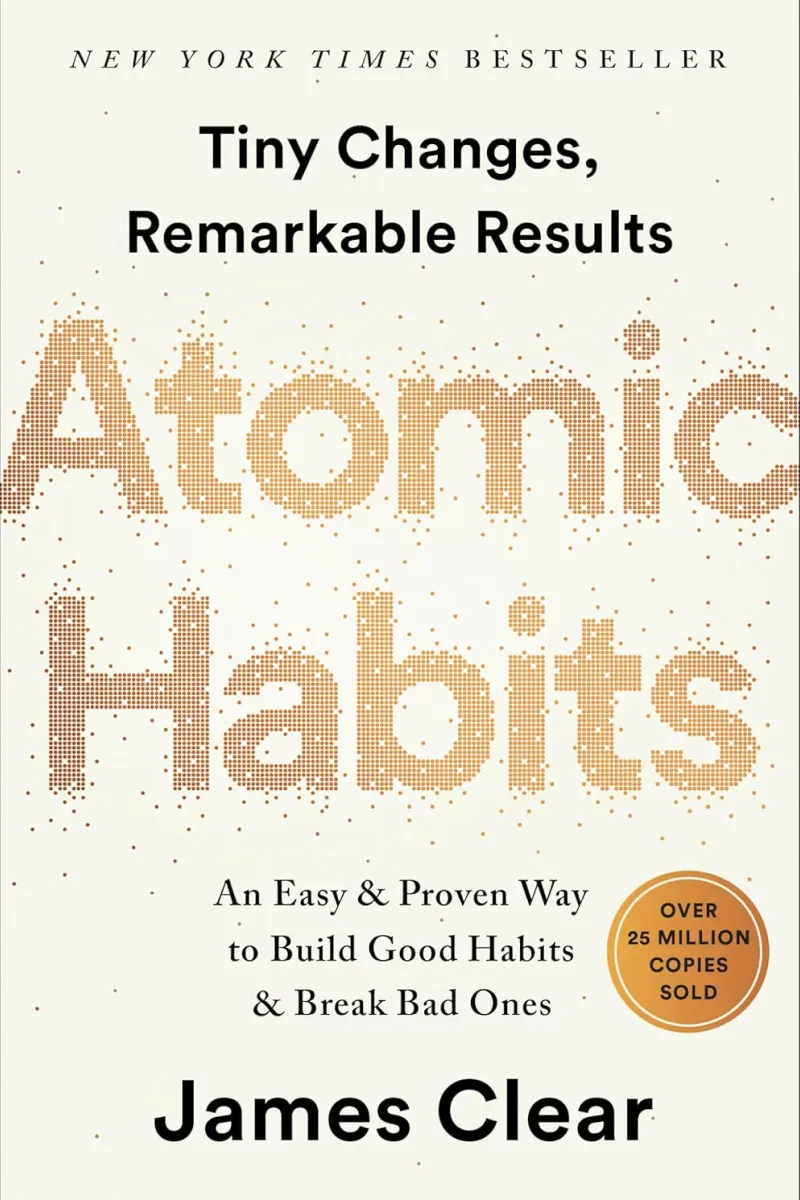
This section contains affiliate links.
Go Deeper
You've been thinking about this long enough.
Ten seconds. Your voice. That's all it takes.
Inner Dispatch turns a single daily recording into something you can actually see - a living reflection of where you've been.
Start free. No writing required. →Related articles
How to Build Consistency Without Willpower
Willpower runs out. Learn the psychology-based approach to building consistency that works even when motivation is low — using environment, identity, and systems.

30-Day Habit Challenge: A Simple Template That Works
A 30-day habit challenge can build a real habit or collapse after week one. Here's the template that works — with the setup, structure, and recovery protocols that make it stick.
The Best Habit Tracking Methods (Apps, Journals, Streaks)
Apps, paper journals, streak calendars — which habit tracking method actually works best? An honest comparison to help you find the right fit for how you think.
The Benefits of Daily Journaling (Backed by Research)
What does science actually say about the benefits of journaling? A clear-eyed look at the research on mental health, cognition, physical health, and self-knowledge.