
The Habit Loop: Understanding Cue, Routine, Reward
The habit loop is one of the most useful frameworks in behavioral science — not because it’s complicated, but because it makes visible a process that normally runs below conscious awareness. Once you understand what a cue, routine, and reward actually are and how they interact over time, you can design new habits more deliberately, understand why old habits persist even when you want them to stop, and troubleshoot why habits you’re building aren’t sticking.
The framework originated in neuroscience research at MIT, was formalized in academic literature, and reached wide popular awareness through Charles Duhigg’s 2012 book The Power of Habit. This article examines the framework carefully — what each component is, what the research actually says, where the popular version oversimplifies, and how to apply it in practice.
The Habit Loop at a Glance
| Component | What It Is | Common Mistake | Design Principle |
|---|---|---|---|
| Cue | Trigger that initiates the routine | Too vague (“morning”) | Specific, reliable, consistent |
| Routine | The behavior itself | Starting too large | Minimum viable version |
| Reward | What reinforces the association | Delayed or assumed | Immediate, genuine, specific to you |
| Craving | Anticipatory want triggered by the cue | Often invisible | The engine — understand it to work with it |
The four-part version (cue → craving → routine → reward) is more accurate to the neuroscience than the three-part popularization. The craving is what actually drives the behavior — understanding it is the difference between managing habits at the surface and working with how they actually function.
The Origin: MIT and the Basal Ganglia
The habit loop framework emerged from research by Ann Graybiel and colleagues at MIT studying the basal ganglia — a region of the brain involved in procedural learning and automatic behavior. Experiments with rats learning to navigate a maze revealed a distinctive pattern of neural activity: early in learning, the brain was active throughout the task. As the behavior became habitual through repetition, neural activity compressed to spikes at the beginning and end — at the cue and the reward — while the middle of the routine became neurologically automated.
This “chunking” — the compression of a learned behavior sequence into an automatic unit — is the neurological basis of habit. The brain packages the cue-routine-reward sequence into a program that runs with minimal conscious oversight once the cue occurs.
The practical implication: habits are stored in subcortical structures that operate largely below conscious awareness. This is why habits are hard to consciously override once established — you’re trying to use a slow, effortful conscious system to interrupt a fast, automatic subcortical one. For a deeper look at the neuroscience, the science of habit formation covers the basal ganglia encoding process in detail.
The Three Components in Detail
The Cue
A cue is an environmental or internal stimulus that triggers the habitual routine. It signals to the brain that a learned behavior sequence is available and appropriate in this context.
Cues fall into several categories. Time is a common cue — 7 AM triggers the morning routine. Location cues associate places with behaviors — the kitchen triggers eating, the desk triggers work. Emotional states can become cues — a feeling of boredom triggers scrolling, stress triggers reaching for a specific comfort behavior. Preceding behaviors cue what follows — finishing a meal cues dessert-seeking, completing a work task cues checking social media.
What the cue is not: The cue is not the same as conscious motivation. You don’t need to be motivated to check your phone when you pick it up — the motion of picking it up is itself the cue that triggers the checking behavior. Motivation is relevant to deliberate behavior; cues operate on habitual behavior below the level of deliberate decision.
Why cue design matters for new habits: When building a new habit, the cue isn’t automatically present — you have to create it. Choosing a cue that is specific, reliable, and closely associated with the desired behavior is the design decision that determines how quickly the habit becomes automatic. For a practical guide to cue design, habit triggers: how to use cues effectively covers the specifics of anchor selection and cue specification.
The Routine
The routine is the behavior itself — the pattern established between cue and reward. It’s the neurologically chunked sequence that runs automatically when the cue occurs.
The routine can be simple (checking the phone when it buzzes) or complex (an entire morning sequence that runs as a single behavioral chain without deliberate decision at each step). Complex routines are composed of smaller habits linked into chains, each behavior functioning as both the reward for the preceding behavior and the cue for the following one.
The routine can be changed. The most important practical implication of the habit loop is that the routine can be changed while keeping the cue and reward stable. This is the basis for habit substitution — changing an undesired behavior by replacing the routine rather than trying to eliminate the cue or reward, which is considerably harder.
The person who habitually reaches for their phone when stressed has a cue (stress), routine (phone), and reward (distraction/relief). Eliminating the cue (stop feeling stressed) or reward (stop wanting relief) is nearly impossible. Substituting a different routine for the same cue and reward — a brief voice note about what’s causing stress, a short walk, a minute of deliberate breathing — is tractable. For how this substitution process works in practice, the role of environment in habit formation covers how context redesign supports routine change.
The minimum viable routine: In early habit formation, the routine should be as simple as possible — the minimum that constitutes a complete instance of the behavior. The two-minute rule for building habits is a direct application of this principle: the routine that takes two minutes or less is the one that can build the cue-reward association before friction or depletion interrupts it.
The Reward
The reward is what follows the routine — the outcome that reinforces the cue-routine association and signals to the brain that this behavioral sequence is worth encoding more deeply. Over time, the brain learns to anticipate the reward when the cue occurs, creating craving: the wanting of the reward before it’s experienced.
Rewards are not exclusively pleasurable. They include the reduction of discomfort (checking email reduces the discomfort of uncertainty), the resolution of a cognitive loop (completing a task rewards the completion itself), and social rewards (acknowledgment or approval that follows behavior).
What makes an effective reward for habit formation:
Immediate rather than delayed. The brain’s reward learning system responds much more powerfully to immediate outcomes than to delayed ones. The health benefits of exercise in twenty years are an almost irrelevant reward signal compared to the immediate post-workout mood improvement. Designing new habits to have immediate rewards — or finding the immediate rewards already present — is critical.
Genuinely rewarding to you specifically. Not what should be rewarding; what actually is. Some people find the completion sensation of marking a habit done in a tracking app genuinely rewarding; others find it irrelevant. The reward that makes you want to return to the routine is the one that works.
The Craving Loop: Why Habits Feel Compelling
The full habit loop is more accurately described as a four-part cycle: cue → craving → routine → reward. The craving is the motivational state generated by the cue — the wanting of the reward that drives the execution of the routine.
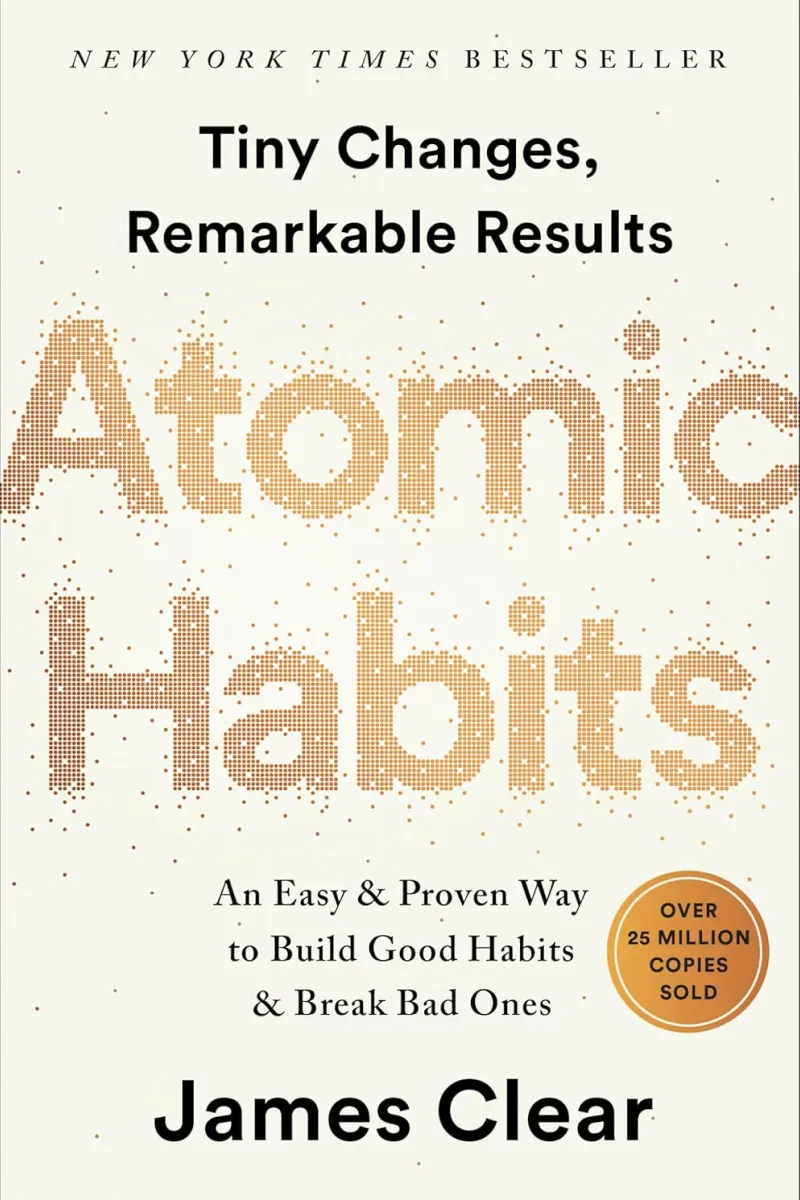
Duhigg’s original popularization emphasized the three-part structure. James Clear in Atomic Habits added the craving component explicitly. The four-part version is more accurate to the neuroscience and more useful for understanding why both desirable and undesirable habits are so persistent.
The craving is the engine. The cue itself has no motivational force — it only triggers the craving. The craving is what makes the behavior feel necessary. When you understand that you’re responding to a craving rather than the cue directly, you gain a small window of awareness between cue and behavior that alternative responses can occupy.
This window is genuinely small — the craving activates faster than conscious deliberation can intervene in well-established habits. But it exists, and practices that expand it — mindfulness, deliberate attention to internal states, brief pauses between cue and response — can increase the effectiveness of intervention.
Where the Framework Is Oversimplified
The habit loop is a framework, not a complete description of behavior. It has real limitations worth acknowledging.
Not All Behavior Is Habit
Much behavior that people describe as habitual is actually a mix of habitual and deliberate. Your morning routine may be highly automatic; the specific conversation you have during that morning may be entirely deliberate. Over-applying the habit loop produces the unhelpful conclusion that all behavior is habit and can be managed by manipulating cues and rewards, when many behaviors require deliberate reasoning, values-based decision-making, or emotional processing the framework doesn’t address.
Rewards Are Often Complex and Uncertain
The reward component is the most difficult to identify accurately in real behavior. The apparent reward — what you think you’re getting from the habit — is often not the actual reinforcing element. People who believe they snack from hunger often discover, through careful attention, that the trigger is boredom and the reward is stimulation rather than satiety.
Identifying the actual reward — as distinguished from the assumed reward — often requires more careful observation than a quick habit analysis provides. The “craving test” — paying attention to what you’re actually wanting when the cue occurs — can reveal the true reward structure more accurately than post-hoc reasoning.
Habits Don’t Exist in Isolation
Most habitual behaviors are embedded in chains, routines, and contexts that the simple loop doesn’t capture. Changing one element affects the entire chain in ways an isolated loop analysis doesn’t predict. Habit change is usually more complex than identifying a single cue-routine-reward sequence and substituting a different routine. Environmental redesign, chain disruption, and context change often need to accompany the specific habit substitution.
Using the Framework in Practice
Diagnosing an Existing Habit You Want to Change
-
Identify the routine precisely. “I eat too much” isn’t analyzable. “I eat junk food from the break room at 3pm on workdays” is.
-
Experiment with the cue. For a few days, note what’s present immediately before the behavior occurs — the time, location, emotional state, preceding action, who is present. Change one variable at a time to isolate the actual trigger.
-
Examine the actual reward. What changes in your state after the routine? What are you actually getting — the energy lift, the social interaction, the change of scene, the taste? Which of these is genuinely reinforcing?
-
Design the substitution. Once cue and reward are identified, design an alternative routine that can be executed in response to the same cue and produces enough of the same reward. The substitution doesn’t need to perfectly match the reward — it needs to be close enough that the brain accepts it as a reasonable alternative.
Building a New Habit
-
Choose a specific, reliable cue. The more precisely defined the anchor (“immediately after brushing teeth, in the bathroom”), the faster the cue-routine association builds.
-
Define the minimum routine. Not the ideal version — the minimum that constitutes a complete instance. For journaling: open the app and record one sentence. For voice journaling: press record and say the date and one true thing.
-
Identify or create an immediate reward. For journaling, the reward is often the closure of having said the thing — the small satisfaction of the entry existing. Marking the habit done in a tracking app, if you find that genuinely satisfying, is a simple immediate reward addition.
-
Repeat consistently in the same cue context. The association builds through repetition. Variations in the cue context slow the association; consistency accelerates it. For why consistency matters more than duration, micro habits: tiny actions, massive change covers the frequency-versus-intensity tradeoff directly.
The Habit Loop and Reflective Practice
Reflective practices like journaling and voice recording occupy an interesting position in the habit loop framework.
Most habits the framework describes are relatively simple behavioral routines. Reflective practices are more complex: they involve a behavioral trigger (opening the journal, pressing record) but the content — what you write or say — is deliberate rather than automatic. The practice is habitual; the reflection is intentional.
This distinction matters for understanding what the habit loop can and can’t do for reflective practice. The loop can automate the initiation — the opening, the sitting down, the beginning — and make the entry consistent. It cannot automate the quality of the reflection, which requires genuine attention and cannot be chunked into an automatic routine.
For established voice journalers, the loop operates on the initiation: the cue (end of day, brushing teeth, morning coffee) triggers a craving for the reflective act — the anticipatory desire to process the day, to complete the psychological closure of the entry. The routine (opening the app, pressing record) initiates almost automatically. The reward (the closure, the completion, the occasional surprise of what emerges) reinforces the behavior.
Before the habit is established, none of this is automatic. The work of getting there is exactly the cue-routine-reward design work this framework describes. If your journaling habit keeps breaking down despite good intentions, why you quit journaling and how to finally stick with it applies the habit loop framework directly to the most common failure patterns.
The habit loop gets you to the journal consistently. What happens once you’re there is a different kind of work.
Common Questions About the Habit Loop
Can I break a habit just by identifying its cue, routine, and reward?
Identification is the first step, not the solution. Understanding the cue-routine-reward structure tells you what you’re working with — it doesn’t automatically change it. The actual change work — substituting a different routine, redesigning the environment to reduce cue exposure, building a competing habit — requires consistent effort over time. What the analysis does is make that effort more targeted and less random.
What if I can’t identify the cue?
Cue identification requires careful, systematic observation rather than memory-based analysis. Most habit cues are environmental or temporal — so consistent and automatic they’ve become invisible. A useful technique: every time you engage in the behavior for one week, immediately note the time, location, emotional state, preceding action, and who is present. After a week, patterns typically emerge.
Is the reward always obvious?
No. The reward is often the least obvious component because it operates on physiological and neurological levels that don’t necessarily produce obvious conscious experience. Close attention to your state immediately after the routine — what has changed, what feels resolved — is more reliable than assuming you know the reward.
Why do I go back to old habits even after months of success?
The old habit loop isn’t erased by forming a new one — it’s suppressed. The neural pathway encoding the old habit remains. When the new habit’s contextual conditions are disrupted (travel, stress, environmental change), the old pathway may become more accessible again. This explains why relapse is common: the old habit isn’t gone; it’s dormant and can be reactivated by the right combination of cues and circumstances.
How does the habit loop explain habitual journaling?
For established journalers, the loop operates on initiation: the cue triggers a craving for the reflective act — the anticipatory desire to process the day, to complete the psychological closure of the entry. Before the habit is established, none of this is automatic. The loop describes where a well-designed practice goes; it doesn’t automatically get it there. For the full habit formation arc for journaling specifically, how to build a daily habit that actually sticks covers the process from first entry to automaticity.
What’s the difference between the habit loop and identity-based habits?
The habit loop describes the mechanism — the neurological process by which behaviors become automatic. Identity-based habits, as described by James Clear, describe the motivational layer that makes the loop self-sustaining. Casting votes for an identity (“I am someone who reflects daily”) creates internal alignment that makes the routine feel like self-expression rather than effort. The two frameworks are complementary: the loop explains how habits form; identity explains why some habits stick long-term while others don’t. Identity-based habits covers this dimension in depth.
The Bottom Line
The cue-routine-reward loop is a map of how habits work at the neurological level. Understanding it makes behavior change more legible: you can see why established habits are automatic and resistant to willpower, why some substitutions work and others don’t, and why consistent cue design is so important in building new habits.
The framework describes the automatic, subcortical part of behavioral life — research suggests roughly 40% of daily behavior is habitual. The rest — deliberate, reflective, values-based choices — operates differently and requires different tools.
But for the habits you want to build and the patterns you want to change, the loop gives you leverage. Know the cue. Design the minimum routine. Find the reward. Repeat in the same context until the association forms.
The behavior becomes automatic. The reflection, if you’re building a reflective practice, remains intentional. Both are necessary. The habit loop handles one of them.
For the underlying neuroscience behind the habit loop, The Science of Habit Formation covers the basal ganglia research in detail. For a practical step-by-step system built on these principles, How to Build a Daily Habit That Actually Sticks translates the framework into actionable design decisions.
This section contains affiliate links.
Go Deeper
You've been thinking about this long enough.
Ten seconds. Your voice. That's all it takes.
Inner Dispatch turns a single daily recording into something you can actually see - a living reflection of where you've been.
Start free. No writing required. →Related articles
How to Build a Daily Habit That Actually Sticks
A science-backed guide to building daily habits that last — covering the psychology of habit formation, why most habits fail, and the specific techniques that actually work.
The Science of Habit Formation: How Habits Actually Form (and Why They Break)
What does behavioral science actually say about how habits form? The real research on habit loops, timelines, context, and why most habits fail — and how to fix them.
Habit Triggers: How to Use Cues Effectively
Habits don't start with motivation — they start with triggers. Here's how to identify, design, and use cues to make new behaviors happen reliably.