The Difference Between Documenting and Living Your Life
The criticism is familiar: you’re at a concert, a birthday party, a sunset, and someone spends the whole time with their phone raised, documenting rather than experiencing. The moment is being captured instead of lived. There’s something uncomfortable about it — a quality of missing the thing while making a record of it.
This discomfort points at something real. Documentation can displace experience. The raised camera can become a barrier between the person and what they’re supposed to be present to. The habit of capturing can substitute for the habit of attending. These are genuine failure modes, worth taking seriously.
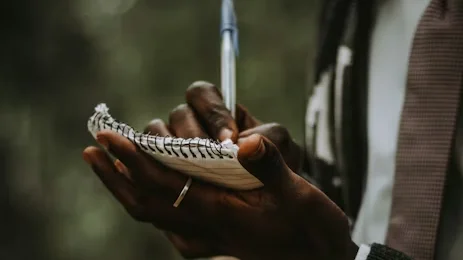
But the critique is often overapplied. The person with the raised phone at the concert isn’t necessarily absent from the experience; they may simply have a different relationship to presence and memory than the critic assumes. The journalist who takes notes is not less engaged with what they’re witnessing. The diarist who writes at the end of the day about what happened is not failing to live — they’re extending engagement with what they lived.
The tension between documenting and living is real but less binary than it’s often presented. Understanding where the genuine conflict lies, and where it doesn’t, makes it possible to build a documentation practice that supplements experience rather than displacing it.
Where the Conflict Is Real
There are specific situations where documentation genuinely competes with presence, and it’s worth being precise about them.
When Documentation Requires Full Attention in the Moment
Some documentation practices require you to step out of the experience to capture it. Composing a photograph involves framing decisions, technical adjustments, and aesthetic choices that take attention away from the experience itself. Writing detailed notes during a significant conversation means partial attention to both the conversation and the note-taking. Extended video recording requires ongoing attention to the framing and quality of the recording.
These practices involve a real trade-off: the quality of the documentation versus the fullness of the experience. Neither outcome is wrong — sometimes the document is more important than being fully present; sometimes presence is more important than the document. But the trade-off is genuine.
When Documenting Becomes a Way of Avoiding Experience
For some people in some situations, documentation functions as a way of maintaining psychological distance from difficult or uncomfortable experiences. The camera becomes a frame that establishes observer status rather than participant status. The act of writing about a difficult conversation provides a sense of control that being fully in the conversation doesn’t.
This use of documentation is not inherently wrong — observer distance can be a legitimate coping mechanism — but it’s worth being honest about what it is. When documentation is primarily serving an avoidance function, the document isn’t supplementing the experience; it’s replacing it.
When the Habit of Capturing Becomes Automatic
A documentation habit that becomes completely automatic — reach for phone, photograph, move on — can gradually decouple from the experiences it’s supposed to be capturing. The photos happen, but they don’t represent genuine attention to the moment. The recordings are made, but they’re not the product of actual noticing. The documentation habit is running without the documentary intention behind it.
This is the version of overdocumentation that actually costs something: not too much documentation, but documentation that has become reflexive rather than intentional.
Where the Conflict Is Not Real (Or Much Smaller Than It Seems)
Against these genuine failure modes, there are situations where the documentation-versus-living tension is largely illusory.
When Documentation Happens After the Experience
Most of the best documentation practices happen after the fact, not during the experience. The journal entry written at the end of the day about what happened doesn’t compete with living the day — it extends engagement with it. The voice recording made before sleep, reflecting on what the day contained, doesn’t displace the day; it processes it.
This is the most important clarification about the documenting-versus-living tension: much of it dissolves when documentation is temporally separated from the experience rather than simultaneous with it. The end-of-day two-minute voice recording is not competing with any experience; the day is over. It’s a different kind of engagement with the same material.
When Documentation Is Brief and Low-Effort
The five-second voice note made during a walk — “I want to remember what this light looks like” — doesn’t displace the experience of the walk. The one-sentence note jotted after a significant conversation doesn’t reduce the quality of the conversation. Brief, low-effort documentation that doesn’t require extended attention during the experience can coexist with full presence.
The documentation practices that most conflict with presence are the extended, high-effort ones that require sustained attention in the moment. Brief documentation — a single photo, a voice note, a sentence — involves a momentary step out of presence that’s a reasonable trade for the preservation it provides.
When Documenting Is Part of How You Process Experience
For many people, expression is part of experience, not separate from it. The person for whom writing is a natural medium may process an experience more fully through writing about it than through silence. The person for whom speaking is how they think may experience more by narrating than by not narrating. For these people, documentation isn’t competing with experience — it’s part of how experience is had.
This varies by person and practice. But the assumption that documentation is always an overlay on top of experience, always reducing rather than extending it, doesn’t hold universally. For people with strong expressive tendencies, documentation can deepen rather than diminish engagement.
When the Document Extends the Experience Over Time
Documentation doesn’t end when the recording stops. A voice recording made of a conversation at a particular place creates a relationship to that place and that conversation that persists across time. The person who returns to an old recording encounters the past experience again — not in the same way as being present in it, but in a different and sometimes richer way.
The documented experience, revisited, can be engaged with in ways that the lived experience couldn’t be. You can notice things in a recording that you missed in the moment. You can hear your past voice with ears that didn’t exist yet. You can recover the emotional quality of a period that memory would have compressed.
The document doesn’t replace the experience; it extends it into a different dimension.
The Question of Presence
The concept of presence — full, undivided attention to what’s happening right now — is at the center of most critiques of documentation. The documented moment is a moment not fully present to. The phone raised is the self partially elsewhere.
But presence is more complex than the critique assumes.
Full presence to a moment doesn’t require the absence of all other cognitive activity. A person who is noticing details to describe them later is present in a specific and attentive way — perhaps more attentive to the details of the experience than someone who is simply in it without noticing. The trained observer is not less present than the unaware one; they’re differently present.
And full presence to the moment isn’t always the goal. Some experiences benefit from reflective distance rather than pure immersion. A difficult conversation may be navigated better with some degree of observer perspective. A complex experience may be understood better through articulation than through silent feeling. The choice between presence and articulation isn’t always obvious, and pure presence isn’t always the right choice.
The more useful question than “am I fully present?” is: “am I relating to this experience in the way that serves what I actually want from it?” For some experiences and some people, documentation is part of serving what you want from it.
Practical Guidance for the Balance
Rather than resolving the tension doctrinally — documentation good, or presence good — a few practical principles help navigate it case by case.
Match the Documentation Practice to the Temporal Relationship
Documentation that happens during an experience involves a trade-off between presence and capture. Documentation that happens after an experience avoids this trade-off. For the experiences where full presence genuinely matters most — rare, significant, fleeting moments — consider whether after-the-fact documentation can capture what you need without competing with the experience itself.
The brief observation noted immediately after — rather than during — an experience often produces better documentation than extended note-taking during it. You attend fully, then you step out briefly to capture.
Choose Low-Friction Formats During
When documentation happens during an experience, lower-friction formats compete less with presence. A single photograph displaces presence less than ten photographs. A two-second voice note displaces it less than a three-minute recording. One sentence of text displaces it less than a paragraph.
For in-the-moment documentation, the principle is: capture the minimum that will serve as an adequate anchor for after-the-fact reconstruction, then return to the experience.
Let Some Experiences Be Undocumented
Not every experience worth having is worth documenting. Some experiences are specifically valuable for being fully present to without any documentation intention. The relationship with documentation can become healthier when some experiences are explicitly set aside from it — when you decide, deliberately, that this experience is for living and not for capturing.
This deliberate exemption is different from simply forgetting to document. It’s an active choice that you return to the experience with, rather than the default of reaching for the phone. The active choice strengthens presence in a way that the automatic decision not to reach for the phone doesn’t.
Use Documentation to Return, Not to Prove
The documentation practice that most conflicts with living is the one oriented toward proof and sharing — capturing for an audience, for social media, for demonstrating that you were there. The documentation practice that least conflicts with living is the one oriented toward return — capturing for your future self, for recovery of the experience later, for the private archive that no one else will see.
The shift from documentation-for-others to documentation-for-future-self changes the relationship to both the documentation act and the experience. When you’re capturing for your own return, the bar for what’s worth capturing is different (personal and specific rather than shareable and presentable), and the act of capturing feels different (less performative, more attentive).
Voice Recording as the Lower-Conflict Format
Among the documentation formats, voice recording has a specific advantage in the documentation-versus-living tension: it can happen most naturally after the experience rather than during it.
A two-minute voice recording at the end of the day — reflecting on what happened, what mattered, what you want to remember — competes with nothing. The day is over. The recording is a different kind of engagement with the material, not a competition with living the material.
The voice note made during a walk is brief enough that it doesn’t significantly displace the walking. The ambient recording of a family dinner doesn’t require the person to step out of the dinner; it runs in the background while life happens around it.
Voice recording as a documentation practice maps naturally to the after-the-fact and low-friction modes that minimize the living/documenting conflict. This is one of the reasons it’s the most sustainable format for people who want to build documentation habits without feeling like documentation is consuming the life it’s supposed to be preserving.
Common Questions About Documenting vs. Living
Is it possible to document too much?
Yes, in specific ways: when documentation becomes reflexive rather than intentional (photographing everything automatically without noticing), when it displaces presence in consistently significant moments (phone out during all meaningful conversations), when it functions primarily as performance for others rather than preservation for yourself, or when the overhead of documentation starts to feel like a burden rather than a practice. For most people, however, underdocumentation of ordinary experience is a larger problem than overdocumentation. The “documenting too much” problem is real but less common than the assumption that it’s the default risk.
How do I stop reaching for my phone to document things and just be present?
The most effective approach: deliberately separate documentation from the phone as the default capture device. Voice recording at the end of the day, rather than photos during the day, removes the phone from the moment. A paper notebook for brief observations keeps the capture practice alive without the phone’s additional associations (social media, notifications, distraction). And explicitly deciding, for specific experiences, that no documentation will happen gives presence an intentional context rather than relying on restraint.
Does my documentation practice affect how I experience things in the moment?
Yes, in both directions. People with strong documentation habits often report noticing more in their experiences — looking for what might be worth capturing sharpens attention to detail. They also sometimes report feeling more detached from experience, watching it from a slight remove as potential material. Whether this is positive or negative depends on the experience and the person. The attentiveness can be a genuine enhancement; the detachment is worth watching.
What about experiences that specifically shouldn’t be documented?
Some experiences carry implicit or explicit social norms against documentation: certain religious or ceremonial occasions, therapeutic contexts, conversations shared in confidence, private moments of other people who haven’t consented to being documented. Beyond these obvious cases, personal judgment applies: some experiences feel like they belong entirely to the living of them, and the sense that documentation would be intrusive or reductive is worth honoring. The practice of documentation doesn’t require that everything be documented.
Can I document too little?
Yes, and it’s the more common problem. Systematic underdocumentation of ordinary experience — the assumption that what’s happening isn’t significant enough to document — leads to the loss of exactly the material that retrospection most values. The person who never documents ends up with a life that happened mostly without record, and the specific texture of what their life was like becomes unrecoverable. The too-little problem is addressed not by documenting everything but by lowering the threshold for what’s worth capturing and building a sustainable brief daily practice.
Doesn’t the act of narrating experience change the experience itself?
Yes, and this is philosophically interesting: the act of putting experience into words (or speaking it into a recorder) doesn’t just capture the experience — it partly constitutes a version of the experience. What you say about what happened shapes what you understand happened, which shapes what you remember happened. This isn’t a reason not to document — the alternative, no narration at all, doesn’t leave experience unchanged either; it leaves it to be shaped entirely by memory’s reconstructive processes. The question is whose narrative construction is operating: the active documentary one, or the passive memorial one. Both shape experience; the documentary one leaves a record.
The Bottom Line
The tension between documenting and living is real in specific contexts and largely illusory in others. It’s real when documentation requires simultaneous attention that genuinely displaces presence. It’s largely illusory when documentation happens after the experience, when it’s brief and low-friction, when expression is part of how you engage with experience, and when you’re capturing for your own return rather than for an audience.
The practical resolution: use documentation formats and timing that minimize competition with presence — primarily after-the-fact, primarily brief, primarily personal. Build the brief daily voice recording habit that doesn’t compete with any moment because it happens after all the moments. And give some experiences the deliberate exemption from documentation that makes presence feel like a choice rather than a default.
The goal isn’t to document life or to live it. It’s to live it more fully, and to be able to return to it — which is what good documentation makes possible.
This section contains affiliate links.
Go Deeper
You've been thinking about this long enough.
Ten seconds. Your voice. That's all it takes.
Inner Dispatch turns a single daily recording into something you can actually see - a living reflection of where you've been.
Start free. No writing required. →Related articles
How to Document Your Life: A Simple System for Capturing Memories
A complete guide to documenting your life — covering what to capture, how to capture it, and how to build a system that preserves memories without becoming a second job.

How to Look Back on Your Year and Feel Good About It
A personal year in review isn't about measuring what you achieved. It's about seeing your year honestly — and finding what was actually there. Here's how to do it well.