The Day I Realized I'd Already Forgotten My Daughter's First Words
She was two and a half when I realized I couldn’t remember her first word.
Not the approximate timeframe. Not the general category. The actual word — the specific sound she made that we’d pointed at and said, yes, that counts, that’s a word — was gone. I had a feeling it started with a D. Maybe “dada.” Maybe “dog.” Maybe neither. My husband thought it was “more,” which felt wrong, but I couldn’t say why.
We sat at the kitchen table one evening trying to piece it together, the way you’d try to reconstruct a dream that’s already half-dissolved, and neither of us could get there. A year and a half earlier, her first word had felt like something I would carry forever, the way you carry certain dates and faces without any effort at all. And now it was just — gone.
I want to be honest about what that felt like: it felt like a small grief. A flash of it, quick and sharp, like catching a splinter on something you weren’t expecting. Nothing catastrophic. But real.
My daughter was right there, very much alive, saying approximately four hundred words a day with complete confidence. She was fine. She is fine. But the version of her that had said that first word — cautious, deliberate, enormously proud of herself — that version had already started to blur. And I hadn’t been paying enough attention to catch it before it did.
This is the moment I trace everything back to. The voice journaling, the shift in how I think about memory, the quiet determination to document ordinary days that I now carry around like a low-level hum. It started at that kitchen table, trying to remember something I’d been certain I’d never forget.
What We Get Wrong About Memory
I had always thought of my memory as reliable. Not perfect — I forget names, misplace keys, occasionally cannot locate a word I want mid-sentence — but fundamentally sound. I trusted it. The big things, I assumed, were safe.
What I didn’t understand, and have spent the last two years learning, is that memory doesn’t work like a recording device. It works more like a reconstruction process. Every time you remember something, you’re not retrieving a stored file — you’re rebuilding it from fragments, filling in gaps, influenced by everything you’ve experienced since the original event.
This is why eyewitness testimony is so unreliable. It’s why your memory of a childhood home changes when you revisit it as an adult. It’s why two people who lived through the same event can have genuinely different memories of it, neither one lying.
The memories we trust most — the vivid, certain ones — are often the most reconstructed. We remember them so many times that the reconstruction becomes the memory, and the original details have long since been overwritten.
I found this genuinely alarming once I understood it. Not in a dramatic way, but in a quiet, rearranging way. The things I was certain I’d remember about my daughter’s early years — I might not remember them. Not because I wasn’t paying attention, but because that’s simply how human memory works.
The particular vulnerability of ordinary moments
Big events have a natural preservation system: photographs, videos, stories told at family gatherings, the collective memory of everyone who was there. My daughter’s first birthday has twenty-seven photographs and a video. I will probably always be able to find my way back to it.
But the ordinary Tuesday when she figured out how to climb onto the couch by herself — that has nothing. No photo, no video, no notation. Just my memory, which is fallible and already overloaded with the ten thousand other things that happened that year.
These ordinary moments are what I mean when I talk about the texture of a life. The specific, unremarkable, completely irreplaceable details that add up to who a person was at a particular moment. They don’t seem important enough to document. That’s exactly why they disappear.
I write about the broader system I eventually built to catch these moments in How I Built a Life Archive in the Margins of a Busy Day. But the foundation of that system started with a question I asked myself at that kitchen table: what would it actually take to not lose these things?
What I Did First (And Why It Didn’t Work)
My first instinct was photographs.
I already took photos — most parents do — but I started being more deliberate about it. Photographing the ordinary moments, not just the milestones. The Tuesday couch-climbing. The Sunday morning when she insisted on wearing her rain boots to breakfast. The expression she made when she tried something new and wasn’t sure what she thought of it yet.
This helped. Photographs are real and valuable, and I’m glad I have them. But I quickly ran into the limitations.
A photograph captures an instant. It doesn’t capture what led up to it, or what followed, or what the moment felt like from the inside. It doesn’t capture the specific way she laughed, or the exact sentence she said. It doesn’t capture my own state of mind — what I was worried about, what I’d been thinking about that week, the context that gives the moment its meaning.
I also started writing things down. A notes app, mostly — quick entries when something happened that I didn’t want to lose. This was better in some ways, because language can carry nuance that a photograph can’t. But it required me to type with my thumbs in real time, which meant I often didn’t do it, which meant the thought would be half-faded by the time I got around to it.
What I needed was something faster than writing and richer than a photograph. Something I could do in sixty seconds without stopping what I was doing, that would preserve not just the fact of the moment but the feeling of it.
That’s when I started recording myself talking.
Why Voice Works for Memory
I want to explain why voice recordings have turned out to be so much more valuable than I expected for memory preservation — because it isn’t just about convenience.
When you listen back to a voice recording, you don’t just get the information. You get the tone, the pace, the background sounds, the small emotional signals that live in the way a person speaks. You get, in some sense, the person who was there.
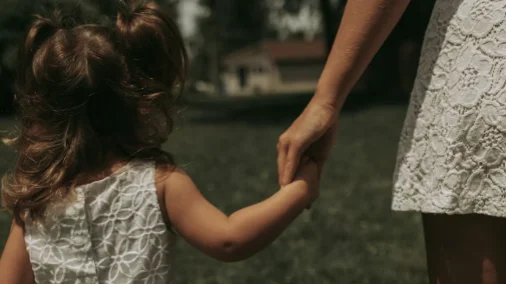
I have a recording from a few months after I started. I was sitting in my parked car after work, and I’d just picked my daughter up from daycare, and I was describing — to no one in particular, to future me — the way she’d grabbed my hand walking to the car. Not dramatically. Just the specific texture of it. Her hand in mine, her commentary on everything she saw, the way she stopped without warning to look at a pigeon.
When I listen to that recording now, I’m back in the parking lot. I can feel the temperature of that afternoon. The quality of the moment isn’t reconstructed — it’s there, in my voice, in the way I’m talking. Memory research suggests this is because episodic memories are highly associated with the emotional and sensory context in which they were formed. Audio preserves more of that context than text does.
This is distinct from what photographs can do, and distinct from what writing can do. It’s its own kind of record.
I explored this more in Why Listening Back to Your Own Voice Is the Most Underrated Self-Improvement Habit, which looks at the broader phenomenon of what happens when you hear yourself from the past. It’s a strange and affecting experience, and it does something to you that reading your own words doesn’t quite replicate.
The First Six Months of Documenting Her Third Year
I started voice journaling when my daughter was two years and eight months old. She’s now three and a half. I have, in that nine-month span, more records of her than I have from her entire first two years combined — and I was present for all of it, paying attention, taking photos.
The difference is in the ordinary moments.
I have a recording of the first time she used the word “actually” correctly in a sentence. I have one of the week she became obsessed with caterpillars and had something to say about every one she saw. I have a recording from the evening she cried because she didn’t want the day to end — genuinely, philosophically sad about time — and I was so startled by the sophistication of it that I sat in the car for ten minutes after bedtime just capturing the whole conversation.
These are things I would have lost. I know I would have, because I lost the equivalent things from before I started.
The compound effect
Something else happened that I didn’t anticipate: the recordings started to compound. Not in a dramatic way, but in the way that regular small deposits in a savings account eventually become something.
What I have now, after nine months of imperfect, inconsistent voice journaling, is a portrait. Not a complete one. Not a curated one. A real one — with gaps, and ordinary Tuesdays, and the stretches where I was too tired to record more than thirty seconds. A portrait of a child growing up, and a parent trying to catch as much of it as possible before it moved on.
This is what I mean by life documentation. Not a project, not an archive, not something you build. Something you accumulate, a little at a time, over the days of an actual life. I Started Documenting My Life at 34. I Wish I’d Started Sooner. is the piece where I sit with the bittersweetness of this — the wish that I’d started when she was born, the gratitude that I started when I did.
What I Learned About Attention
There’s a second thing that happened when I started voice journaling that I didn’t expect, and it matters more than the archive.
I started paying better attention during the day.
Not dramatically. Not in a mindfulness-retreat kind of way. But in a small, practical way — knowing that I was going to record something about the day later made me slightly more likely to notice things during the day. To catch the moment before it slipped past. To hear my daughter say something and think, I want to remember that, and then actually hold onto it.
The practice of capture improved the practice of attention. They fed each other.
This is one of the less-discussed benefits of any kind of journaling — that the act of reflection changes how you experience life in real time, not just how you process it afterward. Three Minutes a Day Changed How I Talk to Myself gets into the self-reflection side of this, and What Six Months of Voice Journaling Actually Looks Like tracks the way this change happened gradually over my first six months.
The parenting version of this is specific and a little hard to articulate. Being a working parent means you’re often physically present but mentally elsewhere — thinking about the email you need to send, the thing you forgot to do, the plan for tomorrow. Voice journaling didn’t solve this. But it did give me a small daily reason to practice being actually there, noticing what was happening, noting what I wanted to remember.
That’s not nothing. In fact, I think it might be the most valuable thing the whole practice gave me.
What I’d Say to the Parent Who’s Already Lost Things
If you’re reading this and you’re feeling the pang I felt at that kitchen table — the recognition that you can’t quite retrieve something you were sure was safe — I want to say something directly.
You haven’t failed. Memory loss isn’t negligence. It’s physiology. The human brain isn’t built to retain the granular detail of ordinary days, no matter how much those days matter to you. You were doing the best you could with the cognitive equipment you have, same as everyone else.
What you can do now is start. Not to compensate for what’s gone — that’s not quite within reach, and grieving it is appropriate and valid. But to start catching what’s still happening. Today, and the ordinary days that follow it.
The bar for starting is lower than you think. One recording, sixty seconds, on your way to pick them up or after they’re in bed. One observation about today that you don’t want to lose. That’s all it takes to begin a record of what’s still in front of you.
I Tried to Keep a Journal for Years. Then I Started Talking Instead. is where I talk about how I actually made this transition — the practical side of switching from written to voice. And if you’re a working parent trying to fit documentation into a life that doesn’t leave much margin, The Working Parent’s Guide to Not Losing Yourself is written specifically for that.
Start now. Start small. Start imperfectly.
Common Questions About Memory and Life Documentation
Is it normal to forget major milestones like a child’s first word?
More common than most parents want to admit. Milestone memories are vulnerable to the same forgetting curve as any other memory — particularly for events that happened during the physically and emotionally demanding early years of parenting, when sleep deprivation and stress impair memory consolidation. Research on parent recall of infant milestones consistently shows significant inaccuracies even when memories feel certain. This is not a failure of love or attention. It’s human neuroscience.
Do voice recordings actually help preserve memories better than photos?
They preserve different things. Photos capture visual details of a moment — faces, places, expressions. Voice recordings capture the temporal and emotional texture — what was said, how it sounded, the emotional atmosphere of the moment. For preserving the felt quality of an experience, audio has significant advantages. Many people find that listening to an old voice recording transports them more vividly than looking at a photograph, because the auditory cues engage memory in a different way.
How do you organize voice journal recordings so you can find things later?
I keep a simple monthly folder structure in a dedicated app, and I tag recordings with a few keywords when something important happened — a specific milestone, a name, a place. For everyday entries, I don’t over-organize. The date and duration are usually enough to find something when I’m looking. The key is choosing a system simple enough that organizing doesn’t become a barrier to recording.
When is the best time to start documenting your child’s life?
The honest answer is: as early as possible, because you’ve already started forgetting. But “the best time to start is now” isn’t a platitude — it’s accurate. The child in front of you today will be different in six months. The version of them that exists right now is still worth catching. Starting late is meaningfully better than not starting.
How much do you need to record to make it worthwhile?
Less than you think. Even one thirty-second entry every few days, over a year, is hundreds of small windows into a period of life. The density doesn’t need to be high for the archive to become valuable. What matters more than frequency is specificity — a brief recording with a concrete detail is worth more than a vague longer one.
Does voice journaling work for documenting adult life too, or is it mainly for parents?
It works for any life. The parenting context is where it became urgent for me — the pace of change in young children is fast enough to make forgetting visceral. But adult life changes too, just more slowly. The self you are at 34 is different from the self you’ll be at 40, and the details of the years between are worth keeping. I Started Documenting My Life at 34. I Wish I’d Started Sooner. makes this case more fully for the non-parent reader.
What if the recordings make you sad — is it worth revisiting them?
Some recordings are sad, yes. Listening back to a period that was hard, or hearing the voice of a younger version of your child, can be emotionally difficult. This is real, and it’s worth knowing going in. Most people who continue the practice find that the sadness is the appropriate response to the passage of time, and that having the record is ultimately better than not having it. The recordings don’t cause the loss — they just make the loss visible. What they also make visible is everything that was there, which is its own kind of comfort.
The Word
We never figured it out definitively. My husband still thinks it was “more.” I’ve half-convinced myself it was “hi” — she used to wave at everyone, at everything, with complete democratic enthusiasm.
I’ll probably never know for certain. That particular retrieval is, I think, beyond reach now.
But I know what she said last Tuesday, and the Tuesday before that, and the specific funny way she currently pronounces “spaghetti” that she’ll have grown out of in a few months. I know the exact phrase she used last week when she was trying to explain why she needed a biscuit before dinner. I know the way she says my name when she’s looking for me in a room she thinks is empty.
I have it. Not all of it — never all of it. But more than I had before. And the accumulation of more, over months and years, is what becomes a record of a life.
Start wherever you are. Start today.
This section contains affiliate links.
Go Deeper
You've been thinking about this long enough.
Ten seconds. Your voice. That's all it takes.
Inner Dispatch turns a single daily recording into something you can actually see - a living reflection of where you've been.
Start free. No writing required. →