
5 Ways to Use Inner Dispatch You Might Not Have Tried
Beyond the daily check-in: five unexpected ways to get more out of your Inner Dispatch recordings — from emotional pattern tracking to pre-decision voice notes.
Beyond the daily check-in: five unexpected ways to get more out of your Inner Dispatch recordings — from emotional pattern tracking to pre-decision voice notes.

Inner Dispatch's free plan handles daily recording perfectly. The Memory Plan is for a different moment entirely — when a milestone arrives and you want to hear what you've been carrying.
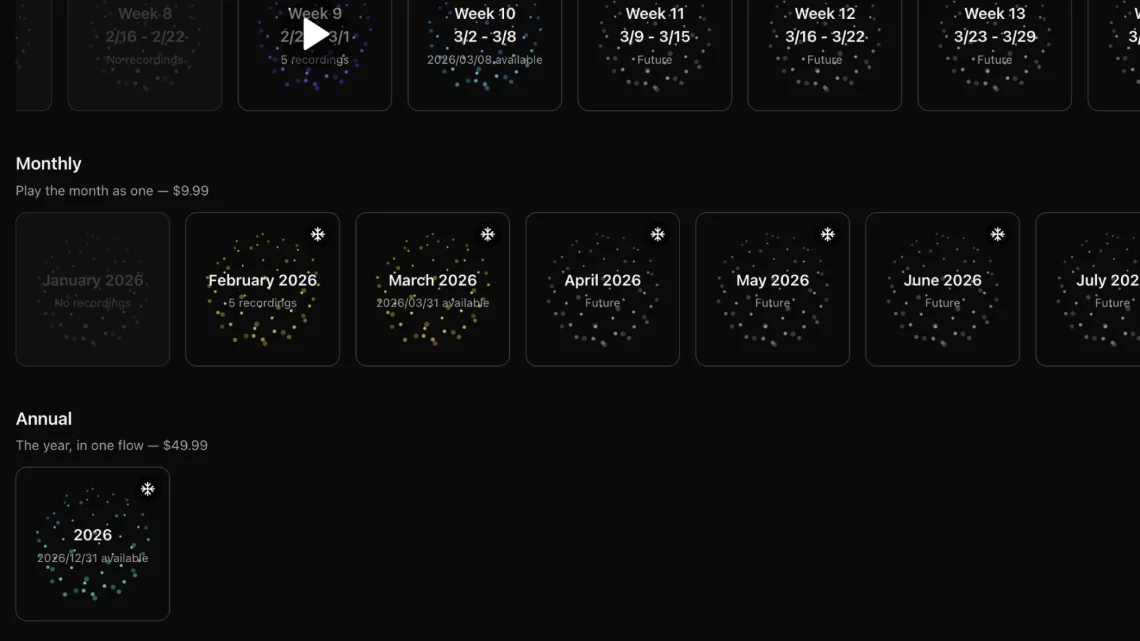
A year-end review doesn't have to start from scratch. If you've been recording daily, the raw material is already there — in your own voice, from the inside.

Not because my life before 34 wasn't worth keeping. Because it was, and most of it is gone. Here's what I've learned about memory, time, and why the ordinary days are worth more than we treat them.

Everyone talks about the recording. Nobody talks about the listening. Here's what actually happens when you hear your own voice from six months ago — and why it changes things in ways that writing can't replicate.

I started voice journaling to document the past. Then I started speaking my goals out loud — and something shifted about how real they felt, and how likely I was to move toward them.

I thought I was just tired. Then I listened back to three months of voice journal recordings and heard something I hadn't been able to see from the inside. This is what it taught me about paying attention to yourself.

I didn't start voice journaling to improve my self-talk. But somewhere in the second year, I noticed the voice in my head had gotten kinder. Here's what I think happened.

I'd tried to build ambitious habits and failed. Then I tried the smallest possible version — so small it felt embarrassing. That one stuck. Here's what I learned about why.
I used to think consistency was the whole game. Then I kept failing at it. The shift that actually made my habits last had nothing to do with discipline — and everything to do with how I treated the gaps.

A 30-day habit challenge can build a real habit or collapse after week one. Here's the template that works — with the setup, structure, and recovery protocols that make it stick.

James Clear's Atomic Habits changed how millions of people think about behavior change. Here are the core ideas — and how to actually apply them to your daily life.

A legacy isn't built by accident. Here's how to think about what you want to leave behind — and the small, deliberate practices that make it possible.

The complete guide to daily mental wellness practices—evidence-based habits for emotional regulation, self-awareness, and resilience that fit into real life.

Digital scrapbooks look beautiful and fall apart. Voice archives sound rough and endure. Here's an honest comparison of two approaches to preserving your life.

What you do in the hour before bed shapes how well you sleep and how well the next day begins. Here's what actually works — and why.

Gratitude journaling is everywhere — but does it actually work? An honest look at the research, the limits, and when it helps versus when it doesn't.

If gratitude journaling feels forced or hollow, you're not doing it wrong — the standard advice is. Here's what the research actually supports, stripped of the hype.

Habit stacking is one of the most research-supported techniques for building new behaviors. Here's how it works, why it works, and how to design stacks that actually hold.

There are dozens of habit tracking apps. Most add more complexity than they remove. Here's an honest comparison of what works, what doesn't, and how to choose.

Habits don't start with motivation — they start with triggers. Here's how to identify, design, and use cues to make new behaviors happen reliably.

Mental health isn't just the absence of crisis. Here are the daily habits with solid evidence behind them — and how to build them when you're not feeling your best.
The 21-day rule is a myth. Here's what the research actually shows about how long habit formation takes — and what that means for building practices that stick.

The most significant changes in your life won't come from a single dramatic decision. Here's why small daily actions compound — and how to work with that reality.
Self-awareness is a learnable skill, not a personality trait. Here's what the research says and exactly how to build it — no therapist required.

Learn how to break a bad habit for good using behavioral science—what actually works, why willpower alone fails, and the specific strategies that produce lasting change.
A science-backed guide to building daily habits that last — covering the psychology of habit formation, why most habits fail, and the specific techniques that actually work.
A journaling streak sounds motivating until the first missed day. Here's how to build one that actually lasts — using habit science, not willpower.

A personal time archive captures the texture of your life as it happens—here's how to build one in five minutes a day using voice, text, or both.
Willpower runs out. Learn the psychology-based approach to building consistency that works even when motivation is low — using environment, identity, and systems.
Learn how to build emotional resilience daily with evidence-based practices that strengthen your capacity to recover, adapt, and stay grounded under pressure.
Most advice says focus on one habit at a time. Here's a more honest look at when that's right, when it's not, and how to manage multiple habits when you need to.
A personal life archive captures who you were, not just what you did. Here's a practical system for building one — without the overwhelm of trying to document everything.
Learn how to create meaning from your personal archive—turn old journal entries, photos, and recordings into insight, identity, and a life story worth telling.
A simple 5-minute daily mental health check-in practice that builds self-awareness, catches problems early, and takes less time than you think.

A complete guide to documenting your life — covering what to capture, how to capture it, and how to build a system that preserves memories without becoming a second job.

When everything feels like too much, a daily reset practice can interrupt the overwhelm cycle—simple, evidence-based steps that work in under ten minutes.

Breaking a habit doesn't mean starting over. Here's how to restart any habit effectively — without the shame spiral that usually makes the gap permanent.
The secret to daily journaling isn't discipline — it's having reliable sources of material. Here's how to never face the blank page again, even on your most ordinary days.

Learn how to journal for mental health with a simple daily method that actually works. Evidence-based techniques that take 5-10 minutes and build over time.

Depression makes journaling hard — the blank page, the heaviness, the lack of words. Here's how to adapt the practice when you're in a difficult period, and when to seek more support.

Listening to your own voice recordings can feel unbearable. Here's why that happens and how to actually get the value from old voice journal entries.
A personal year in review isn't about measuring what you achieved. It's about seeing your year honestly — and finding what was actually there. Here's how to do it well.
The goal of habit formation isn't doing something every day — it's making it happen without thinking. Here's how to actually reach automaticity, faster.
You've recorded. Now what? Here's how to organize months or years of voice recordings into an archive you can actually navigate and return to.
Difficult emotions don't have to derail you. Here's a practical, research-based approach to processing what you feel as it's happening — without suppressing or being overwhelmed.

Practical daily practices to remember your life better—capture moments, preserve memories, and build a personal archive you'll actually use.
The gap is behind you. Here's how to restart a habit you've abandoned — without the guilt, the dramatic re-commitment, or the same mistakes that ended it the first time.
Tracking your emotional wellbeing doesn't require an app with 47 sliders. Here's a simple daily practice that reveals patterns you can't see from inside any single day.
Automatic transcription turns your voice journal into searchable, shareable text. Here's how to do it — the tools, the process, and what to do with the results.

Learn how to use voice journaling for self-reflection that actually deepens self-knowledge. Practical techniques, prompts, and approaches that go beyond venting.

Voice journaling together creates a different kind of intimacy than most couples experience. Here's how to do it, what it reveals, and how to navigate what comes up.
Most habits focus on outcomes. Identity-based habits focus on who you're becoming. Here's why the distinction matters and how to use it in practice.
Most goal-setting fails not because people lack commitment, but because the goals aren't grounded in honest self-knowledge. Here's how journaling changes that.
Journaling and therapy can look similar from the outside. Inside, they're doing different things. Here's an honest account of what each provides — and when you need which.
Discover what keystone habits are and why changing just one behavior can trigger a cascade of positive change across your entire life.
Photos, journals, voice recordings, video, letters — each preserves different things about a life. Here's how the main methods compare and how to choose.
Can't meditate? These evidence-based mental wellness practices work just as well—no sitting still, no clearing your mind, no meditation cushion required.
Eye-rolling at wellness culture? These evidence-based mental wellness practices are designed for skeptics—no crystals, no affirmations, no woo. Just what works.
Micro habits are the smallest possible version of a behavior — and research shows they work better than ambitious commitments. The science, the design steps, and real examples.
If sitting meditation doesn't work for you, you're not out of options. Here are evidence-based ways to build mindfulness into your life without ever sitting on a cushion.
Does mood tracking actually improve mental health? An honest look at what the research says—the real benefits, the real risks, and how to do it in a way that helps.
Morning pages or evening reflection — an honest comparison across time commitment, psychological benefits, sleep, and habit consistency. Includes a decision framework to find your fit.

Self-reflection doesn't require a journal, a quiet hour, or a therapist. 12 exercises under 5 minutes that actually produce insight — with format notes, timing guidance, and a rotation system.

Reading old journals can be uncomfortable, revealing, and deeply useful. Here's an honest look at when to do it, how to approach it, and what to expect.
The most effective self-improvement habits aren't the most demanding ones. Here's a practical guide to small daily practices that compound into real change — starting today.
Accountability partners, public commitments, community — these work, sometimes. Here's an honest look at when social accountability helps habits and when it quietly undermines them.
Stream of consciousness journaling sounds simple — just write what comes. Here's how to actually do it well, when it works best, and when to try something else.
What does science actually say about the benefits of journaling? A clear-eyed look at the research on mental health, cognition, physical health, and self-knowledge.
A honest look at the apps that actually support daily emotional check-ins — what each does well, where they fall short, and how to choose the right one for you.
From voice archives to photo books to digital journals — here are the apps that actually help you document your life, with honest assessments of what each does well.
Discover the best daily mental health check-in methods that actually work. Compare 7 proven techniques to find the right fit for your life and schedule.
Apps, paper journals, streak calendars — which habit tracking method actually works best? An honest comparison to help you find the right fit for how you think.
Talking to yourself isn't a sign of eccentricity—the research on self-talk reveals it's one of the most powerful tools for thinking, emotional regulation, and self-knowledge.
Self-awareness and self-obsession look similar but produce opposite results. Here's how to tell which one you're practicing—and how to cultivate the right kind.
Why does speaking something aloud feel so different from writing it? Explore the psychology of why voicing emotions carries a weight that written words rarely do.
The cue-routine-reward loop explains how habits form and why they're so hard to break. A deep look at the framework, the neuroscience behind it, and how to actually use it to build and change habits.

Science reveals why nostalgia is one of the most powerful tools for wellbeing — and how deliberately revisiting your past can improve your present.
Rumination and reflection both involve thinking about yourself—but research shows they produce opposite outcomes. Here's what distinguishes them and why it matters.
Willpower gets the credit, but environment does most of the work. Here's how your surroundings shape your habits — and how to design them intentionally.
What does research actually say about voice journaling and mental health? Explore the psychology, neuroscience, and evidence behind speaking your thoughts aloud.
Why does naming your feelings actually help? The neuroscience of emotional labeling—what happens in the brain when you put feelings into words, and how to use it.
What does behavioral science actually say about how habits form? The real research on habit loops, timelines, context, and why most habits fail — and how to fix them.
What neuroscience actually knows about how memory works, why we forget, and what the research says about preserving what matters most.
Explore the science of self-awareness—what research says it actually is, how it develops in the brain, and evidence-based practices that genuinely strengthen it.

Can speaking your thoughts out loud actually reduce anxiety? Here's what the research says about voice journaling for anxiety — and how to use it effectively.

50+ voice journaling prompts organized by mood — from anxious to grateful, stuck to overwhelmed. Find the right prompt for how you actually feel right now.
Discover the neuroscience behind voice recordings as memory anchors—why your own voice captures and preserves experiences better than text or photos.

What does behavioral research actually say about daily reflection? A clear look at the science—what the evidence supports, what it doesn't, and what works.

Your photos, voice recordings, and social media exist in a legal and technical gray zone after death. Here's what actually happens — and how to prepare.
A daily intentions practice is one of the simplest mental wellness habits you can build. Here's what it is, why it works, and how to start one today.

What is emotional regulation? Learn what it means, how it works in the brain, why it matters for mental wellness, and practical strategies to strengthen it.

Reflective journaling is one of the most studied journaling methods — and one of the most misunderstood. Here's what it actually is, how it differs from other journaling types, and how to do it.

Self-reflection is more than thinking about yourself — it's a specific practice with measurable effects. Here's what it actually is and why it's worth building.

Motivation always disappears eventually. The habits that survive aren't the ones built on motivation — they're the ones built for when it's gone. Here's how.
Voice journaling reveals what writing hides. Discover the surprising psychology behind why your spoken words capture more truth than anything you put on paper.

The two-week drop-off isn't a willpower problem — it's a predictable pattern with specific causes. Here's what's actually happening when habits collapse, and how to get past it.
Streaks are one of the most popular habit tools — and one of the most misused. Here's an honest look at what they actually do, when they help, and when they get in the way.

Quit journaling more than once? The problem probably isn't you — it's the design. Here's an honest diagnosis of why journaling habits fail and what actually fixes each one.