
Simple Self-Improvement Habits You Can Start in Under 5 Minutes
The self-improvement industry has a scale problem. It consistently presents the most ambitious version of every practice as the correct version, which means most of its advice is structurally inaccessible to anyone living a full life.
Meditate for twenty minutes. Journal for thirty. Exercise for an hour. Read for forty-five minutes before bed. Develop a morning routine that begins at 5am. Build these habits simultaneously and maintain them indefinitely.
The people this advice actually works for are already predisposed to intensive self-directed effort and have the schedule flexibility to accommodate it. For everyone else — which is most people — the advice produces a familiar cycle: ambitious beginning, initial success, inevitable disruption, collapse, conclusion that self-improvement isn’t for people like them.
The conclusion is wrong. The premise is wrong. The practices themselves are right.
What the research consistently shows is that the mechanism behind effective self-improvement practices is not the duration or intensity of any single session. It’s repetition over time — the compound effect of small consistent actions accumulating into changed neural patterns, shifted perspectives, and gradually developing capacity. A two-minute daily practice, maintained for a year, produces more of this compound effect than a thirty-minute practice done twice a month.
This guide covers the specific habits that produce real self-improvement at the scale that real life can actually accommodate. Not the abbreviated versions of ambitious practices, but the legitimate minimum viable forms that produce genuine results when done consistently. Each takes under five minutes. Each has meaningful research support. Each can be started today, without equipment, planning, or ideal circumstances.
The Science of Small Habits
Before getting into specific practices, it’s worth understanding why small habits work — because the answer is counterintuitive enough that most people don’t fully believe it until they’ve experienced it.
Repetition Beats Duration
Habit formation research, particularly Phillippa Lally’s work at University College London, establishes that behavioral automaticity develops primarily through repetition — the number of times a behavior is performed in a consistent context — rather than through the duration or intensity of individual sessions. A behavior performed daily for sixty-six days (the median in Lally’s data) reaches automaticity regardless of whether each session lasts two minutes or twenty.
This means the primary variable that determines whether a habit gets encoded is frequency, and the primary variable that determines frequency is the size of the activation threshold — how much effort it takes to begin. A five-minute habit has a low activation threshold that can be cleared on the worst day of the week. A thirty-minute habit has a high threshold that fails whenever conditions aren’t favorable.
Lower threshold means higher frequency means more encoding means genuine habit. The five-minute version often produces stronger long-term habit formation than the thirty-minute version, precisely because it happens more consistently.
Compound Effects Are Invisible Until They’re Not
Small habits don’t produce dramatic short-term results. A two-minute reflection practice doesn’t transform your self-awareness in a week. A brief daily reading habit doesn’t make you significantly more knowledgeable in a month. This invisibility of short-term results is what makes small habits feel insufficient and what causes many people to abandon them before the compound effect has had time to operate.
The compound effect of small consistent habits typically becomes perceptible around three to six months and significant at twelve to twenty-four months. Before that threshold, the changes are real but subtle — the kind that other people notice before you do, or that you notice only when looking back at where you were six months ago.
This is the patience problem that most self-improvement advice doesn’t adequately address: the gap between when the habit begins and when its effects become obvious is long enough that most people conclude the habit isn’t working rather than waiting for the compound effect to become visible.
Identity Follows Behavior
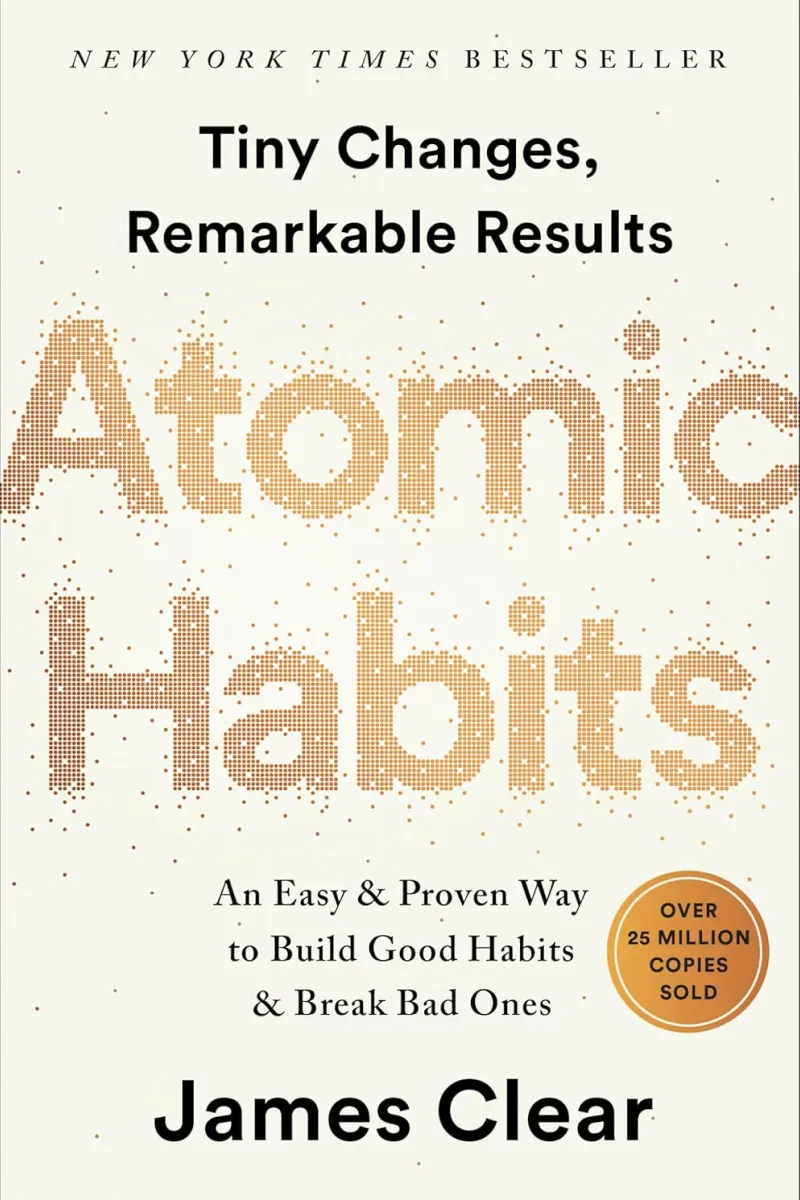
James Clear’s identity-based habit framework offers the most practically useful framing for why small habits matter. Every time you perform a habit — even the minimum viable version — you cast a vote for a particular identity. The person who spends two minutes each morning reflecting on what matters votes, repeatedly, for the identity of “someone who reflects.” Over months, these votes accumulate into a genuine shift in self-image, which makes the behavior easier to sustain and to extend.
The small habit doesn’t just produce its direct effects. It builds the identity that makes larger change possible.
The Habits
1. The One-Sentence Daily Record (1–2 minutes)
Write or speak one honest sentence about your day — not a summary, not a reflection, just the most true thing about the current moment. One sentence.
This is the minimum viable journaling practice, and it produces real effects at this scale. The act of articulating your experience — even briefly — activates the brain’s prefrontal cortex in ways that processing experience without articulation doesn’t. Research on expressive writing, pioneered by James Pennebaker, shows that even brief written self-disclosure improves emotional processing and reduces the cognitive load of carrying unexamined experience.
One sentence forces a decision: what is the most honest thing about today? That decision is itself a form of self-awareness, practiced daily, that gradually improves your ability to know what you’re actually feeling and thinking rather than what you think you should be feeling and thinking.
For voice specifically: speaking one honest sentence into a voice journal requires under sixty seconds and captures something written sentences don’t — your actual voice, with its emotional texture, at a specific moment in time. The thirty-second voice entry is a legitimate daily record, and it compounds across months into an archive of genuine self-knowledge.
How to start: Choose an anchor — after your morning coffee, during your commute, before sleep. When the anchor fires, produce one sentence. Written or spoken, honest rather than polished.
2. The Two-Minute Morning Intention (2 minutes)
Before the day’s demands begin — before email, before news, before the reactive mode that most mornings become — spend two minutes setting a single intention for the day.
Not a to-do list. Not goals. One sentence that captures what you want to be oriented toward today. Today I want to be more patient in the moments when I’m tempted not to be. Today I want to notice when I’m actually enjoying something rather than just getting through it. Today I want to finish one thing completely before starting another.
The morning intention practice works through what psychologists call prospective cognition — deliberate thinking about future behavior that primes the attention and decision-making systems to notice relevant opportunities. People who set specific daily intentions show better follow-through on those intentions than people who rely on general commitment, because the intention creates a mental template that the day’s events are matched against.
Two minutes is enough. One specific intention, genuinely considered, is enough. The practice doesn’t need to be elaborate to work; it needs to be honest and consistent.
How to start: Keep something to write or speak into at the place where your day begins — the kitchen table, the desk, the car. Before opening email or social media, produce one intention sentence.
3. The Three-Breath Reset (1 minute)
At any transition point in the day — between tasks, between meetings, between one context and another — take three slow, deliberate breaths before beginning the next thing.
This practice sounds almost absurdly simple. The research behind it is not. Deliberate slow breathing activates the parasympathetic nervous system, reducing the physiological stress response that accumulates across a day of reactive, cognitively demanding activity. The effect is measurable in heart rate variability within seconds and in cortisol levels across the day when the practice is used consistently.
The three-breath reset is also a micro mindfulness practice: the deliberate direction of attention to a physical sensation (the breath) for a brief period interrupts the automatic continuation of the previous mental state into the next activity. You’re not carrying the residue of the last meeting into the next conversation, or the frustration of one task into the next one.
Used at five transition points across a workday, the three-breath reset takes under five minutes total and produces a measurably different end-of-day physiological and psychological state than the same day without it.
How to start: Choose three specific transition moments — after sitting down at your desk, after lunch, after finishing a work session. At each, three slow breaths before beginning what’s next.
4. The Gratitude Specificity Practice (2–3 minutes)
Gratitude practices have accumulated strong research support for improving wellbeing, sleep, relationship satisfaction, and resilience. They’ve also accumulated a reputation for producing generic, rote responses: “I’m grateful for my health, my family, and my home.” This version doesn’t produce the benefits the research finds — because the research consistently finds that the mechanism is specificity, not acknowledgment.
The specificity practice: identify one thing from the past twenty-four hours that you’re genuinely grateful for, in enough specific detail that a stranger could picture it. Not “I’m grateful for my friend” but “I’m grateful for the specific thing she said when I told her what was happening — the way she didn’t try to fix it but just stayed in it with me.” Not “I’m grateful for my health” but “I’m grateful that I could walk to the coffee shop this morning without thinking about it, which is something I sometimes forget to notice.”
This level of specificity does several things. It requires actually paying attention to what happened rather than generating a standard list. It creates a moment of genuine positive emotion rather than a procedural acknowledgment. And it trains the attention, over time, to notice specific good things in daily life — which is the actual mechanism behind gratitude’s effect on wellbeing.
Three minutes, one specific thing, daily. That’s the practice.
How to start: At a consistent time — morning or evening — produce one specific gratitude observation. Speak it into a voice journal or write it down. The act of articulation is part of what produces the effect.
5. The End-of-Day Completion (2 minutes)
Before leaving a work context — closing a laptop, leaving an office, transitioning out of work mode — spend two minutes completing the day’s mental loop.
The completion practice has two parts. First: what’s the most significant thing that happened today, in one sentence? Second: what’s the single most important thing for tomorrow?
The first question creates what psychologists call an “encoding event” — a deliberate act of meaning-making that strengthens the memory of the day’s significant events before sleep consolidation processes them. Experiences that are articulated before sleep are better remembered than experiences that pass directly into sleep without deliberate processing.
The second question uses what’s called the Zeigarnik effect in reverse: unfinished tasks create persistent cognitive activation that interferes with rest and recovery. Writing down the single most important thing for tomorrow completes the open loop — it tells the brain that tomorrow’s primary task is decided and stored externally, which reduces the low-level planning activity that prevents genuine mental downtime.
Two minutes, two questions, consistently applied, produces meaningfully better memory of your work and meaningfully better rest after it.
How to start: As you close your laptop or transition out of work mode, answer the two questions in writing or voice. The anchor is the closing of the work context.
6. The Weekly Reflection Question (3–5 minutes)
Once a week, ask yourself one substantive question about your life and sit with it long enough to produce an honest answer. Not a journal prompt in the generic sense — a question with enough weight that the answer requires actual thought.
Some questions that reliably produce useful material:
What am I consistently avoiding, and is that avoidance serving me? Where did I show up well this week, and where did I fall short of what I care about? What’s the most important thing I’m not saying to someone I should say it to? What am I pretending not to know? What would I do differently this week if I were being fully honest with myself?
These questions are uncomfortable in proportion to their usefulness. The discomfort is the signal that the question is accessing something real rather than producing a rehearsed answer.
Five minutes, once a week, is enough. The answer doesn’t need to be long or resolved. It needs to be honest, which is harder and more valuable than length.
How to start: Choose a consistent weekly moment — Sunday evening, Friday afternoon, the first morning of the week. One question, five minutes, whatever answer comes honestly.
7. The Learning Capture (2 minutes)
When you encounter something — in reading, conversation, work, or experience — that shifts your thinking or that you want to remember, capture it immediately in two sentences: what you learned and why it matters.
This is not note-taking in the comprehensive sense. It’s the minimum viable capture of a thought worth keeping: the idea from the article that reframed something, the thing a colleague said that was more useful than they probably knew, the observation you made during a difficult situation that you don’t want to lose.
The two-sentence format forces compression: what specifically was the learning, and why specifically does it matter? This compression requires more processing than simply copying a quote, which means the captured idea is better encoded and more likely to be integrated into your actual thinking.
Across a month of consistent learning captures, you accumulate a personal knowledge base of ideas that have actually shifted your thinking — which is a more useful resource than a full reading list or a comprehensive set of notes from things that passed through your attention without leaving a mark.
How to start: Keep a dedicated place for learning captures — a notebook, a voice memo folder, a simple document. When something genuinely shifts your thinking, stop and produce the two sentences before moving on.
8. The Body Check-In (1–2 minutes)
Once a day, direct your attention to your physical body and notice what’s there — without trying to change it.
Where are you holding tension? What is your energy level, described physically rather than conceptually? What does your breath feel like right now? Is there anything your body is doing that you haven’t noticed yet today?
The body check-in is a micro mindfulness practice with a specific function: reconnecting the cognitive mind with the physical body that carries it, which is routinely ignored during cognitively demanding work. Research on embodied cognition shows that physical states influence cognitive and emotional states substantially, and that people who attend to physical states more regularly show better emotional regulation and self-awareness than those who don’t.
For journaling and reflection practices specifically, the body check-in is often the fastest route through writer’s block and the blank-page problem. Speaking or writing what you notice physically — without interpretation — frequently opens a path to what’s happening emotionally, which is often exactly what the reflection session needed to access.
How to start: Attach the body check-in to an existing daily transition — sitting down with morning coffee, transitioning into lunch, lying down at night. Direct attention to physical sensation for sixty to ninety seconds without trying to fix anything.
9. The Connection Moment (2–3 minutes)
Once a day, make brief, genuine contact with another person — not functional communication about logistics, but actual human connection.
A message to someone telling them specifically why you appreciate them. A brief conversation that doesn’t have an agenda. A question asked with genuine curiosity rather than as social lubricant. A moment of real attention given to someone who’s speaking to you.
Research on social connection and wellbeing is among the most consistent in psychology: the quality and frequency of genuine human connection is one of the strongest predictors of life satisfaction, mental health, and longevity. The connection moment is the minimum viable practice for maintaining this — a daily commitment to at least one instance of genuine rather than functional human contact.
Two to three minutes is enough for a meaningful message or a brief genuine exchange. The constraint isn’t time; it’s deliberateness. The connection moment is deliberately chosen rather than incidentally occurring.
How to start: Choose a consistent daily moment — morning, lunchtime, or evening. Identify one person. Make one genuine contact. It doesn’t need to be elaborate; it needs to be real.
10. The Difficult-Thing-First Habit (Variable, setup: 2 minutes)
Each morning, identify the one task or action you’re most avoiding and commit to beginning it before anything else.
This practice — sometimes called “eating the frog,” after a commonly attributed Mark Twain aphorism — is one of the most consistently supported techniques in productivity and self-improvement research. The mechanism is straightforward: tasks we’re avoiding occupy persistent cognitive resources (the Zeigarnik effect), generate low-level anxiety throughout the day, and become larger in imagination the longer they’re deferred. Beginning them first removes the cognitive load, often reveals that the task was less difficult than anticipated, and produces a disproportionate sense of agency over the day that follows.
The setup takes two minutes: at the start of the day, identify the one task you’re most avoiding. Name it specifically. Commit to beginning it before email, before routine tasks, before anything that provides easier early-morning wins.
This is not a time management technique in the conventional sense. It’s a self-awareness practice: the thing you’re most avoiding is information about where your energy and resistance are located, which is useful to know regardless of whether you subsequently prioritize it.
How to start: Before opening email or beginning routine morning tasks, ask: what am I most avoiding today? Name it. Begin it. Everything else after.
Building the Stack: Combining Practices Without Overwhelm
Ten practices, each taking under five minutes, collectively take under thirty-five minutes if done sequentially. Most people don’t have thirty-five daily minutes to allocate to a single practice cluster. The solution is integration rather than addition — fitting practices into existing daily structure rather than carving out dedicated time.
Some practices belong in the morning routine, before the day’s reactive mode begins:
- Two-minute morning intention
- Three-breath reset (at the desk before beginning work)
- Difficult-thing-first identification
Some belong in the workday transitions:
- Three-breath reset (between tasks and meetings)
- Learning captures (as they occur)
- Connection moment (during a natural break)
Some belong at day’s end:
- End-of-day completion
- Body check-in
- One-sentence daily record or voice memo
Some belong once a week:
- Weekly reflection question
- Gratitude specificity practice (can also be daily if time allows)
Integrated this way, most of the practices above require no dedicated time block. They occupy transitions that already exist, moments that are otherwise spent on reflexive phone checking, and the brief gaps between activities that accumulate across a day.
The practices that add the most value aren’t necessarily the ones that take the most time. They’re the ones that happen consistently — which is why integration into existing structure is more sustainable than trying to create new dedicated time.
The Starting Protocol
The most common mistake when encountering a list of self-improvement practices is attempting to begin all of them simultaneously. This reliably produces a period of intensive effort followed by total collapse when the combined system becomes too demanding to maintain.
The starting protocol that produces better outcomes:
Week one: Choose one practice from the list — the one that seems most immediately relevant to where you are right now. Practice it daily, at the same time, attached to the same anchor. Nothing else.
Weeks two through four: Continue the first practice. When it feels reasonably established — when it’s happening most days without requiring significant deliberation — add one more. Two practices, both anchored, both happening consistently.
Months two through six: Continue adding practices sequentially, one at a time, each after the previous one has reached reasonable automaticity. The pace is determined by consistency, not by calendar.
This protocol is slower than beginning all ten practices at once. It’s also substantially more likely to produce ten functioning practices at the end of six months rather than zero functioning practices after six weeks of intense effort and collapse.
Self-improvement is not a sprint. The practices that produce the most significant change are the ones that run long enough to compound.
Common Questions About Simple Self-Improvement Habits
Do short practices actually produce real change, or are they just better than nothing?
They produce real change, not just marginal improvement over doing nothing. The research on brief, consistent practices — particularly in mindfulness, gratitude, reflective journaling, and physical movement — consistently shows significant effects from sessions as short as two to five minutes when those sessions are performed daily for two to three months. The mechanism is frequency-dependent neural encoding, which means daily brief sessions produce stronger habit formation and more consistent benefits than longer, less frequent sessions. The qualifier is “consistent”: practices done sporadically produce significantly less effect than the same practices done daily.
What’s the most important practice to start with?
The right starting practice is the one that addresses the most significant gap in your current self-management — which is different for different people. If you rarely reflect on your experience, the one-sentence daily record. If you frequently carry work stress into personal time, the end-of-day completion. If you feel disconnected from your physical state, the body check-in. If you’re consistently avoidant of the most important tasks, the difficult-thing-first habit. Starting where the need is greatest produces faster noticeable effects, which builds the motivation to continue and expand.
How long before I notice a difference?
Most people notice subtle effects within two to four weeks of consistent practice — not dramatic transformation, but a slightly improved ability to notice their own states, a slightly reduced sense of being driven by the day rather than choosing it. More significant effects typically become perceptible at three to six months. The honest answer is that the timeline depends on the specific practices, the consistency of practice, and the baseline you’re starting from. Starting with modest expectations and checking in honestly at the three-month mark is more accurate than expecting specific results on a specific timeline.
What if I miss days?
Miss days. Missing days is part of a long practice, not evidence that the practice has failed. The research on habit formation (Lally’s data specifically) found that missing single days had no significant impact on long-term automaticity development. The practice that matters is returning quickly — same day if possible, next day at the latest — at the minimum viable version, without treating the missed day as requiring recommitment or fresh start. The gap is information about what made the practice difficult; the return is the practice continuing.
Are there self-improvement practices that are genuinely a waste of time?
Some practices that receive significant attention have weak research support for the specific benefits claimed. Cold exposure for mental performance, many popular “biohacking” interventions, and most supplement-based cognitive enhancement approaches have limited evidence for the specific effects their proponents claim. The practices with the strongest, most consistent research support are also the oldest and most unglamorous: sleep quality, physical movement, genuine human connection, deliberate reflection, and attention to mental and physical states. These don’t require expensive equipment or unusual commitment. They require consistency, which is less interesting to market but more substantiated by evidence.
Can these practices replace therapy or professional support?
No. Self-improvement habits are maintenance and enhancement practices for people whose psychological baseline is reasonably functional. They’re not treatments for depression, anxiety disorders, trauma, or other conditions that benefit from professional intervention. If you’re experiencing significant psychological distress — not ordinary difficulty, but persistent and impairing difficulty — self-improvement habits are a supplement to professional support, not a substitute for it.
How do I know if a practice is actually working?
The most reliable signal is behavioral: is the practice happening consistently, and is that consistency producing observable effects on how you’re moving through your days? Subjective wellbeing assessments — how am I feeling about my life, how present do I feel, how reactive versus deliberate am I — are useful but variable. A more stable signal is tracking the practice’s frequency and observing, at the three-month mark, whether there are specific domains of your life that seem qualitatively different than they were before. If yes, the practice is working. If no, evaluate whether the practice is the right fit for your specific situation rather than assuming it needs to be done longer.
The Long View
Self-improvement, in its most honest form, is not about becoming a different person. It’s about becoming more fully the person you already are — more aware of your actual experience, more deliberate in your choices, more consistent in acting in accordance with what you actually value rather than what’s easiest in the moment.
The practices in this guide don’t produce transformation. They produce incremental, compounding change in the direction of the person you’re trying to be — change that’s invisible in any single session and undeniable across a year of consistent practice.
The entry point is as low as it’s ever going to be. One sentence. Two minutes. One breath between tasks. The compound effect builds from whatever you start with, not from whatever you eventually work up to.
Start with the smallest version that’s genuinely yours. Let it run. See what it becomes.
This section contains affiliate links.
Go Deeper
You've been thinking about this long enough.
Ten seconds. Your voice. That's all it takes.
Inner Dispatch turns a single daily recording into something you can actually see - a living reflection of where you've been.
Start free. No writing required. →Related articles

Daily Mental Wellness Practices: An Evidence-Based Guide
The complete guide to daily mental wellness practices—evidence-based habits for emotional regulation, self-awareness, and resilience that fit into real life.
The Best Daily Check-In Methods for Mental Health
Discover the best daily mental health check-in methods that actually work. Compare 7 proven techniques to find the right fit for your life and schedule.

Voice Journaling for Anxiety: Does It Actually Work?
Can speaking your thoughts out loud actually reduce anxiety? Here's what the research says about voice journaling for anxiety — and how to use it effectively.