
12 Self-Reflection Exercises That Take Less Than 5 Minutes
The friction around self-reflection is rarely about motivation. Most people who want to reflect more don’t fail because they don’t care enough. They fail because the version they have in mind requires conditions — time, quiet, a specific mindset, the right journal — that their actual life doesn’t reliably provide.
The version of self-reflection that actually happens fits in the gap between other things. The commute. The two minutes before a meeting. The moment after parking the car.
The 12 exercises below produce genuine insight at five minutes or under — not abbreviated versions of longer practices, but complete self-reflective acts that work because they’re bounded and specific rather than open-ended and demanding.
All 12 Exercises at a Glance
| Exercise | Time | Best For | Format |
|---|---|---|---|
| 1. The Most Honest Sentence | 1 min | Daily check-in | Voice or written |
| 2. The Two-Column Contrast | 3–5 min | Gap between presentation and reality | Written |
| 3. The Voice Replay | 2–3 min | Emotional processing | Voice recording |
| 4. The Resistance Inventory | 3 min | Identifying avoidance | Voice or written |
| 5. The Projection Check | 2–3 min | Understanding reactions to others | Written |
| 6. The Best Moment Capture | 1–2 min | Values clarification | Voice or written |
| 7. The Completion Audit | 3 min | Clearing mental background noise | Written or voice |
| 8. The Reframe Test | 2–3 min | Difficult situations | Written |
| 9. The Body-First Entry | 1–2 min | When you don’t know what to say | Voice or written |
| 10. The Pattern Interrupt Question | 1 min | Breaking automatic reactions | Mental or brief note |
| 11. The Future-Self Letter Opening | 2–3 min | Perspective and context | Written |
| 12. The Day-Before-Death Lens | 3 min | Values and priorities | Voice or written |
Pick one. Try it today. The rest of this article explains each in detail.
What Makes a Reflection Exercise Actually Work
Before the exercises, a brief note on what separates useful self-reflection from the kind that produces a vague feeling of having done something without producing actual insight.
Specificity over generality. “How am I feeling?” produces general answers. “What specifically am I avoiding right now, and what’s the actual cost of avoiding it?” produces specific ones. The more specific the question, the less room for comfortable non-answers.
Articulation over rumination. Thinking about something repeatedly without articulating it produces rumination — a spinning cycle that rarely generates new understanding. Speaking or writing forces structure onto the thought, which is where the insight tends to live. Even speaking aloud into a voice recording activates different processing than silent thinking alone. For why articulation matters neurologically, the science of emotional labeling covers the research behind why naming emotions reduces their intensity.
Closure over completeness. A five-minute reflection doesn’t need to resolve anything. It needs to surface something true and leave it there. The urge to complete — to arrive at a conclusion, to solve the problem the reflection uncovered — is what turns five-minute exercises into hour-long sessions.
The 12 Self-Reflection Exercises
1. The Most Honest Sentence (1 minute)
Complete this sentence without editing: “The most honest thing I could say about today / this week / right now is…”
Let the first thing that comes be the answer, without checking it against what you should say or what sounds reasonable. The first honest sentence is usually more accurate than any subsequent revision.
This works because the constraint — one sentence, most honest — bypasses the editing process that produces careful but less true answers. As a daily practice, the pattern of sentences across weeks reveals something about your underlying state that individual entries don’t.
Format: Spoken into a voice app or written in a notes app. 30 seconds to 1 minute.
2. The Two-Column Contrast (3–5 minutes)
Draw a line down the center of a page. On the left: how I presented today. On the right: how I actually was.
The contrast between public presentation and private reality is where a significant amount of unexamined material lives. Most people spend a portion of every day presenting a version of themselves that differs from what’s actually happening internally — not dishonestly, but because context calls for a certain register. The two-column exercise makes this contrast explicit and examinable.
Format: Written, in a notebook or notes app. 3–5 minutes.
3. The Voice Replay (2–3 minutes)
Speak about your day or a specific experience as if describing it to a trusted friend who asked how things actually are. Not how you’d describe it at dinner — the version you’d tell someone who genuinely wanted to know and would call you on comfortable avoidance.
Speaking aloud captures emotional texture that written language often loses. The hesitation before a specific word, the speed at which certain things get said versus avoided — these carry information that words alone don’t. This is one of the exercises where voice journaling has a clear advantage over writing: the voice itself is data.
Format: Voice recording, private. 2–3 minutes.
4. The Resistance Inventory (3 minutes)
Ask: what am I resisting right now, and why?
Resistance — the low-level friction around tasks, conversations, decisions — is one of the most information-rich signals in daily life. It reliably points toward things that matter and things that feel threatening.
A resistance inventory names what you’re avoiding specifically — not “I’ve been procrastinating” but “I’ve been avoiding this specific conversation with this specific person because of this specific fear.” The specificity is where the information is. The exercise doesn’t require you to stop resisting. It requires you to know what you’re resisting and have a working hypothesis about why.
Format: Voice memo or written. 3 minutes.
5. The Projection Check (2–3 minutes)
Identify the quality or behavior in another person that most bothered or impressed you recently. Ask: where does this quality exist in me?
Strong reactions to other people’s behavior are often partially about what those behaviors activate in us. This isn’t a universal truth — sometimes someone’s behavior is simply problematic on its own terms. But when the projection check reveals something true, it reveals something that would be very difficult to access any other way.
Format: Written or spoken. 2–3 minutes.
6. The Best Moment Capture (1–2 minutes)
Identify the single best moment of the past 24 hours — not the most significant event, but the moment that felt most alive, most like yourself. Then ask: what was it about that moment that made it that?
The quality of the best moment is information about what actually matters to you, as opposed to what you think should matter. Done daily, the pattern of best moments reveals where your actual values live — often different from your stated values. For a structured daily practice built around this kind of capture, the 5-minute journal uses a similar approach.
Format: Spoken or written. 1–2 minutes.
7. The Completion Audit (3 minutes)
Identify one thing — a conversation, a decision, a piece of work, a relationship situation — that feels emotionally incomplete. Not unfinished in the task sense, but unresolved in the sense of still carrying energy.
Ask: what would completion look like, and what’s preventing it?
Incomplete emotional loops generate persistent low-level cognitive load — the mental background hum of things you haven’t dealt with. Naming them doesn’t resolve them, but it makes them explicit rather than implicit, which is the first step toward either addressing them or consciously deciding to leave them open.
Format: Written or voice. 3 minutes.
8. The Reframe Test (2–3 minutes)
Take one situation that’s currently frustrating or troubling you and try three framings:
What’s the worst realistic interpretation of this situation? What’s the most charitable interpretation? What’s the most accurate interpretation I can manage right now?
The reframe test is not positive thinking. The worst realistic interpretation ensures you’re not avoiding uncomfortable truths. The most charitable interpretation counters the negativity bias that makes difficult situations seem more conclusive than they are. The most accurate interpretation synthesizes what the first two reveal.
Format: Written. 2–3 minutes.
9. The Body-First Entry (1–2 minutes)
Before trying to reflect cognitively, describe your physical state: where you’re holding tension, what your energy level feels like in physical terms (heavy, buzzy, flat, restless), what your breath is doing without directing it.
The body is often several steps ahead of conscious awareness when it comes to emotional states. Physical tension in the shoulders may be carrying stress that hasn’t been cognitively registered yet. Describing the physical state, without interpretation, often surfaces the emotional state underneath it.
This exercise is particularly effective as a starting point for any reflection session that isn’t producing material — when you don’t know what to say, starting with what you notice physically often opens the door. For more on this approach, how to voice journal when you have nothing to say uses a similar body-first technique.
Format: Voice or written. 1–2 minutes.
10. The Pattern Interrupt Question (1 minute)
When you notice yourself behaving in a way that feels automatic rather than chosen — reacting before thinking, falling into a familiar dynamic — stop and ask:
If I were designing my response to this situation from scratch, what would I choose?
The pattern interrupt question doesn’t require that you act differently. It requires that you notice the automaticity and briefly imagine the alternative. That noticing — even when it doesn’t produce behavior change in the moment — gradually loosens the grip of automatic patterns by making them visible. For the habit science behind why this works, the habit loop explains how awareness creates the window between cue and automatic response.
Format: Mental, or briefly voiced or written. 1 minute.
11. The Future-Self Letter Opening (2–3 minutes)
Begin a letter to yourself five years from now, but write only the first paragraph — what you want your future self to know about where you are right now, what you’re dealing with, and what you’re hoping for.
The letter format provides a readership — your future self — that is sympathetic but temporally removed. Writing to a future version of yourself requires contextualizing the present, which forces perspective-taking that direct reflection sometimes doesn’t produce. The first paragraph constraint keeps the exercise bounded: you’re saying the most important thing, not everything.
Format: Written. 2–3 minutes.
12. The Day-Before-Death Lens (3 minutes)
Ask: if I knew today was the last full day of my life, what would I wish I’d done more of in recent weeks? What would I be grateful I did?
The memento mori lens is an ancient reflective practice. It’s not morbid — it’s clarifying. The imagined endpoint reveals what actually matters by removing the infinite deferral that most decision-making relies on. The things you would wish you’d done more of are the things most worth doing more of.
Format: Voice or written. 3 minutes.
Building a Rotation
Twelve exercises means a complete rotation takes less than an hour across a month of daily five-minute practice. The value of rotating, rather than using the same exercise daily, is that different exercises access different dimensions of self-knowledge.
A simple rotation approach: choose three exercises that feel most relevant right now and alternate between them for two weeks. After two weeks, swap one out for an exercise you haven’t tried. The rotation stays fresh enough to prevent the rote responses that make familiar exercises less productive.
By time of day:
- Morning: The Most Honest Sentence, The Body-First Entry, The Resistance Inventory
- End of workday: The Completion Audit, The Reframe Test, The Two-Column Contrast
- Evening: The Best Moment Capture, The Future-Self Letter Opening, The Day-Before-Death Lens
- Anytime: The Voice Replay, The Pattern Interrupt Question, The Projection Check
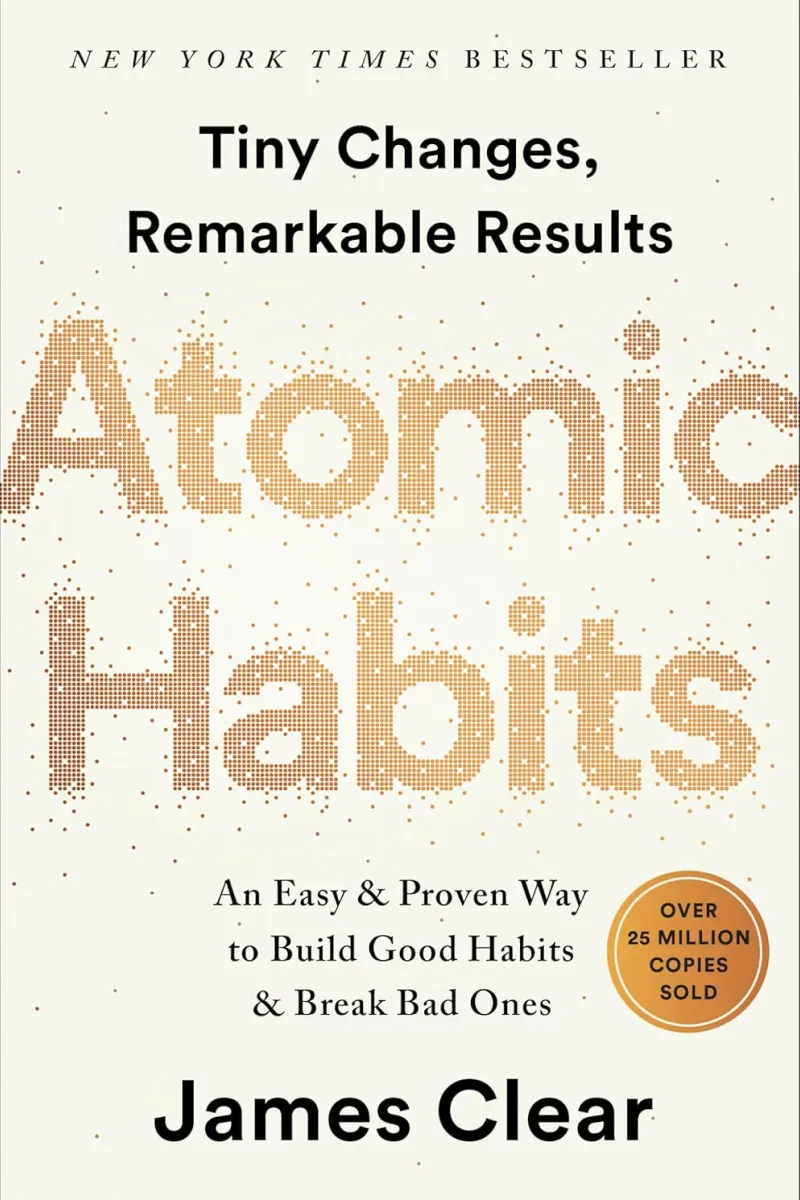
For building any of these into an actual daily habit, self-reflection exercises for under 5 minutes work best when anchored to an existing behavior — the voice replay after parking the car, the best moment capture after brushing teeth at night. For the habit mechanics behind anchoring, micro habits: tiny actions, massive change covers why the anchor approach consistently outperforms reminders and willpower.
The Voice Journaling Advantage for These Exercises
For exercises that benefit from spoken rather than written articulation — the Voice Replay, the Body-First Entry, the Most Honest Sentence, the Resistance Inventory — a voice journaling app removes the friction of the written format and adds something writing can’t provide: the actual sound of your voice at a specific moment.
Listening back to a voice reflection from six months ago is qualitatively different from reading a journal entry from the same period. The voice carries information — hesitation, emotional texture, the specific quality of how you were — that written words don’t encode. For how this works in practice, voice journaling vs. written journaling compares the two formats across emotional capture, depth, and habit consistency.
Common Questions About Self-Reflection Exercises
Why do I often feel worse after self-reflection, not better?
Effective self-reflection surfaces things that were previously below conscious awareness — which sometimes means encountering something uncomfortable. Feeling worse isn’t evidence the reflection didn’t work; it’s often evidence that it did. The distinction worth developing: productive discomfort (encountering something true you needed to see) vs. unproductive distress (rumination that spirals without insight). If reflection consistently produces distress without clarity or movement, it may be worth exploring with professional support rather than solo reflection.
How do I know which exercise to use on a given day?
The exercise that produces the most resistance is often the most useful one. The reframe test you don’t want to do. The honest sentence you’d rather avoid. The exercise that feels most uncomfortable to begin is frequently pointing at something you most need to examine. Starting there rather than choosing the easiest exercise is a reliable heuristic for productive reflection.
Is self-reflection the same as rumination?
No, and the distinction matters. Rumination is repetitive, passive thinking about problems that cycles without producing new understanding. Self-reflection is deliberate, structured examination that aims to produce insight that wasn’t present before. The exercises above prevent the circularity of rumination through specific questions that require specific answers, articulation rather than passive thinking, and bounded time that ends before the session can spiral.
How do I build self-reflection into a daily habit when I keep forgetting?
The most reliable method is anchoring: attach one reflection exercise to an existing automatic daily behavior. The voice replay after parking the car. The body-first entry before the morning coffee is finished. The best moment capture after brushing teeth at night. The anchor provides the trigger without requiring memory or a separate reminder. For the full habit formation mechanics behind this, how to build a daily habit that actually sticks covers why anchor-based habits outperform reminder-based ones.
Can I do these exercises if I’ve never journaled before?
Yes — these exercises are designed to be lower-friction than traditional journaling. None require a blank page or extended writing. Several work entirely as voice memos. If you’ve tried written journaling before and found it hard to maintain, why you quit journaling and how to finally stick with it diagnoses the most common format mismatches that cause journaling habits to fail.
Which exercises work best as voice memos vs. written?
The Voice Replay and Body-First Entry are specifically designed for voice — the spoken format captures what written can’t. The Most Honest Sentence, Resistance Inventory, and Future-Self Letter Opening also translate naturally to voice. The Two-Column Contrast and Reframe Test work better written, because the visual structure of the exercise is part of how it works. The Pattern Interrupt Question is most often mental — a brief pause rather than a recorded entry.
The Bottom Line
Self-reflection doesn’t require optimal conditions. It requires a specific question, a few minutes, and the willingness to answer honestly rather than carefully.
The exercises above are designed to produce that specific-question, honest-answer dynamic in under five minutes — complete reflective acts, not abbreviated versions of longer practices. The constraint forces specificity. The brevity prevents the drift into performance that more elaborate practices sometimes produce.
Pick one. Try it today. Notice what it surfaces. That’s the complete starting point.
For a daily practice that uses a structured version of these exercises, The 5-Minute Journal: A Simple Daily Practice offers a fixed-prompt approach. If you want to build any of these into a consistent habit, Simple Self-Improvement Habits covers the minimal daily practices with the highest return.
This section contains affiliate links.
Go Deeper
You've been thinking about this long enough.
Ten seconds. Your voice. That's all it takes.
Inner Dispatch turns a single daily recording into something you can actually see - a living reflection of where you've been.
Start free. No writing required. →Related articles

Daily Mental Wellness Practices: An Evidence-Based Guide
The complete guide to daily mental wellness practices—evidence-based habits for emotional regulation, self-awareness, and resilience that fit into real life.

The Best Daily Check-In Methods for Mental Health
Discover the best daily mental health check-in methods that actually work. Compare 7 proven techniques to find the right fit for your life and schedule.