
Micro Habits: How Tiny Actions Create Massive Change
The self-improvement industry has a size problem. It consistently overestimates how large a starting commitment needs to be to produce real change — and underestimates how much damage that overestimation causes.
The result is a predictable cycle: ambitious commitment, initial success, disruption, collapse, conclusion that you are the problem. Repeat with the next ambitious commitment.
Micro habits are the structural alternative to this cycle. Not because they’re easier (though they are), but because they’re designed around how behavioral change actually works neurologically — which turns out to favor small, consistent actions over large, inconsistent ones in ways that compound significantly over time.
This guide covers what micro habits are, why they work when larger commitments don’t, how to design them well, and how to build from them into something more substantial.
What a Micro Habit Is — and What It Isn’t
| Micro Habit | Preparation | Reduced Commitment | |
|---|---|---|---|
| Definition | Smallest version of the actual behavior | Steps before the behavior | Full version, scaled back |
| Example (journaling) | One sentence written or spoken | Opening the journal | 5 min instead of 30 min |
| Example (exercise) | One push-up | Putting on gym clothes | 10 min instead of 45 min |
| Counts as doing it? | ✅ Yes | ❌ No | ✅ Yes, but fragile |
| Survives a bad week? | ✅ Almost always | — | ⚠️ Often doesn’t |
A micro habit is the smallest possible version of a behavior that still constitutes actually doing the thing. The insultingly small version. The one that can happen on the worst day of the week — and the worst day of the week is when most habits die.
The distinction between a micro habit and preparation matters. “Getting my journal out and opening it” is not a micro habit for journaling — it’s a precursor. “Writing one sentence in the journal that’s already open” is a micro habit. The behavior itself, at minimum viable scale, is what gets encoded.
Micro Habits vs. Habit Stacking vs. Atomic Habits
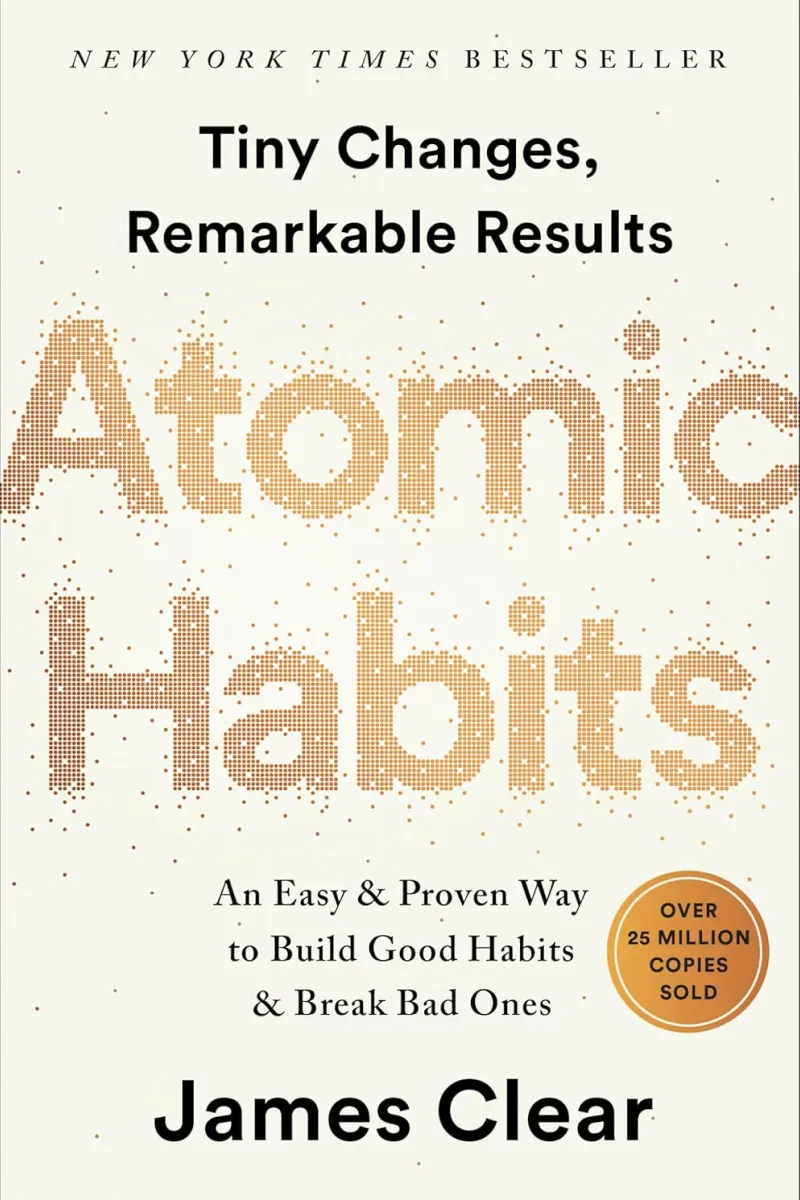
Micro habits are related to but distinct from adjacent concepts. Habit stacking refers to linking a new behavior to an existing one using the existing behavior as a cue. Atomic habits, James Clear’s broader framework, refers to small habits compounding over time like compound interest.
Micro habits are specifically about scale — making the starting version of any behavior as small as possible. They work well in combination with habit stacking, and are a foundational component of the atomic habits approach. But the core insight is about size: smaller starting commitments produce more consistent behavior, more consistent behavior produces more encoding, and more encoding produces automaticity — the actual goal. For the neuroscience behind this, the science of habit formation covers why frequency matters more than duration.
The Science Behind Why Small Works Better
The counterintuitive heart of micro habit research is that smaller starting commitments don’t just produce slightly better results — they often produce substantially better results, because the variable that most determines habit formation outcomes isn’t session quality. It’s session frequency.
Neural Encoding Is Frequency-Dependent
Habit formation is a neurological process. When a behavior is repeated consistently in a similar context, the neural pathways that support that behavior become more efficient — the basal ganglia encode the action sequence so it can be executed with decreasing cognitive overhead.
This encoding process is fundamentally frequency-dependent. A thirty-second voice journal entry repeated daily for three months generates more encoding than a thirty-minute entry done twice a month, even if total time is similar. The question that predicts habit formation outcomes isn’t “am I doing enough each session?” It’s “am I doing this often enough?”
BJ Fogg’s Tiny Habits Research
Stanford behavioral scientist BJ Fogg spent over a decade studying behavior change, culminating in his Tiny Habits framework. His central finding: the most common cause of habit failure is not insufficient motivation — it’s insufficient design. Specifically, starting too large.
Fogg’s research found that people who started with the smallest possible version of a target behavior maintained it significantly more consistently over time than those who started ambitiously. The consistency advantage was largest in the first three months of formation.
Fogg also found an unexpected psychological benefit: success experiences. When the habit threshold is two minutes, you succeed almost every day. Those successes create what Fogg calls “shine” — a positive emotional association with the behavior that gradually makes it intrinsically motivating. Ambitious habits, by contrast, produce frequent failure experiences that generate the negative associations and narratives that kill habits.
The Role of Identity
Every time you perform a habit — even the micro version — you cast a vote for a particular identity. One sentence in a journal is a vote for “I am someone who journals.” Thirty seconds of voice journaling is a vote for “I am someone who reflects on my day.”
These identity votes accumulate. Over weeks and months, the accumulated votes shift self-image in ways that make future behavior easier. This is the core of identity-based habits: the micro habit isn’t just building a behavior. It’s building an identity — and the identity is often more valuable than the behavior itself.
How to Design a Micro Habit: 5 Steps
Step 1: Identify the Minimum Viable Behavior
Ask: what is the smallest possible version of this behavior that still constitutes actually doing it?
- Journaling: one sentence written or thirty seconds spoken — not opening the journal, but making an actual entry
- Exercise: one push-up, one minute of walking — not putting on gym clothes, but performing actual movement
- Meditation: one minute of deliberate breath attention — not sitting in a posture, but actually directing attention
The test: if you performed only this minimum and then stopped, would you have done the thing? If yes, it’s a micro habit. If no, it’s still preparation.
Step 2: Attach It to an Existing Behavior
Micro habits work best when attached to an existing automatic behavior — Fogg’s “anchor” concept. The formula:
“After I [ANCHOR BEHAVIOR], I will [MICRO HABIT].”
For voice journaling specifically, effective anchors include: after I park the car at the end of the workday, after I make my morning coffee, after I sit down on the train. The anchor needs to be reliable — something that happens daily, in a consistent context, without additional decisions. For more on choosing the right time, the best time of day to journal breaks down the tradeoffs between morning, evening, and midday practice.
Step 3: Make It Smaller Than Feels Necessary
The first instinct when designing a micro habit is to make it slightly smaller than the ambitious version. Five minutes instead of twenty. This is not small enough.
The target is the version that feels almost pointlessly small — the one that produces the thought “surely this can’t be worth doing.” A useful calibration question: could I do this if I had a migraine? Could I do this while traveling, exhausted, in an unfamiliar place? If no, it’s still too large.
Step 4: Design the Celebration
Fogg’s research found that immediate positive reinforcement substantially accelerates habit formation. The celebration doesn’t need to be elaborate — a small internal acknowledgment (“yes, I did that”), a physical gesture, or a verbal expression immediately after the micro habit creates the positive emotional association that strengthens the habit loop.
This step is frequently skipped and shouldn’t be. The emotional association between behavior and positive feeling is one of the primary mechanisms through which habits become intrinsically rather than extrinsically motivated.
Step 5: Allow Organic Expansion
Micro habits are starting points, not endpoints. The expansion pattern that works: do the micro habit, then continue if energy and time allow. The micro habit is the commitment. Everything beyond it is a bonus.
Don’t escalate on a schedule — expand when the minimum feels easy enough that more is the natural next step. For most simple daily habits, this begins around four to six weeks. For how this progression works in practice, how to build a daily habit that actually sticks covers the full formation arc.
Micro Habits in Practice: Real Examples
Voice Journaling
Voice journaling is one of the most naturally micro-habit-compatible practices available. The minimum viable version — opening an app, pressing record, speaking one true sentence, stopping — takes under thirty seconds. This is a complete journal entry, not a lesser one.
The organic expansion that typically follows: once the app is open and recording has started, speaking continues past one sentence because the friction of stopping is greater than the friction of continuing. The thirty-second commitment produces a two-minute entry most days — not because you committed to two minutes, but because you committed to thirty seconds and momentum carried you further.
This expansion pattern is particularly consistent in voice journaling because speech is generative — one true thing said aloud often pulls the next true thing up behind it. If you’ve struggled to make written journaling stick, journaling for people who hate writing explains why the voice format removes the friction that kills written micro habits.
Exercise
The minimum viable exercise habit: one push-up. One squat. One minute of walking.
Most people who complete one push-up do more than one, because the act of getting on the floor and doing the first one makes the second easy. The commitment is one. The outcome is usually more. The difference from committing to “more” is that “more” fails on the days when getting on the floor is the hard part.
Meditation
The minimum viable meditation: one minute of deliberate breath attention. Most meditation research on minimum effective dose suggests that sessions as short as five to ten minutes produce measurable benefits when done consistently. The gap between one minute (micro habit) and five minutes (research-supported minimum) is small enough that organic expansion from the micro starting point typically reaches the effective range within a few weeks.
Reading
The minimum viable reading habit: one page. Most people who open a book and read one page read more than one page. The friction of stopping after one page is greater than the friction of continuing. The commitment to one page produces consistent reading sessions; the commitment to thirty minutes produces skipped days when thirty minutes isn’t available.
Where Micro Habits Work Best — and Where They Don’t
Where They Excel
Practices where starting is the hard part. Exercise, creative work, journaling, studying — these are significantly harder to begin than to continue. The micro habit solves the primary obstacle.
New habits in established lives. People with full schedules need habits that fit in the gaps rather than replacing existing behaviors. Micro habits fit in gaps.
Habit rebuilding after lapses. A practice that has collapsed is easier to restart at micro scale than at the original ambitious scale. For the specific recovery process, how to restart a habit after months of stopping applies this directly.
Where They Fall Short
Practices that require minimum duration to be meaningful. Some learning and deep work practices require a minimum time investment before they produce value. A thirty-second coding session doesn’t produce working code. For these, the micro habit can serve as a starter, but the goal is rapid escalation rather than sustained minimum performance.
Skills requiring sustained practice blocks. Learning an instrument, developing athletic technique, studying complex material — these benefit from longer sessions with focus and flow. Micro habits establish the practice pattern, but skill development often requires more than the minimum viable version provides.
Common Questions About Micro Habits
Can a micro habit really produce meaningful results over time?
Yes, and the mechanism is compounding. A thirty-second voice journal entry done daily for a year produces 365 entries — a significant reflective archive. More importantly, it produces the neural encoding and identity formation that make the practice feel natural, which typically leads to entries that extend past thirty seconds most days. The micro habit is the seed; what grows from consistent planting is larger than the seed.
How long do I stay at the micro level before expanding?
There’s no fixed timeline. The expansion from micro to more happens organically when the behavior starts feeling automatic — when you do it without noticing you’ve decided to. For most simple daily habits, this begins around four to six weeks. Don’t escalate on a schedule; expand when the minimum feels easy enough that more is the natural next step.
What if I always do the minimum and never expand?
This is less common than people fear and more acceptable than most habit advice suggests. If the minimum version is producing real value — if a thirty-second voice entry is giving you meaningful reflection — then the minimum is sufficient. Expand if expansion produces additional value. Stay at the minimum if the minimum is genuinely serving you.
How do micro habits interact with motivation?
Micro habits are specifically designed to be independent from motivation — to happen when motivation is low as well as when it’s high. Over time, the relationship tends to reverse: consistent micro habit performance builds motivation, through identity reinforcement and success experience accumulation, rather than depending on motivation as a fuel source. Motivation follows action more reliably than action follows motivation.
What’s the difference between a micro habit and giving up on a real habit?
The key distinction is design intention. Giving up is reducing the commitment because the full version feels too hard. Designing a micro habit is deliberately choosing the minimum viable version as a starting point, with the understanding that consistency at minimum scale produces the encoding and identity formation that make expansion possible. One is retreat; the other is strategy.
How many micro habits can I build at once?
Research and practical experience both suggest building no more than one or two new micro habits simultaneously. Even tiny habits require some cognitive overhead during the formation phase. Attempting three or four at once dilutes consistency across all of them. A better approach: establish one micro habit until it feels automatic (four to six weeks), then add the next. Sequential building produces more stable habits than parallel building.
Building a Life of Micro Habits
The compounding effect of micro habits is not primarily about any individual practice becoming large over time. It’s about what happens when multiple practices, each started at minimum viable scale and grown organically, exist simultaneously.
A daily voice journal entry. A brief morning walk. Two minutes of deliberate breath attention before bed. One page of reading. These individually are small. Together, they constitute a life that includes regular reflection, movement, mindfulness, and learning — a substantially different life from one that has none of these, built through commitments that individually take less than five minutes.
The person who tries to build all four at full scale simultaneously usually builds none of them. The person who builds them sequentially, one at a time, at minimum viable scale, each growing organically as the previous one stabilizes, often has all four functioning within a year.
That is the actual promise of micro habits: not that tiny actions magically create massive change on their own, but that tiny actions, done consistently, create the conditions under which larger change becomes possible and sustainable.
Start with thirty seconds. Mean it. See what grows.
For the full habit formation science behind why frequency beats duration, The Science of Habit Formation covers the neural mechanisms in detail. If you’ve tried building habits before and watched them collapse, Why You Quit Journaling (And How to Finally Stick With It) applies the micro habit framework to the most common failure patterns.
This section contains affiliate links.
Go Deeper
You've been thinking about this long enough.
Ten seconds. Your voice. That's all it takes.
Inner Dispatch turns a single daily recording into something you can actually see - a living reflection of where you've been.
Start free. No writing required. →Related articles
How to Build a Daily Habit That Actually Sticks
A science-backed guide to building daily habits that last — covering the psychology of habit formation, why most habits fail, and the specific techniques that actually work.
How to Make a Habit Automatic (Proven Methods)
The goal of habit formation isn't doing something every day — it's making it happen without thinking. Here's how to actually reach automaticity, faster.