
Identity-Based Habits: Becoming the Person You Want to Be
Most people approach habit formation from the outside in: they identify an outcome they want (better health, more productivity, greater self-awareness), define the behaviors that would produce it, and then try to maintain those behaviors long enough to achieve the outcome.
This approach works, to a point. But it has a structural limitation that becomes visible in two specific moments: when motivation fades and when the goal is achieved.
When motivation fades — which it always does, at some point — the behavior is held up only by the memory of why you wanted the outcome and the hope that continuing will eventually produce it. If the distance between current action and desired outcome is too large, or if the outcome itself has started to seem less important than it did when motivation was high, the behavior often stops.
And when the goal is achieved — you lost the weight, you finished the book, you built the streak — the behavior often stops too. Because the behavior was always in service of the outcome, and the outcome is now complete.
Identity-based habit formation works differently. Instead of using behavior to produce outcomes, it uses behavior to become a kind of person — and then the behaviors flow from that identity rather than from motivation toward a distant goal. The distinction is subtle but its effects are significant and durable.
The Core Distinction: What Are You Trying to Produce?
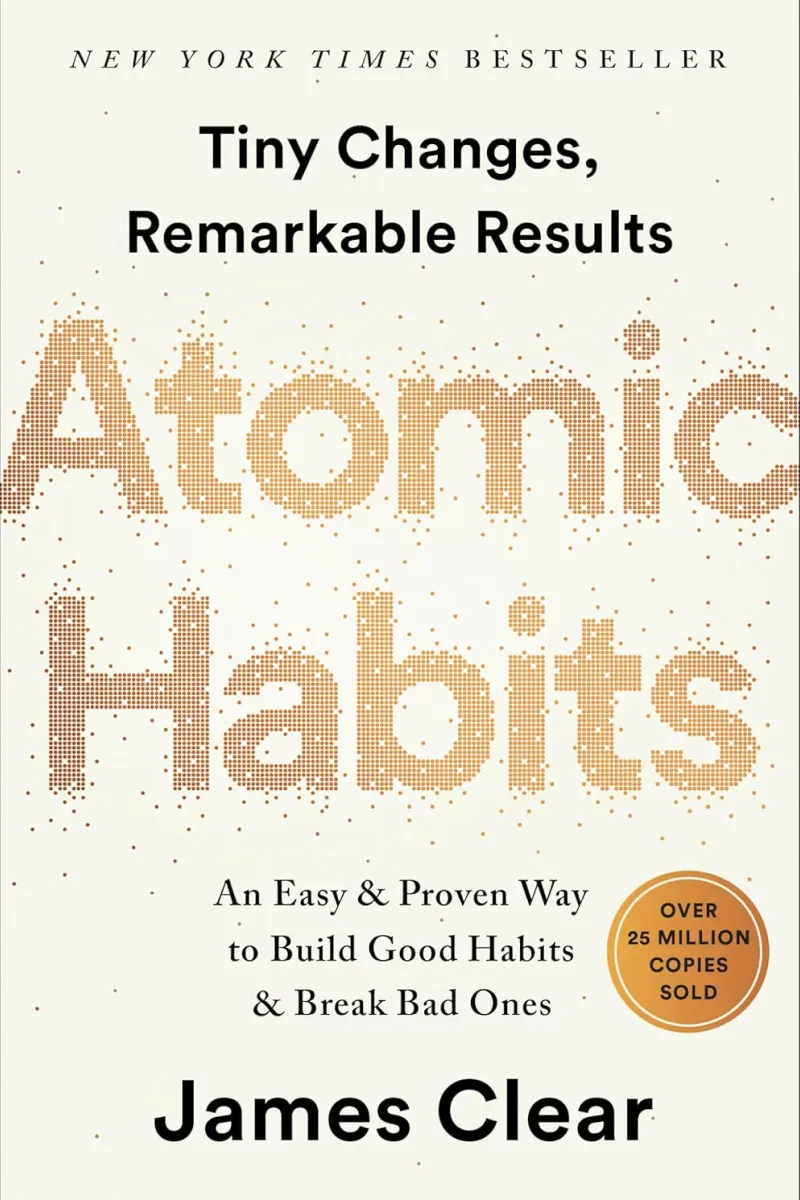
James Clear, in Atomic Habits, describes three layers of behavior change that he calls outcomes, processes, and identity. Most habit advice focuses on the first two: what outcome do you want, and what process will produce it?
Identity-based habit formation centers on the third layer: who you want to be.
The practical difference:
Outcome-based: “I want to run a marathon” → train consistently → achieve the marathon.
Identity-based: “I’m a runner” → runners run → the training happens because that’s what runners do.
In the first version, the behavior is justified by the goal. Once the goal is achieved — or once it starts to feel unlikely — the justification weakens and the behavior may stop.
In the second version, the behavior is expressed from identity. The justification isn’t the goal; it’s the identity itself. Runners run even when they’re not training for a race. Journalers journal even when they’re not tracking progress toward any specific outcome.
This is why long-term practitioners of any discipline — musicians, writers, athletes, journalers — often describe their practice as part of who they are rather than as something they’re doing to achieve something. The practice persists across achieved goals, changed goals, and no goals at all because it’s not held up by goal-directed motivation.
The Psychology Behind Identity-Based Habits
The mechanism behind identity-based habit formation is rooted in what psychologists call self-concept maintenance — the tendency to act in ways consistent with our beliefs about who we are.
Self-concept is one of the most powerful behavioral regulators available to humans. People will go to significant lengths to maintain consistency between their behavior and their self-concept. The non-smoker who is offered a cigarette at a party declines without deliberation; the behavior that would violate the identity is not appealing in the way it might be to someone who thinks of themselves as a smoker who is trying to quit. The “non-smoker” identity is doing behavioral work that willpower isn’t.
Carol Dweck’s research on mindset is related: the person who understands themselves as “someone who is learning to run” responds to setbacks differently from the person who understands themselves as “a runner.” The runner has an identity to maintain; the person-who-is-learning has nothing to maintain when the motivation to keep learning fades.
The implication: building the identity of the person who does the practice is more important than planning the practice itself. The planning matters; the identity matters more.
Why Most People Don’t Change Identity Deliberately
If identity-based motivation is more durable than outcome-based motivation, why don’t more people use it deliberately?
Because changing your identity is uncomfortable in a specific way that deciding to achieve a goal isn’t. “I’m going to start journaling” is a behavioral intention — low psychological stakes, easily modified. “I’m someone who journals” is an identity claim — higher psychological stakes, because identity is how we fundamentally understand ourselves.
Identity claims require evidence. You can’t simply decide you’re a journaler and have it be true; you have to accumulate evidence through behavior that the identity is real. The person who calls themselves a journaler after three days of entries may feel fraudulent; the person who calls themselves a journaler after six months of daily entries does not.
This evidence requirement is often experienced as a barrier: you don’t feel like you’ve earned the identity yet, so you don’t claim it, which means the identity isn’t doing behavioral work, which means the behavior has to run on something else.
The resolution: claim the identity before it feels fully earned, and let the behavior accumulate the evidence. This isn’t self-deception — it’s a structuring decision about how to orient your behavior during the period before the identity is fully established.
Votes and Evidence: How Identities Are Built
Clear uses the metaphor of “votes” for identity — every behavior that is consistent with an identity is a vote for that identity, and over time, enough votes establish the identity as real.
The journaling entry made on a difficult day when you didn’t feel like making it is a vote for “I’m someone who journals.” The voice recording made during a stressful week is a vote. The minimum viable entry made when you had almost nothing to say is a vote.
These small votes accumulate into evidence that is qualitatively different from a streak counter or a habit tracker: they’re evidence about who you actually are, not just evidence about how many days in a row you did something.
This also explains why the minimum viable form of a practice is more valuable, psychologically, than it appears on the surface. Not because a thirty-second voice journal entry is as rich as a twenty-minute reflection — it isn’t. But because a thirty-second entry made when you almost didn’t make it is a vote for the identity in a circumstance where the identity was under pressure. The vote cast under pressure counts more than a vote cast when it’s easy.
The Identity-Behavior Cycle
Identity and behavior exist in a bidirectional relationship: identity influences behavior, and behavior influences identity.
Identity → Behavior: The person who identifies as a journaler makes journal entries because that’s what journalers do. The identity generates the behavior.
Behavior → Identity: The person who makes journal entries regularly begins to experience themselves as a journaler. The behavior generates the identity.
Both directions are real, which means you can enter the cycle from either end. You can start from the identity claim — “I’m going to act as if I’m a journaler” — and let the behavior accumulate the evidence. Or you can start from the behavior — “I’m going to make entries every day” — and let the accumulated behavior produce the identity.
Most people start from the behavior without the identity claim, which means they’re doing the behavior but the identity isn’t doing any behavioral work. The behavior runs entirely on motivation and planning, which are less stable than identity.
The more effective approach: pair the behavior with an explicit identity claim from the beginning. “I’m building a journaling practice” can be accompanied by “I’m becoming someone who reflects daily.” The identity claim orients the behavior differently than pure goal-setting does.
When Identity Gets in the Way
Identity-based motivation has a failure mode worth understanding: the identity can become more important than the behavior, which produces the same perverse dynamic as streaks becoming more important than the underlying practice.
The person who identifies intensely as a runner may run through injury rather than risk the identity disruption of not running. The person who identifies as a daily journaler may feel significant distress at missing a day, even when missing a day is the sensible response to illness, travel, or genuine depletion.
Healthy identity-based habits hold the identity loosely enough that the minimum viable form, the rest day, and the occasional gap don’t constitute identity threats. “I’m a journaler” means “reflection is part of how I understand myself and my life” — not “I must produce an entry every single day or the identity is false.”
The distinction between these two versions of the identity is partly definitional and partly dispositional. Defining the identity in terms of values and orientation rather than behavioral metrics makes it more flexible: “I’m someone who reflects and examines my experience” can accommodate a missed day more easily than “I journal every day without exception.”
Identity-Based Habits in Practice
Naming the Identity Explicitly
The first practical step: name the identity you’re building, not just the behavior. Not “I’m going to journal every day” but “I’m becoming someone who reflects on their experience daily.” Not “I’m going to exercise three times a week” but “I’m becoming someone who takes care of their physical health as a consistent practice.”
The specific language matters. The identity claim should be:
- Present-tense, not future-tense. “I’m becoming” or “I am” rather than “I want to be” or “I will become.” The future-tense framing keeps the identity safely in the future rather than doing current behavioral work.
- Orientation-based, not metric-based. “Someone who reflects on their experience” rather than “someone who journals every day.” The orientation can survive missed days; the metric cannot.
- Genuinely yours, not borrowed. The identity that works is one that connects to what you actually value, not one that sounds impressive or that someone else has suggested.
Using Retrospective Evidence
One of the most powerful uses of a journal for identity formation is retrospective evidence: reading old entries that demonstrate you are, in fact, someone who does this practice. The archive isn’t just a record of the past; it’s evidence for the current identity.
This is a specific use of the practice of reading old entries: not just to learn from the past, but to accumulate the evidence that supports the identity. “I’ve been doing this for six months, I’ve made entries on hard days and easy days, I’ve built something here” is evidence that the identity is real and earned.
Voice journals in particular carry identity evidence in an unusually direct form: the archive of your own voice across months and years is a record of who you were at specific moments, made in your voice, preserved in a form that memory can’t revise. Listening back to old recordings is not just retrieval of information — it’s encounter with past versions of the person you’ve been building toward.
Responding to Gaps from Identity
When a practice is interrupted — by travel, illness, an unusually demanding period — the identity-based response is different from the outcome-based response.
Outcome-based: the gap represents missed progress toward the goal. It may require catch-up or recalibration. It may undermine belief in achieving the outcome.
Identity-based: the gap is an interruption in the expression of an identity that hasn’t changed. The journaler who didn’t journal for two weeks while hospitalized is still a journaler. The practice resumes when circumstances allow, not because the person has decided to try again but because that’s what they do.
This response doesn’t require willpower or renewed motivation. It requires only the belief that the identity is intact despite the behavioral interruption — which is a belief that the behavior before the interruption has earned.
Small Acts as Identity Reinforcement
In the absence of a visible outcome to work toward, small acts take on a different significance. The minimum viable entry, the quick voice recording, the brief check-in — these aren’t consolation prizes on the days you couldn’t do the full practice. They’re identity votes.
This reframe is more than semantic. “I did the minimum because I couldn’t do the real thing” produces different feelings than “I maintained the practice in the form available today, and that’s what someone who does this practice does.” The same behavior, interpreted through different frames, produces different effects on the underlying identity.
Common Questions About Identity-Based Habits
Isn’t saying “I’m a journaler” before you’ve established the habit a form of self-deception?
It depends on how the claim is understood. “I am a fully established journaler with a consistent long-term practice” is an inaccurate claim if you’ve been journaling for a week. “I’m becoming someone who journals, and that’s who I’m orienting my behavior toward” is accurate regardless of the duration of the practice. The identity claim is not a description of current fully-realized status; it’s an orientation statement about who you’re in the process of becoming. This isn’t self-deception — it’s choosing the identity framework that supports the behavior you want to establish.
What if the identity I’m claiming doesn’t feel authentic yet?
Authenticity in identity often follows behavior rather than preceding it. The person who feels most authentically like a runner is usually the person who has been running for years — the identity feels earned because the behavior accumulated the evidence. In the early stages of a new practice, feeling inauthentic in the identity is normal and expected, not a sign that the identity is wrong for you. The feeling of authenticity builds with the evidence.
Can identity-based thinking help with habits you’re trying to break?
Yes, often more effectively than willpower-based approaches. The person who identifies as a “non-smoker” rather than a “smoker trying to quit” has a different relationship to cigarettes. The first identity organizes the behavior around what the person is; the second organizes it around what they’re trying to stop. Reframing from “I’m quitting X” to “I’m someone who doesn’t need X” — when the reframe is genuine — changes the behavioral dynamic. The identity approach to breaking habits works best when the new identity is affirmative rather than purely negating.
How do I maintain an identity-based habit when life gets overwhelming?
The minimum viable form is the identity-based habit’s emergency mechanism. “I’m a journaler” doesn’t require a twenty-minute entry every day; it requires that reflection is part of how you relate to your experience. Thirty seconds of voice recording counts as a journaler doing what journalers do. The identity survives the minimum; it’s specifically designed to. What it doesn’t survive is extended complete abandonment — which is why the minimum matters even more during overwhelming periods than during easy ones.
Is there a risk of becoming too attached to an identity?
Yes, as described above. The rigid identity — “I must do this every day or I’ve failed” — is more fragile than the flexible one, and produces more distress when interrupted. The antidote is holding the identity loosely: it describes your orientation and values, not your daily performance metrics. You can miss a day and still be someone who journals. You can take a vacation from your running practice and still be a runner. The identity persists across variations in the behavior, because the identity is about who you are, not just what you do.
Can I build multiple identities simultaneously?
In principle, yes — people have multiple dimensions of identity and there’s no limit on how many. In practice, deliberately building identity-based motivation for several new practices simultaneously dilutes the attentional and emotional resources available to each. Starting with the identity that most clearly reflects your central values, and letting other identities develop more gradually, tends to produce better outcomes than trying to consciously build several identities at once. The identities themselves don’t conflict; the deliberate attention required to establish them does.
The Bottom Line
Identity-based habit formation is not a trick. It’s a recognition of how behavior actually works over time: the most durable behaviors are those that express who someone is, not those that serve a distant goal.
The person who journals because they’re someone who reflects has a fundamentally different relationship to their practice than the person who journals because they’re trying to achieve greater self-awareness. Both may produce similar journals in the short term. Over years, the one whose practice is embedded in identity will still be journaling long after the other has achieved their self-awareness goal and moved on.
Building the identity takes time and requires accumulated evidence. The evidence is produced by the behavior — by making entries when it’s hard, by maintaining the minimum when the full practice isn’t available, by returning after gaps without drama. Each of these is a vote. The votes accumulate into something real.
Cast the first vote today. The identity builds from there.
This section contains affiliate links.
Go Deeper
You've been thinking about this long enough.
Ten seconds. Your voice. That's all it takes.
Inner Dispatch turns a single daily recording into something you can actually see - a living reflection of where you've been.
Start free. No writing required. →Related articles
How to Build a Daily Habit That Actually Sticks
A science-backed guide to building daily habits that last — covering the psychology of habit formation, why most habits fail, and the specific techniques that actually work.
The Science of Habit Formation: How Habits Actually Form (and Why They Break)
What does behavioral science actually say about how habits form? The real research on habit loops, timelines, context, and why most habits fail — and how to fix them.