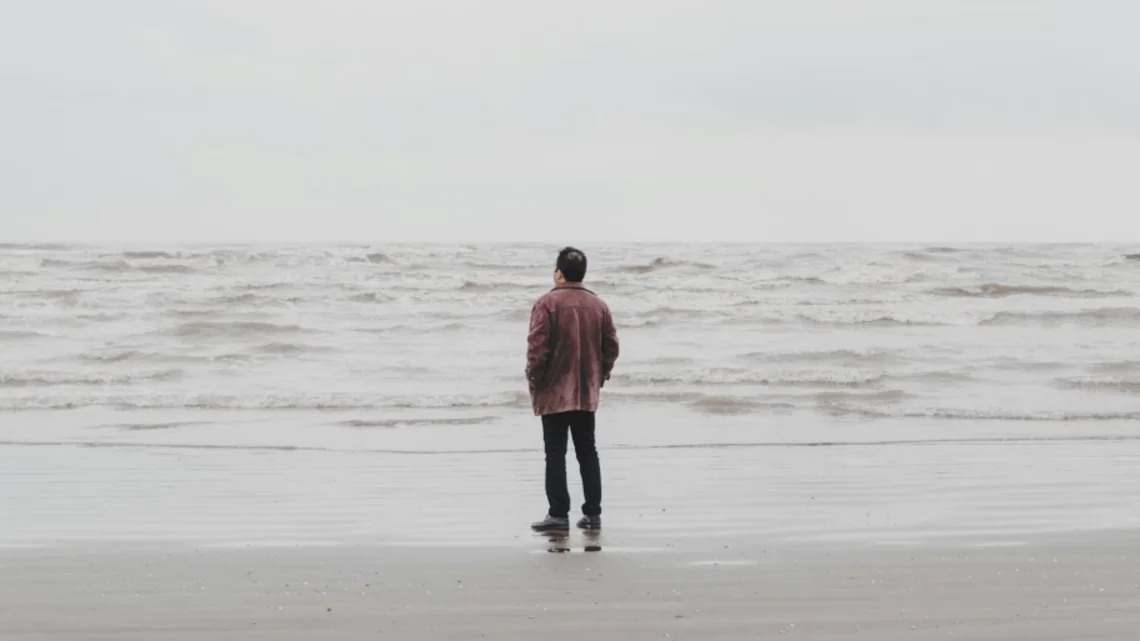
I Started Documenting My Life at 34. I Wish I'd Started Sooner.
I’m 36 now. I started keeping a voice journal at 34.
That means I have two years of recordings — imperfect, gappy, completely unpolished — and approximately thirty-two years of almost nothing.
I’m not saying nothing survives from the first thirty-two years. There are photographs. There are the memories I’ve told often enough that they’ve become solid, reliable, rehearsed. There are a handful of journals from adolescence, written with more feeling than skill, that make me cringe and feel tender in equal measure. There are the things other people remember about me that I’ve borrowed back as my own.
But the ordinary days? The Tuesday in my mid-twenties when something small and specific and irreplaceable happened? The version of myself at 28 — what I was worried about, what made me laugh, what I wanted but hadn’t yet learned to name? The texture of the years I was living while I was busy living them?
That’s mostly gone. And I’m thirty-six, which means it hasn’t been that long.
This is the piece about why I started, what I’ve learned from two years of doing it, and why I’d tell anyone who hasn’t started yet to start now — not because the past is recoverable, but because the present still is.
What Made Me Think I’d Remember
I want to understand, rather than just lament, why I didn’t start sooner. Because the failure wasn’t negligence — I thought I was fine. I thought I’d remember.
The assumption underneath that belief is one most people share without examining: that the things that matter will stick. That importance and memorability go together. That the mind keeps what’s worth keeping.
This is not how memory works. Memory is selective and reconstructive and heavily biased toward the novel and the emotional, not toward the ordinary. The Tuesday that felt significant in the moment — because of something small and real that happened — is exactly the kind of Tuesday that gets overwritten by the ten thousand other Tuesdays that follow it.
The things that actually survive in long-term memory tend to be: events with strong emotional charge (grief, joy, fear), things we’ve told as stories repeatedly, things associated with significant life transitions, and things we’ve been deliberate about preserving. The ordinary texture of ordinary days — which is most of life — survives almost not at all.
I understood this intellectually for years. I didn’t internalize it until I tried and failed to remember my daughter’s first word, a year and a half after she said it. That failure, described in The Day I Realized I’d Already Forgotten My Daughter’s First Words, is what made the abstract knowledge concrete.
The knowledge that I’d forgotten something specific, something I’d been certain I’d always have, changed how I thought about all the other things I was certain I’d always have.
The Thirties Specifically
I want to speak to the thirties in particular, because I think it’s a decade with a specific relationship to documentation and memory that doesn’t get talked about much.
The thirties tend to be, for a lot of people, the decade when life becomes most full: established careers, significant relationships, children, real responsibilities and real stakes. The years when things that matter most are happening.
They’re also, for the same reasons, the years when you have the least time to document anything. The fullness that makes the years worth preserving is the exact fullness that makes preservation difficult. You’re too busy living the life to record it.
This creates a particular irony: the decades that will feel most significant in retrospect — the ones that shaped you most, contained the most change, held the people and relationships that mattered most — are often the least documented. They happened too fast and too fully to catch.
I think about the version of my thirties that will exist in my memory when I’m sixty. Not the photographs, which will show the milestones — the birthdays, the holidays, the occasions that warranted a camera. But the ordinary years. What it felt like to be this person in this decade, doing these particular things, in this particular body, with this particular configuration of people and work and daily life.
Most of that will be gone. It’s already going.
What I have, because I started at 34, is two years of it. Two years of ordinary days, caught in the margins, in parking lots and commutes and the two minutes after bedtime. Not comprehensive. Not polished. But real.
What I’ve Learned About What’s Worth Keeping
Two years of daily recording has changed what I think is worth documenting.
Before I started, I would have said: the significant things. The milestones, the decisions, the events you’d put in a letter to someone you hadn’t seen in years. The things with obvious narrative weight.
What I’ve found is that the significant things take care of themselves. They get photographed, discussed, remembered because they were shared, processed through multiple conversations until they become part of the official record.
What doesn’t take care of itself — what vanishes unless you catch it — is the ordinary. The specific inflection my daughter uses when she’s being deliberately funny, which she’s been doing for exactly six months and will probably stop doing in another six. The particular anxiety I had about a project at work last spring that turned out fine and that I’d already half-forgotten by summer. The version of my commute during a specific three-week period when the leaves were a particular color and I was thinking about something that mattered.
These are not obviously significant. They are, I’ve come to believe, the actual substance of a life. The significant events are the skeleton. The ordinary days are the flesh.
A recording I made eight months ago: a Tuesday evening, tired, two minutes in the car before going inside. I describe the way my daughter said goodnight that evening — a specific phrase, a specific gesture. It’s thirty seconds of the recording. At the time I almost didn’t include it, because it seemed too small.
When I listen to it now, eight months later, I’m back in the car. I can feel the specific quality of that evening. The detail I almost left out is the heart of the whole entry.
That has changed how I record. I aim for the specific, the sensory, the particular. The things that seem too small to mention are often the ones most worth mentioning.
The Accumulation
I want to try to describe what two years of imperfect recording actually produces, because I think people underestimate how quickly the accumulation becomes something real.
I have somewhere around five hundred recordings. They average about ninety seconds. That’s twelve and a half hours of audio — roughly the length of a long novel, or a weekend spent in conversation.
But the way I’d describe what I have is not in hours. It’s in portraits. I have a portrait of my daughter’s third year that’s more detailed than anything I have of her second year, despite having been equally present for both. I have a portrait of a difficult work period — the anxiety before, the confusion during, the relief after — that I could not have reconstructed from memory alone. I have a portrait of who I was at 34 and 35, what I was working through, what was making me laugh, what I wanted and was slowly learning I wanted.
These portraits are rough. They have gaps, flat weeks, entries that are barely audible because I was too tired to project. They are not what I’d have made if I’d known I was making something that mattered.
They’re what I actually made — in the margins of an actual life, in the transition moments between one place and another — and they exist. That’s the whole thing. They exist.
What the Practice Has Given Me Beyond the Archive
I want to be honest that the archive is not the only thing the practice has produced, because if I only talked about the archive I’d be leaving out what surprised me most.
The practice of daily documentation — of treating my own days as worth noticing — has changed how I move through those days.
Not dramatically. Not in the transformative way that self-improvement promises often suggest. But in the quiet, incremental way that habits that fit your actual life tend to produce change: I notice more. I’m more likely to think I want to remember this in real time and then actually hold onto it. I’m more present, in a low-key way, during the moments I’m in.
I wrote about the self-talk changes in Three Minutes a Day Changed How I Talk to Myself — how the practice of speaking my experience out loud, regularly, changed the quality of my internal relationship with that experience. And about the burnout recognition in I Didn’t Know I Was Burned Out Until I Heard My Own Voice — how the archive gave me a mirror I hadn’t had before. These were genuine and significant, and neither was something I set out to get.
The practice gave me an archive. The archive gave me a mirror. The mirror, over time, gave me something I’d been slowly losing: the sense of myself as a continuous person across time, connected to my past and moving toward a future I could actually see.
That sounds larger than I mean it to sound. It’s quieter than that in practice. It’s the difference between living your life and witnessing it — and finding, occasionally, that witnessing makes the living slightly richer.
To the Person Who Is 28, or 22, or 18
If you’re reading this and you’re younger than I was when I started — I want to say something directly.
Start now. Not because you have any particular reason to yet. Not because anything is at risk of being lost. Just because the version of you that exists right now, in this specific configuration of circumstances and relationships and preoccupations, is already becoming the past. Already, the you of six months ago is slightly out of reach. Already, the you of two years ago would be a little unfamiliar if you could hear her voice.
The archive you build in your twenties will be the most complete record you ever have of being young, of being uncertain in the particular way of being young, of the people and places and ordinary days that made you. You probably can’t see why that would matter yet. That’s fine. Start anyway.
Ten seconds a day. A parking lot, a commute, a moment before sleep. Your own voice, saying something true about where you are.
The future version of you — the one who is older and further from this — will be so grateful.
To the Person Who Is Starting Late
If you’re reading this and you’re older than I was when I started — I want to say something different, and equally directly.
You haven’t missed it. You’ve missed some of it, yes. The years you didn’t document are genuinely gone, and there’s an appropriate sadness in that, and I won’t minimize it.
But the years still in front of you haven’t been lost. The version of yourself that exists now — today, in this specific moment, with these specific circumstances and concerns and small pleasures — is already worth keeping. Already already is becoming the past, already will be the thing you’d want to find your way back to.
It is not too late to start. It is never too late to start. The archive you build from here will be incomplete — all archives are — but it will be yours, and it will exist, and that is always worth more than the alternative.
I started at 34. I wish I’d started at 24. But I am so glad I started at 34, because the alternative to starting late is not starting at all, and not starting at all is the only version of this that doesn’t produce anything.
Start now. Start today. Start with the version of yourself that exists in this moment, in this year, which is already in the process of becoming the past.
What I’d Tell My Younger Self
I know what I’d say to the 24-year-old version of me, if I could. She was in a particular city, in a particular apartment, in a particular period of uncertainty about what she was building. She was interesting and anxious and funny in a specific way she hasn’t entirely preserved. She had thoughts and friendships and ordinary days that are mostly gone.
I’d tell her: talk to your phone for a minute, every day, in the car. Tell it something true about where you are. Do this for years, even when it feels pointless, especially when it feels pointless.
The record you build won’t capture everything. It will capture enough that the version of you at 36 — at 46, at 56 — can find her way back to you. Can hear your voice from the past and know: you were there. You were paying attention. You caught the days before they slipped away.
That’s all I’m asking of it. That’s all it needs to do.
How to Start Today
If you don’t have a voice journaling practice yet — or if you have one that has lapsed — here is the whole system:
Find a transition moment you already have. The car before work. The walk to the parking garage. The two minutes after your child goes to bed. Pick one.
Open your phone’s voice memo app, or any app. Press record. Say the date. Say one true thing about today. Stop.
That’s an entry. That’s a start.
Do it tomorrow. And the day after. Let it expand when it wants to, contract when it needs to. Come back after the gaps without ceremony. Build the archive slowly, in the margins, over years.
For the practical side — how to fit this into an actual busy life — How I Built a Life Archive in the Margins of a Busy Day is the most useful piece. For the habit-formation questions — how to make it stick, what to do when it doesn’t — The Smallest Habit I’ve Ever Built (And Why It Stuck) and Why I Stopped Trying to Be Consistent and Started Being Forgiving are the two I’d start with.
And for the question of what the archive actually becomes — what it’s like to listen back to yourself from a year or two ago, what you find there — Why Listening Back to Your Own Voice Is the Most Underrated Self-Improvement Habit is the piece that surprised me most to write.
The practice is simpler than it sounds and more valuable than it looks. The hardest part is believing, before you have the evidence, that the ordinary days are worth catching.
They are. I promise they are.
Common Questions About Starting (At Any Age)
Is it worth starting a documentation practice if you’re already in your 40s or 50s?
Completely. The years ahead of you contain as much worth keeping as the years behind you, and the archive you build from here will be available to future-you in a way that the undocumented past isn’t. Starting later doesn’t produce a lesser archive — it produces a different one, beginning where you actually are.
What if you have a terrible memory and can’t even remember recent days accurately?
All the more reason to record rather than relying on memory. Voice recordings don’t depend on accurate recall — they exist independently of what you remember. The recording from six months ago is there whether or not your memory of the period is reliable. For people with memory difficulties, the archive may be even more valuable than for those without.
How do you decide what’s worth documenting when everything feels either too small or too personal?
The “too small” instinct is almost always wrong in retrospect. The things that feel too small to mention are often the most irreplaceable. The “too personal” concern is a privacy question with a simple answer: keep the recordings private. Nothing has to be shared. Record for yourself, and keep it for yourself.
What if you try it and it doesn’t feel natural?
Give it six weeks before concluding it isn’t for you. The first few weeks of voice journaling feel awkward for almost everyone — the sound of your recorded voice, the uncertainty about what to say, the sense of performing for a non-existent audience. These things fade with repetition. If it still feels profoundly wrong after six weeks, the written format might suit you better. But most people who persist past the awkward phase find it becomes genuinely natural.
Can you document your life without voice journaling — with photos or written notes?
Yes. Photos and written notes are valuable and worth keeping. Voice adds the tonal layer that neither of those captures — the emotional texture of how you were, not just what you looked like or what you wrote. For people who find voice uncomfortable, written micro-journaling (a sentence or two per day) produces a meaningful archive with lower friction. Use whatever format you’ll actually maintain.
What happens to the recordings — who will have access to them?
This is worth thinking about practically. Most voice recordings live on your phone and in a cloud backup associated with your account. They’re as private as your other phone data. If you want to think further ahead, some people periodically export recordings to a personal hard drive or private cloud storage. The question of what happens after your death is a real one without a universal answer — some people include voice archives in their digital estate planning, some don’t. The important thing is not to let the question prevent you from starting.
What’s the single most important thing to remember when starting?
The bar is lower than you think. Not lower as a consolation — lower as the actual design principle. The entries don’t have to be good. They don’t have to be interesting. They don’t have to capture anything significant. They just have to exist. “Thursday. Tired. Made it.” is a complete entry. It’s a marked day. It’s something.
The Archive That’s Already Starting
Somewhere in your recent past — yesterday, or last week, or a month ago — something happened that you won’t remember in five years.
Not something dramatic. Something ordinary. A specific conversation, a moment with someone you love, a thought you had in the car on the way somewhere. The particular version of your life as it currently is, with all its specific texture.
It hasn’t disappeared yet. It’s still findable, if you tried to find it right now.
In five years, it probably won’t be.
The practice of documentation is just this: catching the ordinary days while they’re still catchable. Building, a little at a time, in the margins of a real and busy life, a record of who you were and what you noticed and how it felt to be alive in this specific moment of your specific life.
I started at 34. I wish I’d started at 24. And I am more grateful than I can say that I didn’t wait until 44.
Start now. The days you catch from here are the ones you’ll have.
This section contains affiliate links.
Go Deeper
You've been thinking about this long enough.
Ten seconds. Your voice. That's all it takes.
Inner Dispatch turns a single daily recording into something you can actually see - a living reflection of where you've been.
Start free. No writing required. →