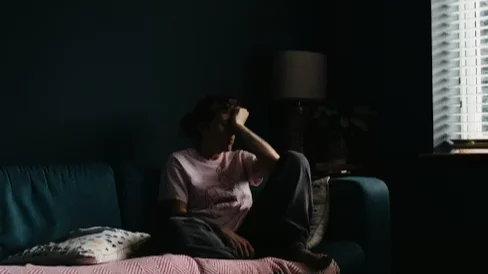
I Didn't Know I Was Burned Out Until I Heard My Own Voice
I want to start with a disclaimer: I’m not a therapist, a psychologist, or any kind of mental health professional. What I’m about to describe is a personal experience, not medical advice. If you think you might be burned out or struggling with your mental health, please talk to someone qualified to help — a doctor, a therapist, someone you trust.
That said: this is the most important thing that has happened as a result of my voice journaling practice, and I think it’s worth writing about honestly.
Last spring, I was about eighteen months into keeping a voice journal. I’d built the practice the slow way — minimum viable entries, self-forgiveness after gaps, the whole arc I’ve written about elsewhere. The practice was stable. I was recording most days, three to four minutes on average, the usual material: work, family, the small details of ordinary days.
I thought I was fine.
I was tired, yes. Tired in the way that working parents of young children are always tired — a tiredness that had become so baseline that I’d stopped registering it as a state and started experiencing it as just how things were. I was functioning. I was showing up. I was getting things done.
I thought I was fine.
The Moment I Realized I Wasn’t
It was a Sunday afternoon in April. My daughter was napping. I had an hour to myself, which was rare enough that I wasn’t quite sure what to do with it. On an impulse, I opened my voice journaling app and started listening back to recordings from the previous three months.
I’d done this before — occasional look-backs, usually finding something I’d forgotten and feeling glad I’d captured it. This time was different.
What I heard, across those three months of recordings, was a voice I barely recognized as mine.
Not literally — it was clearly me speaking. But the quality of it was wrong in a way that took me a few recordings to identify. The flatness. The absence of anything that sounded like genuine energy or interest or investment. Even on the days when I was describing things that should have been good — a nice moment with my daughter, a project going well — the voice was uninflected. Reporting rather than experiencing.
I listened to about forty-five minutes of recordings that afternoon. And by the end of it, I understood something I hadn’t been able to see from the inside: I was exhausted in a way that sleep wasn’t fixing. I had been, for a while.
What Burnout Actually Sounds Like
I’d heard the word “burnout” before, of course. I’d assumed it was something that happened to other people — people in more demanding jobs, or without the support structures I had, or who hadn’t been taking care of themselves as well as I thought I was.
The recordings suggested otherwise.
Burnout, as I now understand it, isn’t acute misery. It’s a flattening. A gradual loss of the quality of engagement with your own life. You’re present in the sense that you’re there, but something that used to be automatic — genuine interest, emotional availability, the sense that things matter — has quietly receded.
Looking back, I could hear this in my own voice across the recordings. In November, talking about a project I was working on, there was something alive in how I spoke — the hesitations and redirections of someone actually thinking. By February, talking about a similar project, the tone had leveled out into a kind of recitation. Facts, sequence, outcome. Nothing behind it.
I hadn’t noticed this happening. You don’t, I think, when it’s gradual. You adapt. You normalize the new baseline. You keep functioning, which provides its own evidence that things are fine, even when things aren’t.
What the recordings gave me was a view from the outside. An archive of my own voice across time, which created a comparison point I couldn’t have constructed from the inside. The January version of me, and the February version, and the March version — laid out in sequence, audible in a way that’s hard to fake and hard to overlook.
Why Voice Reveals What Writing Can’t
I want to be specific about why voice recordings were the medium that made this visible, because I don’t think a written journal would have caught the same thing.
When you write, you’re already processing — translating experience into language, making choices about what to include and how to frame it. Even the most honest writing involves a compositional layer that shapes the raw material. You can write about feeling flat without your writing being flat, because writing is a craft and craft can compensate.
Voice doesn’t offer the same compensation. The tiredness in a voice is audible regardless of what words you’re saying. The absence of energy is there in the pace, the intonation, the moments of trailing off. You can’t write your way into sounding alive when you’re not. But you can write a perfectly coherent sentence about a positive event while sounding like someone who is deeply depleted, and the voice captures that in a way the words don’t.
This is one of the things I mean when I say that voice journaling preserves a layer of information that written journaling can’t reach. Not just the content, but the state. The emotional weather of a period. And sometimes that emotional weather is telling you something important that you haven’t consciously registered.
I wrote about the general phenomenon of what listening back to your voice does in Why Listening Back to Your Own Voice Is the Most Underrated Self-Improvement Habit. The burnout experience is the most dramatic version of it. But the same mechanism — hearing yourself from the outside, with the temporal distance that changes what’s visible — operates in smaller ways all the time.
What I Did With the Realization
I want to be honest about this part, because I think there’s a version of this story where the realization leads immediately to transformation, and that’s not what happened.
What happened was: I sat with it for a week. I told my partner. I made a doctor’s appointment, which I’d been putting off for reasons I no longer remember. I started paying more attention to sleep in a way I hadn’t been.
I didn’t do anything dramatic. I didn’t take a leave of absence or make major life changes or undergo a profound reckoning. Partly that’s because my burnout, while real, was on the milder end of what people experience — a sustained low-grade depletion rather than a crisis. And partly it’s because the practical constraints of life with a young child and a full-time job don’t leave a lot of room for dramatic interventions.
What I did do was stop pretending, to myself, that tired was just how things were.
That sounds small. I don’t think it was. There’s a particular kind of energy that goes into maintaining the story that you’re fine when you’re not, and I’d been spending it without knowing I was spending it. Acknowledging what the recordings had shown me — that I wasn’t just tired, that something had been depleted over a longer period than I’d admitted — released something. Not the depletion itself, not immediately. But the resistance to seeing it.
The Role of the Practice in What Came Next
Over the following months, I started listening back more intentionally. Not obsessively — I wasn’t auditing myself for signs of distress. But I’d started paying attention to the quality of my own voice in a different way. Using it as one data point among others. Noticing when the flatness came back and what was happening in my life at the time.
What I found was that the voice was a leading indicator in a way that other signals weren’t. My mood ratings, when I tried tracking them, lagged. How I felt when I asked myself directly — am I okay? — was subject to all the editing that makes self-assessment unreliable. But the voice, recorded without particular attention to how I sounded, captured something closer to the baseline truth.
I started noticing things I could do something about. The weeks when work was demanding beyond a certain threshold. The relationship between certain kinds of sleep disruption and the flattening I could hear. The difference in my voice when I’d had any kind of genuinely unstructured time — even an hour, even less — versus weeks without it.
None of this produced a cure. Burnout recovery, I’ve learned, is slow and non-linear, and the conditions that produced it don’t vanish because you’ve identified them. But the awareness changed how I moved through it. I started treating the leading indicators as real information rather than as something to push through. I started advocating for myself — with my partner, in how I structured work — in ways I hadn’t been.
The voice journaling practice didn’t solve burnout. But it gave me a mirror I hadn’t had before. And sometimes the mirror is the most important tool.
What I’d Tell Someone Who Suspects They’re Burning Out
This is the part I feel least qualified to write, because what I experienced was relatively mild and I know burnout exists on a wide spectrum. What helped me might not help someone in a more severe situation. Please, if you think you’re struggling, talk to someone who has actual training in this.
With that caveat: a few things I’ve found useful.
Listen back to yourself over time, not just in the moment. The moment-to-moment assessment of how am I doing is subject to so much interference — the mood of the day, the last thing that happened, what you’re hoping is true — that it’s often unreliable. A series of recordings over weeks and months creates a comparison point that single-day assessment can’t.
Pay attention to the quality of your voice, not just the content. You can record something positive in a depleted voice. The content isn’t the only thing the recording is capturing.
Name the state without catastrophizing it. I found that acknowledging the depletion — I am actually tired in a sustained way, not just today — was less frightening than I expected. The thing I’d been managing without naming was taking more energy than naming it did.
Treat small accommodations as real, not as indulgences. The hours of genuine rest, the moments of unstructured time, the boundary that actually held — these mattered in a way I’d been minimizing. The depleted version of me needed them more than the functioning version of me was willing to admit.
For the mental-wellness angle of what regular voice journaling does more generally — not just in a crisis but as a daily practice — Three Minutes a Day Changed How I Talk to Myself covers the steadier, less dramatic version of what this practice does over time. And Hearing My Own Goals Out Loud Was the Habit I Didn’t Know I Needed gets at the forward-looking version — what happens when you use your voice not just to document where you are but to articulate where you want to go.
Why I’m Writing About This
I’ve hesitated to write this piece, because it requires more personal disclosure than most of what I publish here, and because I’m aware that burnout is a term that gets used loosely in ways that can minimize what it means for people who experience it severely.
I’m writing it because I think the specific mechanism — voice recordings as a mirror for a state you can’t see from the inside — is genuinely useful and not widely discussed. Most of what you read about voice journaling focuses on the content of what you capture. What surprised me was the information carried in the quality of the voice itself, independent of content.
If you keep a voice journal for any length of time, you’ll build an archive of your own voice across seasons and circumstances. That archive is, among other things, a record of your states — not just what happened to you, but how you were doing. Most of the time, you’ll listen back and find the ordinary variation of an ordinary life. Energy levels up and down. Good weeks and harder ones.
But occasionally, if you listen with a certain kind of attention, you might hear something you weren’t able to see. A pattern in the flatness, a sustained quality to the exhaustion, a version of yourself that’s been asking for something you haven’t been giving it.
That information is worth having. Even if what you do with it is small and slow and imperfect, the way I did with it.
Especially then, maybe.
Common Questions About Voice Journaling and Mental Wellness
Can voice journaling replace therapy?
No. Voice journaling is a personal reflection practice, not a therapeutic intervention. It can provide a useful mirror and a record of your states over time, but it doesn’t offer the professional assessment, the trained response, or the relationship that therapy provides. If you’re experiencing mental health challenges, please talk to a qualified professional.
How do you listen back to recordings without it becoming a negative spiral?
The listening-back practice works best with some temporal distance — recordings from a few weeks or months ago rather than yesterday. Immediate playback can trigger self-consciousness without the benefit of perspective. I also find it helps to approach old recordings with curiosity rather than evaluation: what was I dealing with then? rather than was I okay?
What if you don’t want to hear your own voice?
This is very common, especially early in the practice. Most people find recorded voices uncomfortable at first — it’s the gap between how we hear ourselves internally and how we sound externally. This usually diminishes significantly within a few weeks of regular recording. If it remains a significant barrier, written journaling can serve some of the same functions, though without the tonal information that voice captures.
How long do you need to journal before look-backs become useful?
Usually at least two to three months of reasonably consistent practice, which creates enough material to see patterns rather than just individual data points. A single recording tells you how you were on one day. A series of recordings across months tells you something about how you’ve been — which is the comparison point that makes look-backs meaningful.
Should you journal when you’re in a difficult mental state?
Often yes, though the approach might shift. In difficult periods, shorter entries with less pressure to be coherent or insightful tend to work better than trying to process everything at once. Even a brief “today was hard, I’m not okay, I don’t have more than that right now” is a real entry and a real record. The practice doesn’t require you to have something useful to say — it requires you to show up, which is sometimes the hardest part.
What do you do if you listen back and recognize something that worries you?
Take it seriously. Tell someone you trust. Make a doctor’s appointment if you’ve been putting one off. Don’t dismiss what the recording showed you because you’ve been functioning — functioning isn’t the same as fine, and the recording may be seeing something you’ve been explaining away. You don’t have to be in crisis to deserve attention and care.
Can voice journaling help with anxiety as well as burnout?
Many people find it helpful for anxiety specifically — externalizing anxious thoughts by speaking them aloud can interrupt the circular quality of anxious thinking. There’s a separate piece on this at Voice Journaling for Anxiety that goes into more depth. The mechanisms are different from what I described with burnout, but the practice overlaps.
The Voice I Hear Now
I listen back to those spring recordings sometimes. The ones from the months before I understood what I was hearing.
I feel something like tenderness toward the voice in them — the version of me that was managing, that was showing up, that had no idea a Sunday afternoon in April was going to hold a reckoning. She was doing the best she could with the information she had. The problem was that she was missing information, and the missing information was about herself.
The practice gave me that information eventually. Not immediately, not dramatically, not in a way that resolved everything cleanly. But it gave me a mirror I hadn’t had before, and the mirror showed me something true.
That’s all I’m asking of it. That’s all I was ever asking of it. A record of where I’ve been — and occasionally, unexpectedly, a clearer view of where I am.
This section contains affiliate links.
Go Deeper
You've been thinking about this long enough.
Ten seconds. Your voice. That's all it takes.
Inner Dispatch turns a single daily recording into something you can actually see - a living reflection of where you've been.
Start free. No writing required. →