
How to Start Journaling: The Beginner's Guide
Most people have tried to start a journal at some point. A significant number of them have a half-filled notebook somewhere — bought with good intentions, abandoned after two weeks when the blank pages started feeling like an obligation rather than an outlet.
This doesn’t mean journaling isn’t for them. It usually means they started without a clear sense of what journaling actually is, why it works, and what makes the habit stick. They jumped straight to the blank page without the context that would have made the blank page less threatening.
This guide exists to fill that gap.
How to start journaling is one of the most searched questions in the self-improvement space — and it’s a genuinely good question, because “just write whatever you feel” is advice that works for some people and fails completely for others. The reality is that journaling is not a single practice. It’s a family of related practices with different formats, different purposes, and different entry points, and the one that works for you depends on things like how you process emotions, how much time you have, whether you prefer structure or freedom, and what you’re actually trying to get out of it.
This guide covers all of it: what journaling is and isn’t, why it works, how to choose the right format, what to write when you don’t know where to start, how to build a habit that survives the inevitable low-motivation weeks, and what to do when things go wrong. By the end, you’ll have everything you need to start — and, more importantly, to keep going.
What Journaling Actually Is (and What It Isn’t)
Before talking about how to start, it’s worth being precise about what journaling means — because the word carries a lot of baggage that can get in the way.
Journaling is not a diary in the childhood sense. It’s not a place to document the events of your day like a log. It’s not a practice that requires literary skill, emotional articulacy, or a particular kind of introspective personality. It’s not something only anxious people or therapy enthusiasts do. And it’s not a practice that has to take thirty minutes, require a beautiful notebook, or produce insights every single session.
At its most basic, journaling is the practice of externalizing your inner life in a regular, recorded form. You take what’s inside — thoughts, feelings, observations, questions, decisions, memories — and you put it somewhere outside yourself. That act of externalization, done regularly over time, is what produces the benefits.
The “recorded form” part matters. Journaling is different from thinking, different from talking, and different from meditating — not better, but meaningfully distinct. When you write or speak your thoughts into a record, you create something you can return to, observe from a slight distance, and reflect on in ways that purely internal processing doesn’t allow.
What the Research Actually Shows
The science of journaling is more robust than most people realize. Psychologist James Pennebaker spent decades studying what he called expressive writing — the practice of writing about emotionally significant experiences — and found consistent benefits across a wide range of populations: reduced psychological distress, improved immune function, fewer doctor visits, better academic performance, and faster reemployment after job loss.
More recent research has extended these findings. Studies in cognitive psychology suggest that writing about experiences reduces their emotional charge by engaging the brain’s language-processing systems, which modulate the amygdala — the region most associated with fear and emotional reactivity. Research on what’s called affect labeling (naming an emotion rather than just experiencing it) shows that the act of putting feelings into words reduces their intensity, often measurably and almost immediately.
What this research doesn’t show is a single best format. The benefits appear across different journaling approaches, which is why matching the format to the person matters more than finding the objectively correct way to journal.
Realistic Expectations
Journaling is not a cure for anything. It’s a tool for self-understanding, emotional processing, and — over time — building a relationship with your own patterns of thought and feeling. The benefits tend to be cumulative rather than immediate, which is one reason so many people quit before they become apparent.
A realistic expectation for the first month: some entries will feel useful and clarifying; others will feel like filler; a few will surprise you with what they surface. This is normal. The value of the practice becomes clearer over longer periods, when you can read back across entries and see things you couldn’t see in the moment.
Why Most People Quit (and How to Not Be One of Them)
Understanding why journaling habits fail is at least as useful as understanding why they’re valuable. The most common failure modes are predictable, which means they’re largely preventable.
The Blank Page Problem
The most cited barrier to journaling is not knowing what to write. The blank page can feel like a test you haven’t studied for — especially in the early weeks, before you’ve developed the instinct for what material is worth putting into an entry.
The solution isn’t to wait until you have something profound to say. It’s to reduce the entry threshold so low that almost anything qualifies. A sentence about how your coffee tastes. Three things you noticed today. The one feeling you can name right now. These small, low-stakes entries are not lesser versions of good journaling; they’re exactly how good journaling develops.
Perfectionism
Many people unconsciously write for an imagined reader — a future self who will judge the prose, a therapist who will evaluate the insight level, some internalized standard of what a journal entry is supposed to sound like. This imagined audience creates paralysis.
The most effective journaling is often the least polished. Half-sentences, contradictions, observations that go nowhere, feelings that don’t resolve — these are not failures of the form. They’re the form working as it’s supposed to: capturing what’s actually present, rather than a curated version of it.
Unrealistic Commitments
“I’m going to journal every day for thirty minutes” is a commitment that sounds admirable and is almost guaranteed to fail. Not because the aspiration is wrong, but because it sets a threshold that can’t survive a difficult week. When you miss three days, the gap feels too large to recover from, and the habit dies.
Sustainable journaling habits tend to start much smaller than people expect — five minutes, three times a week, with the explicit acknowledgment that some entries will be one sentence long. The goal in the first month isn’t depth. It’s repetition.
The Meaning-Making Trap
Journaling is often pitched as a path to insight and self-discovery — which it can be, over time. But approaching every entry with the expectation that it will produce a meaningful realization puts enormous pressure on the practice. Most entries don’t produce revelations. They produce small accumulations of self-knowledge that compound into something useful over months, not sessions.
Choosing the Right Journaling Format
The most important decision in starting a journaling practice isn’t what notebook to buy or what time of day to write. It’s which format fits how your mind actually works. Here are the main options, with honest assessments of who each one serves.
Free Writing
Free writing is the most open-ended format: you write whatever comes, without stopping to edit, evaluate, or organize. The goal is to stay in motion — to let the pen (or voice, or fingers) keep moving even when you’re not sure what you’re saying.
This format works best for people who find that thinking through problems out loud (or on paper) is how they actually understand them. It can feel uncomfortable for people who need more structure, and it tends to produce scattered entries that don’t lend themselves easily to review.
Best for: Processing emotions, untangling complicated feelings, creative or intuitive thinkers, people who find structure constricting.
Prompted Journaling
Prompted journaling uses a question or starting point to focus each entry. Prompts can come from a dedicated journal, a book, an app, or a self-generated list. They solve the blank page problem directly and give the mind somewhere specific to go.
This format works best for beginners, for people who struggle with open-ended reflection, and for anyone whose entries tend to spiral or lose focus without a guiding question. The downside is that prompts can also constrain — sometimes the most useful thing to write about is the thing the prompt didn’t ask.
Best for: Beginners, people who feel paralyzed by the blank page, anyone who wants a more structured reflective practice.
Bullet Journaling
Bullet journaling — popularized by designer Ryder Carroll — is a hybrid system that combines task tracking, scheduling, and reflection in a single notebook using a simple rapid-logging notation. It’s more of a productivity and organization system than a pure emotional processing tool, but it has a strong reflective component and a dedicated global community.
This format works best for people who are motivated by organization, who want their journaling to integrate with planning and goal-tracking, and who find purely introspective formats too ungrounded. It requires more setup than other methods and can become elaborate enough to become an obstacle in itself.
Best for: Analytical, organized thinkers; people who want journaling integrated with planning; anyone who is motivated by systems.
Gratitude Journaling
Gratitude journaling focuses specifically on recording things you’re grateful for — typically three to five items per day. It’s one of the most extensively studied journaling formats: research consistently shows that regular gratitude practice improves mood, reduces anxiety, and increases life satisfaction over time.
The main limitation is specificity. Gratitude journaling works best when entries are specific and varied rather than generic — “the conversation with my sister this morning” rather than “my family.” Generic entries stop producing benefits quickly because they don’t require genuine attention.
Best for: People dealing with negativity bias or low mood; anyone who wants a quick, low-commitment daily practice; those seeking a positive-focused entry point into journaling.
Voice Journaling
Voice journaling — recording spoken entries rather than writing them — is a growing format that removes the friction of writing entirely. You speak your thoughts into a phone or app, often for two to five minutes, and can listen back later.
Voice journaling tends to capture more emotionally authentic material than written journaling because speech moves faster than the editorial mind. It’s more accessible for people with dyslexia, ADHD, or negative associations with writing, and it works well in mobile contexts — commuting, walking, winding down before bed. The main limitation is reviewability: audio is harder to scan than text.
Best for: People who find writing laborious or anxiety-provoking; anyone who processes thoughts more naturally through speech; busy people who need a low-friction format; people who’ve tried written journaling and quit.
Hybrid Approaches
Many experienced journalers use more than one format, often reserving different methods for different purposes. Voice journaling for daily emotional processing; written reflection for working through a specific decision; gratitude entries as a consistent daily anchor; free writing for creative or deeper sessions. Starting with one format and expanding later is usually the right approach — but knowing that hybrids exist is useful when one format stops serving you well.
What to Write When You Don’t Know Where to Start
This is the question behind the question for most beginners. The format decision is relatively easy; the blank page problem is where the practice actually lives or dies.
The Minimum Viable Entry
Before anything else: lower the bar. The minimum viable journal entry is one honest sentence. Not one insightful sentence, not one well-written sentence — one true sentence about what’s present right now. “I’m tired and slightly anxious about tomorrow.” “Today was better than I expected.” “I don’t know what to write.” Any of these are complete entries. They’re small, but they keep the habit alive, and a habit that’s alive can develop.
Starting Points That Work for Beginners
Rather than staring at a blank page waiting for inspiration, use one of these starting points to generate the first line. Once you have a first line, the rest tends to follow.
Describe the moment. Where are you right now? What can you hear? What does your body feel like? What’s the quality of your attention today? Physical and sensory details are concrete, immediately available, and often surprisingly evocative.
Name one feeling. Not a comprehensive emotional inventory — just one feeling you can identify right now. If you can’t name it, describe it physically or metaphorically. “Something tight in my chest.” “A low hum of restlessness.” Naming or describing the feeling is the entry.
Finish this sentence. Choose one: The thing taking up the most space in my mind right now is… / Something I noticed today that I haven’t thought about yet is… / If I’m being honest about how I feel, it’s… / The thing I most want to say that I haven’t said to anyone is…
Walk through the day. Start at the beginning and narrate what happened, in order, without trying to make it interesting. Something in the recounting almost always catches — a moment where the emotional texture changes, a detail that turns out to matter more than you thought.
Write to someone. Address an entry to a specific person — a friend, a therapist, a future version of yourself. The imagined relationship softens the self-consciousness of writing into a void and tends to activate more natural, honest language.
When to Use Prompts
Prompts are most useful when you’re in a low-activation state — not distressed, not processing anything acute, just flat and uninspired. They give the mind a specific door to walk through rather than an open field to wander in. For a library of prompts organized by mood and situation, prompts collections offer starting points for almost any state you might be in.
How to Build a Journaling Habit That Lasts
Starting is easy. Continuing past the first month is where most people struggle. The research on habit formation is clear that the variables most predictive of long-term success aren’t motivation or willpower — they’re consistency, environmental design, and the ability to recover from missed sessions.
Start Smaller Than You Think You Should
The most common mistake in building any new habit is starting with an ambitious version of the behavior rather than a sustainable minimum. For journaling, the sustainable minimum is usually much smaller than people expect: five minutes, three to four times per week, with no minimum for entry quality.
Starting small feels unsatisfying if you’re used to thinking of journaling as a meaningful daily practice. But the function of a small start is not to produce great journals — it’s to establish the pattern of showing up. Once the pattern is stable, depth develops naturally.
Attach It to an Existing Habit
The most reliable way to install a new habit is to attach it to an existing one — a behavior that already happens automatically in your routine. This is sometimes called habit stacking. Morning coffee, the commute, the ten minutes after dinner, the transition into bed — any reliable existing anchor can host a new journaling habit.
The attachment doesn’t need to be elaborate. “After I make coffee, I open my journal for five minutes” is a complete implementation intention. The specificity — the concrete when and where — is what makes the attachment work. Vague commitments (“I’ll journal in the mornings”) fail more often than specific ones (“I’ll journal at the kitchen table before I check my phone”).
Design the Environment
Friction kills habits. If starting a journaling session requires finding your notebook, uncapping a pen, clearing a space, and getting into the right mental state, many days it simply won’t happen. Reducing friction to near-zero means the practice can survive low-motivation days — which are the days that matter most for building consistency.
For written journaling, this means keeping materials exactly where you’ll use them, already set up. For voice journaling, this means having an app on the home screen of your phone that opens directly to a record button. The easier it is to start, the more often you will.
Plan for Missing Days
You will miss days. Possibly weeks. This is not a sign that the habit has failed — it’s a feature of any long-term practice, and how you respond to gaps determines whether they become permanent breaks.
The most effective response to a missed session is to re-start with the minimum viable entry as soon as possible, without treating the gap as significant. A one-sentence entry after a two-week absence keeps the habit alive in a way that waiting until you “feel ready for a proper session” does not.
The research on habit recovery suggests that what matters is not streaks but the ratio of sessions to opportunities. Missing one day in ten doesn’t significantly damage the habit. Missing a week is more significant, but recoverable. The important thing is the return, not the absence.
Track Consistency, Not Quality
In the early months, measuring the success of a journaling habit by the quality of individual entries is a mistake. Entries vary enormously, and using quality as the metric means the habit’s perceived value fluctuates with how articulate or insightful you felt on any given day.
A more useful early metric is simply frequency: how many times this week did you show up? A simple tally — even a dot in a calendar — provides the kind of visual feedback that supports consistency without over-indexing on any individual session.
Journaling for Specific Goals
Different goals require different approaches. Here’s how to orient the practice depending on what you’re specifically trying to get from it.
Journaling for Emotional Processing
If your primary goal is working through difficult emotions — anxiety, grief, relationship stress, transitions — the most effective format is usually free writing with low editorial control. The point is not to produce coherent analysis but to give the emotion somewhere to go outside of your body and mind.
Pennebaker’s original research on expressive writing suggested writing about the same difficult experience for fifteen to twenty minutes over three to four consecutive days. This intensive short-term approach shows consistent measurable benefits. For ongoing emotional processing, a regular free-writing practice serves the same function across a longer timeframe.
One important caution: journaling about distressing events can sometimes amplify rather than reduce distress, particularly if the writing style tends toward rumination — cycling through the same thoughts and feelings without movement or new perspective. If you notice that entries consistently leave you feeling worse rather than relieved, try adding a prompt that shifts toward meaning-making: What does this experience tell me about what I value? or What, if anything, has this changed about how I see things?
Journaling for Self-Understanding
If your goal is building a clearer understanding of your own patterns — how you respond to stress, what you need in relationships, where your values and behavior align or diverge — the most useful format is regular reflection over time, combined with periodic review.
The review component is often underemphasized. Reading back across entries after several months is where the most significant self-understanding tends to emerge — not from any individual session, but from the pattern that becomes visible across many sessions. Themes recur, blind spots become obvious, and growth becomes measurable in ways that real-time reflection doesn’t allow.
Journaling for Clarity and Decision-Making
For working through specific decisions or problems, a more structured approach tends to be more effective than open-ended free writing. Some useful decision-journaling formats:
The steelman. Write the strongest possible case for each option you’re considering, taking each position seriously rather than stacking the deck.
The premortem. Imagine the decision has been made and went badly. Write about what went wrong and why. Then do the same with a successful outcome. The contrast often clarifies what you’re actually worried about.
The values check. Write about which option better reflects what you say you value. Often the gap between stated values and actual preferences is where the real decision lives.
Journaling for Creativity and Ideation
Morning Pages — a practice developed by author Julia Cameron in The Artist’s Way — involves writing three pages of longhand, stream-of-consciousness writing immediately upon waking, before engaging with any external input. The practice is specifically designed to bypass the inner critic and access more generative, associative thinking.
For creative people who struggle with internal censorship or creative blocks, this format can be genuinely transformative. It’s also demanding — three longhand pages takes twenty to thirty minutes — so it requires meaningful commitment. A lighter version (one page, or five minutes of voice journaling before engaging with the day) preserves some of the benefit with less overhead.
Journaling for Specific Life Situations
Starting When You’re Going Through Something Difficult
A significant number of people are drawn to journaling precisely during difficult periods — grief, illness, relationship breakdown, major transition. This is one of the best times to start, because the material is immediately available and the need for a processing outlet is real.
The caution: journaling during acute distress is most beneficial when it moves toward meaning-making rather than pure venting. Research on expressive writing suggests that writing which explores causes and implications — not just the feelings themselves — produces better outcomes than writing that simply recounts distressing events repeatedly. If you find yourself writing about the same thing in the same way without any sense of forward movement, try asking yourself: What does this tell me? What has this changed? What do I want to do with this?
Starting When Life Is Going Well
Counterintuitively, journaling when things are good often produces some of the most valuable long-term records. What you were excited about, what you were working toward, what your daily life actually felt like during a period you’ll later remember as a good time — these are things you’ll want access to later, and they’re easy to let pass undocumented.
Starting a journaling practice during a stable, positive period also means building the habit without the emotional pressure of distress, which tends to produce a more durable practice.
Starting as a Complete Beginner
If you’ve never journaled before and aren’t sure where to start, the following is the simplest possible beginning:
Choose one format (voice or written). Set a recurring time (attach it to an existing habit). Commit to five minutes, three times this week. Start each session with the same opening: “The most honest thing I can say about today is…” Write or speak until the five minutes are up, or until you run out of material, whichever comes first. Do not evaluate what you produced. Return the next scheduled session.
That’s it. Everything else — finding the right notebook, developing a prompt system, experimenting with different formats — comes later. The only thing that matters in the first two weeks is showing up.
Common Questions About Starting a Journaling Practice
How long should a journal entry be?
There is no correct length. Useful entries range from a single sentence to several pages, and length correlates very loosely with value. In the early stages of building a habit, prioritizing consistency over length will almost always produce better long-term results. A three-sentence entry three times a week is more valuable than a two-page entry once a month.
Should I journal in the morning or the evening?
Both work. Morning journaling tends to capture the mind before external input shapes the day — it can have a clarifying, intention-setting quality. Evening journaling tends to capture the day’s residue — what stuck, what needs processing, what you’re carrying into sleep. The right time is the one you’ll actually keep. If you’re uncertain, try both for a week each and notice which produces more honest material and which fits your energy levels more naturally.
Do I need a special notebook or app?
No. The format of the container is completely secondary to the practice itself. People journal productively in composition notebooks, expensive leather journals, free apps, and dedicated software with equal results. The right tool is the one you’ll actually use. If a beautiful notebook makes you more likely to open it, get the beautiful notebook. If it makes you afraid to ruin it, get a cheap spiral-bound instead.
Is it okay to skip some days?
Yes. Skipping days is normal, expected, and not a sign of failure. The only response that matters is returning as soon as you can, with whatever you have. A two-sentence entry after a two-week gap is a full entry. The gap doesn’t cancel the practice.
What if I read back my old entries and cringe?
This is nearly universal and typically indicates that you’ve grown enough to see what you couldn’t see when you wrote it — which is exactly the point of keeping a record. Cringe-worthy old entries are evidence the practice is working, not evidence it’s embarrassing. Most people who journal long-term report that entries that felt mortifying at first become valuable archives with distance.
Should I ever share my journal with anyone?
Only if you want to. Journaling is most effective when it’s genuinely private — when you’re writing for yourself rather than for a reader. Knowing someone might see an entry changes what you’re willing to say in ways that usually reduce the practice’s value. Shared journals — writing collaboratively with a partner or therapist — can be useful tools, but they’re a different practice from private journaling.
What’s the difference between journaling and therapy?
Journaling is a self-directed reflective practice; therapy is a professional relationship with a trained clinician. They serve overlapping but distinct functions. Journaling can support mental health, improve emotional regulation, and build self-awareness — but it doesn’t replace therapy for diagnosable mental health conditions, trauma processing, or situations where a trained external perspective is needed. Many people find the two practices complement each other well, with journaling extending the reflective work that therapy opens up.
When Journaling Isn’t Working
Not every approach to journaling works for every person, and if you’ve tried repeatedly and found the practice either unappealing or actively counterproductive, it’s worth troubleshooting before concluding it isn’t for you.
If entries consistently feel like a chore: The format may be wrong. Try switching from written to voice, or from free writing to prompted, or from long to short. The practice that feels like a chore is usually the one that doesn’t fit how you actually process.
If you consistently feel worse after journaling: You may be writing in a ruminative style — cycling through distressing content without movement. Try adding a forward-looking prompt at the end of each entry: What’s one thing I can do with this? or What would I tell a friend in this situation? If the pattern persists, it’s worth discussing with a therapist.
If you can’t seem to build consistency: The commitment may be too large. Reduce it until it feels almost embarrassingly easy. One sentence, twice a week. The practice can grow from there once the pattern of showing up is established.
If you don’t find the material interesting: You may be writing about surface content rather than what actually has weight. Try the prompt: What am I not saying? — and write that instead.
The Bottom Line
Journaling works. The evidence is clear, the practice is accessible, and the barrier to entry is genuinely low. What makes it hard isn’t the practice itself — it’s starting with the wrong format, the wrong expectations, or too high a bar for what counts as a successful session.
The beginner’s path is simple, even if it’s not always easy: choose a format that fits how you actually think. Start with a commitment small enough that you’ll keep it during a difficult week. Use starting points and prompts when the blank page is too blank. Build the habit before optimizing it.
You don’t need the right notebook. You don’t need the right mood. You don’t need to know what you’re going to say. You need to start, and then to return — which is what every long-term journaler will tell you is the whole of it.
Start today. Say one true thing. See what follows.
This section contains affiliate links.
Go Deeper
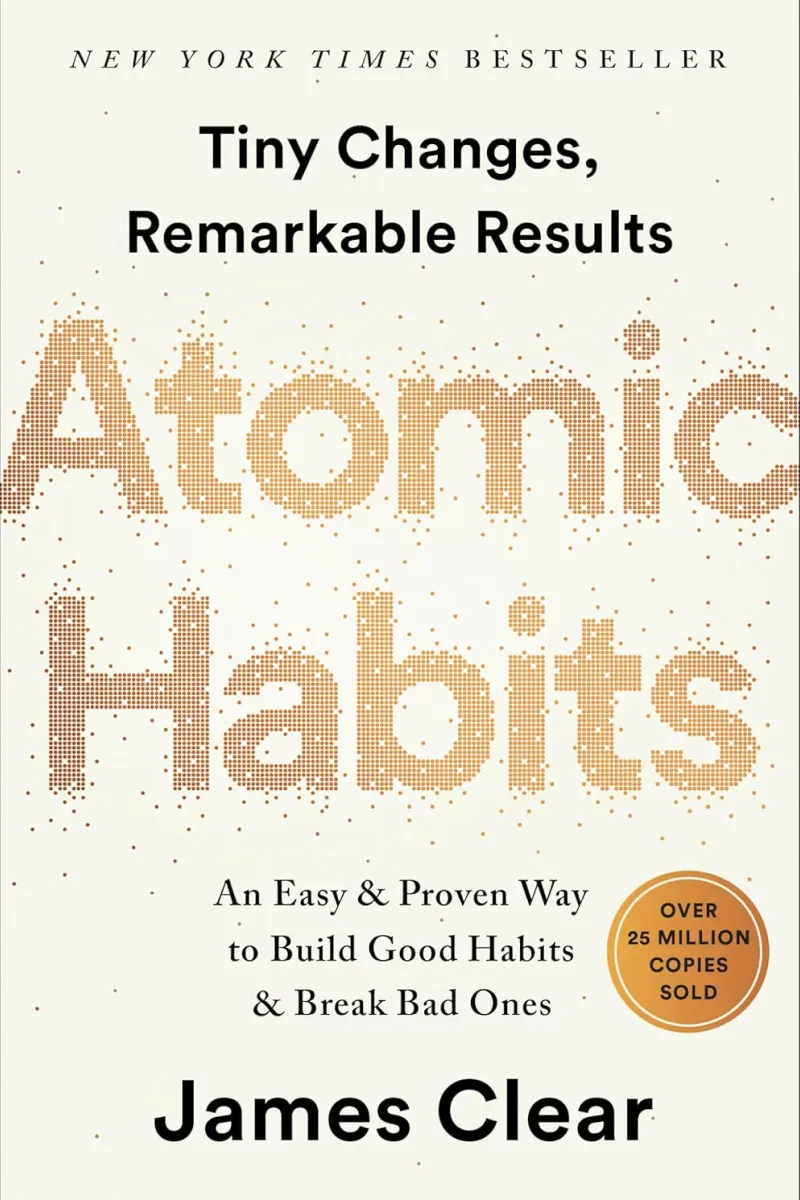
You've been thinking about this long enough.
Ten seconds. Your voice. That's all it takes.
Inner Dispatch turns a single daily recording into something you can actually see - a living reflection of where you've been.
Start free. No writing required. →Related articles

What Is Voice Journaling? A Beginner's Introduction
Discover what voice journaling is, how it works, and why speaking your thoughts beats writing them. A complete beginner's guide to starting an audio diary.

Journaling for People Who Hate Writing
You don't have to love writing to benefit from journaling. Here's how non-writers can build a reflection practice that actually fits — no blank pages, no prose required.
Types of Journaling Methods (Complete Guide)
Every major type of journaling explained in one place. Compare methods, find your fit, and build a practice that actually works for your life and goals.
The Benefits of Daily Journaling (Backed by Research)
What does science actually say about the benefits of journaling? A clear-eyed look at the research on mental health, cognition, physical health, and self-knowledge.