
How to Preserve Memories for Future Generations
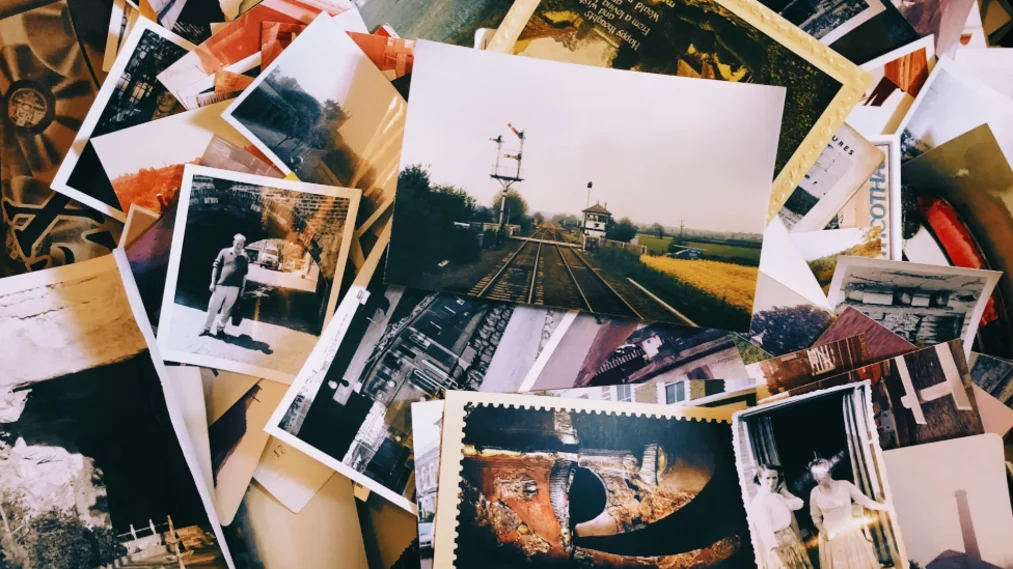
Somewhere, there are photographs of your great-grandparents that nobody can identify anymore. The faces are there — clear, specific, irreplaceable — but the names, the stories, the context that would make them meaningful have been lost. The people who knew them are gone. The thread connecting those faces to your life has been severed not by time but by silence: nobody wrote anything down, nobody recorded anything, nobody passed anything on.
This is the default outcome for most lives. Not because the lives weren’t worth preserving, but because preservation requires intention, and intention requires knowing that the future will want what the present has.
The future always wants what the present has. The problem is that the present rarely acts on this, because the sense of urgency that creates preservation behavior arrives too late — usually when the people and periods worth preserving are already gone.
This guide is about closing that gap. Not with elaborate archival projects or expensive equipment, but with practical habits that can be started today, maintained without significant effort, and that will produce records that genuinely survive — records that the people who come after you will be able to find, use, and be glad existed.
What Future Generations Actually Want
Before designing a preservation system, it’s worth thinking carefully about what future generations actually find valuable in inherited records. Because the things most worth preserving are often not the things people instinctively prioritize.
Stories, Not Just Images
Photographs without context are fragments. A hundred photographs of a person’s life, without dates, names, or stories, leave the inheritor with faces and locations but no thread connecting them. The photographs feel important — you can see they’re important — but the meaning can’t be reconstructed.
What turns images into inheritance is story: who these people were, what they believed, what they struggled with, what they were proud of, what they wished had been different. A single recorded conversation between grandparent and grandchild, in which the grandparent describes their childhood in their own voice, is more irreplaceable than a hundred photographs without captions.
Future generations inherit objects and images regularly. Stories, voices, and honest self-accounts are what they almost never inherit — and what they most miss when they start to look.
The Ordinary Alongside the Significant
The events people most often document — weddings, graduations, major celebrations — are the events most likely to have multiple records from multiple sources. If something significant happened, others were present, others photographed it, others remember it.
What nobody else documents is the ordinary: the specific way someone told a story, the texture of their daily life, the small details that made them who they were. These are what disappear entirely without personal documentation, and what future generations most acutely feel the absence of.
A record of a great-grandparent’s daily routine — what they cooked, how they spent their evenings, what they worried about, what made them laugh — is genuinely rare and genuinely irreplaceable. The formal portrait is everywhere. The ordinary record is nowhere.
The Inner Life
Letters from earlier centuries are so precious precisely because they reveal inner lives: what people actually thought, what they feared, how they made sense of their circumstances. These records exist because letters required people to articulate their inner experience and send it somewhere it would be kept.
Modern communication has largely eliminated that form, and nothing has replaced it. Most people leave enormous archives of external evidence — social media posts, photographs, messages — and almost no record of their inner experience. Future generations will know what their ancestors looked like and where they went. They won’t know what they thought about their lives.
Voice recordings and journals are the contemporary equivalents of letters. They’re where inner life gets preserved, if it gets preserved at all.
The Formats That Actually Survive
Not all documentation survives equally. Some formats that seem durable are surprisingly fragile; some that seem ephemeral can last centuries with minimal care.
The Durability Hierarchy
Physical documents and photographs have the longest track record of survival. A letter kept in a box, a photograph in an album, a journal on a shelf — these have survived centuries in reasonable conditions. Their durability is passive: they don’t require electricity, internet connection, software, or subscription renewal. They exist as objects, and objects persist.
Their limitation is accessibility: they exist in one physical location, are vulnerable to fire, flood, and physical deterioration, and can only be in one person’s hands at a time.
Digital files in multiple locations combine reasonable durability with the significant advantage of being infinitely copyable. A voice recording stored on three different services and an external hard drive is effectively invulnerable to any single point of failure. The risk with digital is obsolescence — file formats change, platforms close, storage media deteriorates — which is why redundancy and format choices matter.
Platform-specific content — social media posts, content stored only in specific apps, records accessible only through accounts with passwords you’ve shared with nobody — is the most fragile category. Platforms close. Accounts become inaccessible. Content created within platforms is often not exportable, or not exportable in useful formats. Memory built on platforms you don’t control is memory at risk.
What This Means in Practice
A preservation practice that will actually work across generations uses at least two formats for anything important: a digital copy for accessibility and replication, and either a physical copy or multiple redundant digital locations for durability.
For voice recordings specifically: export to a standard audio format (MP3 or AAC) that doesn’t depend on any single app, store in at least two locations, and consider occasional printing of transcripts for important recordings. The voice is in the audio; the words are in the transcript; one survives even if the other doesn’t.
What to Capture and When
The People Before They’re Gone
The most urgent preservation work is with the people whose time is limited: elderly parents and grandparents, relatives with health conditions, anyone whose stories and voice and specific self will be irreplaceable once lost.
The recordings most often regretted as unmade are conversations with people who are no longer alive to have them. Not formal interviews — just conversations. What was your childhood like? What do you wish you’d done differently? What are you most proud of? What do you want me to know? These questions, asked and answered in a recorded conversation, produce something that no amount of photographs or official records can replicate.
The barrier is usually discomfort — the conversation feels too heavy, the person might not want to be recorded, it seems premature or morbid. These barriers are real and worth acknowledging. They’re also regularly regretted when the window has closed.
A simple approach: tell the person you want to remember them as they are now. Ask if they’d be willing to be recorded for a short time. Most people are not just willing — they’re grateful. They wanted to say these things; they just needed someone to ask.
Your Own Life, Documented Now
The records that future generations will want most from you are the ones you’re producing right now — if you’re producing them.
Your daily life, your inner experience, your voice as it sounds today — these are creating right now and disappearing right now. The family members who will come after you will not have access to what you were actually like unless you create records while you’re alive and able to do it.
This is not a morbid observation. It’s a practical one. The time to document your life for the people who will inherit your story is not when you’re old enough to feel the urgency; it’s now, when the life you’re living is happening and can be captured.
A daily voice memo habit, maintained over years, produces something genuinely rare: a record of what you sounded like, how you thought, what you cared about, what your daily life felt like from the inside. This is the inheritance that most families have never had and can’t reconstruct.
Family Stories Before the Context Is Lost
Every family has stories that circulate orally — the story of how grandparents met, the account of what a family member did during a significant historical event, the explanation of why the family ended up in a particular place. These stories feel safe because they’re repeated often enough to feel permanent.
They’re not safe. Each generation of retelling compresses and changes them. Details drop out. Inaccuracies accumulate. And when the people who hold the original version are gone, the story that remains is the compressed, changed version — which is better than nothing but significantly less than what was there.
Recording family stories — even informally, even imperfectly — while the people who hold them are alive is preservation work that won’t get a second chance. A phone held up during a family dinner, capturing a story that’s been told many times, preserves a version of that story that all future retellings will be measured against.
The Transition Moments
The moments when one phase of life ends and another begins are worth documenting with specific intentionality. Moving from the house where children grew up. A parent retiring. A family member facing a significant health event. These transitions often receive external documentation — photographs of the empty house, the retirement party — but rarely receive the internal documentation that would be most valuable.
What does this feel like from inside? What does this moment mean? What do you want the people who come after you to understand about this period?
These questions, answered in a voice recording or a written entry, create documentation that photographs can’t provide. External events get photographed; inner experience gets spoken or written down, or it disappears.
Building a Practice That Lasts
The preservation work that actually survives across generations is not done in a single ambitious project. It’s done through consistent habits that run across years.
The Regular Recording Habit
The foundation of any multi-generational preservation practice is a regular recording habit — something that happens often enough to produce a substantial archive over time without requiring special circumstances.
A daily voice memo habit, even a brief one, produces 365 entries per year. Over ten years, that’s 3,650 entries — a substantial record of a decade of life. Over thirty years, it’s a record that will outlive you and contain things you don’t yet know will be worth preserving.
The habit doesn’t need to be elaborate. Three minutes most days, captured in a consistent place — the car, the morning routine, the transition into bed — produces an archive that serves both your own ongoing reflection and the eventual inheritance you leave.
The Explicit Labeling Practice
Unlabeled archives become inaccessible archives. Voice memos without dates or context become cryptic collections that future inheritors can’t navigate. Photographs without names become the anonymous faces problem that affects every family eventually.
The labeling practice is simple: at the beginning of any significant recording, state the date and any context that won’t be obvious from the recording itself. Not elaborate annotation — just the date, who’s present if others are involved, and what the occasion is if there is one. Thirty seconds of context can make a recording navigable that would otherwise be opaque.
For photographs: captioning at the moment of capture, or in a dedicated labeling session shortly after, before the context fades. Names, dates, and one sentence about what’s happening is enough. More is better; some is transformative compared to none.
The Explicit Legacy Recording
In addition to the ongoing daily practice, periodically make recordings specifically intended for future inheritors — recordings that assume the listener won’t have the context you have.
What do you want the people who come after you to know? This question, asked and answered in a voice recording addressed explicitly to future family members, produces something most families have never had: a direct communication from an ancestor to a descendant, unmediated by other people’s interpretations.
These recordings don’t need to be heavy or formal. They can be stories. They can be practical wisdom. They can be accounts of what your daily life is like right now, with the explicit understanding that you’re recording it for someone who will want to know. The awareness of the intended audience changes what you include — you explain what would be obvious to contemporaries, you provide context that future listeners will need.
Making the Archive Findable
A preservation practice that produces records nobody can find has failed at its most important task. The archive needs to be not just durable but discoverable — accessible to the people who will eventually want it.
Tell Someone It Exists
The most basic and most overlooked step: tell someone that the archive exists and where it is. Not necessarily what’s in it — but that it’s there, how to find it, and what you want done with it.
Many personal archives disappear not because they were destroyed but because nobody knew they were there. The voice memos on a phone are erased when the phone is cleared after someone’s death. The journal in a drawer is given away without being opened. The photographs on a hard drive are not found because nobody knew to look.
Name a specific person who will be responsible for the archive. Tell them where to find it. Give them any passwords they’ll need. Make this part of any general estate planning you’ve done, and if you haven’t done estate planning, make this part of the conversation that initiates it.
Organize for the Person Who Will Inherit
When organizing an archive, think about the person who will eventually navigate it — someone who won’t have your context, won’t know what’s significant, and will be looking for specific things without knowing where they are.
Organizing by date is the most universally navigable system: anyone can orient to a chronological archive even without knowing what they’re looking for. Topic-based organization requires knowing what topics exist. Date-based organization assumes only that you know roughly when something happened, which is almost always true.
Within date-based organization, simple annotation goes a long way: a folder named “2023 — Mom’s recordings from her last year” communicates more than one named “Audio 2023.” The annotation costs fifteen seconds and returns decades of navigability.
Plan for Format Survival
The specific apps and platforms you use today will not exist in their current form in fifty years. This is not speculation — it’s the established pattern of technology. Planning for format survival means:
Periodically export recordings from app-specific formats to standard file formats. MP3 and AAC for audio; JPEG and PNG for images; PDF for documents. These formats have broad support and are likely to remain accessible longer than proprietary formats tied to specific applications.
Store in multiple locations, at least one of which is not dependent on a single account or platform. An external hard drive, updated annually, provides a physical backup that survives account closures and platform changes.
Consider physical backups for the most important recordings: a transcript printed and stored with other family documents outlasts any digital format and requires no technology to access.
Common Questions About Preserving Memories for Future Generations
How do I start if I’ve never documented anything before?
Start with what’s most urgent: a conversation with an older family member, recorded on your phone. This requires no setup beyond hitting record, and it produces something irreplaceable immediately. After that, establish a simple daily practice — a brief voice memo at a consistent time — that builds an archive going forward. The past can be partially recovered through conversations and other people’s records; the present can only be captured now.
What if older relatives don’t want to be recorded?
Some people are uncomfortable being recorded, and that discomfort deserves respect. In these cases, the alternative is conversation: ask the questions, listen carefully, and write down what you heard as soon as possible after the conversation. A written account of a conversation, captured while the details are fresh, preserves significantly more than memory alone. It’s not as complete as a recording, but it’s far better than nothing.
How much should I document? Is there a risk of overdoing it?
The risk of overdoing documentation is real but less common than under-documentation. Comprehensive documentation can become burdensome and can interfere with experiencing life rather than recording it. The practical ceiling is whatever can be sustained without becoming a primary focus: brief daily entries, deliberate recording of significant conversations, and occasional legacy recordings add up to a substantial archive without requiring constant attention. If documentation starts feeling like a second job, it’s probably too much.
What’s the most important thing to record right now?
The voice of someone you love who won’t always be available to record. This is the most urgent and most irreplaceable documentation, because the window for it is finite and unknowable. Everything else can be approximated or partially recovered. A person’s voice, face, and stories — once gone — cannot be.
How do I store recordings safely long-term?
The three-location rule: keep any important recording in three separate places, at least one of which is physical (external hard drive) and at least one of which is cloud-based. Update the physical copy annually. Export from app-specific formats to standard file formats periodically. For the most important recordings, consider producing a written transcript as an additional backup. No single storage method is entirely reliable over decades; redundancy is the only real protection.
What do I do about privacy — some recordings are very personal?
Personal recordings intended for future generations can be given restricted access: sealed until a certain date, accessible only to specific people, or released in stages as circumstances allow. The key is making the restriction explicit: tell someone what the restriction is and how to implement it, and put it in writing alongside the archive information you’ve shared with your designated custodian. Privacy concerns are legitimate reasons to restrict access; they’re not reasons to avoid creating the records in the first place.
The Inheritance Nobody Talks About
Most people think about inheritance in terms of objects and money — the things that get distributed, divided, and sometimes argued over. The inheritance that tends to matter most over time is something else: the sense of who you came from, what they were like, how they made sense of their lives.
This inheritance is made of stories, voices, and honest self-accounts. It’s made of the records that were created by people who understood that future generations would want them. It’s made of the ordinary documentation of daily life that seemed too unremarkable to preserve — and that became, once the person was gone, the most remarkable thing they left behind.
The people who will inherit your story don’t exist yet, or they’re children who can’t yet understand what you have to offer. They’ll want what you have. They’ll want your voice. They’ll want to know what your daily life felt like, what you believed, what you struggled with, what you hoped for.
That record exists if you create it. It doesn’t exist if you don’t. There is no version in which someone else creates it for you, because no one else has access to the inside of your life.
This is not a burden. It’s a practice — brief, sustainable, and cumulative. A few minutes most days, capturing what’s present, building an archive that grows across years into something genuinely irreplaceable.
Start with today. The record of today is the only one that can be made right now.
This section contains affiliate links.
Go Deeper
You've been thinking about this long enough.
Ten seconds. Your voice. That's all it takes.
Inner Dispatch turns a single daily recording into something you can actually see - a living reflection of where you've been.
Start free. No writing required. →Related articles
How to Document Your Life: A Simple System for Capturing Memories
A complete guide to documenting your life — covering what to capture, how to capture it, and how to build a system that preserves memories without becoming a second job.
How to Record Family Stories Before They're Lost
A practical guide to capturing the stories, memories, and voices of the people you love — before time makes it impossible. No equipment or expertise required.