
How to Make a Year-End Memory Video From Daily Moments
Every January, the same thing happens. You look back at the year that just ended and feel a vague dissatisfaction — not with the year itself, but with how little of it you can actually recall. There were good months. There were people you spent time with. There were moments that felt significant in the moment but have since dissolved into a general blur. The year happened. You just can’t quite find it anymore.
A year-end memory video changes that. Not a polished production with background music and cinematic transitions, but a simple, personal compilation of the moments you actually lived — the ordinary ones and the significant ones, assembled into something you can watch, share, and return to for years. The kind of thing that, ten years from now, will make you catch your breath a little.
The good news is that you almost certainly have everything you need already. The photographs on your phone, the short videos you took but never organized, the voice notes and audio clips from days that mattered — this is your raw material. Turning it into a year-end memory video doesn’t require editing software expertise or hours of work. It requires a framework, a couple of focused evenings, and the intention to actually do it.
This guide walks you through the entire process, from gathering your material to finishing something you’ll be glad you made.
Why a Year-End Memory Video Is Worth Making
Before the how-to, a brief case for the why — because if this is going to be worth your time, it helps to understand what you’re actually creating.
The Problem with Passive Documentation
Most people document their lives passively. They take photographs. They capture occasional videos. They save voice messages. But passive documentation without curation is a pile, not a record. The photographs sit in a camera roll in reverse chronological order, accessible in theory but not in practice. The videos are too long or too numerous to share meaningfully. The moments exist, but they’re not organized into anything you can experience or return to.
A year-end memory video is an act of active curation. It takes the pile and creates something coherent — a version of the year that reflects what actually mattered, assembled with enough intentionality to be genuinely watchable rather than just technically preserved.
What Memory Research Tells Us About Reviewing the Past
There is real psychological value in deliberately revisiting the year. Research on what psychologists call “the reminiscence bump” — the disproportionate recall of events from certain life periods — suggests that memory is powerfully shaped by how we process and revisit experiences. Events that are reviewed, discussed, and given narrative form are retained more vividly and for longer than events that simply pass.
Creating a year-end video is, among other things, a memory consolidation exercise. The act of going through your photos and recordings, selecting the ones that represent the year, and assembling them into a sequence forces the kind of deliberate processing that strengthens memory encoding. The video itself is a future reference point; the process of making it is already doing memory work.
It Becomes More Valuable Every Year
The most compelling argument for making a year-end memory video is the one you’ll feel most acutely in five years: these videos compound in value over time in a way that individual photographs don’t. A single photograph from three years ago is pleasant. A five-minute video that captures what your life looked and sounded like three years ago — the faces, the places, the specific texture of that year — is something else entirely. It’s a window into a version of your life that is genuinely gone, preserved with a specificity that memory alone cannot maintain.
The first year you make one, it’s a nice project. By the fifth year, the archive is extraordinary.
Step 1: Gather Your Raw Material
The first step is collecting everything that might go into the video. This is usually more abundant than people expect.
Photos and Videos from Your Phone
Your camera roll is the primary source. Don’t curate yet — just gather. Export or identify the photos and videos from the year you’re documenting. Most phones allow you to filter by date range, which makes this straightforward. On iPhone, you can use the Photos app to browse by year. On Android, Google Photos offers a similar view.
Don’t worry about quality at this stage. You’re looking at volume first. A year of regular phone photography typically yields hundreds of usable images and dozens of video clips.
Voice Recordings and Audio
This is the element most people don’t think to include — and it’s often the most emotionally resonant once it’s in. Voice messages you saved, voice journal entries from the year, short audio clips of your children or family, recorded conversations — any audio that captures the sound of the year has a place in a memory video.
Even a single voice recording layered under a sequence of photographs does something that music alone cannot: it puts you back inside the year with a specificity that is hard to describe until you experience it. Your voice from six months ago, talking about what you were thinking about at the time, is more intimate than any stock music track.
Videos You Took but Forgot About
Most people have a category of video they’ve completely forgotten existed: the thirty-second clip of something funny, the slow-motion shot that seemed clever at the time, the birthday video that ran a bit long. These are often the best material for a memory video — not the posed photographs, but the captured moments that were never meant to be anything more than a record.
Go through your video library specifically looking for clips between fifteen seconds and two minutes. These are the right length for a compilation. Longer clips will need to be trimmed.
Screenshots and Other Images
Screenshots of text conversations, tickets for events you attended, maps of places you went — these functional images often tell the story of a year more specifically than photographs. A screenshot of a restaurant reservation, a text message that made you laugh, a confirmation email for a trip — these are the connective tissue of a year.
Step 2: Do a First Pass Curation
Once you have your raw material collected, do a first pass curation before you think about structure or tools. This is the most important step and the one most people skip, leading to compilations that are too long and too diluted.
The Emotional Resonance Test
For photographs and video clips, apply a simple test: does this image or clip make you feel something? Not “is this a good photograph” or “was this a good day” — just: does this make you feel something when you look at it now?
The images that pass this test are your core material. The ones that don’t — even if they document something that happened — don’t earn their place in a video you’ll want to watch again. A memory video that includes everything is a slideshow. A memory video that includes the right things is a record.
Aim for 80-120 Images and Clips
For a finished video of three to eight minutes — long enough to feel substantial, short enough to actually be watched — you need roughly 80 to 120 photographs and video clips at typical display times of three to five seconds per image. This feels like a lot if you’ve never made one, and too few if you’re a prolific photographer. Let it guide your curation.
If you’re starting with 500 photographs, your job in this step is to get to 100-150 by removing the duplicates, the technically poor images, and the ones that don’t pass the emotional resonance test. You’ll refine further in later steps.
Organize Roughly Chronologically
Before moving to the next step, arrange your selected material in rough chronological order. You don’t need to be precise — the structure can shift — but having a chronological foundation makes the narrative arc of the year easier to work with and easier to watch.
Step 3: Add Audio
This step is optional in the sense that you can make a year-end memory video without it, but including audio — especially voice recordings — transforms what you’re creating from a slideshow into something that genuinely captures the year.
Voice Recordings as Narration
If you kept any kind of voice journal or made voice notes during the year, listen back through them and identify one to three recordings that feel representative of the year. These don’t need to be dramatic — a recording from an ordinary month in which you were thinking about something you cared about, or a recording from a significant moment, or a brief entry that captures your state of mind during a particular period.
Layer these recordings under the relevant photographs in your compilation. The voice anchors the images to the interior experience of the year, not just the exterior events.
Family and Friend Voices
Short audio clips of people you love — especially children’s voices, which change so rapidly — are among the most precious archival material a memory video can contain. If you have voice messages, recorded conversations, or audio clips that include the voices of people who matter to you, include them.
Music as the Backbone
Most year-end memory videos use music as the primary audio layer, with any voice recordings or clips placed over or between musical sections. Choose one to three tracks that feel emotionally right for the year — not necessarily happy, but true to the texture of the time. Avoid tracks with intrusive lyrics for sections where you’re also using voice recordings.
Music from the year itself — songs you listened to, tracks that were playing during moments the video captures — often works better than deliberately “moving” music chosen after the fact. It returns you to the time rather than commenting on it from outside.
Step 4: Choose Your Tool
Year-end memory videos don’t require professional editing software. Several tools make the process accessible without editing experience.
For Phone-First Workflows
Google Photos automatically generates year-in-review videos and “memories” compilations, but these are algorithmically generated rather than curated. For a personalized video, use the manual movie creation tool within Google Photos: select your images and clips, arrange them, add music, and export. The tool is limited but requires no learning curve.
Apple Photos has a similar memories and video creation tool. Select photographs, create a memory movie, choose a mood/music style, and the app generates a compiled video with transitions. You can reorder images and change music but have limited control over timing and editing.
Both of these are excellent for a first year-end video with minimal effort. Their limitations become apparent if you want more control over pacing, transitions, or audio layering.
For More Control Without a Learning Cliff
CapCut (free, available on iOS and Android) offers significantly more control than the built-in phone tools while remaining accessible to non-editors. You can control the duration of each image, add multiple audio tracks, layer voice recordings under music, add text, and control transitions — all through a reasonably intuitive mobile interface.
iMovie (free on Mac and iOS) is more powerful than the photos app tools and gives you a proper timeline, multi-track audio, and transition control. If you’re comfortable with a simple interface and want more than the automatic tools provide, iMovie is the right next step.
For the Most Control
DaVinci Resolve (free, desktop) is professional-grade video editing software with a free tier that is genuinely powerful. It has a learning curve, but its color tools, timeline, and audio editing capabilities are excellent. If you find yourself making year-end videos annually and wanting to improve the quality each year, investing a few hours in learning Resolve is worthwhile.
For most people making their first or second year-end memory video, Google Photos or Apple Photos for a quick version, or CapCut for a more personal one, is the right starting point.
Step 5: Assemble and Structure
With your curated material, your audio, and your tool chosen, you’re ready to assemble. The structure of a year-end memory video follows a natural arc that most people arrive at intuitively.
The Opening: Ground the Year
The first fifteen to thirty seconds should establish the year — the people, the places, the feeling. A few images or a short clip that captures something essential about how the year began or what characterized it overall. This is where an opening voice note, if you have one, works particularly well: the sound of you at the beginning of the year, thinking about what you were hoping for or working on, immediately creates emotional context for everything that follows.
The Middle: The Months
The body of the video moves roughly chronologically through the year, organized loosely by season or significant period rather than month-by-month. Don’t try to represent every month equally — let the footage guide the emphasis. Some months will have more material and deserve more time; others might be represented by a single photograph.
Look for natural groupings: a trip, a season, a period when something significant was happening. These become the chapters of the video’s middle section. Transitions between them can be marked by a brief pause in the music, a title card with the month or season, or simply a clear shift in the images.
The Close: The Year as a Whole
The final section — roughly the last thirty to sixty seconds — should feel like an arrival rather than a stopping point. This is where you put the images or clips that feel most representative of the year as a whole: the faces you saw most, the places you felt most yourself, the moments that feel, in retrospect, most like that particular year. If you made a year-end voice note — a brief reflection on what the year meant — this is where it goes.
Pacing and Length
A common mistake in first-time memory videos is pacing that’s too slow. Three to four seconds per image is usually right; five seconds feels like it’s waiting; two seconds feels rushed. Video clips should generally be trimmed to fifteen to thirty seconds unless a longer clip is particularly strong.
A finished video of four to six minutes is the sweet spot for most people — substantial enough to feel like a real record, short enough to be rewatchable and shareable. Push past eight minutes and the video becomes a production rather than a keepsake.
Step 6: Finish and Preserve
Once your video is assembled, two final steps complete the project.
Export in a High-Quality Format
Export at the highest quality your tool offers, typically 1080p or 4K if your source material supports it. Save the exported file to your primary storage location — whether that’s a dedicated folder on your computer or a cloud storage service — named clearly with the year: 2024-year-end-memory-video.mp4.
Then back it up. Apply the same archival thinking you’d give to any important recording: cloud storage plus at least one local copy on an external drive. A year-end memory video is the kind of file you’ll want to access for decades; treat it accordingly.
Share It
A year-end memory video is inherently shareable in a way that a camera roll is not. Sending it to the people who appear in it — family, close friends, a partner — is a gift of a specific kind: not a photograph of a moment, but a record of a year you shared. Most people who receive one describe it as among the most meaningful things anyone has sent them.
Consider also sharing it privately with your future self. Some people send themselves an email with the video attached, set to deliver in five or ten years. Others save it to a folder they’ve designated for future review. The video will be more moving than you expect when you find it.
Common Questions About Year-End Memory Videos
How long should a year-end memory video be?
Four to six minutes is the practical sweet spot for most personal year-end videos. Long enough to feel like a genuine record of the year; short enough to be watched more than once and shared without asking too much of the recipient. If you have an unusually full year with a lot of strong footage, pushing to eight minutes is defensible. Beyond that, the video becomes difficult to share and harder to return to. When in doubt, trim.
What if I didn’t take many photos or videos this year?
Work with what you have. Even twenty or thirty photographs can make a meaningful memory video — the pacing simply becomes slower, and the images more deliberate. Years with less documentation are often the ones where voice recordings become most valuable: a few recordings of you talking about your life during the year fill the space that photographs would otherwise occupy, and often do so more meaningfully. A sparse video from a hard year is not a failed project — it’s an honest record of what that year was.
Do I need to include every significant event?
No, and trying to creates the most common problem with year-end memory videos: comprehensiveness at the expense of watchability. The goal isn’t documentation of everything that happened — it’s a video that captures the feeling and texture of the year. Some significant events will be represented by a single image. Others might not be represented at all if the footage doesn’t support it. Let the material guide you, not the calendar.
What music should I use?
The music that feels emotionally true to the year — which may or may not be the music that feels most moving in the abstract. Songs you actually listened to during the year, tracks that were playing during moments the video captures, or music that captures the mood of the time tend to work better than deliberately poignant choices made after the fact. For a four-to-six minute video, one or two tracks is usually right. Use instrumentals or tracks with minimal lyrics for any sections that include voice recordings or video audio.
Can I include voice memos or journal recordings I didn’t intend to be public?
Yes, if the video is for private use only. A personal year-end memory video shared only with yourself or the people who appear in it has no audience to worry about. Voice notes made in private, unguarded moments — talking about what you were struggling with, what you were hoping for, what you were thinking about — are often the most valuable material in a memory video precisely because they’re unperformed. Just be clear about who will have access to the video when you share it.
Is it too late to make one for a year that’s already passed?
Not at all. A year-end memory video for last year, or the year before, made now with the photographs and recordings that still exist, is still meaningful — perhaps more so, because the distance of time clarifies which moments actually mattered. The footage that survives to be included has been pre-selected by memory: you’ve already forgotten the images you don’t have, which means what remains is already the meaningful material. Start with whichever year is most vivid or most important to you.
What if I want to include other people’s photos and videos?
Ask them to share their favorites from the year. A year-end memory video assembled from multiple people’s perspectives on shared events is often richer than one assembled from a single camera roll — it includes moments you weren’t present for, angles you didn’t capture, faces you were too present with to photograph. Create a shared album or folder and invite the relevant people to contribute. This also makes the final video more genuinely shareable with the group.
The Bottom Line
A year-end memory video is one of the most personal things you can make from materials you already have. It asks only that you look at what the year contained, choose what mattered most, and put it together into something watchable.
The technical barrier is genuinely low. The emotional return is genuinely high. And the archive you build by making one each year — five videos, ten videos, a collection that spans decades — becomes something that future you will be profoundly glad exists.
The year you just lived deserves a record that’s more than a camera roll. Give it one.
This section contains affiliate links.
Go Deeper
You've been thinking about this long enough.
Ten seconds. Your voice. That's all it takes.
Inner Dispatch turns a single daily recording into something you can actually see - a living reflection of where you've been.
Start free. No writing required. →Related articles
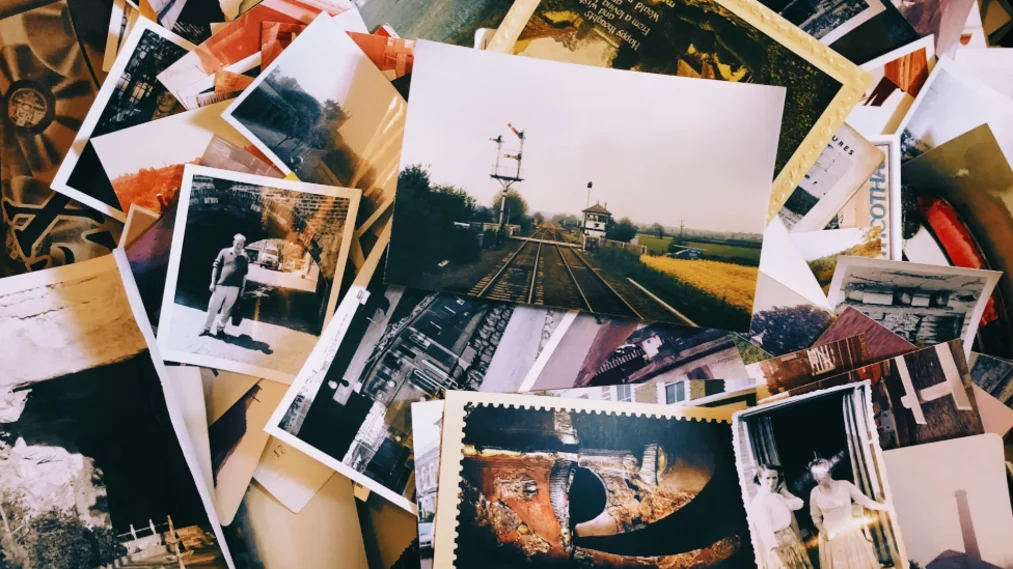
How to Document Your Life: A Simple System for Capturing Memories
A complete guide to documenting your life — covering what to capture, how to capture it, and how to build a system that preserves memories without becoming a second job.
How to Build a Personal Time Archive in 5 Minutes a Day
A personal time archive captures the texture of your life as it happens—here's how to build one in five minutes a day using voice, text, or both.