
How to Build Consistency Without Willpower
Most advice about building consistency sounds like a motivational speech in disguise: dig deeper, want it more, develop discipline, strengthen your resolve. The underlying assumption is that consistency is a character trait — something you either have or work harder to develop — and that failure to be consistent reflects some deficiency in willpower or commitment.
This assumption is both common and wrong, in ways that are well-documented by behavioral science.
Willpower — the capacity for deliberate self-regulation against impulse or preference — is real, but it’s a limited and unreliable resource. Research by Roy Baumeister and colleagues established that self-regulatory capacity depletes with use, a phenomenon called ego depletion: the same person who exercises excellent self-control in the morning may have substantially diminished capacity for it by afternoon. More recent research has complicated and partially challenged the ego depletion model, but the practical implication remains well-supported: relying on willpower as the primary mechanism for consistent behavior is a structurally fragile strategy.
The people who appear to have extraordinary willpower — who exercise every day, maintain their journaling practice for years, eat well without apparent effort — are often not exercising extraordinary self-control. They’ve built environments, habits, and identities that make the desired behavior require less willpower, not more. Consistency without willpower isn’t a paradox; it’s the actual mechanism behind most durable behavior change.
This guide covers how to build that kind of consistency: the strategies, the underlying psychology, and the specific implementation that makes behavior reliably happen without depending on daily reserves of motivation or self-control.
The Core Problem with Willpower-Based Consistency
Willpower-based approaches to consistency share a structural vulnerability: they require sufficient motivational and self-regulatory resources at the moment of decision. These resources fluctuate significantly across the day, across emotional states, and across life circumstances. A system that requires them to be available will fail whenever they aren’t — which is, predictably, when the system is most needed.
Consider the pattern: you commit to a daily journaling practice with genuine intention. Day one happens without difficulty. Days two through five are manageable. By day eight, you’re tired, work has been stressful, and the journaling session that felt easy on day one feels like an additional demand on a depleted system. The willpower isn’t there, so the behavior doesn’t happen.
This is not a character failure. It’s a design failure. The practice was designed for the person you are on a good day, not the person you are on a depleted one. And the depleted person is the person who is most in need of whatever the practice offers.
The shift from willpower-based to system-based consistency requires understanding where behavior actually comes from — which is mostly not from deliberate conscious decision-making.
How Behavior Actually Works
Research by Wendy Wood at USC synthesized decades of habit research into a key finding: roughly 43 percent of our daily behaviors are habitual — performed in the same context, without deliberate decision-making, triggered by environmental cues rather than conscious intention. We are, in other words, far more automatic than we typically believe ourselves to be.
This automaticity is not a failure of mindfulness or intentionality — it’s the brain’s efficiency system. Habitual behaviors require fewer cognitive resources than deliberate ones, which is why behavior that’s been made habitual feels effortless while the same behavior as a new practice feels demanding.
The implication for building consistency without willpower: the goal is not to make yourself do things through greater self-discipline. The goal is to make the things you want to do happen automatically — triggered by environment, embedded in routine, supported by identity — so that they require the same low cognitive investment as other habitual behaviors.
The Five Mechanisms of Willpower-Free Consistency
1. Environmental Design
The single most powerful and underused tool for building consistency is changing the environment rather than changing the person.
Behavior is substantially determined by context. The same person in different physical and social environments makes systematically different behavioral choices — not because their values change but because the environmental cues that trigger behavior change. Research on context-dependent behavior change, by Wendy Wood and David Neal, shows that people who change contexts (move homes, change jobs, travel) are significantly more likely to successfully change habits than those who attempt change in the same environment. The old context is saturated with cues that trigger old behaviors.
You can engineer this for yourself without a major life change by deliberately restructuring your immediate environment.
Reduce friction for desired behaviors: Every step between wanting to do something and doing it is a point of potential abandonment. A running shoe by the door is retrieved more reliably than a running shoe in the closet. A journal on the kitchen table is opened more reliably than one in a drawer. A water bottle already filled and visible is consumed more reliably than one that needs to be found and filled. Map the friction in your environment and systematically remove it.
Increase friction for undesired behaviors: The same principle in reverse. Leaving your phone in another room removes the zero-friction access that makes mindless scrolling so automatic. Keeping unhealthy foods at the back of the pantry rather than eye level introduces enough friction to reduce their automatic selection. Logging out of time-consuming apps after each session adds enough friction that opening them becomes a choice rather than a reflex.
Use visual cues: Behavior is often triggered by what you see. A book on your pillow triggers reading before sleep. A yoga mat unrolled in your living room triggers movement more reliably than a mat rolled and stored. Post-it notes at relevant locations create environmental cues that substitute for memory. Make the desired behavior visible at the moment it should happen.
The environment design approach works because it operates at the level of automatic behavior rather than deliberate decision-making. You’re not asking yourself to choose the desired behavior every day — you’ve arranged things so the desired behavior is the path of least resistance.
2. Anchor-Based Triggering
Behavior that has no reliable trigger depends on recall and motivation — both unreliable. Behavior that fires automatically after a consistent, reliable trigger requires neither.
An anchor is an existing behavior that reliably precedes the new habit, creating a stimulus-response pattern that eventually becomes automatic. The formula is simple: After I [anchor], I will [new habit]. The anchor needs to happen every day without exception, at the same point in your routine, and it should naturally precede a moment when the new habit is logistically possible.
The choice of anchor is more important than most people realize. A good anchor has three qualities:
It’s genuinely daily — not “usually in the morning” but a specific behavior that happens every morning without variation. Pouring coffee. Getting into the car. Sitting down at your desk. Brushing teeth. Behaviors that happen at consistent frequencies with high reliability.
It creates a natural pause after it completes. The moment between the end of the anchor and the beginning of whatever comes next is where the new habit is inserted. A natural pause is a gap in the behavioral sequence that accommodates the new behavior without requiring it to displace something else.
It’s logistically compatible with the new habit. “After I pour my coffee” is a good anchor for a journaling habit if the coffee-pouring happens at a desk where a journal is accessible. It’s a poor anchor for a journaling habit if the coffee is made and immediately carried to an unprivate setting.
Building an anchor connection takes two to eight weeks of consistent pairing before the trigger becomes reliable. During that period, you’re doing more work than the habit requires once it’s established — you’re essentially building the automatic trigger manually, through deliberate repetition. After the anchor is established, the trigger fires without deliberate intention.
3. Identity-Based Motivation
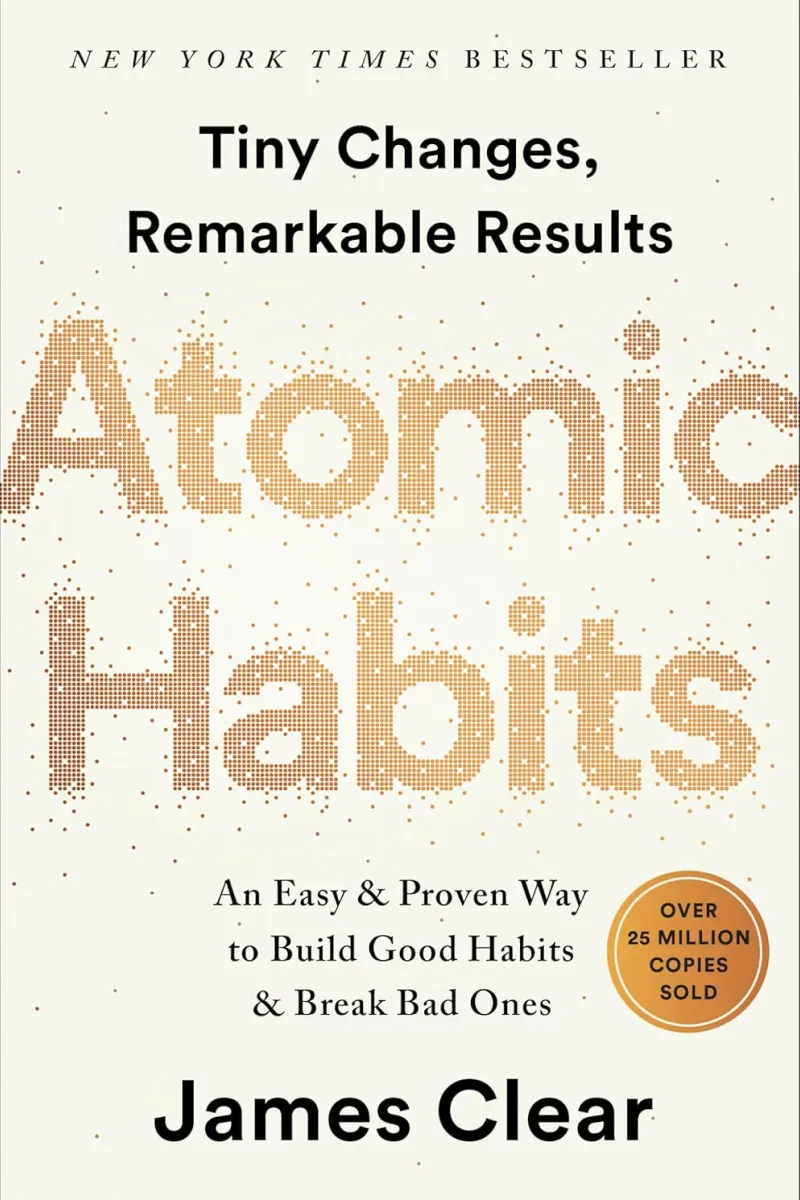
James Clear’s concept of identity-based habits captures something important: behaviors that are consistent with who we believe we are require less willpower to maintain than behaviors that feel external to our self-concept.
“I’m trying to exercise” and “I’m someone who moves their body daily” are structurally different. The first positions exercise as an external goal pursued through effort. The second positions it as an expression of who you already are. Behaviors that express identity feel natural and self-reinforcing; behaviors pursued as external goals feel effortful and contingent on ongoing motivation.
The practical application is a shift in how you talk and think about the behaviors you’re building. Instead of framing them as goals (“I’m trying to meditate every day”), frame them as identity expressions (“I’m a person who meditates”). This isn’t self-deception — it’s a deliberate use of self-concept to align behavior with identity in the direction you want rather than having your identity formed by whatever you happen to do.
The identity shift works backward as well as forward: every time you complete the behavior, you’re casting a vote for the identity. Missing a day is casting a vote in the other direction. This framing makes individual instances more meaningful without requiring that any single instance be high-stakes — it’s the cumulative pattern of votes that shapes the identity, not any one day.
For journaling and reflective practices specifically, the identity shift sounds like: “I’m someone who reflects regularly” rather than “I’m trying to build a journaling habit.” The first identity includes the behavior as a natural expression; the second positions it as a struggle to be sustained through effort.
4. Friction Sequencing and Implementation Intentions
Research by Peter Gollwitzer on implementation intentions — what he called “if-then” planning — shows that specifying the exact conditions under which you’ll perform a behavior increases the likelihood of doing it substantially more than simply intending to do it.
The implementation intention format: “When [situation], I will [behavior].”
Not “I’ll journal in the morning” — “When my coffee is poured and I sit down at the kitchen table, I will open my journal and write for five minutes.”
The specificity removes the decision-making at the moment of action. You’re not deciding whether to journal this morning — you’re executing a pre-made decision. The deliberate decision was made once, in advance, when cognitive resources were available. The execution at the actual moment requires only behavioral pattern-matching (“This is the coffee-sitting situation I planned for”) rather than fresh deliberation.
Implementation intentions are most effective when they specify:
- A concrete situation (a physical location or immediately-preceding action)
- The specific behavior (not “journal” but “write three sentences”)
- Optionally, a recovery response for when the situation is absent (“If I miss my morning window, I will do it during my lunch break instead”)
The implementation intention essentially pre-loads a decision, removing it from the moment of limited willpower.
5. Social Architecture
Human behavior is profoundly shaped by the behaviors of people around us. This isn’t weakness or susceptibility — it’s the normal operation of social cognition in a species that evolved in intensely social groups. The people around you are significant environmental factors, and social architecture is the deliberate use of this effect.
Social architecture for consistency means:
Joining environments where the desired behavior is normal: If everyone in your social environment exercises regularly, exercises is a socially normal behavior and its absence is what requires explanation. If none of your immediate social contacts exercise, you’re constantly swimming against a social current that treats the behavior as unusual. Placing yourself in environments — online communities, classes, friend groups, workplaces — where the behavior you’re building is ordinary significantly reduces the social friction against it.
Explicit accountability without shame: Telling another person about your behavioral goals increases follow-through substantially. The key design detail is the structure of the accountability: accountability relationships work better when they emphasize curiosity and problem-solving (what got in the way? what adjustment would help?) rather than performance evaluation (did you do it or not?). The former supports adaptation; the latter supports avoidance when the record is imperfect.
Behavioral synchronization: Doing the desired behavior alongside someone else — even virtually — creates a synchronization effect that increases consistency. Exercise classes, co-working sessions, and accountability check-ins where two people do their respective practices simultaneously all use this mechanism.
Common Willpower-Replacement Mistakes
Replacing One Form of Effort with Another
Some people interpret “don’t rely on willpower” as meaning they should find ways to enjoy every desired behavior, which leads to spending significant effort searching for forms of exercise, eating, or reflection that feel effortlessly pleasurable. This is a different kind of effortful approach — it’s trying to transform the feeling of the behavior rather than making the behavior happen regardless of feeling.
Willpower-free consistency doesn’t require that the behavior feel enjoyable in the moment. It requires that the behavior happen regardless of how it feels. A morning run that you don’t particularly look forward to but that happens automatically because you lace up your shoes immediately after getting out of bed — and shoes are placed by the bed each night — is more consistent than a run contingent on feeling motivated.
The goal is reducing the behavioral friction and decision-making, not transforming the hedonic experience.
Waiting for Motivation to Design the System
System design is best done at a time of relative calm and high resource availability — not during the motivational high of starting a new resolution, and not during the depleted low of a difficult week. The motivational high tends to produce overambitious systems calibrated to best-day performance. The depleted low produces despair and abandonment.
Design the system during a neutral period. Think about what your worst day looks like and make sure the system survives it. Design the anchor for the person who is tired and has had a hard day, not the person who is energized and has unlimited time.
Confusing Novelty with Consistency
New practices feel effortful because they’re novel as well as because they require deliberate choice. As novelty decreases, the effort required decreases — not because you’ve developed greater discipline, but because the behavior becomes more familiar and eventually more automatic. Many people abandon practices during the period when they’re transitioning from novel-and-effortful to familiar-and-automatic, mistaking the continued effort for evidence that the behavior hasn’t taken hold.
The transition from deliberate to automatic typically takes six to twelve weeks for simple behaviors. During that period, the design features — the anchor, the environmental setup, the implementation intention — need to remain in place. They’re carrying the behavior while automaticity develops.
Practical Implementation: Your First Week
Day 1: Identify one behavior you want to make consistent. Write out its minimum viable version — the version achievable on your worst day.
Day 2: Map the friction. List every step between wanting to do the behavior and actually doing it. Eliminate or reduce each step. Set up the physical environment to make the behavior the path of least resistance.
Day 3: Choose your anchor. Write out the implementation intention: “When [anchor completes], I will [minimum viable behavior].” Put this where you’ll see it at the time of the anchor.
Day 4: Write your identity statement. “I am someone who ___.” Say it to yourself at the moment of completion each day. It sounds slightly awkward at first. That’s fine.
Day 5-7: Execute without evaluation. Just do the minimum viable behavior after the anchor, every day. The first week is not about seeing results — it’s about pairing the anchor with the behavior repeatedly enough that the pairing begins to feel natural.
After week one: Don’t increase the difficulty. Continue for another three to five weeks before making any adjustments. The system needs to become reliable before it becomes ambitious.
Frequently Asked Questions About Consistency Without Willpower
If I don’t use willpower, what’s doing the work of keeping me consistent?
Environment, automaticity, and identity are doing most of the work. When the behavior is triggered by a reliable anchor rather than a deliberate decision, when the environment removes friction rather than requiring you to overcome it, and when the behavior is experienced as identity-consistent rather than as external effort — the behavior happens with significantly less active self-regulation than willpower-based approaches require. This doesn’t mean the behavior requires zero effort, particularly in early stages. It means the effort is front-loaded into system design rather than required daily.
How long does it take to build consistency without relying on willpower?
Research on habit automaticity suggests an average of 66 days for simple behaviors, with significant individual variation. The transition from deliberate to automatic doesn’t happen at a single moment — it’s a gradual reduction in the cognitive cost of the behavior. Most people begin noticing meaningful reduction in effort around weeks four to six. Full automaticity — where doing the behavior feels as natural as brushing teeth — typically takes two to four months. During the entire formation period, the system (anchor, environment, implementation intention) needs to remain in place.
What about behaviors that can’t be anchored to an existing routine?
Some behaviors are genuinely difficult to anchor because they’re tied to unpredictable circumstances. The most effective alternative is to create a dedicated time container — not a time of day, but a specific contextual container. “My morning commute is my podcast time” works because the commute is a reliable container even if its exact time varies. “The fifteen minutes after I close my laptop for the day” works if laptop-closing is reliable. For truly unpredictable schedules, calendar-blocking — literally scheduling the behavior as an appointment — provides the contextual container that anchors can’t.
Does this approach work for complex behaviors, not just simple habits?
The principles — environmental design, anchor triggering, identity alignment — apply to complex behaviors, but complex behaviors require more sophisticated implementation. A complex behavior often needs to be decomposed: the trigger can reliably initiate a simple starting action (sitting down, opening the file, putting on shoes) even when the full behavior can’t be predetermined. The simple starting action is the anchor target; once started, the full complex behavior typically follows. This is the value of the “two-minute rule” — if the trigger reliably produces two minutes of the behavior, the behavior often continues past two minutes by its own momentum.
What should I do when consistency breaks down despite having a good system?
Treat it as diagnostic rather than personal. Ask: what changed that disrupted the system? Was the anchor disrupted (change in morning routine, travel)? Was the environmental setup lost (staying somewhere else, desk moved)? Was the identity weakened (negative self-talk after missed days)? Usually the breakdown is traceable to a specific system component that needs to be re-established. Recreate the disrupted component specifically, rather than trying to restart with greater willpower or commitment. The system that worked before will work again once the disrupted component is restored.
How do I know if a behavior has become truly automatic?
The behavioral hallmark of automaticity is that the behavior happens without explicit decision-making at the moment of the anchor. You’re not asking yourself whether you feel like journaling today — you poured your coffee and your hand is already reaching for the journal. A reliable test: notice whether you experience the absence of the behavior as stranger than its presence. If missing the behavior feels like forgetting something — a mild wrongness, an interrupted routine — rather than relief or indifference, the behavior has probably become automatic. This shift typically happens gradually and often isn’t noticed consciously until someone asks you how long you’ve been doing the practice.
The Structural Case
The behaviors that you maintain for years and decades aren’t maintained by extraordinary willpower. They’re maintained because somewhere along the way — whether by design or accumulated experience — they became automatic, identity-consistent, and environmentally supported enough that stopping them would require more deliberate effort than continuing them.
This is an achievable state for almost any behavior you want to make consistent. The path to it doesn’t run through greater self-discipline. It runs through better design: lower friction, more reliable triggers, clearer identity alignment, smarter social architecture.
Build the system. Let the system build the behavior.
This section contains affiliate links.
Go Deeper
You've been thinking about this long enough.
Ten seconds. Your voice. That's all it takes.
Inner Dispatch turns a single daily recording into something you can actually see - a living reflection of where you've been.
Start free. No writing required. →Related articles
The Best Habit Tracking Methods (Apps, Journals, Streaks)
Apps, paper journals, streak calendars — which habit tracking method actually works best? An honest comparison to help you find the right fit for how you think.

30-Day Habit Challenge: A Simple Template That Works
A 30-day habit challenge can build a real habit or collapse after week one. Here's the template that works — with the setup, structure, and recovery protocols that make it stick.

How to Make Voice Journaling a Daily Habit That Sticks
Learn how to build a voice journaling habit that actually lasts. Practical strategies rooted in habit science to make daily reflection feel automatic.
How to Build a Journaling Streak You Won't Break
A journaling streak sounds motivating until the first missed day. Here's how to build one that actually lasts — using habit science, not willpower.