
How to Build a Voice Journaling Streak You Won't Break
There’s a specific feeling that arrives on day eight of a new journaling habit. You’ve been more consistent than usual. You’re starting to feel like the kind of person who does this. And then you miss a day — travel, exhaustion, one of those evenings where everything runs long and suddenly it’s midnight and the moment has passed.
The streak is broken. And for many people, that’s where the habit ends. Not because the practice wasn’t valuable, but because something about the break changed the relationship to the practice. The chain is snapped. The momentum is gone. The story “I’m someone who journals every day” becomes “I’m someone who was journaling every day,” and that tense shift matters more than it should.
Streaks are psychologically powerful in ways that researchers have documented — and they’re also fragile in ways that habit design can address. The difference between a streak that builds into a lasting practice and one that ends in a familiar crash is not willpower or consistency of circumstances. It’s architecture: how the streak is designed, what it asks of you on easy days and hard ones, and crucially, what the protocol is when you inevitably miss.
This guide is about building a voice journaling streak that works — not one that produces anxiety, perfectionism, or a dramatic end. One that uses the psychological leverage of streaks without being destroyed by their fragility.
Why Streaks Work (And Why They Break)
Before getting into the design, it helps to understand what makes streaks psychologically effective — and what makes them fail.
The Psychology of Continuity
Streaks work because of loss aversion, one of the most robust findings in behavioral economics. The pain of losing something — in this case, a consecutive day count — is psychologically more motivating than the pleasure of gaining it. On day twelve of a streak, the motivation to record is partly “I want to continue this practice” and partly “I don’t want to lose what I’ve built.” The second motivation is often stronger than the first.
Research by researchers at Duolingo studying millions of users found that streak mechanics dramatically improved daily app engagement — streak-aware users returned more frequently and maintained longer active periods than those without streak visibility. The finding wasn’t just that streaks motivated; it was that the streak number itself became a form of social and personal identity. You’re not just someone who uses the app; you’re someone on a forty-two day streak.
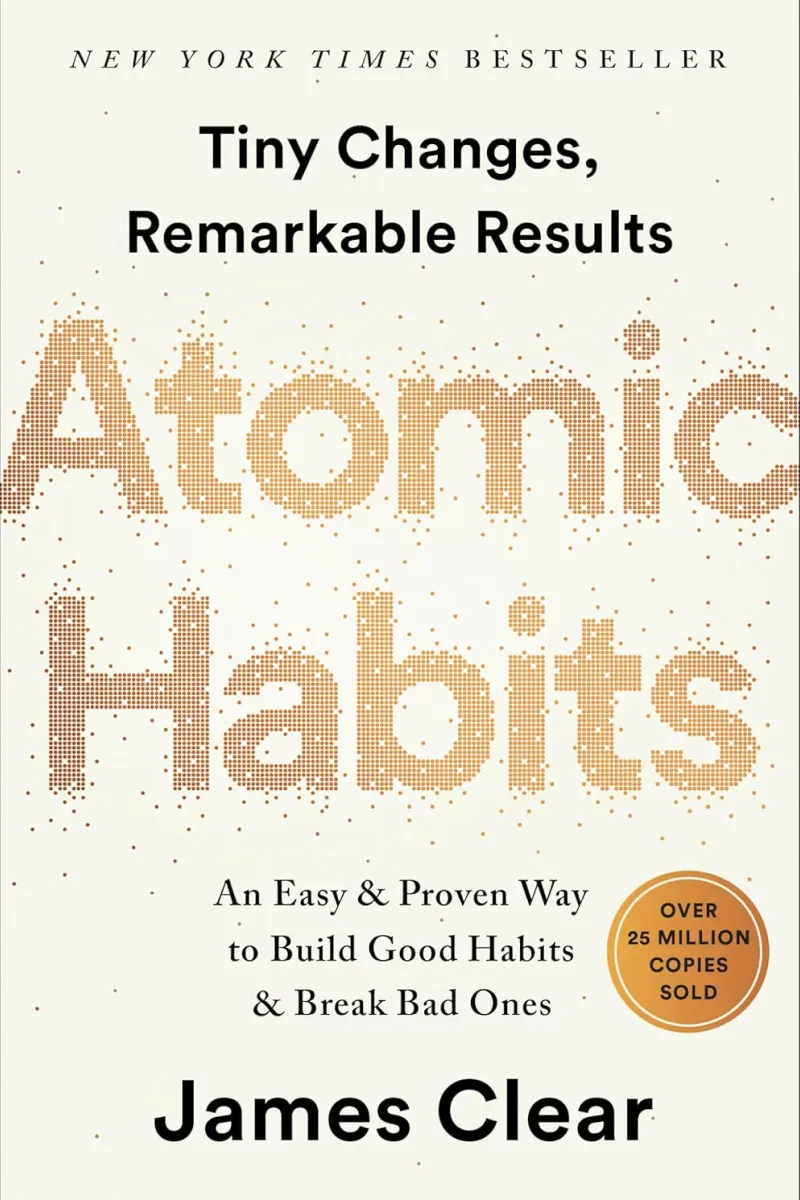
The identity dimension is important. Habit research by Wendy Wood and James Clear, among others, consistently finds that the most durable habits are identity-based: the person who doesn’t miss Monday practice because they’re a musician, not because they’ve decided to practice. Streaks accelerate identity formation by creating visible evidence of consistency — every day the number advances, you have one more data point for the self-concept “I am someone who does this every day.”
Why They Break: The All-or-Nothing Problem
The same mechanics that make streaks motivating also make them fragile. The psychological power of the consecutive count creates an implicit all-or-nothing framing: the streak is either intact or it isn’t. There’s no half-credit, no partial success. This binary makes the first missed day disproportionately damaging to the habit.
Research on what’s sometimes called “the what-the-hell effect” — formally studied by psychologist Janet Polivy in the context of dieting — documents the phenomenon precisely. Once a person transgresses an absolute standard they’ve set for themselves, the motivation to maintain the standard collapses. “I’ve already broken my diet” produces more eating, not less. “I’ve already missed my streak” produces more skipped days, not a quick return.
This is the design problem that most streak-based approaches fail to solve. They motivate through consecutive counting, which works beautifully in easy periods and catastrophically in disrupted ones. The solution is not to abandon streaks but to design them more carefully.
The Minimum Viable Entry Problem
A second design failure common in streaks is setting the daily requirement at the level of an ideal session rather than a sustainable minimum. If your streak requires a meaningful, thoughtful five-minute voice journal entry every day, then on a terrible Tuesday when you get home exhausted at 10:30 p.m., the streak requires more than you have left. The choice becomes “do the full thing at the wrong time” or “break the streak.” Most people break the streak.
The solution is designing the minimum entry — the thing that counts on the worst days — to be so small it can be done in the hardest circumstances. More on this below.
Designing a Streak That Doesn’t Break You
Define Your Minimum Viable Entry
Before you start your streak, define what counts on a terrible day. Not what you’ll aim for — that can be whatever you want — but what the absolute floor is, below which you’ve missed.
For a voice journaling streak, a reasonable minimum viable entry is: one voice note, any length, recorded on that calendar day. It can be thirty seconds. It can be a single thought while you’re in the parking lot before bed. “It’s 11:40 p.m., I’m exhausted, nothing particular to say except that I made it through today. Recording this so the streak counts. Goodnight.”
That’s a valid entry. It preserves the streak, it maintains the habit infrastructure, and — importantly — it’s often not where the session ends. The act of opening the app and starting to speak frequently produces more than thirty seconds of content. But even if it doesn’t, the minimum has been met, the chain remains unbroken, and the habit is still alive.
This design principle — James Clear calls it “never missing twice” with a slight variation — acknowledges a fundamental truth about habit formation: the chain’s value comes from its length and consistency, not from every individual link being perfect. A streak of sixty real entries that includes several minimal ones is more durable and ultimately more valuable than a series of thirty perfect entries followed by abandonment.
Use a “2-Day Rule” for Skips
For the inevitable occasion when you genuinely miss — travel, illness, emergencies where the phone is nowhere near you at midnight — design your protocol in advance. The most effective protocol, supported by habit formation research, is the 2-day rule: you can miss one day without breaking the streak’s fundamental trajectory, but you never miss two consecutive days.
This reframes the missed day from “the streak is broken” to “I’ve used my allowable skip.” The second missed day becomes the line you don’t cross. This shifts the psychological weight from the first miss (which creates the what-the-hell collapse) to the second miss (which remains meaningful as a limit).
Some people extend this to a formal “streak protection” mechanism: you get a certain number of “freeze” days per month, which are logged as protected skips. This is explicitly how Duolingo and many other streak-based apps handle the fragility problem. A streaks-with-protection system is significantly more sustainable than a pure consecutive-days system for most real-world use patterns.
Stack It Onto an Existing Anchor
Voice journaling streaks are most consistent when the recording is attached to an existing daily behavior that already has strong routine infrastructure. This is the habit stacking principle: rather than building a new standalone habit, you attach the new behavior to one that already happens.
Common effective anchors for voice journaling:
- Morning coffee or tea (before anything else, first thoughts of the day)
- The commute, if you drive or walk alone
- After a workout or physical practice
- In bed, before lights out
- After brushing teeth in the evening
The anchor provides the environmental cue that triggers the habit. Instead of “I need to remember to record my voice journal at some point today,” the habit becomes “after I do the thing I already always do, I record my voice journal.” The anchor removes the decision and the memory burden. It converts the habit from something you choose to do into something that follows automatically from something else.
The specific anchor matters less than how well it fits your actual schedule and how reliably the anchoring behavior happens. Choose an anchor that happens even on bad days — not a habit that sometimes gets skipped. Exercise works less well than teeth brushing for this reason.
Set the Minimum for Your Streak Publicly or with Accountability
Research on commitment devices — agreements you make in advance about your future behavior — consistently finds that public commitment or accountability to another person significantly improves follow-through. This doesn’t require a formal accountability structure; it can be as simple as telling one person what you’re doing and asking them to check in after thirty days.
The mechanism is social: you’re not just risking the personal cost of breaking a private commitment, you’re risking the social cost of explaining to someone why you didn’t do what you said you’d do. For most people, this adds motivational weight to the habit during the difficult early days when the practice isn’t yet strongly established.
Some voice journaling apps have built-in streak visibility and social features. Others don’t, and a simple external accountability structure — a message to a friend after a week, a monthly check-in — provides the same mechanism more flexibly.
Build Streak Milestones That Reward Effort, Not Perfection
Design your own milestone structure in advance. Not “100 perfect entries” — something more realistic: 7 consecutive days, 30 total recordings, first month, 50 recordings, 100 days. The milestones acknowledge what you’ve built without setting impossible standards for how you built it.
Mark milestones in a way that feels meaningful to you — listen back to your earliest entries, write yourself a brief note about what you’ve noticed, share the milestone with someone. The acknowledgment reinforces the identity dimension: you’re not just completing a task, you’re becoming someone who does this consistently.
What to Record When You Have Nothing to Say
The most common reason streaks break isn’t forgetting — it’s arriving at the recording moment and feeling like there’s nothing worth capturing. The solution is a small set of reliable prompts that work even on the emptiest days.
Default Prompts for Zero-Inspiration Days
Keep these somewhere visible — on your phone’s lock screen, in the notes app, written on a card. When the recording moment arrives and your mind is blank, choose one:
The one-word weather report. “One word for today: [word]. Here’s why…” This forces a minimal act of emotional labeling that often opens into something more.
The unremarkable thing that happened. “Nothing particularly notable today, but…” and then describe whatever comes to mind first — what you ate, where you went, a brief exchange you had. Unremarkable entries often contain more than they initially seem.
The thing you didn’t do. “I kept meaning to [X] today and didn’t. What that says about my week right now is…” A non-event is still content. The things we avoid or defer are often the most revealing.
The question you’ve been carrying. “Something I’ve been thinking about lately without really thinking about it…” Questions that haven’t been voiced often surface when you give them thirty seconds of deliberate attention.
The fast forward. “In a year, what will I wish I’d paid attention to this week?” This reframe from present to future often produces something you hadn’t noticed you’d noticed.
The person who appeared in your thoughts today. “Someone I’ve been thinking about is [person]. Here’s what’s on my mind about that…” People rarely appear in our thoughts without reason. This prompt surfaces the relationship material that usually stays below conscious articulation.
The Minimum Entry as a Practice in Itself
The thirty-second entries made on exhausted nights are not lesser entries. Many people, reviewing their archives months later, find the bare-minimum entries among the most revealing — precisely because there was no energy for performance or construction. “I’m recording this at midnight because I promised myself I would. I’m incredibly tired. I don’t know what else to say except that today was a lot.” That’s an honest entry. It captures something about the week and the period that a more deliberate entry might have polished away.
Minimum viable entries are not failures of the practice. They’re evidence of the practice working exactly as designed: consistent regardless of circumstances, honest by necessity, real in ways that more considered entries sometimes aren’t.
Recovering from a Broken Streak
However well you design your streak, there will likely come a moment when it breaks — a gap too long to rationalize as a skip, circumstances that truly prevented any recording, or simply a few weeks in which the habit fell away.
The Reframe That Matters
The most important thing to understand about a broken streak is that the streak is a scorekeeping mechanism, not the practice itself. A gap does not eliminate the recordings you made before it. It does not mean the practice is over. It does not mean you’re not someone who voice journals.
What it means is that you stopped for a while and are starting again. This is the most common pattern in any sustainable practice — not linear daily consistency but cycles of engagement and re-engagement. The research on habit recovery consistently finds that previous habit performance is the strongest predictor of re-engagement: the person who has done something for fifty days and then taken a month off returns to the practice faster and more durably than someone who never built the habit at all.
A broken streak is evidence that you built something real. It’s not evidence that you failed.
Starting Again Without Shame
The protocol for returning after a break is simple: record something today. Not something significant. Not something that acknowledges or atones for the gap. Something ordinary. “I’m starting again. It’s been [time]. Here’s where I am.” That’s enough.
The return entry is not a ceremony. It’s just the next recording. And the streak starts again from the day you record it — not from where the old streak ended, not from the beginning of your practice, but from today, which is the only place you can start from anyway.
Consider a “Total Recordings” Metric Alongside Days
One structural adjustment that reduces the fragility of streak-based motivation is tracking total recordings alongside consecutive days. Total recordings never go backward — even a broken streak doesn’t reduce your count from fifty to zero. The accumulation of recordings, regardless of gaps, reflects what you’ve actually built: an archive, a practice history, a body of self-documentation.
Many people find that after experiencing a broken streak, they restructure their tracking around total recordings rather than consecutive days — which produces less anxiety and more honest representation of the practice they’ve actually built. The consecutive day count can still be a motivating secondary metric, but it’s not the one that defines whether the practice exists.
Common Questions About Voice Journaling Streaks
How long does it take for a voice journaling habit to feel automatic?
Research on habit automaticity suggests somewhere between 18 and 254 days, with a median around 66 days, depending on the complexity of the habit and individual factors. Voice journaling at the minimum-viable-entry level is relatively simple, which puts habit formation toward the shorter end of that range. Most people find that by the forty-five to sixty day mark, the recording moment no longer requires active decision — they’re reaching for the app as a natural next step rather than choosing to do it. The first thirty days are the most effortful; treat them accordingly.
Should I track my streak publicly or privately?
This depends on your motivational style. Public tracking adds social accountability — which is helpful if you respond to social commitment — but also adds social pressure that can make missing feel more costly than it should. Private tracking, with perhaps one accountability person who knows you’re working on the habit, often produces the benefits of social commitment without the anxiety of public failure. Experiment with what feels motivating rather than anxious for you specifically.
What if I miss the anchor behavior that triggers my journaling?
This is the most common gap in streak architecture. If your anchor is morning coffee and you skip coffee, the trigger doesn’t fire. The solution is a backup trigger: a specific time of day that serves as the fallback if the primary anchor is missed. “After morning coffee, or by 10 a.m. if I don’t have coffee” — the specific time prevents the trigger from being silently bypassed on atypical days.
Is it worth maintaining a streak if most entries are minimal?
Yes. The value of a voice journaling practice lives in two places: the accumulation of recordings over time, which produces the archive that makes listening back valuable, and the habit of regular self-reflection, which produces the self-awareness that transfers to daily life. Both of these values are built by consistent practice, even minimal practice. A streak of short entries is still building the archive and the habit. The depth of individual entries matters, but it matters less than showing up consistently.
What’s the longest useful streak before it becomes counterproductive?
Streaks don’t typically become counterproductive from length alone. The problem that emerges in long streaks is usually rigidity: the streak has become so important to protect that it starts producing anxiety about missing rather than motivation to record. If you find yourself recording out of fear of the count rather than genuine engagement with the practice, it’s worth questioning whether the streak is serving the practice or the other way around. Occasional deliberate breaks — planned, not emergency — can reset the relationship to the habit from obligation to choice.
What should I do if I find myself dreading the recording moment?
Dread is information. It usually means one of three things: the entry bar is set too high (the minimum needs to be lower), the habit is at the wrong time (the anchor is wrong), or you need a break. If dread is consistent rather than occasional, try reducing the minimum entry to something genuinely trivial — thirty seconds, one sentence — for two weeks and see if that changes the relationship to the moment. If it doesn’t, a brief deliberate break followed by a fresh start may serve the practice better than grinding through ongoing reluctance.
The Bottom Line
A voice journaling streak is a tool, not a test. Its job is to create enough consistency that the habit forms and the archive accumulates — not to verify that you’re disciplined enough to deserve the practice.
The streaks that work are designed with their own fragility in mind: a minimum viable entry that’s genuinely minimal, a 2-day rule that prevents one miss from becoming two, a protocol for recovery that treats returning as unremarkable rather than shameful. They’re attached to anchors that are already reliable, acknowledged at milestones that reward consistency over perfection, and framed around the total archive being built rather than just the consecutive days being counted.
The voice journaling practice that serves you is the one that exists — imperfect, sometimes minimal, occasionally interrupted, but ongoing. Design your streak to protect that existence, not to make you feel worse about the days you’re human.
Record something today. Then do it again tomorrow. That’s the whole architecture.
This section contains affiliate links.
Go Deeper
You've been thinking about this long enough.
Ten seconds. Your voice. That's all it takes.
Inner Dispatch turns a single daily recording into something you can actually see - a living reflection of where you've been.
Start free. No writing required. →Related articles
The Complete Guide to Voice Journaling
Everything you need to know about voice journaling: what it is, why it works, and how to start an audio journal practice that actually sticks.

What Is Voice Journaling? A Beginner's Introduction
Discover what voice journaling is, how it works, and why speaking your thoughts beats writing them. A complete beginner's guide to starting an audio diary.

How to Make Voice Journaling a Daily Habit That Sticks
Learn how to build a voice journaling habit that actually lasts. Practical strategies rooted in habit science to make daily reflection feel automatic.