
How to Build a Time Capsule of Your Life With Your Voice
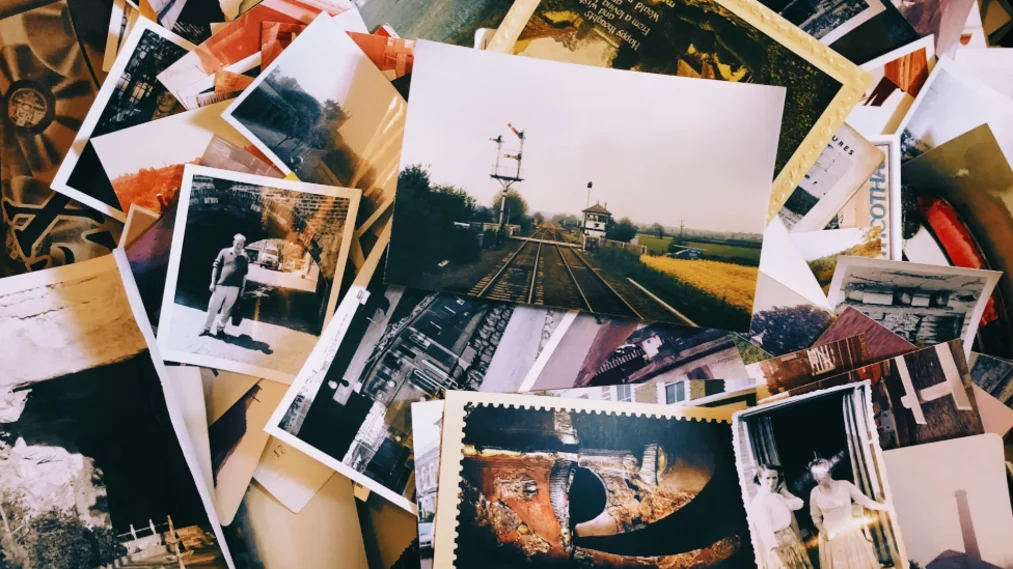
Somewhere, there is probably a photograph of you from ten years ago. You can look at it and know exactly who that person was — the haircut, the clothes, the place. What the photograph cannot tell you is how that person sounded when they were excited about something. What they worried about on an ordinary Tuesday. The exact way they laughed. How their voice rose at the end of a question, or dropped when they were being serious.
Your voice is the most personal record of yourself that exists. It carries not just words but texture — hesitation, warmth, the specific cadence of how you think and feel in real time. And unlike almost every other dimension of your life, it is almost never deliberately preserved.
A voice time capsule changes that. It’s a structured audio archive — recordings made across weeks, months, or years — that captures not just what happened in your life but who you were while it was happening. It’s the kind of record that future you, or your children, or people who love you will be able to hear and feel rather than just read. And it’s far simpler to build than most people assume.
This guide explains exactly how to do it: what to record, how to organize it, how to make it something you’ll actually come back to, and why the act of building it turns out to be as valuable as the archive itself.
Why Voice Preserves What Nothing Else Does
Before getting into the how, it’s worth understanding what makes a voice time capsule distinctly valuable — different in kind, not just format, from other methods of life documentation.
The Limits of Text and Photography
Written journals are valuable. Photographs are irreplaceable. But both capture a curated, static version of experience. Writing edits as it goes — you choose words, construct sentences, shape meaning. The result is often more polished than the original thought. Photography captures a moment, but it’s a moment posed or selected, and it’s silent. It shows faces and places. It cannot convey the quality of a conversation, the sound of a city, or the tone of voice someone used when they said something that changed how you thought about yourself.
Voice recordings capture something genuinely different: the unedited texture of thought in motion. When you speak, you pause, search for words, change direction mid-sentence, laugh at something you didn’t expect to be funny. These imperfections are not flaws — they are the record of a mind working in real time. They are, in a very direct sense, what you actually sounded like.
There’s a reason that hearing a deceased loved one’s voice — even in an old voicemail — can feel more piercing than looking at photographs. The voice carries presence in a way that images cannot fully replicate. A voice time capsule is, in part, an act of preservation for the people who will want to hear you long after ordinary recordings have been lost or forgotten.
What Memory Actually Loses Over Time
Memory research is instructive here. Autobiographical memories don’t fade uniformly. What goes first, typically, is the sensory and emotional texture — the felt quality of an experience. What remains longest are the narrative facts: what happened, in what order, to whom. This means that without documentation, your memories of meaningful periods gradually become thinner and more abstract. You remember that a particular year was important; you can no longer feel why.
Voice recordings reverse this pattern in a specific way. Because they capture the emotional texture of the moment — the excitement in your voice about a new project, the tiredness of a hard period, the warmth when you talk about someone you love — they preserve exactly what memory tends to lose. Listening back to them years later frequently reactivates the emotional context of the period, not just the facts.
This is what separates a voice time capsule from a simple diary or log. It doesn’t just tell you what your life contained. It allows you to feel who you were.
What to Include in a Voice Time Capsule
A voice time capsule can contain almost anything, but the most meaningful archives tend to cover a few distinct types of content. You don’t need all of them — start with what feels most natural, and expand over time.
The Now Snapshot: Who You Are at This Moment
The foundational recording for any voice time capsule is a “now snapshot” — a description of your life as it currently stands. Not a resume or a summary, but an honest, present-tense account of what your life looks like and feels like right now.
A useful now snapshot covers: where you live and what that place is like; the people who are most present in your life and what those relationships feel like; what you’re spending most of your time on; what you’re worried about; what you’re excited about; what a typical day actually involves; what feels hard; what feels good.
The goal isn’t comprehensiveness — it’s authenticity. A recording made in ten minutes of honest reflection will be more valuable in twenty years than a polished hour-long narrative. Future listeners, including future you, don’t need a performance. They need the real thing.
Record a now snapshot when you begin your time capsule, and then again at meaningful intervals — annually, at the close of a significant chapter, or whenever you feel your life has shifted enough that the previous snapshot no longer accurately describes you.
Milestone and Chapter Recordings
These are recordings tied to specific events or transitions: a move, a new job, a relationship beginning or ending, the birth of a child, a graduation, a period of loss, a major decision and the reasoning behind it. Any time your life is changing in a significant way, a voice recording captures both the facts of the change and the emotional reality of being inside it — something that is almost impossible to reconstruct accurately from memory months or years later.
Milestone recordings don’t need to be long or formal. A few minutes of honest reflection at the time of the event — what’s happening, how it feels, what you’re hoping for or afraid of — is more valuable than a detailed account recorded six months later. The immediacy is the point.
Consider also recording “before and after” pairs: a recording before a major change, and one after, once you’ve had time to absorb it. The comparison between the two often reveals things about how you’ve changed that neither recording would show alone.
Ordinary Day Recordings
These are often the most treasured in retrospect, and the most counterintuitive to make. An ordinary Tuesday in your life right now — what you had for lunch, how the morning went, what you talked about with a colleague, what you noticed on your commute — will feel achingly specific and vivid in fifteen years in a way that milestone recordings cannot replicate.
The ordinary texture of a life is what nostalgia most acutely seeks. The special moments are remembered; the specific quality of the everyday is what gets lost. Voice recordings of unremarkable days preserve exactly that.
You don’t need to make these often. A handful of ordinary day recordings per year — capturing different seasons, different moods, different textures of your daily life — is more than enough to build an archive that will feel rich and real when you revisit it.
Reflections and Questions
Some of the most interesting time capsule content is reflective rather than descriptive: recordings in which you respond to specific questions or explore what you actually think and believe at this point in your life.
Useful questions to record responses to: What do I believe now that I didn’t believe five years ago? What am I most afraid of? What do I want my life to look like in ten years, and why? What do I wish I’d been told earlier? What does the best version of my current day look like? What question am I living with right now that I don’t have an answer to?
These recordings tend to be the ones people find most surprising on later review — both because their answers have changed significantly, and because hearing themselves articulate something they’ve never spoken aloud clarifies the belief in a way that thinking alone often doesn’t.
Recordings for Specific People
A voice time capsule can also contain recordings addressed to specific people who will listen to them someday: your children at an age they haven’t yet reached, a future partner, your parents while they’re still alive and you want to tell them something you haven’t found words for in person, your future self at a particular age.
These recordings tend to be among the most emotionally significant to both make and receive. There is something about speaking directly to a future listener — “I’m recording this for you when you’re twenty-one” — that cuts through the ordinary resistance to self-expression. The constraint clarifies what actually matters to say.
How to Actually Build It: A Practical System
The concept of a voice time capsule is appealing; the practice requires a system simple enough to maintain. Here’s how to structure one.
Step 1: Choose Your Recording Method
The ideal recording setup is one you will actually use. For most people, this means a phone. Any smartphone microphone records with more than enough quality for personal archiving — the warmth and clarity of your voice will come through in even a simple voice memo.
A few considerations for choosing your method: you want recordings that are searchable or labelled, not buried in an undifferentiated folder of audio files. You want a format you can access easily years from now (avoid formats tied to specific apps that may not exist in a decade). And you want a setup that makes it easy to record spontaneously — when a moment or reflection arrives, friction should be minimal.
Voice journaling apps designed for this purpose handle many of these concerns automatically: they date-stamp entries, allow tagging and searching, and store recordings in formats designed for longevity. But a well-organized folder of clearly named voice memos works nearly as well. The system matters less than the consistency.
Step 2: Create a Simple Folder Structure
Organization is what separates a voice time capsule from a pile of recordings. A structure that works for most people:
One folder or category for snapshots — now recordings, annual check-ins, and broad life-state reflections. One for milestones and chapters — organized by event or period rather than date. One for ordinary days — dated recordings of unremarkable life. One for reflections and questions — explorations of beliefs, values, and open questions. And one, optionally, for recordings for specific people.
This doesn’t need to be elaborate. The point is that future you, scrolling through an archive five years from now, can find what you’re looking for rather than wading through hundreds of undifferentiated files.
Step 3: Start With One Recording Today
The most common failure mode for voice time capsule projects is starting too ambitiously. People plan elaborate recording sessions, buy new equipment, draft questions — and then don’t begin because the conditions never feel quite right.
The antidote is a single recording made today, in whatever conditions you currently have, for five to ten minutes. A now snapshot is the obvious choice: speak honestly about who you are and what your life looks like right now. Don’t edit. Don’t plan what you’ll say before you start. The imperfect recording made today is worth infinitely more than the perfect one planned for next month.
Once you have one recording, you have a time capsule. Everything after is addition, not foundation.
Step 4: Build a Light Recurring Practice
A voice time capsule grows through occasional, irregular additions rather than a rigid daily schedule. A sustainable rhythm for most people is something like: one recording per month minimum, with additional recordings triggered by significant events or transitions.
Useful triggers to build into your awareness: the end of a month or season (“it’s been a few weeks — what’s worth recording right now?”), significant events or news, moments when you feel strongly about something and want to capture it, and annual milestones like birthdays or New Year’s that naturally invite reflection.
The recordings don’t need to be long. Two to three minutes of genuine reflection is often more valuable than twenty minutes of meandering. The consistency of the practice — that you return to it — matters more than the volume of any individual recording.
Step 5: Create Access Points for Future Listening
The final component of a good voice time capsule system is planning for revisiting. An archive that’s never heard is an archive for no one.
Build in a recurring moment to listen back: annually is a natural cadence for most people. Some people review their recordings on their birthday; others at the new year; others at the end of a significant chapter. The format matters less than the intention.
Consider also creating specific “unsealing” moments for recordings you’ve designated as time capsules: “I’ll listen to this on my fortieth birthday,” or “I’ll play this for my daughter when she’s sixteen.” These predetermined access points give weight to the recordings at the time of making them and create a meaningful experience at the time of listening.
Common Questions About Voice Time Capsules
How long should each recording be?
There’s no ideal length, but most people find that two to five minutes is enough for most types of recordings. Longer recordings — ten to fifteen minutes — are appropriate for major milestones or now snapshots. The instinct to be comprehensive often produces recordings that are exhausting to listen back to; the instinct to be authentic tends to produce recordings that are worth hearing repeatedly. If you’re unsure, start speaking and stop when you’ve said the essential thing.
What if I hate the sound of my own voice?
Almost everyone does, at first. The discomfort with hearing your own recorded voice is partly acoustic — you’re used to hearing yourself through bone conduction, which sounds warmer and deeper than the air-transmitted voice others hear — and partly psychological. It passes with familiarity. More importantly, the discomfort is precisely the reason a voice time capsule is valuable: the version of your voice you’re uncomfortable with is exactly the version the people who love you experience every day. That’s the one worth preserving.
How do I keep recordings safe for the long term?
Use multiple storage locations: the original recordings on your phone, a copy in cloud storage, and ideally a periodic local backup to a hard drive or USB drive. Avoid formats or apps where your recordings exist only on that platform’s servers — if the service disappears, so do your recordings. Standard audio formats (MP3, M4A) stored in cloud services you control (like Google Drive, iCloud, or Dropbox) offer a good balance of accessibility and longevity. For recordings you want to preserve for decades, periodic format migration — moving to whatever the current standard format is — is worth the occasional effort.
What if I’m not sure what to say?
Start with the simplest possible prompt: “It’s [date], and here’s what my life looks like right now.” Then speak for two minutes without stopping. You will almost certainly say something worth keeping. If you’re consistently stuck, use questions as scaffolding — the reflection questions described above are specifically designed to make it easy to start speaking. You’re not trying to produce something good. You’re trying to capture something true.
Can I include other people’s voices?
Yes, and recordings that include other voices are often the most treasured over time. Conversations with your children about what they’re currently interested in, your parents telling stories about their own past, a friend describing what your friendship has meant to them — these are recordings that no single person could make alone and that become more valuable with every year. Ask for permission, be clear about what you’re preserving and why, and make it informal enough that people forget they’re being recorded.
How is this different from just keeping a voice journal?
A voice journal is typically an ongoing daily or near-daily practice focused on processing the present. A voice time capsule is more intentionally archival — it’s built with future listeners in mind, including your future self, and it’s curated rather than continuous. The two practices complement each other well: regular voice journaling gives you the raw material and the habit of reflection, while the time capsule structure gives you a way to select, organize, and preserve the recordings most worth keeping. Many people find that their voice journal entries naturally become the foundation of their time capsule.
When is the best time to start?
Now, and specifically today. The most common regret people have about documentation is not starting earlier — not the quality of their early recordings, not the format they chose, but the gap between the life they could have preserved and the one they actually did. The life you’re living right now is the most recent, most unrepeatable version of yours. A recording made today captures it. A recording planned for next week captures slightly less of it. The best time to start was years ago; the second best time is before today is over.
The Bottom Line
A voice time capsule is one of the most personal things you can create — not for anyone else’s benefit, primarily, but for your own. It is proof, in your own voice, that you were here, that your life had texture and specificity, that the particular combination of circumstances and personality and feeling that constitutes you existed at this moment in time.
It is also, practically speaking, an act of generosity toward the people who will miss you someday, and toward the future version of yourself who will want to remember not just what happened but who you were while it was happening.
The technology required is already in your pocket. The system can be as simple as a dated folder of voice memos. The only thing between you and a ten-year archive that will move you to tears is starting today.
Record something. Say what your life looks like right now. Put it somewhere you’ll find it again.
That’s the whole thing.
This section contains affiliate links.
Go Deeper
You've been thinking about this long enough.
Ten seconds. Your voice. That's all it takes.
Inner Dispatch turns a single daily recording into something you can actually see - a living reflection of where you've been.
Start free. No writing required. →Related articles
How to Document Your Life: A Simple System for Capturing Memories
A complete guide to documenting your life — covering what to capture, how to capture it, and how to build a system that preserves memories without becoming a second job.

What Is Voice Journaling? A Beginner's Introduction
Discover what voice journaling is, how it works, and why speaking your thoughts beats writing them. A complete beginner's guide to starting an audio diary.