
How to Build a Journaling Streak You Won't Break
The journaling streak is one of the most seductive ideas in personal development. You’ve seen it — the little calendar filling up with checkmarks, the growing chain of consecutive days, the simple satisfaction of not breaking what you’ve built. Streaks work, as motivational tools go. The desire not to break a chain is a real psychological force, and it’s been responsible for a lot of genuinely useful daily habits.
But streaks are also responsible for a particular kind of journaling failure that most people know from experience: the day you inevitably miss, the shame that follows, the strange paralysis around restarting, and eventually the quiet abandonment of the whole practice. Not because journaling didn’t work, but because the structure you built around it made a single missed day feel like a catastrophe.
The goal of this guide isn’t to help you build a streak that never breaks. No streak — especially in a daily practice — survives indefinitely without a missed day. The goal is to build a journaling habit so well-anchored in your actual life that a missed day is a small interruption rather than a reset, and that the practice continues regardless of whether any streak counter is intact.
That kind of habit is more durable than any streak, and ultimately more satisfying.
The Psychology of Streaks: What Works and What Backfires
Understanding why streaks succeed and why they fail is the foundation for building a journaling habit that actually lasts.
What Makes Streaks Motivating
Streaks work by exploiting a well-documented psychological phenomenon: loss aversion. Research by behavioral economists Daniel Kahneman and Amos Tversky established that the pain of losing something is roughly twice as intense as the pleasure of gaining something equivalent. A streak turns every day of practice into something you’d be losing if you stopped — which makes continuation feel more urgent than it would otherwise.
This is genuinely useful in the early stages of habit formation, when the behavior hasn’t yet become automatic. The streak provides external motivation to fill the gap before internal motivation — the actual experience of benefit from the practice — kicks in. For the first three to four weeks of a journaling habit, streak-consciousness can meaningfully support consistency.
Where Streaks Break Down
The problem with streaks as a long-term strategy is structural. A streak is binary: either intact or broken. The moment it breaks, all the accumulated progress is nullified by the counter’s logic. A 45-day streak and a 0-day streak look identical from the outside once the break has occurred.
This creates a specific failure mode: the all-or-nothing response. When the streak breaks — and it will, eventually, because life is not a controlled environment — the psychological loss is disproportionate to the actual harm. Missing one day of journaling has essentially zero impact on the long-term benefits of a journaling practice. But the emotional experience of breaking a streak can feel like the whole practice has failed, which is why so many people don’t restart after a disruption.
The second problem with streaks is that they privilege the record over the practice. The goal becomes not-breaking-the-streak rather than genuine daily reflection — and these goals diverge on the days when you’re exhausted, distracted, or simply don’t have much to say. On those days, a streak-focused journaler often produces a cursory entry purely to protect the number, rather than taking a genuine daily rest or producing an entry that reflects their actual state.
The practice exists to serve you. When you start serving the practice’s record, the relationship has inverted.
Redesigning the Structure: From Streak to System
The most durable journaling habits are not built on streak logic — they’re built on systems. A system doesn’t break when you miss a day. A system is designed to absorb disruption and continue.
The Anchor Instead of the Alarm
The most reliable driver of a consistent journaling practice isn’t a notification, a streak counter, or a resolution — it’s an anchor. An anchor is an existing daily behavior that reliably precedes your journaling session, creating an automatic trigger that requires no decision-making.
The research on habit formation, developed by researchers including Wendy Wood at USC, consistently shows that behaviors become automatic when they’re consistently performed in the same context — same location, same preceding action, same time of day. The anchor provides that consistency.
A good journaling anchor is something you do every day without exception — not just on weekdays, not just when you’re at home, but genuinely every day. Common anchors:
Morning coffee or tea: The moment between pouring the drink and the first sip is a natural pause. Many people find that three minutes of journaling during this pause becomes so habitual that doing it feels like part of making coffee, not a separate activity.
The commute: For anyone with a regular transit commute, the travel time is a natural container. A voice journal entry or phone-based written entry during the commute has the advantage of a fixed time container — the commute ends whether or not you’ve finished, which prevents the session from expanding indefinitely.
Getting into bed: The moment before turning off the light is reliably private, reliably daily, and naturally oriented toward reflection. Evening journaling also benefits from having actual material — the day has happened — rather than requiring anticipatory thinking.
Changing out of work clothes: A surprisingly reliable anchor, because it’s a physical transition that already signals a shift from work mode to personal time. Three minutes of journaling before or after this ritual is easy to attach.
The anchor formula is simple: After I [anchor], I will journal for [minimum time]. Write that sentence and put it somewhere visible until the behavior is automatic.
The Minimum That Survives Every Day
The second structural principle is calibrating your minimum to your worst days, not your average days.
Most people set their journaling intention based on how they feel on a good day — energized, reflective, with time to spare. On a good day, fifteen minutes of thoughtful journaling feels achievable and appealing. On a hard day — exhausted, overwhelmed, sick, or simply out of time — fifteen minutes is an insurmountable barrier.
The minimum should be calibrated to the hard day, because the hard day is when the habit is most vulnerable and most in need of protection. If your minimum is three sentences, you can do it while exhausted. If your minimum is fifteen minutes of structured reflection, you can’t — and the habit develops a hole wherever the hard days are, which tends to be predictably regular.
Three sentences, or sixty seconds of voice journaling, or even a single word that describes your current state — these minimums are small enough to complete on the worst days. They’re also sufficient to maintain the anchor-trigger-reward loop that makes the behavior automatic. The behavior doesn’t need to be elaborate to keep the neural pathway active. It just needs to happen.
The Never-Miss-Twice Protocol
Even the best-anchored habit will miss a day eventually. The question is not whether you’ll miss a day but what happens when you do.
Research on habit disruption, including work by Phillippa Lally at University College London, shows that a single missed day has minimal impact on habit formation — but that multiple consecutive missed days compound into meaningful disruption. The most protective intervention is a simple rule: never miss twice.
Decide this in advance, before the first missed day happens: if I miss a day, my only obligation is to return the next day, even briefly. One missed day is a gap. Two consecutive missed days is the beginning of an abandoned practice. The one-day rule is the difference.
The critical feature of this protocol is that it removes the decision-making from the disrupted moment. When you wake up the morning after a missed day, you’re not negotiating with yourself about whether to restart — you’ve already decided. The negotiation happened in advance, and the answer was already yes.
Building Your Journaling System: Step by Step
Step 1: Choose Your Anchor (This Week)
Before anything else, identify the anchor behavior. Ask yourself: what do I already do every day, without exception, that has a natural ending point?
Write down three candidates. Then evaluate each for reliability: does it happen on weekends? When you travel? When you’re sick? When your schedule is disrupted? The anchor that survives these variations is your anchor.
Once you’ve chosen it, write your anchor formula: After I [anchor], I will journal for at least [minimum] minutes/sentences/seconds. Put this somewhere you’ll see it at the time of the anchor — a sticky note on the coffee maker, a reminder on your phone that fires two minutes after you typically wake, whatever creates the environmental prompt.
Step 2: Set Up the Physical Logistics (Today)
Remove every possible source of friction between your anchor completing and your journal opening. This means:
If you use a physical journal, it should be in the same place as the anchor — on the kitchen table if your anchor is morning coffee, on the nightstand if your anchor is getting into bed. The pen should be in or next to the journal. No searching, no assembling.
If you use a phone or app, the app should be in your dock and open to a new entry before you need it. For voice journaling, the recording app should require one tap to start recording.
The principle is that starting should require zero decisions and under ten seconds. Friction kills habits not through dramatic resistance but through the small accumulation of steps that make starting feel like an effort.
Step 3: Define Your Minimum (Before You Start)
Write down the minimum entry that counts. Be specific and make it genuinely small:
- Three sentences of any kind
- Sixty seconds of voice journaling
- A single paragraph about how you’re feeling
- One question answered honestly
Whatever you choose: it should be achievable on your worst day. When you’re sick, at midnight, exhausted, or in a week when everything has gone sideways — can you still do this? If yes, it’s your minimum. If not, make it smaller.
The minimum is not the target — it’s the floor. Most days you’ll write more. The minimum only applies when the floor is all you have. And having a floor is what prevents a hard day from becoming a missed day.
Step 4: Track Differently Than a Streak
If you find tracking motivating — and many people do — track in a way that doesn’t punish single misses.
Instead of a streak counter (which resets to zero on the first miss), try:
A monthly calendar with simple marks — a dot for each day you journal, regardless of whether previous days have marks. A month with 25 dots and 5 blanks is a successful month. It doesn’t become a failed month when the first blank appears.
A running total — total number of entries since you started, regardless of consecutive days. This number never goes backward. A missed day doesn’t change it. It only grows.
A “sessions this week” goal — rather than a daily streak, aim for five or six sessions per week. This builds in natural flexibility without removing the tracking motivation.
Any of these approaches preserves the motivational value of tracking while removing the catastrophic all-or-nothing quality of strict streak logic.
Step 5: Build the Review Into the System
A journaling practice that only records and never reviews is like a photograph album that’s never opened. The longitudinal value — the patterns, the growth, the insights that only appear across time — requires periodic listening or reading.
Schedule a brief monthly review into your system from the beginning. It doesn’t need to be elaborate: fifteen minutes of reading back through the month’s entries and noting anything that surprised you, repeated itself, or showed a shift you hadn’t consciously noticed. This review is where much of journaling’s long-term value actually lives.
The review also has a habit-protective function: it reminds you of why the practice matters, which sustains motivation through the periods when individual entries feel dull or pointless.
When the Streak Breaks Anyway: A Recovery Protocol
Even with all of the above in place, there will be missed days. Here’s the protocol for handling them without losing the habit.
Day of the miss: Nothing. Don’t try to catch up with a retroactive entry. Don’t begin a “why I failed” analysis. The missed day happened; that’s all.
The day after: Return to your anchor and your minimum. No commentary necessary. If you want to acknowledge the gap, one sentence is sufficient: “I missed yesterday — back today.” Then move on. The gap doesn’t need to be processed; it needs to be followed by a return.
If you’ve missed several days: Same protocol. Return to the anchor, produce the minimum entry, move on. Don’t try to fill in the gap retroactively. Don’t write a long explanation for the absence. The most important thing is the entry that happens today, not the entries that didn’t happen last week.
If you’ve missed weeks or months: Consider resetting the system rather than restarting the same approach. What specifically caused the lapse — was the anchor reliable, or did it break? Was the minimum too demanding for hard days? Did the tracking method create a catastrophic response to the first miss? Diagnose the structural failure and adjust before restarting. Restarting the same approach that failed tends to produce the same failure.
Common Journaling Streak Mistakes and How to Avoid Them
Setting the minimum too high. The most common structural error. A minimum that requires fifteen minutes of thoughtful reflection will regularly fail on hard days, creating gaps that accumulate into abandoned practices. Make the minimum embarrassingly small. You can always do more; you need to be able to always do the minimum.
Using streak logic for too long. Streaks work as temporary scaffolding in early habit formation. After four to six weeks of consistent practice, the habit should be generating its own internal motivation — the actual experience of benefit. If streak-consciousness is still the primary driver after two months, the habit may not have taken root in the way it needs to. This is a signal to examine the anchor, the minimum, or the practice itself.
Treating a missed day as a character failing. A missed day of journaling is not a moral event. It’s not evidence that you lack discipline, or that journaling isn’t right for you, or that you’ve failed in some meaningful sense. It’s a single missing data point in an ongoing record. The habit lives in the return, not the unbroken chain.
Journaling for the record rather than for yourself. When the goal shifts from reflection to streak maintenance, the practice tends to degrade into pro-forma entries — something written purely to preserve the number, without genuine engagement. A brief genuine entry is more valuable than a long performative one. If you notice yourself writing primarily to protect the streak, that’s a signal to revisit what you’re actually there to do.
No anchor. The most structurally common cause of journaling habit failure. A practice with no specific trigger — no anchor behavior that reliably cues it — depends on active recall and daily decision-making, both of which are unreliable under any stress or schedule change. If your journaling practice doesn’t have an anchor, that’s the first thing to build.
Frequently Asked Questions About Journaling Streaks
Does a journaling streak actually improve outcomes?
Streaks improve short-term consistency, which indirectly improves outcomes by making practice more frequent. But the streak itself is not the mechanism of benefit — the mechanism is consistent self-expression and reflection, which the streak supports instrumentally. Research on expressive writing consistently shows that the benefits come from the nature of the processing (honest, narrative, emotionally engaged), not the frequency metric. A practice with occasional gaps but genuine quality is likely more beneficial than a perfect streak of superficial entries. The streak is worth building as scaffolding for early habit formation; it’s not worth protecting at the cost of the practice’s quality.
What’s a realistic first journaling streak goal?
For the first month, a more realistic goal than a perfect 30-day streak is 25 out of 30 days — a frequency goal rather than a streak goal. This allows five missed days without creating the catastrophic loss-of-streak effect, while still requiring consistent effort. Research on habit formation suggests that a consistent behavior performed most days for 60-90 days becomes substantially more automatic. The specific target matters less than the combination of high frequency and appropriate minimum.
How long does it take to make journaling automatic?
Research by Phillippa Lally found that habit automaticity develops in an average of 66 days, with a wide range from 18 to 254 days depending on the behavior, the person, and the consistency of practice. For journaling — a behavior that requires ongoing active engagement rather than a simple routine action — the higher end of this range is more realistic for full automaticity. That said, meaningful habituation — the point where not journaling feels stranger than journaling — tends to occur around weeks six to ten for most people who practice consistently.
What should I do when I genuinely have nothing to write?
Write that. “I sat down to journal and I genuinely don’t have much today. Everything is roughly okay. I’m [tired / busy / fine].” That’s a complete, honest entry. It’s also more useful than it sounds — the entries that document ordinary contentment are part of the longitudinal record that makes difficult-period entries meaningful. The minimum exists precisely for moments like this: say something true, even if it’s small, and close the session.
Is it better to journal every day or several times a week?
Daily practice builds habit automaticity faster, because the anchor-behavior-reward loop fires more frequently and therefore strengthens more quickly. For the first two months of a new journaling practice, daily practice with a small minimum is generally recommended over less frequent but more elaborate sessions. After the habit is established, some people naturally settle into a five or six day per week rhythm, skipping occasional days without disruption. Either can work long-term; the daily cadence in the early stages is specifically about building the neural pathway of the habit, not about any particular belief that every day is necessary.
Should I journal on days when I feel great and nothing is troubling me?
Yes, and these are some of the most valuable entries to have in a longitudinal record. A journal that documents only difficulty produces a skewed emotional record — you’d think your life was uniformly hard when reading it back. Entries that document contentment, ordinary good days, and what life feels like when things are going well provide both the baseline for comparison and the evidence that hard periods are not the whole story. Many people find, reading back through entries from a year ago, that the ones they remember most clearly are the ordinary good ones — precisely because they captured something that memory doesn’t preserve as reliably as it preserves pain.
The Long View
A journaling habit that lasts years doesn’t look like an unbroken chain of perfect daily entries. It looks like a consistent orientation toward regular reflection — interrupted occasionally by illness, travel, disruption, or simply life being more demanding than usual — and returned to reliably after those interruptions.
The entries that matter most in a long journaling practice are usually not the ones that felt most significant at the time. They’re the ones that create the longitudinal picture: the voice of who you were in a particular season, the pattern that only becomes visible across dozens of entries, the evidence of change that you couldn’t see from inside it.
Building a journaling habit you won’t break doesn’t mean building one that never breaks. It means building one with strong enough roots that the breaks don’t kill it — one anchored in your actual life, calibrated to your actual capacity, and structured to survive the inevitable disruptions of an actual life being lived.
The streak is a tool. The practice is the point. Build the practice, and the streak will take care of itself.
This section contains affiliate links.
Go Deeper
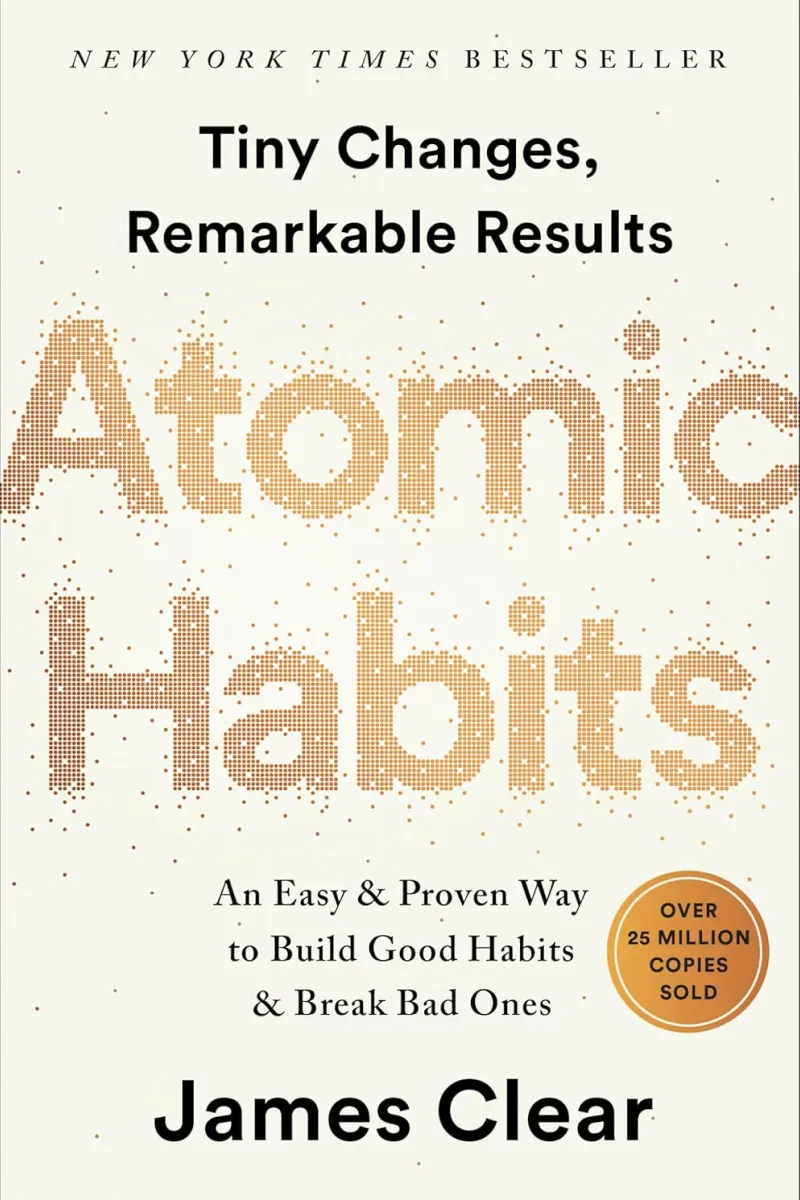
You've been thinking about this long enough.
Ten seconds. Your voice. That's all it takes.
Inner Dispatch turns a single daily recording into something you can actually see - a living reflection of where you've been.
Start free. No writing required. →Related articles

What Should I Write in My Journal? (When You're Stuck)
Staring at a blank journal page with nothing to write? Here are practical answers to what to write in your journal — for every mood, moment, and mental block.

Journaling Ideas for When You Don't Know What to Write
Run out of journaling ideas? This practical guide offers 60+ prompts organized by mood, situation, and goal — so you always have somewhere to start.

How to Make Voice Journaling a Daily Habit That Sticks
Learn how to build a voice journaling habit that actually lasts. Practical strategies rooted in habit science to make daily reflection feel automatic.

How to Start Journaling: The Beginner's Guide
A complete beginner's guide to starting a journaling practice — including how to choose your format, what to write, and how to build a habit that actually lasts.