
How to Build a Daily Habit That Actually Sticks
Most people who want to build a new habit approach it the same way: they decide to start, they start with full commitment, and they sustain it until the first disruption. Then they restart, recommit, and repeat the cycle until they conclude, quietly and with some embarrassment, that they are simply not a person who can maintain habits.
This conclusion is almost always wrong. What’s wrong is the model — a set of assumptions about how habits work that sound reasonable but contradict what the research actually shows. Fix the model, and the habit often fixes itself.
Building a daily habit that actually sticks is not primarily a willpower problem. It is not a motivation problem. It is a design problem — a question of how the habit is structured, when it’s placed in your day, how large the starting commitment is, and what happens when (not if) it gets disrupted. These are solvable engineering questions, and the solutions are more specific than “try harder” or “want it more.”
This guide covers the science of how habits form and persist, the most common reasons habits fail, and the specific techniques that reliably improve the probability of success. It’s built around what the research actually shows rather than what sounds intuitively correct — because the two don’t always agree, and the gaps between them are often exactly where people get stuck.
How Habits Actually Form: The Science
A habit, in neurological terms, is a behavior that has become automatic through repetition — one that runs largely without conscious deliberation once triggered. The brain’s basal ganglia, which manage procedural learning and automatic behaviors, encode frequently repeated action sequences so that they can be executed with minimal cognitive overhead. This is the brain doing exactly what it’s designed to do: converting deliberate behaviors into efficient routines.
The practical implication is important: habit formation is not about motivation or discipline. It’s about repetition sufficient to produce encoding. A behavior becomes habitual not because you wanted it badly enough but because you performed it often enough in a consistent context.
The Habit Loop
The foundational model of habit structure — cue, routine, reward — was established in research by Ann Graybiel at MIT and popularized by Charles Duhigg. The structure works like this:
Cue — a trigger that initiates the behavior. Cues can be environmental (a specific location), temporal (a time of day), emotional (a particular feeling), or behavioral (completing another action). The cue is what tells the brain: this is when the habit happens.
Routine — the behavior itself. The sequence of actions that constitutes the habit.
Reward — the consequence that reinforces the loop. Rewards can be intrinsic (the feeling of having done the thing) or extrinsic (something received as a result). The reward is what tells the brain: this sequence is worth encoding.
Understanding this structure matters because it reveals where interventions work. Trying to build a habit without a clear cue produces inconsistent performance — the behavior happens sometimes, when you remember and feel motivated, rather than automatically. Engineering a strong cue is often more effective than trying to increase motivation.
The Automaticity Curve
Research by Phillippa Lally at University College London tracked how long it takes for behaviors to become automatic — to reach the point where they feel habitual rather than deliberate. The popular claim is twenty-one days, but Lally’s data tells a different story: automaticity typically takes sixty-six days on average, with a range from eighteen days to over two hundred, depending on the complexity of the behavior and the consistency of practice.
Two things this research clarifies: first, habit formation takes longer than most people expect, which is why so many habits are abandoned around the four-week mark when they still feel effortful and haven’t yet become automatic. Second, consistency matters more than duration — a habit performed reliably for sixty-six days produces more automaticity than the same behavior performed sporadically for six months.
Missing a day, the same research found, didn’t significantly damage the automaticity trajectory. What matters is the frequency across the full formation period, not whether any individual day was missed.
Why the Brain Resists New Habits
Existing habits have a structural advantage over new ones: they’re already encoded. The neural pathways that support established behaviors are well-worn and efficient; the pathways for new behaviors have to be built through repetition. This means that in any moment of low motivation or disruption, the established behavior wins — not because you lack discipline, but because the brain naturally routes to what’s already automatic.
This is not a character flaw. It’s neuroscience. And knowing it clarifies what habit formation actually requires: not maintaining high motivation indefinitely, but performing the behavior often enough in a consistent context that the new pathway becomes efficient enough to compete with the established ones.
Why Most Habit Attempts Fail
Understanding the common failure modes is at least as useful as understanding what works — because the failure modes are predictable, and predictable failures are preventable.
Failure Mode 1: The Commitment Was Too Large
The most common habit mistake is beginning with an ambitious version of the behavior rather than the minimum viable version. Running five miles is the goal, so running five miles is what you commit to from day one. Meditating for twenty minutes is the goal, so twenty minutes is the starting commitment.
This creates a habit with a high activation threshold — one that requires significant time, energy, and favorable conditions to perform. High-threshold habits are structurally fragile: they can be maintained when conditions are good, but they fail during the weeks when conditions aren’t good, which is exactly when the habit is most needed.
The solution is counterintuitive: start with a commitment that feels embarrassingly small. Not five miles — five minutes of walking. Not twenty minutes of meditation — two minutes. Not a full journal entry — one sentence. The goal of the starting commitment is not to produce meaningful results immediately. It’s to install the pattern of showing up, which is the only thing that produces results over time.
The minimum viable habit is whatever you can perform on the worst day of the week — not the average day, the worst one. That threshold is what the habit needs to survive.
Failure Mode 2: No Clear Cue
“I’ll exercise in the mornings” fails more often than “I’ll exercise immediately after making my morning coffee.” The difference is the precision of the cue. The first is a time window; the second is a specific environmental trigger attached to an existing behavior.
Research on implementation intentions — the mental planning of when, where, and how you’ll perform a behavior — consistently finds that specific if-then plans (“If X happens, then I will do Y”) substantially increase follow-through compared to general intentions (“I intend to do Y”). The specificity works because it pre-decides the response to a cue, reducing the cognitive work required in the moment and bypassing the deliberation that allows competing behaviors to win.
A cue that works is specific, reliable, and observable — something that actually happens in your day without requiring memory or decision. Your existing behaviors are the best source of cues, because they’re already happening.
Failure Mode 3: The Gap Became the End
Missing a day generates a narrative. The narrative is almost always worse than the missed day itself: I’ve broken the streak, I can’t maintain habits, this isn’t working, I should wait until conditions are better before trying again. This narrative converts a temporary disruption into a permanent ending.
The gap is not the problem. The story about the gap is the problem. And the story is optional — it’s an interpretation, not a fact. Missing one session in a developing habit, as Lally’s research confirms, has minimal effect on the automaticity trajectory. What has a substantial effect is whether you return, and how quickly, and whether returning requires a major recommitment or a simple continuation.
Developing a return protocol in advance — before you need it — removes the narrative’s power. The protocol can be: return with the minimum viable version, immediately, without acknowledging the gap. The session after the gap is not a recommitment. It’s just the next session.
Failure Mode 4: Relying on Motivation
Motivation is a state, not a trait. It fluctuates with mood, energy, sleep, stress, and dozens of other variables that are only partially within your control. A habit designed to run on high motivation will work during high-motivation periods and fail during low-motivation ones — which means it will fail exactly when the habit would be most valuable.
The goal of habit design is to make the behavior as independent from motivation as possible — to reduce the activation threshold low enough that the habit can happen even when motivation is minimal. This is not about eliminating motivation’s role. It’s about not depending on it.
The specific techniques for this: environment design (making the habit easier to do than not to do), minimum viable commitment (low enough to happen even on difficult days), and consistent cuing (so the behavior is triggered automatically rather than decided fresh each time).
Failure Mode 5: Measuring the Wrong Thing
Measuring a habit by the quality of individual sessions is a mistake that’s particularly common in reflective practices like journaling or meditation. Sessions vary enormously. Some are rich and productive; many are ordinary; some feel like nothing. Using quality as the primary metric means the habit’s perceived value fluctuates with session quality, which decouples the sense of success from what actually produces it.
The metric that predicts long-term outcomes is frequency: how often did you show up over the past month? A simple consistency tracker — a dot in a calendar, a number at the top of a journal page, a habit tracking app — provides feedback about what actually matters without over-indexing on any individual session.
The Techniques That Actually Work
Habit Stacking
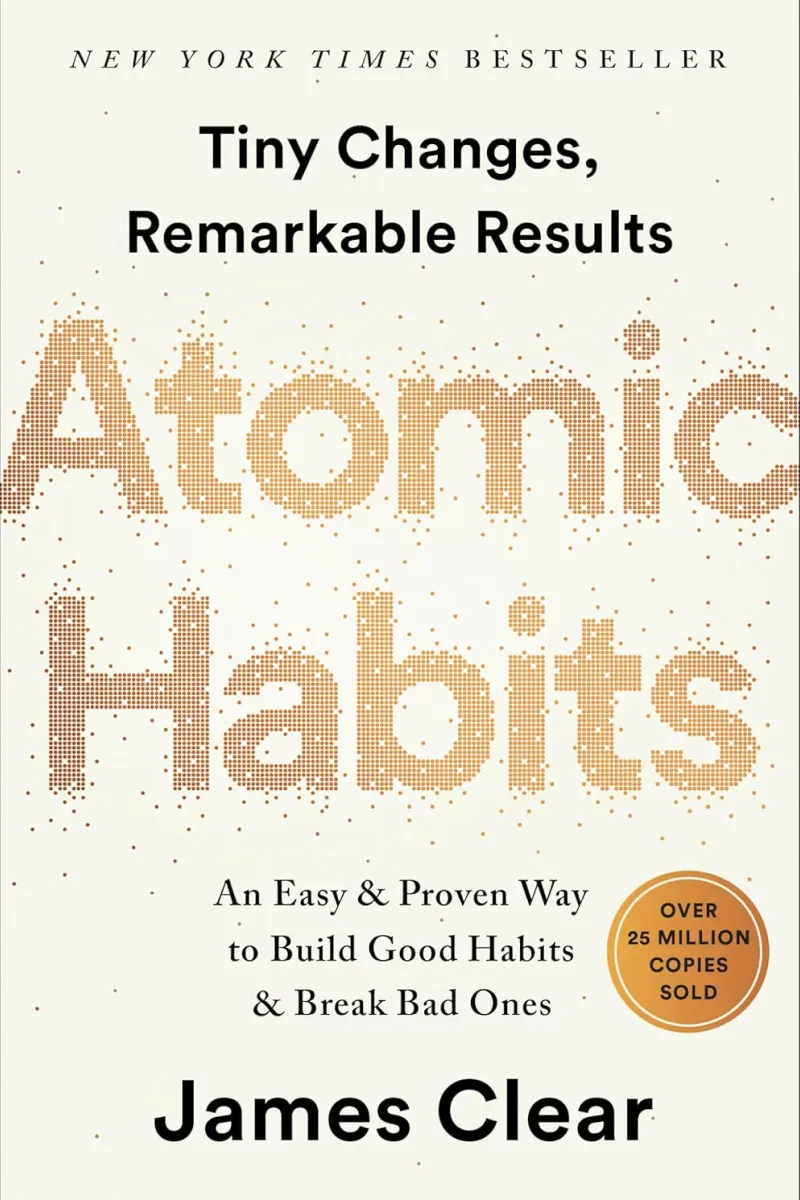
Habit stacking, formalized by James Clear in Atomic Habits, involves attaching a new behavior to an existing one, using the existing behavior as a cue. The formula: “After I [CURRENT HABIT], I will [NEW HABIT].”
This works because existing habits already have reliable cues, consistent timing, and established neural pathways. Linking a new behavior to an existing one borrows that infrastructure. The existing habit becomes the cue for the new one, which means the new behavior is triggered automatically by something that already happens automatically.
Examples: After I pour my morning coffee, I will write one journal sentence. After I sit down on my commute, I will open my voice journal app. After I brush my teeth at night, I will take three deep breaths before getting into bed.
The stack works best when the behaviors are genuinely sequential — one following naturally from the other in the same location or time window. Stacks that require a transition (going to a different room, getting equipment, taking a significant amount of time) introduce friction that can break the link.
Environment Design
The environment exerts powerful influence on behavior — often more powerful than intention. Behaviors that the environment makes easy happen more often than behaviors the environment makes difficult, regardless of motivation. This is not a weakness; it’s how environment-behavior relationships work, and designing the environment deliberately is one of the most reliable habit-building techniques available.
For habits you want to build: make the starting action as visible and accessible as possible. A journal on the pillow. A running shoe by the door. An app on the home screen, opened to the record button. The goal is to reduce the number of steps between the cue and the behavior to as close to zero as possible.
For habits you want to break: increase friction. Move the thing that triggers the unwanted behavior out of sight, out of reach, or out of the path of least resistance. The same principle that makes good habits easier makes bad habits harder.
Crucially, environment design works when motivation is low — when you’re tired, stressed, or simply not in the mood — because it makes the desired behavior the path of least resistance rather than the path of effort.
The Two-Minute Rule
The two-minute rule, another concept from Clear’s framework, states that a new habit should take less than two minutes to perform in its starting form. Not two minutes as a goal — two minutes as the complete, legitimate version of the habit.
The function of the rule is to keep the activation threshold low enough that the habit can happen in almost any conditions. A two-minute habit can happen before bed no matter how tired you are. It can happen between meetings. It can happen on the worst morning of the month.
The two-minute version is not a lesser version of the real habit — it’s the version that installs the pattern of showing up, which is what produces everything else. A two-minute journal entry every day for three months does more than a thirty-minute entry once a week, because the daily practice builds the automaticity and the consistency that compound over time.
Once the pattern is established — once showing up feels automatic rather than deliberate — the natural next step is usually to extend the behavior organically. You do the two minutes and then continue because you’re already there, already in the mode. The two-minute starting point is not where the habit stays forever. It’s where it starts reliably.
Temptation Bundling
Temptation bundling, developed by behavioral economist Katherine Milkman, involves pairing a behavior you want to make habitual with something you already enjoy — reserving the enjoyable thing for the time when the habit is happening.
Examples: Only listen to a specific podcast while going for a walk. Only watch a favorite show while doing a particular household task. Only drink a preferred tea while journaling.
The enjoyable activity makes the habit more immediately rewarding, which strengthens the habit loop’s reward component. Over time, the association between the habit and the pleasant experience can make the habit itself feel more appealing.
The pairing works best when the enjoyable thing is genuinely reserved for the habit context — if you listen to the podcast at other times, the bundling effect diminishes. The exclusivity is what creates the incentive.
Friction Reduction Stacking
A single friction reduction is useful. Multiple friction reductions stacked together can make the starting action nearly automatic. For any habit you’re trying to build, systematically identify every small friction between the cue and the behavior and eliminate each one.
For voice journaling as an example: the app is on the home screen (one tap to open). The default action when it opens is record (no navigation required). A visual reminder is placed where the trigger event happens. A recurring calendar reminder fires at the same time each day. Each of these individually reduces friction slightly. Together, they make the behavior’s activation energy negligible.
This stacking approach is particularly valuable for habits that compete with existing automatic behaviors — scrolling social media, watching television, reaching for a snack. Those behaviors are nearly frictionless; making your target habit similarly frictionless gives it a realistic chance of competing.
Identity-Based Framing
James Clear’s most significant contribution to habit literature may be the concept of identity-based habits — framing the goal not as a behavior to perform but as a type of person to become. Instead of “I want to journal every day,” the frame is “I am someone who journals.” Instead of “I’m trying to exercise regularly,” the frame is “I’m a person who moves daily.”
This reframe matters because identity is a powerful behavior regulator. When a behavior is consistent with who you believe yourself to be, performing it requires less deliberation and produces less internal conflict. When a behavior contradicts your self-image, it requires effort to override the inconsistency.
Every instance of performing the habit becomes a vote for the identity: evidence that you are, in fact, this kind of person. Over time, the accumulated votes shift the self-image — not through affirmation, but through action. The identity follows the behavior, which makes future behavior easier, which further reinforces the identity.
The practical application: when you make a choice consistent with your target habit, frame it explicitly as an identity expression. “I’m the kind of person who takes two minutes to reflect on my day.” Small, but it accumulates.
Building Habits in the Real World
Theory is useful. Real-world application is messier. Here are the considerations that matter most when building habits outside of laboratory conditions.
Designing for Your Worst Week, Not Your Average Week
The habit that survives is not the one optimized for typical conditions. It’s the one designed for atypical ones — travel, illness, high stress, family disruption. These conditions will arrive, and they will arrive without warning or schedule.
Before committing to any habit design, run this test: Could you perform this habit during the most disrupted week you’ve had in the past year? If the honest answer is no, the commitment is too large. Reduce it until the honest answer is yes, even if the reduced version feels inadequate.
Habits grow. The reduced version is not the permanent version. It’s the version that survives the difficult weeks, and surviving the difficult weeks is what builds the consistency that produces growth.
Building One Habit at a Time
Research on habit formation consistently finds that trying to build multiple habits simultaneously reduces the success rate of each. Attention, decision-making capacity, and the cognitive resources required to establish new behaviors are limited. Spreading them across multiple simultaneous habit changes is less effective than concentrating them.
The practical rule: build one habit to the point of reasonable automaticity before adding a second. Reasonable automaticity means the behavior happens most days without significant deliberation — not that it’s perfectly consistent, but that it’s no longer a daily decision. This typically takes six to twelve weeks for a simple daily habit.
Sequencing habit formation this way feels slower and often is slower in calendar time. But it produces a higher success rate for each individual habit, which means the total number of habits successfully established over a year is usually higher than the spray-and-pray approach.
Tracking Without Obsessing
Habit tracking is useful when it provides accurate feedback about consistency without creating anxiety about streaks. The goal of a tracker is to see the pattern across weeks and months — to answer the question “how often am I actually doing this?” rather than to maintain a perfect record.
A tracker that generates distress about missed days, or that causes you to keep the streak at the expense of the habit’s actual quality, has stopped serving its function. If tracking is increasing your anxiety rather than informing your behavior, simplify it or drop it. The habit is the goal; the tracker is a tool.
Anticipating Obstacles
Most habit failures are not random — they happen predictably, in the same circumstances, for the same reasons. Identifying the most likely obstacles in advance and planning for them specifically is more effective than hoping the obstacles won’t arise.
This is called if-then planning in the research, and it applies to obstacles as well as to cues: “If I’m traveling, then I will [specific alternative version of the habit].” “If I miss the morning window, then I will [specific recovery plan].” “If I’m tired in the evening, then I will [minimum viable version].”
Pre-planning removes the need to make decisions under adverse conditions, when cognitive resources are depleted and competing behaviors are strongest. The decision has already been made; you’re just executing it.
Habit Formation for Specific Practices
Journaling
Journaling habits succeed most often when the format is matched to the person (written vs. voice vs. list-based) and when the starting commitment is genuinely minimal. A single sentence, a two-minute voice memo, three items in a list — these are legitimate starting points, not compromises.
The most effective cue for daily journaling is typically a transition moment: the morning routine, the commute, the end of the workday, the move into bed. These transitions are reliable and already happen daily, making them strong cue candidates. Voice journaling specifically has the advantage of being usable during transitions that written journaling can’t access — commuting, walking, cooking.
Exercise
Exercise habits fail most often because the starting commitment is too large or the cue is too vague. The evidence strongly supports starting with a version of exercise that is shorter than feels meaningful — ten minutes, five minutes, a walk around the block — and a cue that is specific enough to be reliable. “I’ll exercise when I have time” is a commitment that will fail. “I’ll do ten minutes of movement immediately after getting dressed” is a commitment that can survive a difficult week.
Meditation or Mindfulness
Meditation habits often fail because the sessions feel like they should be longer to “count.” The research on meditation benefits does not support a minimum session length — shorter, more consistent practice appears to produce comparable or better outcomes than longer, sporadic practice. Two minutes of deliberate breath attention, done daily, is a legitimate and evidence-supported meditation practice.
Learning and Reading
Learning habits succeed most often when the format is matched to the contexts available. Audiobooks and podcasts during commutes. Physical books during dedicated morning or evening windows. Flashcard apps during transitions. The habit that fits the available context is the one that happens.
Common Questions About Building Daily Habits
How long does it really take to build a habit?
The honest answer is longer than twenty-one days and more variable than any single number suggests. Research by Phillippa Lally found an average of sixty-six days to automaticity, with a range from eighteen to two hundred and fifty-four days depending on the behavior’s complexity and the consistency of practice. Simpler behaviors in consistent contexts form faster; complex behaviors in variable contexts form slower. Plan for three months of consistent practice before expecting a habit to feel truly automatic.
What’s the best time of day to build a new habit?
The best time is whenever you have the most reliable window in your specific life — not the time that sounds most virtuous. Morning habits have theoretical advantages (willpower is typically higher earlier in the day, before decision fatigue sets in) but only if you’re a morning person and your mornings are reliably available. The most important variable is reliability, not time of day.
Should I track my habits?
Tracking is useful during the formation period, when feedback about actual consistency is valuable and when visual progress provides motivation. It becomes less useful — and can become counterproductive — when it generates anxiety about streaks or when maintaining the tracker becomes burdensome. A simple system (a dot in a calendar, a number in a notes app) is usually more sustainable than a complex one.
What do I do when I miss multiple days in a row?
Return with the minimum viable version as soon as possible, without treating the gap as significant. The narrative built around the gap is more damaging than the missed days themselves. A gap of several days — even a week or two — does not require a full recommitment or a fresh start. It requires the next session, performed in the smallest version available, as soon as the next opportunity arrives.
Is it possible to build too many habits?
Yes. Trying to build multiple habits simultaneously reduces the success rate of each, because the cognitive and motivational resources required for habit formation are limited. Sequential habit building — one at a time, to reasonable automaticity, before adding the next — produces better outcomes over a year than attempting to change many behaviors at once. Prioritize the habit that would have the largest positive impact on your life right now, build it to automaticity, then move to the next.
Does it get easier over time?
Yes, meaningfully. The early weeks of a new habit are typically the most effortful — the behavior is not yet automatic, the neural pathways are not yet efficient, and competing behaviors have a structural advantage. As the habit becomes more encoded, the effort required to perform it decreases. Eventually, the habit becomes easier to do than not to do — which is the definition of automaticity. Getting to that point is the challenge. Once there, maintenance is relatively low-effort.
What if I build a habit and then stop wanting it?
Habits can be consciously discontinued just as they can be consciously built. If a habit no longer serves you — if it was useful for a period and that period has passed — deciding to stop is a legitimate outcome, not a failure. The goal was never the habit itself; it was whatever the habit was supposed to produce. If the habit is no longer producing that, or if something else does it better, the rational response is to change.
The Compound Effect: Why Daily Habits Matter More Than They Seem
A habit performed daily doesn’t add value linearly. It compounds.
The journaling practice that produces one entry today doesn’t just produce one entry. It produces the pattern of showing up, which produces fifty entries over two months, which produces the self-knowledge that comes from seeing those fifty entries as a coherent record. The exercise habit that burns a modest number of calories today also produces the identity shift, the improved sleep, the reduced stress, the increased energy that makes tomorrow’s session more likely and more productive.
This compounding is why the starting commitment matters less than the starting consistency, and why the quality of individual sessions matters less than the pattern across months. You cannot see the compound effect in any individual day. You can only see it across time — and you can only accumulate it through habits that actually stick.
The techniques in this guide are not shortcuts. They’re the conditions under which habit formation reliably occurs, as opposed to the conditions under which it reliably fails. The work is still showing up. The science just makes it clearer what showing up needs to look like to produce results.
Build one habit. Build it small. Build it consistently. Then build the next one.
This section contains affiliate links.
Go Deeper
You've been thinking about this long enough.
Ten seconds. Your voice. That's all it takes.
Inner Dispatch turns a single daily recording into something you can actually see - a living reflection of where you've been.
Start free. No writing required. →Related articles
How to Build Consistency Without Willpower
Willpower runs out. Learn the psychology-based approach to building consistency that works even when motivation is low — using environment, identity, and systems.
The Science of Habit Formation: How Habits Actually Form (and Why They Break)
What does behavioral science actually say about how habits form? The real research on habit loops, timelines, context, and why most habits fail — and how to fix them.
Micro Habits: How Tiny Actions Create Massive Change
Micro habits are the smallest possible version of a behavior — and research shows they work better than ambitious commitments. The science, the design steps, and real examples.

Voice Journaling for Anxiety: Does It Actually Work?
Can speaking your thoughts out loud actually reduce anxiety? Here's what the research says about voice journaling for anxiety — and how to use it effectively.