
How to Break a Bad Habit for Good
Most attempts to break a bad habit follow the same arc. You decide you’re done—with the late-night scrolling, the cigarettes, the third glass of wine, the nail-biting, the opening of social media every time you feel mildly uncomfortable. The decision feels real and motivated. For a few days, sometimes a week, it holds. Then something happens—a stressful day, a social situation, a moment of boredom—and the habit runs, and you’re back to the beginning, carrying a fresh layer of self-criticism that makes the next attempt harder.
The standard explanation for this failure is insufficient willpower or motivation. You wanted to change but not quite enough. The standard prescription is more commitment, more determination, a stronger why.
The behavioral research says something different. The failure to break bad habits is not, in most cases, a motivation problem. It is a design problem. The habits are winning not because your desire to change them is inadequate but because you’re trying to change them using tools—willpower, intention, resolve—that are structurally mismatched to how habitual behavior actually works in the brain.
This guide explains what the research has actually found about breaking bad habits—the mechanisms that make them persistent, the interventions that actually work, and why the most effective approaches look almost nothing like the effort-based strategies most people default to.
Why Bad Habits Are So Hard to Break: The Neuroscience
A habit, in behavioral terms, is a learned association between a cue and a response that has been strengthened through repetition until the response becomes relatively automatic. The key word is automatic: habitual behavior is controlled by neural systems that operate largely below the threshold of deliberate conscious thought.
Research by Ann Graybiel at MIT and others on basal ganglia function has established that repeated behavior becomes encoded in the striatum—a subcortical brain region involved in reward learning and procedural memory—as a chunked sequence that can be triggered by the right cue with minimal cortical involvement. This chunking process is what makes habits efficient: you don’t have to think about every step of driving to work or making coffee because the sequence runs automatically.
The same process applies to bad habits. The phone-checking response to boredom, the stress-eating sequence, the automatic cigarette after coffee—these aren’t choices made in the moment. They’re chunked behavioral sequences stored subcortically, triggered by cues, and executed with minimal deliberate involvement.
The Cue-Routine-Reward Loop
Charles Duhigg’s popularization of MIT habit research introduced the concept of the habit loop—cue, routine, reward—to a wide audience, and the model is useful enough to be worth engaging with directly.
Every habit operates through this structure: a cue triggers the routine (the habit behavior), which delivers a reward (a physiological or psychological payoff). The loop is self-reinforcing: the reward strengthens the cue-routine association, making the routine more likely to run the next time the cue appears.
What this means for breaking habits: you can’t effectively target the routine alone. The habit loop is a system, and intervening in only one part of it—just deciding not to do the routine—leaves the cue-to-routine association intact and the reward-seeking motivation unsatisfied. This is why willpower-based approaches work temporarily and then fail: you’re suppressing the routine while leaving the cue and the reward craving in place. Every time the cue appears, the craving fires. Suppressing the response repeatedly depletes the cognitive resources that suppression requires, and eventually the system wins.
The key insight from this research: to break a bad habit, you need to address the whole loop—specifically the cue that triggers it and the reward it’s delivering—not just resolve not to perform the routine.
Why Willpower Alone Fails
The research on self-regulation and willpower convergently points to a troubling conclusion: willpower is a limited resource that depletes with use and fails most reliably under the conditions that trigger bad habits—stress, fatigue, boredom, emotional difficulty.
Roy Baumeister’s influential ego depletion research found that acts of self-control draw on a shared resource that diminishes over repeated use within a day. While subsequent research has challenged some specific claims of this model, the practical observation it reflects—that self-control is harder at the end of a hard day, when you’re hungry, stressed, or emotionally taxed—is robustly supported across the literature.
The habits most people are trying to break tend to be stress-responsive or boredom-responsive. They run precisely when the conditions for willpower-based suppression are worst. The person who wants to stop stress-eating is most tempted when they’re most stressed, which is exactly when their regulatory resources are most depleted. The person who wants to stop late-night scrolling is most tempted when they’re most exhausted, which is when cognitive control is weakest.
This isn’t a character failing. It’s a structural mismatch between how the problem is usually addressed and how human self-regulation actually works.
What Actually Works: The Research-Based Approaches
1. Cue Identification and Modification
Because habits are triggered by cues, identifying and modifying the cues is more effective than trying to suppress the routine through willpower.
Research by Wendy Wood at the University of Southern California—one of the leading habit researchers in the field—has documented that environmental cues drive habitual behavior to a degree most people dramatically underestimate. In her research, people behave differently in new environments not because their motivation or values have changed, but because the environmental cues that trigger habitual behavior are absent or different.
This finding has a direct practical application: changing the environment to remove or modify cues is one of the most effective habit-breaking interventions available. If you’re trying to stop eating chips in the evening, removing chips from the house is more effective than repeated acts of willpower resisting the cue every night. If you’re trying to stop checking your phone first thing in the morning, charging it in another room removes the cue (phone visible upon waking) that triggers the routine.
This is sometimes called environment design—structuring the physical and social environment so that cues for bad habits are absent or replaced by cues for better behaviors. Research consistently finds that environment design outperforms intention-based strategies for habit change because it works upstream of the moment of temptation rather than at the moment itself.
2. Friction Engineering
Related to cue modification is the deliberate introduction of friction between the cue and the routine. If the habit loop can’t be broken by removing the cue entirely, making the routine harder to execute reduces the probability that the automatic sequence runs.
Research on default behaviors and choice architecture—pioneered by Richard Thaler and Cass Sunstein in the behavioral economics literature—has established that adding even small amounts of friction to a behavior dramatically reduces its frequency. Conversely, making a behavior effortless dramatically increases it.
Practical friction engineering for bad habits: log out of the social media account so you have to log in each time; move the app off the home screen and into a folder; keep the wine in the basement rather than on the counter; put the cigarettes in a less accessible location. None of these make the behavior impossible. They interrupt the automaticity of the habit loop by inserting a step that requires deliberate engagement—which gives the slower, more rational cognitive systems a chance to participate.
3. Substitution Rather Than Elimination
One of the most well-supported principles in habit change research is that substitution is more effective than suppression. Rather than attempting to eliminate the habitual routine, you replace it with a different routine that delivers a similar reward.
The reason: the cue and the reward remain after you eliminate the routine, and the craving they generate will find some outlet. Attempting to simply not do the habit leaves a motivational gap that the system will try to fill. Substitution fills that gap with something different—ideally something that addresses the same underlying need but in a less harmful way.
Research on smoking cessation, substance use reduction, and eating behavior all consistently support substitution over elimination strategies. Gum replaces cigarettes by occupying the oral fixation and providing a tactile routine. Exercise replaces stress-eating by addressing the need for stress release through a different mechanism. A brief walk replaces the phone-check by providing a change of environment and a pause in whatever was producing the urge.
The substitution doesn’t need to be elaborate or perfectly matched. It needs to be accessible (easy to perform when the cue fires), rewarding (providing some version of what the original habit delivered), and incompatible with the original routine where possible.
4. Implementation Intentions
Research by Peter Gollwitzer on implementation intentions—if-then plans that specify what you will do when a specific cue appears—has found that this simple planning technique substantially improves follow-through on behavioral intentions.
An implementation intention takes the form: “When [cue], I will [alternative response] instead of [habitual response].” For example: “When I feel the urge to check my phone during dinner, I will put it face-down in another room and take three slow breaths.” Or: “When I feel stressed at the end of the day, I will put on my running shoes before doing anything else.”
The research on why this works is interesting: the if-then format appears to pre-consciously activate the planned response when the specified cue is encountered, reducing the time and deliberate cognitive effort required to choose the alternative. You’re essentially pre-deciding under conditions where deliberate decision-making is most accessible—not in the moment of temptation but in advance.
Meta-analyses of implementation intention research find substantial, consistent effects on goal-directed behavior across a wide range of behaviors and populations. This is one of the highest-evidence, lowest-effort interventions in the habit change literature.
5. Identity-Level Reframing
Research by Wendy Wood and independently by psychologist Carol Dweck on identity and behavior change suggests that framing habit change as an identity shift rather than a behavioral goal produces more durable change.
The distinction: “I’m trying to quit smoking” positions the behavior as something you’re struggling against—a sacrifice, an ongoing act of willpower. “I don’t smoke—that’s not who I am” positions it as an expression of existing identity. The latter framing is more effective not because it’s more accurate but because it changes the cognitive work required: instead of repeatedly choosing not to smoke, you’re occasionally noticing a misalignment between an impulse and your self-concept, which is a different and lower-cost process.
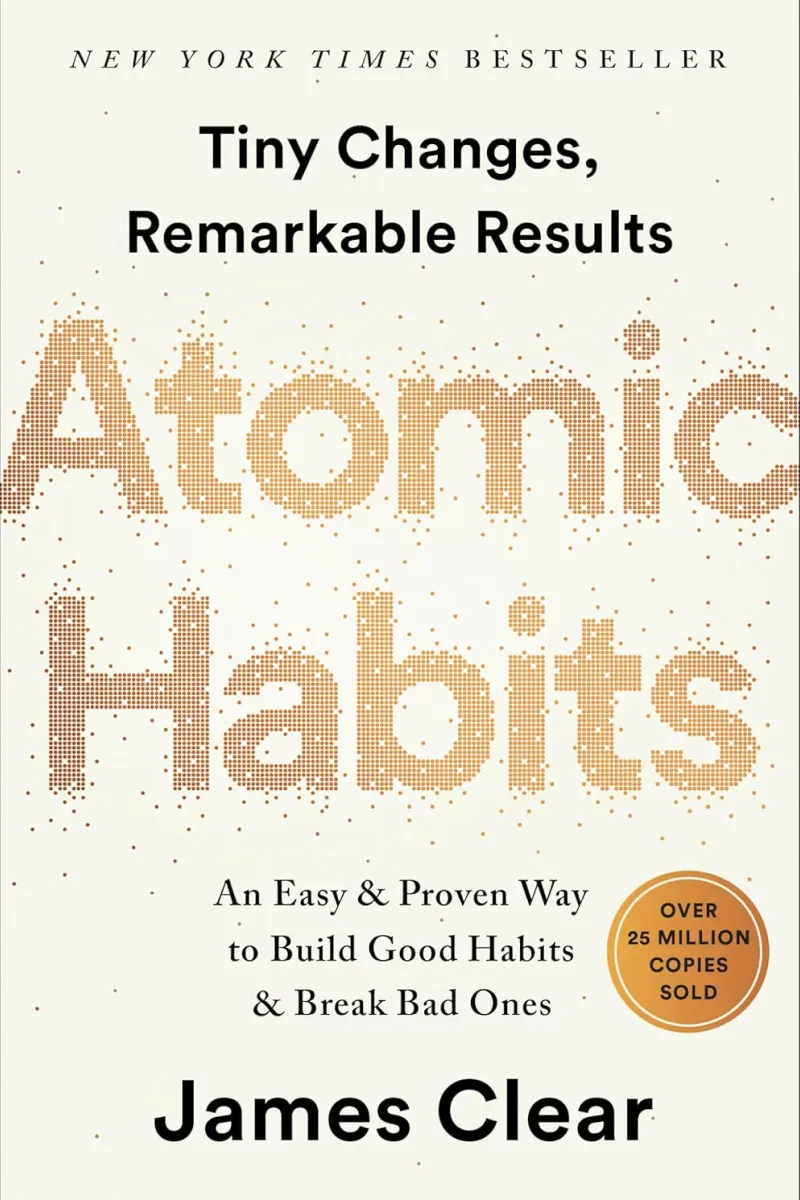
Research by James Clear popularized this as “identity-based habits,” and while the cultural execution of this idea has sometimes outpaced the science, the underlying research on identity and behavior change is solid. People are more likely to maintain behavior changes that they understand as expressions of who they are rather than as performances of what they’re trying to become.
The practical application: when breaking a habit, explicitly articulate the identity statement that makes the changed behavior coherent. “I’m someone who takes care of their body” is an identity that makes the exercise habit and the reduced alcohol consumption both follow naturally. It doesn’t resolve every moment of temptation, but it changes the default narrative within which those moments occur.
The Timeline Reality: What to Expect
Habit change takes longer than popular culture suggests and is less linear than success-story accounts imply.
The widely-cited “21 days to form a habit” figure has no scientific basis and substantially understates typical timelines. Research by Phillippa Lally at University College London found that habit automaticity—the point at which a new behavior requires minimal deliberate effort—takes an average of 66 days to develop, with a range of 18 to 254 days depending on the behavior and the individual. More complex behaviors take longer; simpler ones shorter.
Breaking habits follows a similar pattern. The initial phase—when the cue fires and the craving is strong but the routine is being suppressed or substituted—is the hardest and requires the most active management. This phase typically lasts weeks, not days. The intermediate phase—when the new pattern is established but the old one can still be reactivated by strong cues—can last months. Full automaticity of the alternative behavior, such that the old habit no longer runs easily, takes longer still.
This timeline doesn’t mean progress isn’t happening. It means that the absence of instant results is not evidence of failure. The neural restructuring that underlies habit change is slow. The behavioral strategies that support it need to be maintained across this full timeline, not just until the initial motivation wanes.
The Role of Reflection in Habit Change
One of the most underappreciated components of successful habit change is consistent self-reflection—maintaining a clear, accurate picture of what you’re doing, when you’re doing it, and what’s driving it.
Research on self-monitoring in behavior change consistently finds that people who track their behavior change more than those who don’t—not because tracking itself changes the behavior (though it often does, through the observer effect) but because tracking provides the accurate information that adaptive adjustment requires. You can’t optimize what you can’t see.
The specific value of reflective practice for habit change: it surfaces the cue pattern (when is the habit actually running?), identifies the reward structure (what is the habit delivering?), and notices the early warning signs of relapse (what conditions reliably precede the habit returning?). All of this is invisible from inside autopilot; reflection makes it visible.
A brief daily record—spoken into a voice note or written in a few sentences—of when the urge appeared, what preceded it, and how you responded is more than a record-keeping exercise. It’s the ongoing processing that keeps the conscious cognitive systems engaged with the habit loop at the level where intervention is possible, rather than leaving the subcortical systems to run unchecked.
When Habit Breaks Signal Something More
Not all bad habits are equal in the support they require to change. Behaviors that involve physical dependence—nicotine, alcohol, other substances—have physiological withdrawal dimensions that behavioral strategies alone may not adequately address, and that warrant medical consultation. Behaviors that are symptoms of underlying mental health conditions—compulsive checking behaviors in OCD, substance use as self-medication for depression or anxiety, disordered eating patterns—require treatment of the underlying condition rather than behavior change strategies directed at the surface behavior.
The practices in this guide are appropriate for the ordinary bad habits of everyday life: the phone addiction, the unproductive routines, the comfort-seeking behaviors that have become automatic and unwanted. For habits with clinical dimensions, professional support is the appropriate first step, with behavioral strategies as complement rather than primary intervention.
Common Questions About Breaking Bad Habits
How do I figure out what reward my bad habit is delivering?
The most direct method is the pause-and-note technique: when you notice the urge to engage in the habit, pause for thirty seconds before running the routine and note what you’re feeling—boredom, stress, anxiety, loneliness, a need for stimulation? Then run the habit and notice how you feel immediately after, and fifteen minutes after. The immediate feeling names the reward the habit is delivering. This information tells you what alternative behavior needs to provide.
What if I’ve failed to break this habit many times before?
Prior failure is actually useful information, not evidence that change is impossible. It tells you which approaches don’t work for you in your specific circumstances, and which cues and conditions are most likely to derail the attempt. Approach the next attempt as a design iteration rather than a willpower re-commitment: what specifically went wrong last time, and what environmental or structural change would address that specific failure point?
Is cold turkey better than gradual reduction?
The research on this is genuinely mixed and depends significantly on the specific habit and individual. For nicotine specifically, research has found that abrupt cessation produces slightly higher long-term quit rates than gradual reduction in some studies—but the difference is modest and both approaches work for some people. For most everyday habits without physical dependence, gradual reduction paired with substitution tends to produce more durable change than abrupt elimination, because it allows the neural restructuring to keep pace with the behavioral change. Abrupt elimination requires more sustained willpower during the gap period.
Why do bad habits come back during stress even after months of not doing them?
Habit loops stored subcortically are not deleted when the behavior stops—they become dormant but remain accessible, particularly under conditions that resemble the original learning context. Stress, which often figured prominently in the formation of stress-responsive habits, can reactivate dormant habit loops even after months of abstinence. This is the mechanism behind addiction relapse and the return of habits after major life disruptions. Understanding this makes the experience less alarming when it happens: the habit returning doesn’t mean all progress is lost, it means the dormant loop got activated by a strong cue. The response is the same as it was at the start: environmental modification, substitution, implementation intentions—the strategies that worked before.
How do I stay motivated when progress is slow?
The research on motivation and habit change suggests that measuring the right things matters enormously. If you measure success as “the urge never firing,” you’ll feel like you’re failing constantly—urges persist long after behavioral change is established. If you measure success as “the urge fired and I responded differently,” or “I went three days without the habit,” or “the urge is noticeably weaker than it was a month ago,” you’re measuring actual progress. Keeping a brief daily record—even just noting whether the habit ran—provides the concrete data that sustains motivation more reliably than abstract commitment.
The Bottom Line
Breaking a bad habit for good is not a willpower problem. It is a systems problem—specifically, a problem of redesigning the environmental, cognitive, and behavioral systems that the habit runs on.
The approaches with the strongest evidence base are not about wanting to change more but about changing the conditions in which the habit operates: removing cues, adding friction, substituting alternative routines that deliver similar rewards, forming specific if-then plans, and anchoring change to an identity rather than to willpower. These approaches work by engaging the habit loop at multiple points rather than targeting only the routine with suppression.
None of this is easy, and none of it is quick. Habit change measured in weeks is usually habit change that doesn’t last. Habit change measured in months—with consistent attention to the cue-routine-reward system, consistent environmental design, and consistent reflective monitoring of what’s actually happening—is the kind that does.
Start by identifying the cue. Then figure out the reward. Then design the alternative. The rest is time.
This section contains affiliate links.
Go Deeper
You've been thinking about this long enough.
Ten seconds. Your voice. That's all it takes.
Inner Dispatch turns a single daily recording into something you can actually see - a living reflection of where you've been.
Start free. No writing required. →Related articles

How to Build a Daily Habit That Actually Sticks
A science-backed guide to building daily habits that last — covering the psychology of habit formation, why most habits fail, and the specific techniques that actually work.
How to Build Consistency Without Willpower
Willpower runs out. Learn the psychology-based approach to building consistency that works even when motivation is low — using environment, identity, and systems.