
How Small Daily Actions Compound Into Big Life Changes
The changes people most want in their lives — better health, stronger relationships, meaningful work, a sense of calm and direction — almost never arrive the way we imagine they will. We imagine a decision: the moment we finally commit, the morning we wake up different, the resolution that this time will be different. We imagine transformation as a threshold, something you cross.
It doesn’t happen that way.
What actually changes lives is something far less cinematic: the slow accumulation of small actions, repeated with enough consistency that they alter not just what you do but who you are. The conversation you have instead of avoiding it. The hour of focused work instead of drifting. The brief reflection instead of letting the day close without notice. None of these feel significant in the moment. Cumulatively, over months and years, they are everything.
This isn’t a new idea. But it’s one that is systematically misunderstood — not because people haven’t heard it, but because the human mind is poorly calibrated to perceive gradual change. We can’t feel a compound curve bending. We can’t observe identity shifting over six months. We can’t see the trajectory that each small action is contributing to, which makes it very easy to dismiss any individual action as too small to matter.
This essay is about why that dismissal is wrong, what the compounding of small actions actually looks like, and how to work with this reality rather than against it.
The Compounding Principle and Why We Misunderstand It
In finance, compounding is well understood: small returns, reinvested consistently over time, produce results that seem disproportionate to the input. A modest return compounded over decades looks nothing like what linear arithmetic would predict. The curve bends upward, slowly at first and then dramatically, and the key variable is not the size of each individual return but the duration and consistency of the compounding.
The same principle operates in human behavior, though we apply it far less deliberately.
Linear Thinking in a Nonlinear World
The fundamental mismatch is this: we evaluate actions linearly — “this workout burns approximately this many calories, produces approximately this much fitness improvement” — while the actual effects of consistent behavior are nonlinear. The tenth workout doesn’t just add its immediate effect to the previous nine. It builds on an infrastructure of metabolic adaptation, neural habit formation, and identity development that makes the eleventh workout more likely, and more effective, than it would otherwise be.
This is why the math of behavior change never quite works the way the projections suggest. Not because the projections are wildly optimistic about what a single behavior produces, but because they fail to account for the compounding of consistent behavior over time — the way each action changes the conditions in which the next action occurs.
The person who reads for thirty minutes each evening is not simply accumulating knowledge at a rate of thirty minutes per day. They are also building a reading habit that makes tomorrow’s reading more automatic; developing the attentional capacity that makes sustained reading more possible; gradually becoming someone who identifies as a reader, which shapes countless downstream decisions; and, over time, building a scaffolding of knowledge and reference that makes each new book more comprehensible and generative than the last. The output of consistent reading is not what thirty minutes per day times three hundred and sixty-five days of knowledge intake would predict. It is something much larger.
The Valley of Disappointment
The most important feature of a compounding curve — and the one that most disrupts human behavior change — is its shape in the early stages. A compound curve appears nearly flat at the beginning, then gradually steepens, then bends dramatically upward. In the early phases, before the curve has meaningfully bent, it is genuinely difficult to distinguish whether your consistent effort is producing the results it will eventually produce.
This is what some behavior change researchers call the “valley of disappointment” — the period in which you’re doing the work, not seeing proportionate results, and having no reliable way to know whether results are coming. Most habit abandonment occurs here, in the flat early section of the curve. Not because the practice doesn’t work, but because it hasn’t worked yet in ways that are perceptible, and the patience required to cross from the flat section to the bend is more than most people can sustain without a framework for why it’s worth sustaining.
Understanding the shape of the curve doesn’t eliminate the valley of disappointment. But it changes your relationship to it. Instead of interpreting slow early progress as evidence that the approach isn’t working, you can interpret it as evidence that you’re still in the early section of the curve — which is exactly where you’d expect to be.
What Actually Compounds in Human Life
The financial metaphor is useful but limited. In human behavior, the mechanisms of compounding are worth understanding specifically, because they’re the reason small daily actions eventually produce large effects.
Identity: The Deepest Compound
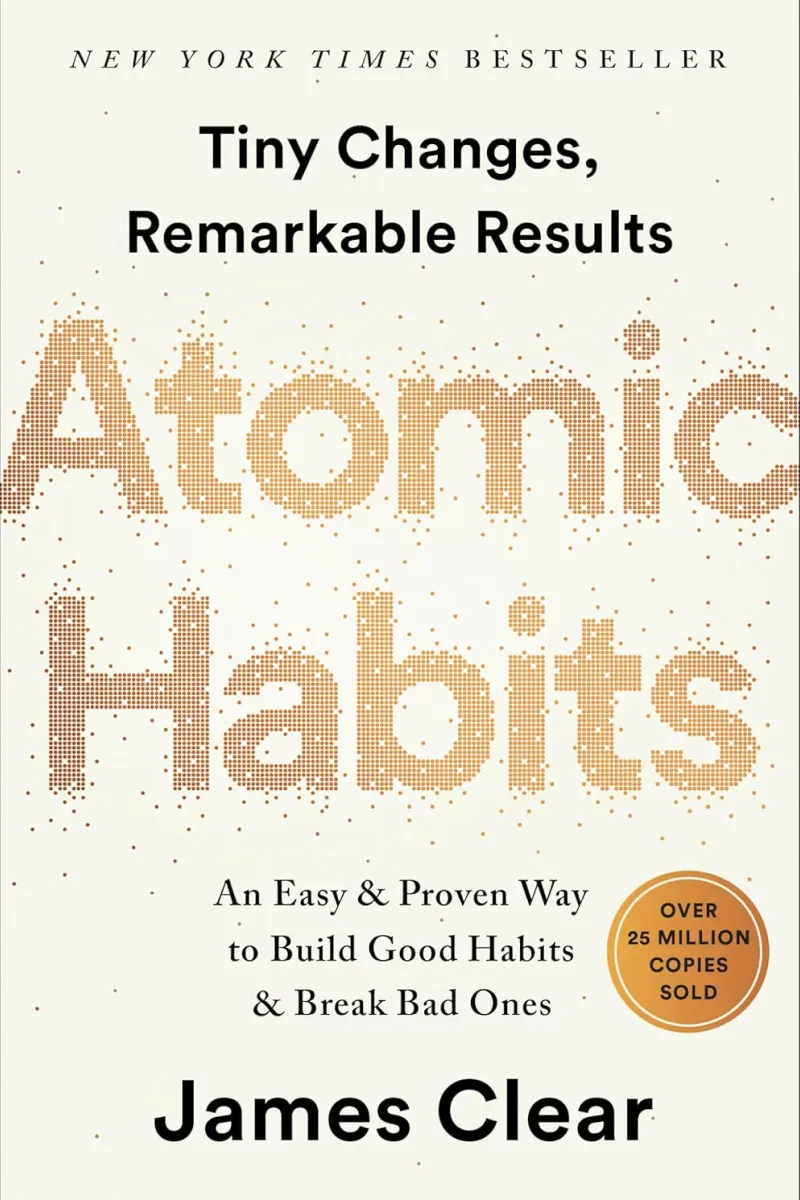
The most powerful and least appreciated form of compounding in human behavior is identity. Every action you take is a vote, as James Clear has put it, for a particular kind of person. Not a decisive vote — one action doesn’t make you anything. But each action contributes to the accumulating evidence your mind uses to construct a self-concept, and that self-concept then shapes future behavior in ways that aren’t fully visible from inside individual moments.
The person who exercises three times this week is not yet a person who exercises regularly. But if they exercise three times next week, and the week after that, they are building the neural and psychological infrastructure of an identity — someone who exercises — that will eventually operate as a background assumption rather than a daily decision. The future workout is not chosen from scratch; it’s enacted by someone who already knows, at some level, that this is what they do.
Identity change is slow, invisible, and foundational. It is also, once established, remarkably durable — far more durable than behavioral change that isn’t supported by identity. The person who exercises because it’s who they are is more resilient to disruption than the person who exercises because of a goal they’ve set.
Skill: The Visible Compound
Skills compound in ways that are more visible than identity but still often underestimated. Early skill acquisition is slow — the learning curve is steep in terms of effort relative to progress. As foundational competency develops, later learning accelerates: each new layer of skill builds on the previous one and makes further development more accessible.
This applies to skills most people don’t think of as skills: the skill of self-reflection, of emotional regulation, of listening, of communicating difficult things with care. A year of consistent practice in any of these — even informal practice, through deliberate daily reflection and attention — produces measurable change. Five years of consistent practice produces someone genuinely different from who they were at the beginning. The specific skill doesn’t matter as much as the recognition that practice compounds.
Relationships: The Overlooked Compound
Relationships compound in ways that are perhaps the least appreciated of all. A relationship that receives consistent small investment — genuine attention, regular honest communication, small acts of kindness and care — develops a quality of trust and ease that can’t be created in any other way and can’t be fully replicated by occasional large investments.
People often try to compensate for consistent relational neglect with periodic significant gestures. They sometimes work, but they can’t substitute for the compound effect of consistent small investment. The relationship that has had hundreds of small conversations, hundreds of small moments of genuine attention, hundreds of small acts of care, is structurally different from the relationship that has had a handful of significant ones — more resilient, more honest, more capable of navigating difficulty when it arrives.
Knowledge and Understanding: The Slow Burn
The compounding of knowledge is so familiar as to be almost invisible — we understand intellectually that learning builds on learning — but its implications for daily behavior are underappreciated. The fifteen minutes of reading you do every day feels inconsequential. The library of understanding you build over five years of that reading is not inconsequential. It changes how you see problems, what solutions occur to you, how you understand other people, what you’re capable of doing.
This compounding effect is also the reason that breadth of knowledge supports the compounding of depth. The person who knows a little about many things finds that new knowledge integrates more readily with existing knowledge, which is one of the mechanisms through which understanding deepens over time beyond what the raw quantity of input would predict.
The Psychology of Why We Resist Small Actions
If small consistent actions are so powerful, why is it so common to dismiss them — to reach instead for significant interventions, dramatic resolutions, and the hope of rapid transformation?
The Preference for Intensity
Psychologically, humans are better calibrated to respond to intense stimuli than subtle ones. A dramatic intervention — a bootcamp, a radical diet overhaul, a move to a new city — registers as significant because its intensity is perceptible. A five-minute daily practice doesn’t register as significant in the moment, because in the moment it isn’t — it’s only significant in the aggregate.
This creates a systematic preference for intensity over consistency that runs directly counter to what the evidence on behavior change supports. The intense intervention that produces dramatic early results and then fades is valued over the modest consistent practice that produces no discernible early results and eventually becomes everything. The first feels like action; the second doesn’t feel like enough.
The Attribution Problem
When significant change does occur — when you look back and notice that your health, relationships, or capacities have meaningfully improved — it’s often difficult to correctly attribute that change to the small daily practices that produced it. The change feels like it arrived; the hundreds of small contributing actions have faded into the undifferentiated background of daily life.
This misattribution reinforces the preference for dramatic intervention: if you can’t perceive the causal link between small consistent actions and significant outcomes, you’re unlikely to strengthen that link in your behavioral repertoire. You’re more likely to credit the occasional dramatic effort and undervalue the consistent small ones.
The Immediacy Bias
The human reward system is heavily weighted toward immediate feedback. Actions that produce immediate perceptible results are intrinsically more motivating than actions whose results are delayed and diffuse. The compounding of small daily actions is, almost by definition, a delayed-return investment — which is exactly the type of investment the immediate-feedback-seeking reward system is worst at sustaining.
This is why external structures — tracking, commitment devices, habit stacking, accountability — help with consistent small actions in ways they don’t help with large dramatic ones. The dramatic intervention is intrinsically motivating in the short term; the consistent small action often requires external support to sustain through the valley of disappointment.
How to Work With the Compounding Principle
Understanding compounding changes how you approach personal change. A few principles that follow from taking the compounding logic seriously.
Choose for Sustainability, Not for Intensity
The first implication: the criterion for choosing a daily practice should be sustainability, not impressiveness. A thirty-minute daily walk that you will actually do consistently produces more cumulative effect than an hour-long workout you’ll do enthusiastically for two weeks and then abandon. The question to ask is not “how much impact would this have if I did it perfectly?” but “what’s the most I’ll actually do consistently, indefinitely?”
This is a more humbling question than most people want to engage with honestly. The honest answer is usually something considerably smaller than the initial aspiration — and considerably more likely to produce actual change.
Protect Consistency Over Intensity
When circumstances make the full practice impossible — when you’re traveling, ill, overwhelmed, or simply having a bad week — the most important thing is to maintain some version of the practice, even if it’s the smallest possible version. A two-minute version of a daily habit is not ideal, but it preserves the behavioral infrastructure that makes tomorrow’s full practice more likely. Skipping entirely breaks something that takes more than the next day to repair.
This is the logic behind the “never miss twice” heuristic in habit formation: one missed day doesn’t break compounding. Two missed days begins to. Not because of the direct effect of the gap, but because of the identity signal that multiple consecutive misses sends — the beginning of the transition from “I’m someone who does this” to “I’m someone who used to do this.”
Track Not to Judge, But to See
One of the most useful things you can do in service of compounding is to create some form of record — a tracking system, a journal, a simple log — that makes the cumulative effect of small daily actions visible. Because the individual moments don’t feel significant, and because the early-stage curve is genuinely flat, having a visible record of accumulation serves as a concrete counter to the “this isn’t working” interpretation that the valley of disappointment naturally generates.
Looking back at two months of daily entries in any reflective practice, or two months of a simple habit tracker, produces a visceral sense of accumulated effort that the individual moments never do. That visibility is a support for continued effort, not just a record of past effort.
Build on What’s Already Compounding
The most efficient path to change isn’t starting from scratch — it’s identifying what’s already compounding in your life, even modestly, and adding to it. A person who already walks thirty minutes a day can more easily add five minutes of deliberate reflection at the end of those walks than they can build an entirely new practice from nothing. The existing habit provides structure, context, and identity that the new practice can borrow.
This is the logic of “habit stacking” — attaching a new practice to an existing one — but it applies more broadly. What you’re already doing consistently is evidence of what your behavioral infrastructure already supports. Compound on what’s working rather than building something entirely new beside it.
A Note on the Motivational Dimension
Essays of this kind carry a risk: the compounding principle can be used to argue that everything you’re doing already matters more than you know, which is true but not always the useful message. There’s a complementary truth worth naming: not all small daily actions compound in the same direction.
The small daily actions that compound toward the life you want are the ones that are intentional — chosen because they’re oriented toward something you actually value, not just the ones that happen by default. The daily hour of passive scrolling compounds too. The daily avoidance of a difficult conversation compounds. The small consistent compromise of your own needs compounds. The compounding principle is neutral: it applies to what you do, whether or not what you do is what you’d choose if you were paying attention.
This is one of the strongest arguments for some form of daily reflection — even a brief one — as a component of any intentional life. Not because reflection is inherently valuable, but because it provides the regular opportunity to notice what’s actually accumulating and whether it’s what you’re trying to build. The question “what small action did I take today, and is it the kind of action I want compounding?” is a genuinely useful one to ask regularly.
A voice note. A journal entry. A minute of honest self-assessment before the day closes. These are themselves small daily actions. They compound, too — into the habit of seeing your life clearly enough to direct it intentionally, rather than looking back in five years and finding that something accumulated that you never chose.
Common Questions About Small Daily Actions
How long before small daily actions produce noticeable results?
Honest answer: longer than you want, and it varies significantly by what you’re doing and what you’re measuring. Research on habit formation suggests meaningful automaticity develops between 18 and 254 days, with significant variation by habit complexity and individual factors. For identity-level change — feeling genuinely like a different kind of person — expect a minimum of six months of consistent practice, often longer. For skill-level change, the timeline depends heavily on the domain and how much feedback you’re getting. The “when will I notice?” question is better replaced with “what would I expect to notice at three months, six months, one year?” — which allows for more calibrated assessment than waiting for a dramatic threshold.
What if I miss a day?
Miss one day and return the next. The research on habit resilience is consistent here: a single lapse has minimal effect on long-term habit continuity as long as you return to the practice promptly. The damage comes from interpreting a single lapse as a failure and abandoning the practice, or from a chain of missed days that begins to signal a genuine behavioral change. One missed day is irrelevant. The response to the missed day matters considerably.
Is there a minimum effective dose for small daily actions?
For most practices, yes, though it’s lower than people expect. Research on deliberate reflection, for instance, suggests even five minutes of genuine engaged reflection produces measurable self-awareness benefits. Research on physical activity finds that brief but consistent movement produces meaningful cardiovascular benefits over time. The minimum effective dose is the amount that is genuinely engaging rather than perfunctory — which varies by person and practice. The useful question is not “what’s the minimum to produce results?” but “what’s the minimum I’ll do with real attention rather than going through the motions?”
Can small negative actions compound just as powerfully as positive ones?
Yes, and this is worth taking seriously. Avoidance compounds: each time you avoid a difficult conversation, the next avoidance is slightly more automatic and the eventual conversation is slightly harder. Cynicism compounds: each time you interpret something in the most negative light, that interpretation becomes more habitual and more available. Small consistent patterns in the direction you don’t want to go are just as potent as the ones you do. The compounding principle offers no natural floor — it works as powerfully in the direction you’re drifting as in the direction you’re trying to go.
How do I choose which small daily action to start with?
Two criteria that matter most: genuine alignment with something you actually value (not what you think you should value), and realistic sustainability. Of the things you’ve been telling yourself you should do more of, which one, done minimally — at the smallest possible scale — would feel meaningful rather than performative? That’s probably the one to start with. The smallest version that would feel genuine is more useful than the largest version you can imagine, because the smallest version is the one you’ll actually do tomorrow.
The Bottom Line
The life you’re living in five years is being built by the small actions of today — including the ones that feel too small to matter. The conversation you’re avoiding is compounding into a pattern of avoidance. The daily reflection you’re putting off is not building the self-knowledge it would otherwise be building. The small consistent kindness you’re extending is gradually deepening a relationship. The daily reading is slowly building a mind.
None of this is visible in a single day. The compounding curve is nearly flat in the early stages, and it requires a kind of faith — or at least a working hypothesis — that consistent small actions are doing something even when you can’t see it. That hypothesis is well-supported by the evidence. It is not well-supported by the immediate experience of doing something small that doesn’t feel like enough.
It is enough. It is, in fact, the whole thing. The dramatic threshold you’ve been waiting to cross is built from the accumulation of actions small enough to do today, and tomorrow, and the day after that — until one day you look back and realize that you crossed it somewhere in the middle, on an ordinary day, when you didn’t know the curve was bending.
This section contains affiliate links.
Go Deeper
You've been thinking about this long enough.
Ten seconds. Your voice. That's all it takes.
Inner Dispatch turns a single daily recording into something you can actually see - a living reflection of where you've been.
Start free. No writing required. →Related articles

Daily Mental Wellness Practices: An Evidence-Based Guide
The complete guide to daily mental wellness practices—evidence-based habits for emotional regulation, self-awareness, and resilience that fit into real life.

Simple Self-Improvement Habits You Can Start in Under 5 Minutes
The most effective self-improvement habits aren't the most demanding ones. Here's a practical guide to small daily practices that compound into real change — starting today.