
Habit Triggers: How to Use Cues Effectively
Most people try to build habits by deciding to do something and then doing it. The decision is real; the intention is genuine. And for the first few days, this works. But habits built on decision-making alone have a structural problem: decision-making is effortful, and effort fluctuates. On the days when you’re depleted, distracted, or stressed — which are the days when habits are most valuable — the decision is the first thing to go.
Habits that last don’t depend primarily on decision-making. They depend on triggers: specific cues that prompt the behavior before a deliberate decision is required. When a cue reliably precedes a behavior across many repetitions, the association between cue and behavior becomes automatic. The behavior happens not because you decided to do it, but because the cue occurred.
Understanding how triggers work — and more importantly, how to deliberately design and use them — is one of the most practical behavioral skills available for habit formation. This is the implementation detail that separates habits that stick from habits that require constant re-deciding.
What a Habit Trigger Is (and Isn’t)
A habit trigger is an external or internal signal that prompts a habitual behavior. It can be a time of day, a physical location, a sensory experience, another behavior, an emotional state, or a social context. The defining feature is that it’s reliably associated with the behavior — the behavior follows the trigger with enough consistency that the trigger eventually begins to prompt the behavior automatically.
Triggers are sometimes confused with intentions. “I’m going to journal every evening” is an intention; “I’m going to journal every evening immediately after brushing my teeth” is an intention paired with a trigger (brushing teeth → journal). The trigger anchors the intention to a specific cue in the environment rather than leaving it floating — actionable only when you remember it and decide to act on it.
The distinction matters enormously in practice. Intentions without triggers rely entirely on conscious recall and deliberate decision-making at the right moment. Intentions with triggers rely on the trigger occurring, which — when the trigger is well-chosen — doesn’t require remembering or deciding.
The Five Types of Habit Triggers
Different types of cues have different strengths as habit triggers. Understanding the range helps you choose the right type for a given habit.
1. Time-Based Triggers
Time is the most commonly used habit trigger: 7 AM, after lunch, before bed. It’s widely used because time is reliable — it arrives on schedule regardless of circumstance, there’s no ambiguity about when it’s occurred, and most people’s days have some time structure to attach to.
Strengths: Universal and predictable. Works well for habits that benefit from being at a consistent daily time — morning reflection, end-of-day review, exercise. The time cue itself becomes strongly associated with the behavior through repetition.
Limitations: Time triggers are environment-dependent in a way that isn’t always apparent. “7 AM journaling” works when your 7 AM is reliably your own. It fails on travel, during disruption, and on days when the morning routine is different. Time-based habits also require that the time actually be remembered — which is where alarms and notifications become useful scaffolding, though they should be treated as temporary support rather than permanent infrastructure.
Best for: Habits that genuinely need a specific daily time: morning practices, end-of-day rituals, time-sensitive behaviors.
2. Location-Based Triggers
Physical locations become associated with behaviors through repetition, eventually functioning as triggers independent of time. The chair where you always read. The desk where you always work. The kitchen, for many people, triggers eating regardless of hunger.
Strengths: Location cues build strong automatic associations over time because the environment is stable and consistent across many repetitions. The specificity of a location also limits competing behaviors — a chair designated only for reading becomes strongly associated with reading rather than with the range of activities that happen in other chairs.
Limitations: Location cues don’t transfer. The habit built on a home-office location fails on travel. The practice that requires a specific chair doesn’t happen in hotels or other people’s spaces. For habits meant to be globally portable, location cues are weak.
Best for: Habits where consistency of location is possible and desirable — a home journaling practice, a meditation spot, a writing desk.
3. Activity-Based Triggers (Habit Stacking)
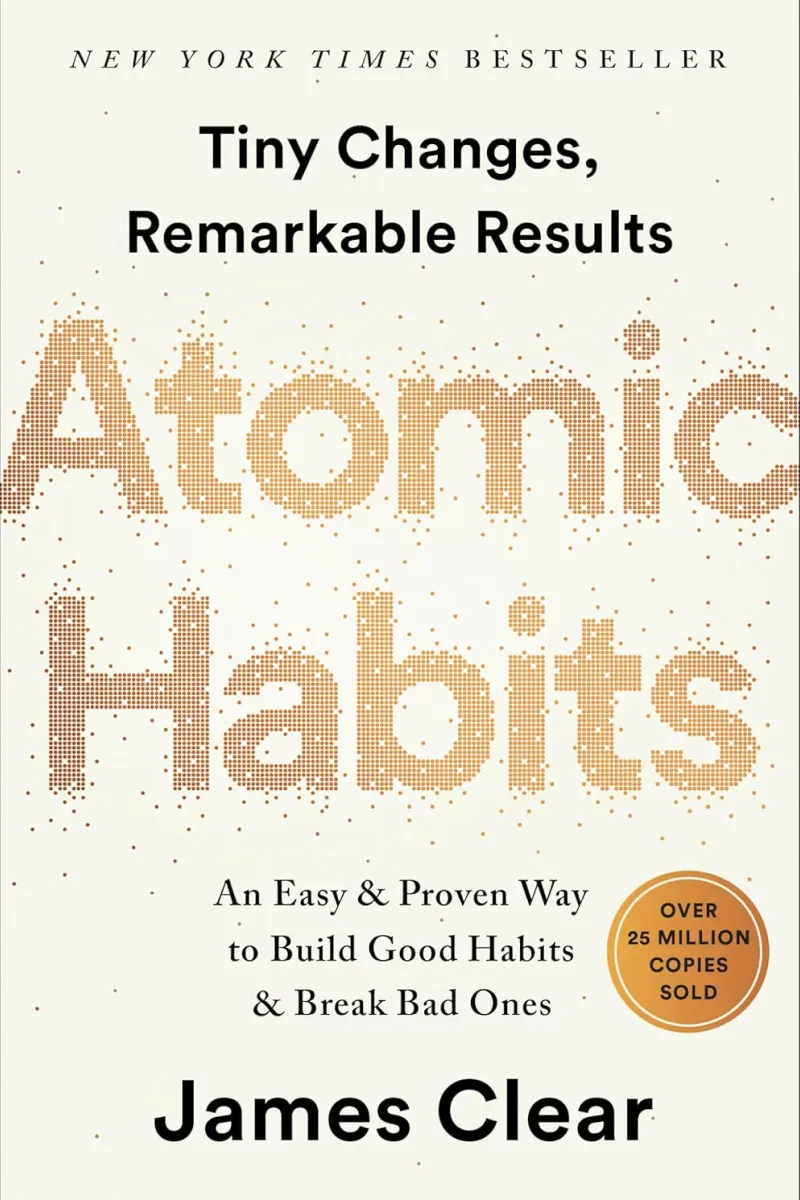
Attaching a new habit to an existing, reliable behavior is known as habit stacking, popularized by James Clear. The formula: “After [EXISTING HABIT], I will [NEW HABIT].” The existing habit functions as the trigger — it occurs reliably, and the new habit is designed to follow it consistently.
Strengths: Activity-based triggers leverage habits you already have, making the new habit dependent on behavior that already happens rather than on a time you might not remember. The trigger is reliable without requiring external support like alarms.
Examples of effective habit stacks:
- After making morning coffee → open journal
- After arriving at my desk → set three priorities for the day
- After brushing teeth at night → record a voice journal entry
- After putting on workout clothes → begin workout
- After lunch → take a ten-minute walk
Limitations: The new habit is only as reliable as the anchor habit. If the anchor behavior is skipped (you don’t have coffee on weekends; the workout clothes don’t get put on), the habit stack fails without its trigger. Choose anchors that are maximally reliable — daily behaviors that happen regardless of circumstance.
Best for: Most new daily habits. Habit stacking is the most versatile trigger approach because it works across environments and times and builds on existing behavioral infrastructure.
4. Sensory Triggers
Specific sensory experiences — a smell, a sound, a physical sensation, a visual cue — can function as habit triggers. The smell of coffee prompts the morning routine for many people. The sound of a particular alarm tone or piece of music prompts a specific practice. The physical sensation of putting on running shoes prompts the mindset of exercise.
Strengths: Sensory triggers can be deliberately designed and are often highly specific, which means they develop strong associations quickly. They can also be portable: bringing the specific sensory cue to a new environment recreates the trigger context.
Limitations: Sensory triggers require the sensory cue to be present, which means they need deliberate management — making sure the cue is available in the relevant contexts. They can also fade if the sensory stimulus becomes too familiar and stops registering distinctly.
Best for: Habits where you want a very specific and reliable trigger that can be transported across environments — particularly useful for travel situations where time and location cues are disrupted.
5. Emotional and Internal State Triggers
Some habits can be triggered by internal states: a specific mood, a level of stress, the feeling of completion after another task. “When I feel anxious, I will take three deep breaths” or “When I finish a work task, I will write a brief note about it” use internal states as triggers.
Strengths: These triggers engage exactly when the habit is most needed (stress → calming practice) or at natural behavioral boundaries (task completion → reflection note).
Limitations: Internal state triggers are the hardest to use reliably, because internal states require introspective recognition before the trigger can fire. When you’re most anxious, noticing the anxiety and choosing the habit response is itself cognitively demanding. These triggers work better for people with established self-awareness practices than for beginners.
Best for: Habits that are direct responses to specific emotional or cognitive states — particularly in combination with other trigger types rather than as the primary trigger.
How to Choose the Right Trigger
The trigger that works for a given habit depends on the habit itself, your daily structure, and the consistency you can realistically maintain. A few questions that guide the choice:
How much does this habit need a specific time? If the habit is time-sensitive (morning pages, evening wind-down), time-based triggers make sense. If it can happen at any point in the day, activity-based triggers offer more flexibility.
How stable is my daily environment? If you work from the same location daily and have a reliable routine, location and time triggers are viable. If your schedule varies significantly or you travel often, activity-based and sensory triggers are more robust.
What’s the most reliable behavior in my current routine? Identify the one or two behaviors that happen almost every day without exception — these are your best anchors for habit stacking. Brushing teeth, making coffee, putting on shoes, locking the car — highly reliable behaviors that happen without decision-making.
Does this habit need to be portable? If you want the habit to travel with you, don’t build it primarily on location cues. Build it on activity-based or sensory cues that you can recreate in other environments.
The Trigger Design Process
Once you’ve chosen a trigger type, designing the specific trigger involves four considerations.
Specificity
The more specific the trigger, the stronger the association it develops. “After dinner” is less specific and therefore weaker than “immediately after I finish eating dinner, before getting up from the table.” The first leaves room for indefinite deferral (it’s still after dinner when you’re watching television at 9pm); the second is precise about when and removes the window for delay.
Specificity also prevents the “I’ll do it in a bit” trap. “Before bed” can mean any time in the two hours before you fall asleep. “After brushing my teeth, while still in the bathroom” is specific enough to not allow postponement.
Reliability
The best trigger is the one that happens most reliably, not necessarily the one that seems most logical. If you’re trying to attach a habit to morning coffee but you skip coffee on some mornings, the habit will skip with it. The slightly less intuitive anchor that is truly daily — brushing teeth, the morning alarm — is a better trigger than the more intuitive one that isn’t fully reliable.
Proximity
The trigger should be immediately followed by the habit. The gap between trigger and behavior should be as small as possible — ideally zero. “After making coffee” works as a trigger for journaling if the journal is already open on the table when you make the coffee. “After making coffee” is a much weaker trigger if the journal has to be found, opened, and set up before any writing happens. The friction between trigger and behavior is part of the trigger design.
Durability
Some triggers erode over time — they become so familiar that they stop being perceived as distinct cues. For triggers that seem to be weakening, deliberate reinforcement helps: periodically re-establishing the association by being very explicit about the sequence (“right now I’m finishing coffee, and now I’m opening my journal”) rather than letting the automaticity run silently.
Implementation: Building a Trigger Stack for a New Habit
A practical example of trigger design for voice journaling, applied to real circumstances.
The habit: a daily three-to-five-minute voice journal entry.
Step 1: Identify anchor behaviors. In a given day: alarm off, coffee made, teeth brushed, shoes put on, lunch eaten, leaving work, arriving home, preparing dinner, teeth brushed again, lights off. Of these, which is most reliable? Teeth-brushing at night is near-universal and is already a consistent behavioral anchor with a clear completion signal.
Step 2: Design the trigger. “After brushing my teeth at night, I will record a voice journal entry before leaving the bathroom.” Specific (after brushing, in the bathroom), proximate (before leaving the bathroom), and attached to a maximally reliable anchor.
Step 3: Reduce friction. Voice journaling app on the phone’s home screen. Phone already in bathroom for tooth-brushing (for many people). Entry requires one tap. The low friction between trigger and behavior is part of the design.
Step 4: Add an implementation intention. “If I finish brushing my teeth and the phone isn’t with me, I will go get it before leaving the bathroom.” Planning for the most common obstacle prevents the obstacle from derailing the habit.
Step 5: Establish for 30 days before evaluating. Enough repetitions for the association to form before deciding whether the trigger is working. Change the trigger if it’s not working after genuine sustained effort — not before.
When Triggers Stop Working
Triggers that were effective sometimes stop working. Common reasons and responses:
The anchor behavior has changed. If the anchor habit itself has been disrupted — you stopped having coffee, your tooth-brushing routine changed, the morning activity you were piggybacking disappeared — the trigger no longer fires. The response is identifying a new anchor rather than trying to rebuild the old trigger without its anchor.
The trigger has habituated. Sensory triggers in particular can fade when they become too familiar. Changing the specific sensory cue slightly — a different alarm tone, a different physical object — often re-establishes the triggering function.
The trigger-behavior gap has grown. If friction between trigger and behavior has increased — the journaling app moved to a second screen, the journal is now in a different room — the effective trigger has weakened. Restoring the proximity restores the trigger.
Life circumstances have changed the reliability of the anchor. A habit that was reliably triggered by the commute home stops working when you start working from home. The habit needs a new trigger appropriate to the new circumstances, not indefinite waiting for the old circumstances to return.
Common Questions About Habit Triggers
How many habits can I attach to a single trigger?
One at a time, when building. Stacking multiple new habits onto the same trigger simultaneously dilutes the association and makes each habit harder to establish. Build one habit with one trigger until the first habit is automatic, then add the next. The exception: behaviors so brief that they can naturally chain together — two or three very short habits can share an anchor because together they take only a few minutes.
What if my schedule is too irregular for habit triggers?
Irregular schedules make time and location triggers unreliable but leave activity-based triggers fully viable. Identify the behaviors that happen even in irregular schedules — eating, sleeping, moving between spaces — and anchor to those. Also consider whether some minimal daily structure is worth creating specifically to support habit formation, even if the rest of the schedule is irregular.
Should I use alarms as habit triggers?
Alarms can function as effective triggers in the early stages of habit formation, when the association between the trigger and the behavior is still being established. But they shouldn’t be the permanent trigger — if the habit requires an alarm indefinitely, the underlying contextual association hasn’t formed. Use alarms as scaffolding to get the sequence started consistently; design the environment so that the alarm eventually becomes unnecessary.
What if I complete the trigger and then don’t feel like doing the habit?
The trigger-behavior link doesn’t depend on feeling like doing it. It depends on doing it. When you complete the trigger and notice resistance, the response that builds the habit is to do the minimum viable version of the habit anyway — thirty seconds of voice journaling, one sentence in the written journal, one minute of the practice. The feeling of not wanting to is part of the early habit formation experience, not a signal to wait for better conditions. The minimum done consistently beats the maximum done occasionally.
How long does it take for a trigger to become automatic?
Research by Phillippa Lally at UCL suggests the average is around 66 days, with significant individual variation (18–254 days). The more consistent the context and the simpler the behavior, the faster automaticity develops. More complex behaviors in more variable contexts take longer. The practical implication: commit to a trigger-behavior pairing for at least two months before evaluating whether it’s working.
Can I use emotional states as my primary habit trigger?
Emotional state triggers are best as secondary triggers or for specific responsive habits (stress → breathing practice) rather than as primary triggers for daily habits. The recognition of an emotional state requires self-awareness that isn’t always available, and emotional states are inconsistent cues for behaviors you want to happen daily. For a daily reflective practice, a reliable environmental or activity trigger is more effective than an emotional state trigger.
The Bottom Line
Habits that last are habits that have reliable triggers. The behavior becomes automatic not because you keep deciding to do it, but because the cue that precedes it keeps occurring and the association between cue and behavior has been reinforced enough times that the behavior is now what happens when the cue occurs.
The work of trigger design is not complicated, but it is specific: identify the right anchor, make the trigger-behavior gap as small as possible, reduce friction between trigger and behavior, and then repeat consistently for long enough that the association forms.
The decision to journal, to exercise, to reflect — make it once, when you design the trigger. After that, the trigger does the deciding.
This section contains affiliate links.
Go Deeper
You've been thinking about this long enough.
Ten seconds. Your voice. That's all it takes.
Inner Dispatch turns a single daily recording into something you can actually see - a living reflection of where you've been.
Start free. No writing required. →Related articles
How to Build a Daily Habit That Actually Sticks
A science-backed guide to building daily habits that last — covering the psychology of habit formation, why most habits fail, and the specific techniques that actually work.
The Science of Habit Formation: How Habits Actually Form (and Why They Break)
What does behavioral science actually say about how habits form? The real research on habit loops, timelines, context, and why most habits fail — and how to fix them.