
Habit Stacking: How to Add New Habits to Your Existing Routine
The hardest part of building a new habit isn’t the behavior itself. It’s remembering to do it.
This sounds like a minor problem — surely you can just set a reminder, or put it in your calendar — but it’s actually structural. Reminders and calendar entries require you to make a fresh decision every time they fire: is now a good moment? Do I have what I need? Will I do this now or later? Each of those questions is an opportunity for the habit to lose. Competing behaviors, lower motivation, unfavorable conditions — any of these can intercept the decision and produce a skipped session.
Habit stacking solves this differently. Instead of creating a new trigger from scratch, it borrows one that already exists: an automatic behavior you already do every day. The existing behavior becomes the cue for the new one, which means the new habit inherits the reliability of the old one without requiring a separate reminder, a decision, or a favorable moment.
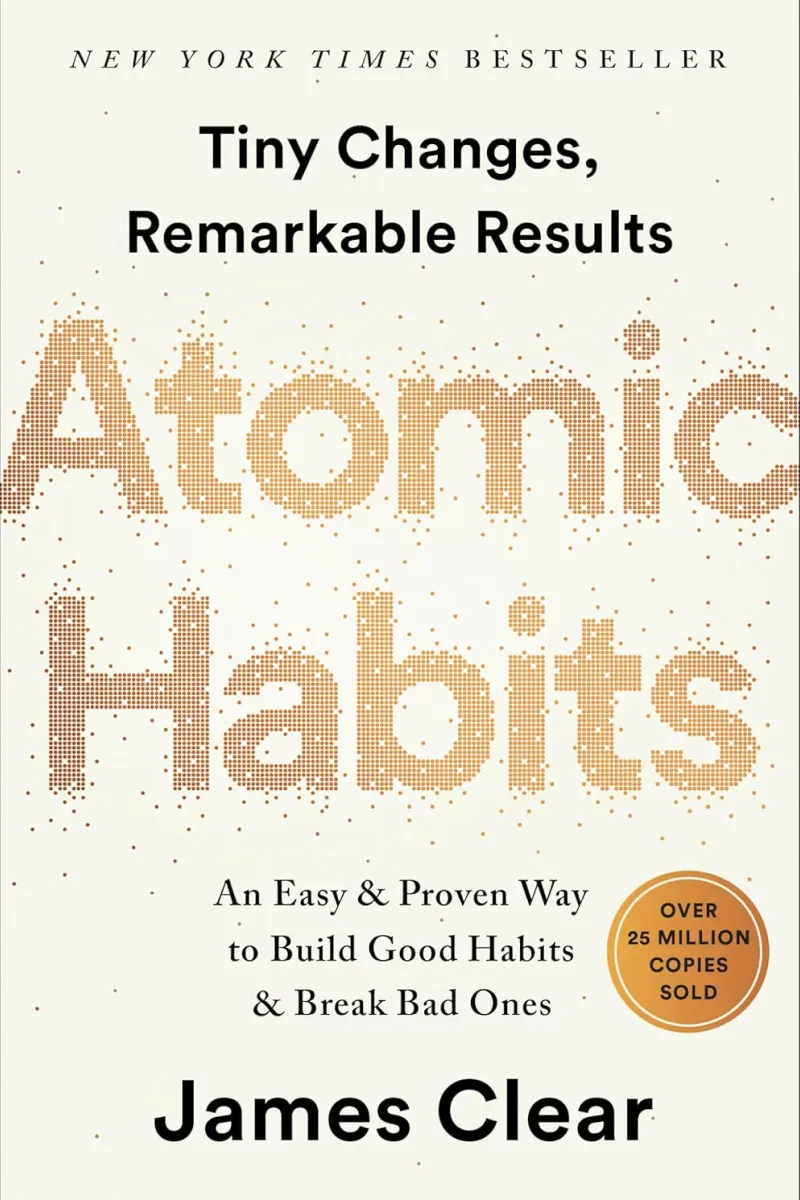
The concept has roots in BJ Fogg’s Tiny Habits research and was formalized as a standalone technique by James Clear in Atomic Habits. But the underlying mechanism — using established neural pathways to scaffold new ones — is grounded in decades of research on associative learning and procedural memory. The technique works not because it’s clever but because it matches how habit formation actually happens in the brain.
This guide covers how habit stacking works, why some stacks hold and others collapse, and how to design stacks that produce durable new behaviors — including practical examples for journaling, mindfulness, and other daily practices.
What Habit Stacking Is and How It Works
Habit stacking is the practice of linking a new behavior to an existing automatic behavior, using the existing behavior as a reliable cue.
The formula: “After I [EXISTING HABIT], I will [NEW HABIT].”
Examples:
- After I pour my morning coffee, I will write one sentence in my journal.
- After I sit down on my commute, I will open my voice journal app and record for two minutes.
- After I brush my teeth at night, I will write three things I’m grateful for.
- After I sit down at my desk in the morning, I will review my three priorities for the day.
The existing habit — pouring coffee, sitting on the commute, brushing teeth, sitting at the desk — is the anchor. It already happens automatically, without reminder or decision. The new habit attaches to the anchor and inherits its automaticity.
Why This Works Neurologically
Habits are encoded as cue-routine-reward loops in the basal ganglia. When a cue fires — a specific context, action, or time — it activates the associated routine automatically, without deliberate decision-making. This is what makes established habits automatic: the brain has encoded the sequence so efficiently that it runs without conscious intervention.
Habit stacking exploits this by attaching a new behavior to an existing cue-routine sequence. The existing anchor already has a reliable, encoded cue. When the anchor fires, the attached new behavior is positioned to follow immediately — benefiting from the momentum of the already-activated sequence.
Over repetitions, the connection between the anchor’s completion and the new behavior’s initiation gets encoded. The new behavior begins developing its own cue-routine-reward loop, using the anchor’s completion as its cue. Eventually, the stack operates as a single extended sequence: doing the anchor automatically initiates the new behavior.
This is why habit stacking is more reliable than reminder-based approaches. A reminder fires externally and requires a fresh decision. An anchor fires internally, automatically, as part of an already-encoded sequence — and the new behavior follows before the decision-making mind has fully engaged.
The Anatomy of a Good Habit Stack
Not all stacks are equally effective. The ones that hold tend to share specific design characteristics; the ones that collapse tend to violate one or more of them.
The Anchor Must Be Truly Automatic
The foundational requirement of any habit stack is that the anchor behavior is genuinely automatic — that it happens daily, without deliberate decision, in a consistent context.
“Making coffee” is a strong anchor for most people: it happens at the same time, in the same place, in the same sequence, every day. “Checking email” is a weaker anchor because it happens at variable times, for variable durations, in variable contexts. “Going to the gym” is an especially weak anchor because it doesn’t happen every day and requires its own motivational resources.
Test the anchor with this question: on a disrupted day — travel, illness, an unusually early morning — does this behavior still happen? If yes, it’s a strong anchor. If no, find one that would.
Strong anchors for most people include: waking up, making or drinking morning coffee or tea, sitting down at a desk, eating a meal, commuting, brushing teeth, getting into bed. These are reliable precisely because they’re tied to biological rhythms and long-established routines rather than variable intentions.
The New Behavior Must Immediately Follow
The connection between anchor and new behavior is strongest when the new behavior begins immediately after the anchor completes — not sometime later, not when conditions are better, immediately. Even a thirty-second gap introduces decision space where competing behaviors can intercept.
“After I pour my coffee, I will journal” works when the journal is already open and waiting on the counter. It works less well when the journal is in a drawer in another room and the coffee is getting cold while you look for a pen. The physical gap between the anchor’s completion and the new behavior’s start is a vulnerability in the stack.
Design the environment to minimize this gap. The journal on the counter. The app already open on the phone. The yoga mat already unrolled. Remove every step between the anchor’s end and the new behavior’s beginning.
The New Behavior Must Be Small Enough to Actually Follow
A habit stack that attaches a large, demanding new behavior to a small, automatic anchor creates a size mismatch that strains the connection. The anchor fires reliably; the new behavior requires significant effort to start; the effort requirement introduces resistance that the anchor’s momentum can’t fully carry.
The new behavior in a stack should be small enough that beginning it requires less effort than the anchor itself. If making coffee takes two minutes and the attached journaling practice requires thirty minutes of setup and writing, the stack has a friction problem. If making coffee takes two minutes and the attached journaling practice is opening a voice journal app and speaking for sixty seconds, the stack’s size is matched to the anchor’s momentum.
This is why micro habits and habit stacking are natural complements: the minimum viable version of a new behavior is exactly the right size to attach to an existing anchor without introducing prohibitive resistance.
The Stack Must Fit the Context
The new behavior needs to fit the physical and temporal context of the anchor. A mindfulness practice attached to “sitting on the commute” requires that the commute provides enough quiet and privacy for brief mindfulness. A voice journaling entry attached to “after I park the car” requires that the car provides enough privacy for speaking aloud.
Stacks that don’t fit their context fail consistently in that context and never get the repetitions needed for encoding. Before committing to a stack, evaluate whether the context of the anchor is compatible with the physical requirements of the new behavior.
How to Build a Habit Stack in Practice
Step 1: Map Your Existing Anchors
Before attaching anything new, identify the automatic behaviors that already exist in your day. Make a list of everything you do without deliberate decision-making — behaviors so embedded in your routine that you’d notice their absence more than their presence.
For most people, this list includes: waking up, using the bathroom, showering, making or drinking a morning beverage, preparing or eating breakfast, commuting (first moment of entering a vehicle or sitting on public transit), sitting at a work desk, eating lunch, returning home, preparing or eating dinner, brushing teeth, getting into bed.
These are your available anchors. The habit you’re trying to build will attach to one of them.
Step 2: Choose the Right Anchor for the New Behavior
Match the new behavior to the anchor that provides the most compatible context. Consider:
Timing: When in the day is the new behavior most likely to produce value? Morning journaling captures intentions before the day’s demands; evening journaling processes the day’s residue. Match the anchor’s timing to the behavior’s optimal timing.
Context: What physical and environmental conditions does the new behavior require? Voice journaling requires some privacy and a moment of relative stillness. Written journaling requires a surface and a hand free to write. Mindfulness requires a moment without competing demands. Find the anchor that provides these conditions naturally.
Sequence: Does the completion of the anchor naturally create a transition moment that the new behavior can fill? Getting into a parked car creates a contained, private moment that precedes getting out. Sitting down on the commute creates a moment before the phone typically comes out. These transition moments are particularly valuable anchors.
Energy: Is the anchor typically followed by a period of relative cognitive availability, or does it lead directly into demanding activity? Pouring morning coffee before emails are checked is a higher-cognitive-availability anchor than sitting down at the desk when the inbox is already open.
Step 3: Write the Stack Explicitly
Write the stack in the “After I [ANCHOR], I will [NEW BEHAVIOR]” format, as specifically as possible. Not “after coffee, I’ll journal” — “after I pour my coffee and sit down at the kitchen table, I will open my voice journal app and record for sixty seconds before opening my phone.”
The specificity serves two purposes. It reduces the decision space at the moment of execution — you’ve already decided exactly what “this” looks like, so the choice is binary rather than open-ended. And it creates an implementation intention, which research consistently shows increases follow-through compared to general intentions.
Write the stack down. Tell someone. Make it concrete rather than kept as a vague plan.
Step 4: Design the Environment for the Stack
Walk through the physical sequence of anchor → new behavior and identify every point of friction. The journal that needs to be retrieved from another room. The app that requires navigating through the phone’s home screen. The pen that needs to be uncapped. Remove each friction point in advance.
For voice journaling stacks specifically: move the voice journal app to the home screen. Set it to open directly to the record interface. If the anchor is commute-based, put the app in a location on the phone where you’ll see it immediately when you open the device.
The goal is for the new behavior to be the path of least resistance at the moment the anchor fires — requiring less effort to start than to skip.
Step 5: Do It for Thirty Days Without Evaluating Quality
For the first thirty days of a new stack, the only metric that matters is whether the stack happened. Not how long the new behavior lasted, not how meaningful the session felt, not whether you did more or less than planned — just whether the anchor fired and the new behavior followed.
This thirty-day non-evaluation period matters because early habit stacks are fragile. The connection between anchor and new behavior isn’t yet encoded; the neural pathway is still being built. Evaluating quality before the connection is established introduces a judgment layer that can break the stack — concluding that the practice isn’t working because individual sessions feel thin, when what’s actually happening is that the encoding process is in progress.
After thirty days, the stack is typically stable enough to evaluate quality and adjust accordingly.
Stack Design for Common Practices
Voice Journaling Stacks
Voice journaling is one of the most naturally stackable practices because its minimum viable version — thirty to sixty seconds of speaking — is small enough to attach to almost any anchor without creating a size mismatch.
Morning stack: After I pour my coffee / After I start the shower / After I get into the car → Open voice journal, speak for sixty seconds about what’s on my mind before the day begins
Commute stack: After I sit down on the train or bus / After I start driving → Open voice journal, record for two to three minutes about what I’m carrying from yesterday or what I’m anticipating today
Transition stack: After I park the car at the end of the workday / After I close my laptop → Open voice journal, speak for two minutes about the day before transitioning to home life
Evening stack: After I get into bed / After I brush my teeth → Open voice journal, record three things from the day worth remembering
The commute and post-work transition stacks are particularly effective because the context (car, transit) creates a contained, semi-private environment where speaking aloud is practical and the transition moment creates natural reflective material.
Written Journaling Stacks
Morning stack: After I sit down with my coffee → Write one sentence in the journal that’s already on the table
Evening stack: After I get into bed, before picking up my phone → Write three things that happened today in the notebook on my nightstand
Work transition stack: After I close my laptop for lunch → Write three intentions for the afternoon session
Mindfulness Stacks
Morning stack: After I wake up, before getting out of bed → Two minutes of deliberate breath attention
Transition stack: After I close a browser tab or finish a task → Three slow, deliberate breaths before beginning the next task
Evening stack: After I get into bed → Body scan from feet to head, thirty seconds
Learning and Reading Stacks
Commute stack: After I sit down on transit → Open book or reading app to current page
Lunch stack: After I sit down with my meal → Open a learning resource for the duration of eating
Common Reasons Habit Stacks Fail
The Anchor Isn’t as Automatic as It Seemed
Some behaviors feel automatic but aren’t. “Going to the gym in the morning” feels like a routine until the schedule changes. “Eating breakfast” feels like a daily behavior until travel eliminates it. Testing an anchor’s reliability across a disrupted week before committing to it reveals its actual stability.
If a stack is failing inconsistently — sometimes working, sometimes not — the anchor is usually the cause. Find a more reliable one.
The New Behavior Is Too Large
A thirty-second anchor cannot carry a thirty-minute new behavior. The size mismatch creates friction that the anchor’s momentum can’t overcome, and the stack fails whenever conditions aren’t favorable.
Reduce the new behavior until it’s clearly smaller than the anchor. Not “journal for twenty minutes after coffee” — “speak one sentence into the voice app before the coffee is finished.”
The Context Doesn’t Fit
A stack designed for the commute fails on work-from-home days. A stack designed for the kitchen table fails during travel. Stacks need either a context that’s present every day regardless of schedule, or a specific alternative version for days when the primary context is unavailable.
The alternative version — the travel version, the disrupted-week version — should be designed in advance and written into the stack explicitly: “After I pour my coffee (or, when traveling, after I first check my phone in the morning), I will…”
The Gap Between Anchor and New Behavior Is Too Long
A stack that looks like “after morning coffee, journal” fails if “after morning coffee” is followed by thirty minutes of email before the journal emerges. The anchor fires; competing behaviors intercept; the new habit never executes.
The stack works when the new behavior begins within thirty to sixty seconds of the anchor’s completion. Design the physical environment so this is possible.
Stacking Multiple Habits: The Morning Routine Example
Once individual stacks are stable, they can be chained into a sequence — a routine where each completed behavior serves as the anchor for the next. This is how intentional morning routines work at their best: not as a list of things to do, but as a chain of anchored behaviors that run sequentially.
A simple example:
- Wake up → drink water (anchor: first thing after waking)
- Drink water → two minutes of breath attention (anchor: finishing the water)
- Breath attention → open voice journal, speak for sixty seconds (anchor: finishing the breath practice)
- Voice journal → review three priorities for the day (anchor: finishing the journal entry)
Each behavior completes and immediately anchors the next. The chain runs on the momentum of the first anchor — waking up — which is the most automatic anchor available.
The caution: chains are more fragile than individual stacks. If any link breaks — if the breath practice is skipped — the subsequent links lose their anchor and are more likely to be skipped as well. Build individual links to stability before chaining them.
Common Questions About Habit Stacking
Can I stack a new habit onto another new habit?
Not reliably, at least not in early formation. A new habit isn’t yet automatic; it doesn’t have the encoded reliability needed to serve as an anchor for another new behavior. Stack new habits onto established automatic behaviors until the new habit itself reaches sufficient automaticity — typically around six to eight weeks of consistent performance — before using it as an anchor.
What if my schedule is too variable to have reliable anchors?
Look for biological anchors rather than schedule-based ones. Waking up, using the bathroom, eating, and going to sleep happen regardless of schedule — though their timing varies. These are your most reliable options in a variable schedule. The specific timing doesn’t need to be fixed; the sequence does. “After I eat my first meal of the day” works whether that meal is at 7am or noon.
Should the new behavior always be right after the anchor, or can there be a gap?
Immediately after is significantly more effective than after a gap. The gap introduces decision space. If the anchor fires at 7:30am and the new behavior is planned for 8:00am, thirty minutes of competing behavior have had access to your attention and the new habit has to be decided fresh. The closer the new behavior to the anchor’s completion, the stronger the stack.
How many habits can I stack onto one anchor?
One new habit per anchor is the most reliable approach, especially in early formation. Attaching multiple new behaviors to a single anchor creates a sequence where each link must hold for subsequent ones to execute — increasing the failure surface. Build one link to stability, then consider whether adding a second link serves a genuine purpose or just adds complexity.
What’s the difference between habit stacking and a morning routine?
A morning routine is the outcome; habit stacking is the mechanism. A morning routine built through deliberate habit stacking — each behavior anchored to the previous one — is more durable than a morning routine that’s simply a list of intentions, because the stacking creates automatic cuing rather than relying on repeated decisions. The morning routine advice fails most people because it describes the destination without explaining the mechanism. Habit stacking is the mechanism.
The Bottom Line
Habit stacking works because it solves the problem that kills most habits: reliable initiation. By attaching a new behavior to an existing automatic one, you eliminate the decision of whether to do the habit and replace it with a sequence that fires automatically when the anchor fires.
The design choices that matter: choosing an anchor that is genuinely automatic, making the new behavior small enough that the anchor’s momentum can carry it, designing the environment so the gap between anchor and new behavior is minimal, and giving the stack thirty days of consistent execution before evaluating quality.
For practices like voice journaling — where the minimum viable version is brief enough to attach to almost any anchor, and where the format works in the contexts most anchors provide — habit stacking is often the specific technique that turns an intention into a practice.
The behavior you want to build is already supported by an existing automatic behavior in your day. The stack is just making that connection explicit.
This section contains affiliate links.
Go Deeper
You've been thinking about this long enough.
Ten seconds. Your voice. That's all it takes.
Inner Dispatch turns a single daily recording into something you can actually see - a living reflection of where you've been.
Start free. No writing required. →Related articles

How to Build a Daily Habit That Actually Sticks
A science-backed guide to building daily habits that last — covering the psychology of habit formation, why most habits fail, and the specific techniques that actually work.

Morning Routine Ideas That Take Under 5 Minutes
A 5 minute morning routine you'll actually keep. Practical ideas backed by habit science — no hour-long rituals, no willpower required.