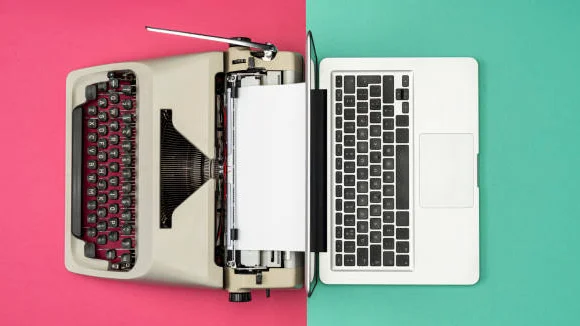
Digital vs. Paper Journal: Which Is Right for You?
The digital vs. paper debate has been running in journaling communities for years, and it generates more heat than it probably deserves. Advocates on both sides make strong cases. Paper people talk about the physicality, the absence of distraction, the way writing by hand slows thought in a useful way. Digital people talk about searchability, portability, backup, and the ability to type faster than they write.
Both sides are right about their own experience. Neither is universally right about everyone’s.
The honest answer to “digital or paper?” is that it depends on what you’re trying to get from journaling, how your mind works, and what the conditions of your actual life look like. A format that produces rich, sustained reflection for one person is the format that makes another person quit after two weeks.
This guide covers what each format genuinely does well, where each falls short, and how to identify which one fits your situation. It also covers a third option that most comparisons don’t include — one that sidesteps the central problem of both formats for a specific group of people.
What Paper Journaling Does Well
Paper journaling has been the default for centuries, and it retains genuine advantages that digital formats haven’t fully replicated.
The Absence of Distraction
A physical notebook doesn’t have notifications. It doesn’t show you the unread email count in the corner of your eye. It doesn’t tempt you to switch tabs, check a message, or look something up mid-thought. When you open a paper journal, the only thing in front of you is the page.
This is a more significant advantage than it might sound. For many people, the value of journaling comes specifically from sustained, undistracted attention — the kind that lets a thought develop past its surface layer into something more revealing. That quality of attention is harder to maintain on a device that’s also your communication hub, your entertainment system, and your news feed.
Paper creates a container for reflection that digital formats have to actively work to replicate — through airplane mode, focus apps, or disciplined habit. The paper version is that container by default.
The Physicality of Handwriting
Handwriting is slower than typing, and for certain purposes that slowness is an asset rather than a limitation. When you write by hand, you can’t transcribe your thoughts verbatim — the speed mismatch forces you to summarize, select, and prioritize. This compression is itself a form of reflection: deciding what’s important enough to write down is part of the process.
Research on note-taking suggests that handwriting produces better comprehension and retention than typing, partly because the processing required to compress information engages the material more deeply. Whether this extends to journaling is less studied, but the experiential evidence is consistent: many people find that writing by hand pulls them into a different, slower, more deliberate mode of thinking that typing doesn’t reliably produce.
There’s also a sensory dimension that some people find genuinely meaningful: the specific weight of a pen, the texture of paper, the visual record of handwriting that changes slightly across years. For people for whom these things matter, they’re not trivial. The physical experience of the practice is part of why it works.
Privacy by Design
A paper journal, kept in a drawer or on a shelf, has a straightforward privacy model: only someone physically present with access to that location can read it. There’s no cloud storage, no account, no server that could theoretically be breached. The data doesn’t exist anywhere except the pages.
For people journaling about sensitive topics — mental health struggles, relationship difficulties, professional conflicts, experiences they’d prefer to be entirely private — this simplicity has real value. You know exactly where your entries are and exactly who could access them.
No Subscription, No Ecosystem
Paper journaling requires a notebook and a pen. Both are available everywhere, require no account, generate no data, and continue to work indefinitely without updates or pricing changes. For people who are skeptical of ongoing subscriptions or uncomfortable with their personal reflections living inside a company’s product ecosystem, this is a meaningful practical advantage.
Where Paper Journaling Falls Short
Searchability and Review
A paper archive is opaque. Finding a specific entry, a recurring theme, or what you were thinking during a particular period requires physically paging through notebooks — which is slow, imprecise, and dependent on good labeling. Most paper journalers have had the experience of knowing they wrote something important and being unable to locate it.
Over years, this limitation compounds. A decade of paper journals is an irreplaceable record and also a largely inaccessible one. You can’t search across them, can’t see patterns across time, can’t easily find entries that relate to a current situation.
Portability Constraints
A paper journal requires physical presence. You can’t journal on a notebook that’s at home when you’re on a commute that would be the perfect journaling window. You can carry a small notebook everywhere, but that requires the habit of carrying it — and the habit of having it with you when the reflective moment arrives.
For people whose best journaling windows are scattered throughout the day rather than concentrated in a dedicated home session, paper’s portability constraint genuinely limits the practice.
Vulnerability to Loss and Damage
Paper journals can be lost, damaged, destroyed by water or fire, or simply worn out. For a years-long archive, the physical fragility is a real risk. Digital backups of handwritten journals require scanning — which few people actually do. The record you’ve built over years is, in a meaningful sense, unrecoverable if the physical object is lost.
Legibility and Speed
Handwriting varies. On tired evenings or hurried mornings, handwriting that seems clear in the moment can become difficult to read months later. And for people whose handwriting is slow, the gap between the speed of thought and the speed of transcription can be frustrating enough to shorten entries or discourage the practice.
What Digital Journaling Does Well
Searchability Across All Entries
The most significant practical advantage of digital journaling is the ability to search. Finding every entry that mentions a specific person, a recurring theme, or a particular period requires a few keystrokes rather than hours of manual review. This transforms the archive from a sequential record into something closer to a database of your own thinking — accessible by topic, date, mood, or keyword.
For people who use journaling to track patterns, process recurring situations, or build self-understanding over time, searchability is not a convenience feature. It’s the feature that makes the archive actually useful.
Portability Across Devices
A digital journal lives on your phone, which is already with you. The reflective moment on the commute, the two minutes between meetings, the thought that surfaces at midnight — all of these can be captured immediately, in the app, without any additional preparation. The practice can happen wherever you are rather than wherever your notebook happens to be.
Backup and Permanence
Entries stored in a reputable digital app, with cloud sync and local backup, are more durable than paper. A fire doesn’t destroy your digital journal. A lost phone doesn’t either, if sync is enabled. For people who have kept a long-running journal and are genuinely invested in preserving the archive, the durability advantage of digital is significant.
Speed for People Who Type Faster Than They Write
For a meaningful portion of people, typing is substantially faster than handwriting — fast enough that the speed gap between thought and transcription is smaller in digital than on paper. For these people, digital journaling captures more material per session and feels less effortful to sustain. The format advantage of paper’s compression works in reverse here: if typing is nearly as fast as thinking, the cognitive load of the format is lower.
Rich Media Integration
Digital journals can include photographs, audio, location data, links, and other media types that paper can’t. For people who journal around visual experiences, travel, or specific life documentation, the ability to attach a photo to an entry or capture a location adds dimensions that paper simply can’t.
Where Digital Journaling Falls Short
The Distraction Problem
The phone is also your email, your social media, your news. Opening a journaling app on the same device that delivers notifications requires a form of attention discipline that paper doesn’t demand. Many people find that digital journaling sessions are interrupted, abbreviated, or simply replaced by scrolling — not through weakness of character, but because the device architecture works against sustained reflection.
This is addressable — airplane mode, a dedicated tablet used only for journaling, focus features — but it requires active management that paper doesn’t.
The Performance of Typing
Typing feels different from writing by hand in ways that affect what gets produced. Typed text looks more finished than handwritten text, which can activate the same self-editing instinct that blank-page perfectionism produces. The visual similarity between a journal entry and an email or a work document can subtly shift the mode from personal reflection to something more performative.
This isn’t universal — many people type with complete unselfconsciousness. But it’s a real pattern worth knowing about if you’re deciding between formats.
Privacy Concerns
Digital journaling, particularly in cloud-connected apps, involves a different privacy model than paper. Your entries exist on a company’s servers, subject to that company’s security practices, privacy policy, and business continuity. Most reputable journaling apps use encryption, but the architecture is fundamentally different from a notebook in a drawer.
For most people, this is an acceptable tradeoff. For people journaling about genuinely sensitive topics, or those who have strong preferences about data privacy, it’s worth thinking through carefully before committing to a cloud-based format.
The Third Option: Voice Journaling
Most digital vs. paper comparisons treat the choice as binary, but there’s a third format that sidesteps many of the central problems of both: voice journaling.
Voice journaling — recording spoken entries rather than writing or typing them — addresses the key limitation that both paper and digital share: both require you to translate thought into written language, which is slower than thought, requires a certain cognitive engagement, and is blocked for people who find writing difficult.
Speaking is faster than writing, requires less cognitive load than constructing prose, and works in contexts where neither paper nor digital text entry is practical. You can voice journal while commuting, walking, or in any situation where your hands and eyes are occupied. The format is accessible to people with dyslexia, ADHD, or other conditions that make writing effortful, and it tends to capture emotional content with more authenticity than writing does — because speech moves faster than the internal editor.
What Voice Journaling Offers That Neither Format Does
The spoken entry preserves something that both written formats lose: the paralinguistic layer. Your tone, your hesitations, the way your voice changes when you talk about something that actually matters — these carry emotional information that written words don’t encode. Listening back to an entry from six months ago, you don’t just read what you were thinking. You hear how you were.
This listening-back experience is distinct from re-reading. It creates a slight external distance — you hear yourself almost as someone else would — which can surface things that reading your own writing doesn’t. The witness effect of listening to your own recorded voice is one of the more underappreciated aspects of the format.
The Limitations
Voice journaling’s main limitation is reviewability. Audio is harder to scan than text — you can’t skim a recording the way you can skim a page. Apps that include transcription partially address this, turning spoken entries into searchable text. But even with transcription, navigating an audio archive is less intuitive than navigating a written one.
Voice journaling also requires a degree of privacy to record comfortably — you’re speaking out loud, which isn’t practical in all contexts. And some people find it initially self-conscious in a way that takes a few weeks to move through.
Who Voice Journaling Works Best For
Voice journaling is worth serious consideration if any of the following apply:
You’ve tried written journaling — paper or digital — and found it unsustainable. You find writing slow, effortful, or anxiety-provoking. You have strong feelings about the blank page or about how your entries “should” sound. Your best available journaling windows are in motion — commuting, walking, cooking — rather than at a desk. You process thoughts more naturally through speaking than writing.
For these people, the choice between paper and digital is the wrong choice to be making. The format that fits is the one that removes writing from the equation.
How to Choose: A Direct Framework
Rather than declaring a winner, here’s a framework for identifying which format actually fits you.
Choose paper if: You value distraction-free sessions and find devices pull your attention. You find handwriting puts you in a different, more deliberate mode of thinking. Privacy through physical simplicity matters to you. You don’t need to search across entries. You have a reliable time and place for journaling that means portability isn’t a constraint.
Choose digital if: Portability is essential — your journaling windows are scattered across your day. Searchability matters — you want to find themes and patterns across months or years. You type substantially faster than you write. You want rich media in entries — photos, audio, location. You value backup and durability over physical simplicity.
Choose voice if: You’ve quit written journaling before and the format was the likely cause. Writing is effortful, slow, or anxiety-provoking for you. Your best journaling windows are in contexts where writing isn’t practical. You process thoughts more naturally through speech than text. You want to capture emotional content with more authenticity than writing tends to produce.
Consider combining formats if: You’ve been journaling in one format for a while and feel like something is missing. You want voice journaling’s immediacy and written journaling’s reviewability. Different purposes suit different formats — quick emotional processing in voice, deeper analysis in writing.
Common Questions About Choosing a Journal Format
Does the research show one format is better for mental health?
The research base on journaling and mental health is largest for written journaling — primarily because it’s been studied for longer. James Pennebaker’s extensive work on expressive writing established the benefits of written emotional disclosure in the 1980s and has been replicated consistently. Research on voice journaling and photo journaling is more recent but shows comparable benefits for emotional processing and self-awareness. The honest answer is that the format most supported by research is the one you’ll actually do consistently — which is an individual question, not a universal one.
Is it okay to switch formats, or does that reset the habit?
Switching formats does introduce a transition period where the practice feels less automatic. But if your current format isn’t working — if you’re skipping sessions because of format friction rather than time constraints — switching is usually worth the disruption. A new format that actually fits your life will produce more value over six months than the familiar format you keep abandoning.
What if I want the benefits of both paper and digital?
Some people maintain two practices: a physical notebook for certain kinds of reflection (slower, more contemplative, private in a specific way) and a digital app for quick capture, searchability, or on-the-go journaling. This works if the two practices serve genuinely different purposes rather than competing for the same time and energy. Trying to maintain two identical practices in different formats usually results in both becoming inconsistent.
Do I need to commit to one format long-term?
No. Most experienced journalers have gone through several format evolutions over years. Starting with paper and moving to digital, or moving from digital to voice, or settling on a hybrid — these are normal developments in a long practice. The format that works best at one life stage may not be the best at another. Commitment to the practice matters more than commitment to any particular format.
Is paper journaling better for mental health because it’s less connected to technology?
This is a plausible intuition but not one that research has clearly confirmed. The benefit of the disconnect from technology is real — removing yourself from the device ecosystem during a reflective session is genuinely useful for some people. But this benefit is about the distraction and notification environment, not about paper itself. A digital journaling session in airplane mode, or on a device used only for journaling, approximates the same environment. The question is whether you’ll actually create that environment, or whether the friction of doing so means the session doesn’t happen.
The Bottom Line
Paper and digital journaling are both legitimate formats with real advantages and real limitations. Neither is universally better. The right choice is the one that fits how you actually process, what you actually need from the practice, and the actual conditions of your life — not the format that sounds most appealing or most virtuous.
For people who’ve tried both and found neither sustainable, the answer may be the one most comparisons don’t include: voice journaling, which removes the written language requirement from the equation and works in contexts that neither paper nor digital text entry can serve.
Start with the format that creates the least friction. Give it a genuine trial — a month, with consistent use. Then assess honestly. The format that works is the one that produces entries, and entries are what produce everything else.
This section contains affiliate links.
Go Deeper
You've been thinking about this long enough.
Ten seconds. Your voice. That's all it takes.
Inner Dispatch turns a single daily recording into something you can actually see - a living reflection of where you've been.
Start free. No writing required. →Related articles

How to Start Journaling: The Beginner's Guide
A complete beginner's guide to starting a journaling practice — including how to choose your format, what to write, and how to build a habit that actually lasts.

What Is Voice Journaling? A Beginner's Introduction
Discover what voice journaling is, how it works, and why speaking your thoughts beats writing them. A complete beginner's guide to starting an audio diary.