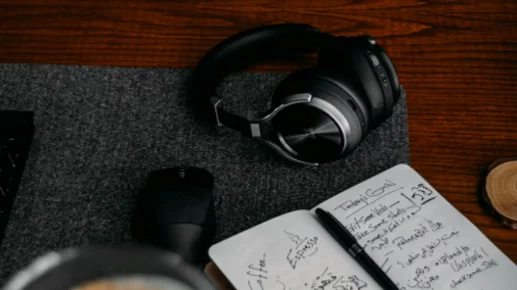
Audio Diary vs. Video Diary: Which Captures Life Better?
The impulse behind both is the same: to hold onto something before it slips away. The voice of someone you love. The feeling of a period that’s ending. The texture of a day that seems unremarkable now but might not feel that way in ten years.
Audio diaries and video diaries both answer that impulse. But they answer it differently — capturing different layers of experience, fitting different contexts, and producing archives that are used in different ways. Choosing between them, or understanding how to use both, depends on knowing what each format actually does well and where each genuinely falls short.
This isn’t a verdict. It’s a map of the territory — what you can expect from each format, what you’ll get that you didn’t expect, and what you’ll miss that you thought you’d have.
What an Audio Diary Actually Is
An audio diary is a spoken record of your life — your voice, captured on a recording device, describing experience, processing feeling, or simply talking through what’s happening. It’s the spoken equivalent of a written journal: private, reflective, honest, and free from the performance pressure that cameras create.
In its modern form, an audio diary lives on your phone. You open a voice journaling app or a voice memo tool, press record, speak for as long as you have, and stop. The entry is timestamped, saved, and accessible whenever you want to return to it.
The format has a long tradition — it predates smartphones by decades, showing up in the tape-recorded confessions of writers, the oral histories captured by documentarians, the spoken letters people used to send before email made them obsolete. What the smartphone era changed is friction: where maintaining an audio diary once required equipment and deliberate setup, it now requires a tap.
What a Video Diary Actually Is
A video diary is a recorded visual and audio document — you, on camera, speaking to the lens about your life. Like the audio diary, it’s a spoken practice; unlike it, it adds the visual layer: your face, your expression, your surroundings, whatever the frame captures.
In its most common contemporary form, the video diary looks like talking to a phone propped against something, or held at arm’s length. Some people set up a camera. Some use a laptop or tablet. The format exists on a spectrum from raw and unedited to produced and edited, but in diary form — as opposed to content creation — it’s usually raw: one take, minimal setup, not intended for an audience.
The format has its roots in camcorder culture and documentary filmmaking, but it became genuinely accessible in the smartphone era for the same reason audio diaries did: the device that records is already in your pocket.
What Audio Captures That Video Can’t
The Voice Without Performance
Audio recording captures your voice without your face — and the absence of the face changes everything about how honest the recording is.
When a camera is recording, most people perform. Not necessarily consciously, and not necessarily inaccurately — but the presence of a lens activates a social awareness that shapes what you say and how you say it. You hold the phone a specific way. You become aware of your expression. You’re not talking to yourself; you’re talking to the camera, which is a different thing.
Audio doesn’t trigger this in the same way. Without a visual component, the recording captures the version of your voice that exists when no one is watching — which is often a more honest version than the camera-facing one. The hesitations are less edited. The contradictions are less smoothed. The feeling underneath the words is more likely to make it into the recording.
This is one reason audio diaries tend to produce more emotionally authentic records than video diaries for most people. The format doesn’t ask you to be comfortable on camera. It just asks you to talk.
The Internal Without the External
Audio is the ideal format for capturing internal states — what you’re thinking, how you’re feeling, what you’re afraid of, what you don’t yet know how to say. It makes no demand on the external world. You don’t need a particular background. You don’t need to look presentable. You don’t need to be in a setting that reflects well on the record being created.
This freedom makes audio the right format for the private, unresolved, and uncomfortable material that makes up a significant portion of any honest interior life. The 2am recording about a relationship that isn’t working. The voice memo in the car after a difficult conversation. The entry that begins “I don’t know how to say this” — and then figures it out.
These entries don’t work on camera. The visual layer would either get in the way or require the kind of presentability that honest private records don’t need.
Portability and Context
Audio records in contexts that video can’t. You can record a voice memo while driving, while walking, while your hands are doing something else. You can record immediately after an experience — in the parking lot, in the elevator, during the thirty seconds between one thing and the next — when the emotional freshness is still present.
Video requires you to stop, position yourself, look at the lens, and speak. These requirements mean video recording typically happens in dedicated moments, in specific locations, under conditions that are at least minimally set up. Audio can happen anywhere, immediately, in the context where the experience is still close.
For capturing memory at its most vivid — before the forgetting curve steepens and the specific details begin to blur — immediacy is everything. Audio wins on immediacy consistently.
File Size and Archive Manageability
An audio diary creates files that are a fraction of the size of video. A five-minute voice memo might be 5–10 megabytes. A five-minute video might be 500 megabytes to 1 gigabyte. Over years of daily practice, this difference is enormous.
An audio archive of five years of daily entries is practically manageable: a few gigabytes, searchable if transcribed, organized by date, accessible on any device. A video archive of the same period is a data management problem: terabytes of footage that require significant storage infrastructure, are difficult to search or navigate, and often end up on a hard drive that nobody opens.
The manageable archive gets used. The unmanageable one doesn’t. This practical consideration is one of the most underappreciated differences between the formats.
What Video Captures That Audio Can’t
The Face as Document
A person’s face at a specific age is an irreplaceable record that audio cannot preserve. The way your child looked at four, at eight, at twelve — these are documents that photographs approximate and video captures in motion, with expression and voice and the particular animation of a face that photographs can’t hold.
For documenting other people — children growing, parents aging, friends at specific moments in their lives — video provides something genuinely impossible to replicate with audio. A recording of your child explaining their current theory of how dinosaurs went extinct, complete with the particular facial expressions they make at seven, is a record with a texture that no photograph or audio recording can fully reproduce.
This is the single most compelling case for video: capturing the faces of people you love at specific moments in time that won’t come again.
The Visual Environment
Video records the world the way it actually looks — the specific appearance of a home you’re about to leave, the view from a window during a period of your life, the particular light of a summer afternoon. These visual records preserve information about the external world that audio cannot.
For life periods that will end — a living situation, a job, a city — video documentation of the physical environment creates records that are impossible to produce any other way. Audio can describe a place; video can show it.
The Whole-Self Record
Watching a video of yourself from five or ten years ago provides a different kind of self-knowledge than hearing an audio recording. The visual record includes how you moved, how you held yourself, what you looked like — your external presentation at a specific point in time, which is a form of documentation that only exists in video.
This is particularly valuable across longer timescales. The video diary from ten years ago shows not just what you thought and felt, but what you were — a physical, embodied person at a specific moment in time. That record has a different relationship with memory than audio alone.
The Practical Comparison
Daily Practice: Audio Wins
For a sustainable daily documentation practice, audio is the more realistic format for most people in most lives. It requires no camera setup, no concern about appearance or setting, no dedicated time and place. It can happen in the margins — the commute, the transition, the moment before sleep — in ways that video cannot.
The audio diary that actually happens every day is more valuable than the video diary that happens once a week with production quality. For daily documentation, friction determines sustainability, and audio has systematically less friction.
Significant Events: Consider Both
For events that matter specifically because of their visual reality — birthday celebrations, family gatherings, life transitions that involve place and people — video provides something audio cannot. The visual record of a significant event is often what you’ll most want to return to.
For the internal processing of significant events — how you felt going into them, what you understood differently afterward, the specific texture of what they meant — audio is the better format. The reflection that follows the event, captured in voice, often contains more of what you’ll actually want to access later than the footage of the event itself.
Used together — video at the event, audio after it — they produce a more complete record than either alone.
Self-Reflection and Processing: Audio Wins
For journaling in the most traditional sense — examining your thinking, working through a difficult situation, making sense of something that happened — audio is the better format. The camera’s presence is incompatible with the kind of unguarded, exploratory reflection that makes journaling valuable. People self-censor on camera in ways they don’t when speaking into a microphone.
Memory of Others: Video Wins
If your primary documentation motivation is preserving the people in your life as they are right now — the way your parent tells a particular story, the specific way your child laughs, the particular presence of someone you love — video provides irreplaceable material. Audio can capture voice and speech, but it can’t capture the face.
What Neither Format Fully Captures
It’s worth being honest about what both formats miss, because neither is a complete substitute for memory, and understanding the gaps helps calibrate expectations.
Both audio and video are external records. They capture what was said and what was visible. They don’t capture smell, physical sensation, or the felt sense of being in a body in a specific place at a specific time. A recording of a dinner captures the conversation; it doesn’t capture the warmth of the room or the particular feeling of that night. Documentation always preserves a partial record.
Both formats also shape what they capture. An audio diary shapes speech into a kind of narrative; a video diary shapes the speaker into a camera-aware performer. Neither produces raw, unmediated experience. They produce records that were created with awareness of being recorded — which influences the records themselves.
Neither format replaces the experience. Documentation captures something real and valuable. But the experience itself will always be more than any record of it, and the best documentation practices hold this with some humility.
Building a Practice: The Pragmatic Case for Audio
For most people building a documentation practice from scratch, audio is the right starting point. Not because it’s superior as a format in all respects — it isn’t — but because it’s the format most likely to actually become a consistent habit.
The voice memo recorded in the parking lot after a difficult conversation is documentation that happened. The video diary entry that required a specific setup and a moment when your surroundings and appearance were appropriate is documentation that often gets deferred.
Deferred documentation becomes no documentation. The honest record of your life is made of what actually gets captured, not what would theoretically be captured if conditions were right.
Start with audio as the daily spine of a documentation practice. Add video deliberately, for specific purposes — the people you want to see moving and speaking, the places you want to preserve visually, the events that have a visual dimension worth capturing. Use each format for what it does best rather than treating them as interchangeable alternatives.
Common Questions About Audio vs. Video Diaries
Which format is better for preserving memories long-term?
For preserving your internal experience — thoughts, feelings, the emotional texture of a period — audio is typically more effective, because people are more honest and unguarded in audio than on camera. For preserving the external reality of your life — how people looked, what places looked like, the physical reality of a moment — video provides something audio cannot. The most complete documentation uses both formats for their respective strengths.
Is it weird to keep an audio or video diary?
The self-consciousness around both formats is common, particularly at the beginning. Audio self-consciousness typically fades faster than video self-consciousness, because audio removes the visual component that makes recording feel like performance. Most people find that within a few weeks of regular audio recording, speaking into a phone feels natural rather than strange. Video often continues to feel slightly performative, which is part of why it works less well as a daily reflection tool.
How long should diary entries be?
For daily practice, the right length is whatever you’ll actually do consistently. A sixty-second audio entry is a complete and legitimate record. A five-minute entry is richer. The length that happens reliably is more valuable than the length that happens occasionally. For video, shorter entries are more realistic as a daily practice — keeping them under three to five minutes reduces the setup and processing overhead that can make longer video diaries unsustainable.
What’s the best app for an audio diary?
The built-in voice memo app on any smartphone is sufficient for starting a practice. Dedicated voice journaling apps offer additional features — transcription, organization, mood tagging, searchability — that become more valuable as the archive grows. If you’re starting out, use what’s already on your phone and switch to a dedicated app when specific limitations become genuine friction.
Should I keep audio and video diaries separate?
Many people find it useful to maintain a primary audio practice — daily, low-friction, the spine of the documentation system — and a separate video practice for specific purposes. Keeping them in different places with different organizational systems makes both more navigable. Mixing them in a single archive can make both harder to use.
What happens to the archive when I’m gone?
This is worth thinking about, particularly if one motivation for documentation is leaving something for the people who come after you. Audio and video archives that live exclusively in app-specific cloud storage may not survive format changes, company closures, or account access issues. Periodic export to a more durable, format-agnostic storage (an external hard drive, a cloud service not tied to a specific app) protects against these risks. For documentation intended to be a long-term legacy, format durability is worth building into the system design from the beginning.
The Bottom Line
Audio and video diaries are not competing formats — they’re complementary ones, each suited to different purposes and different moments.
Audio captures the internal, the honest, the immediate, and the daily. It fits in the margins of real life, produces manageable archives, and removes the camera-awareness that makes video diaries feel like performance. It is the right format for the reflective, exploratory, emotionally honest practice that documentation is most valuable for.
Video captures the visual, the embodied, the face-specific, and the external. It provides something irreplaceable for the people and places that matter most — a record that audio cannot fully replicate.
The documentation practice most likely to produce a genuinely useful archive uses audio as its daily foundation and video as its deliberate supplement — reaching for the camera when there’s something worth seeing, and reaching for the voice memo for everything else.
Which captures life better? Both, when used for what each actually does well.
This section contains affiliate links.
Go Deeper
You've been thinking about this long enough.
Ten seconds. Your voice. That's all it takes.
Inner Dispatch turns a single daily recording into something you can actually see - a living reflection of where you've been.
Start free. No writing required. →Related articles
How to Document Your Life: A Simple System for Capturing Memories
A complete guide to documenting your life — covering what to capture, how to capture it, and how to build a system that preserves memories without becoming a second job.

What Is Voice Journaling? A Beginner's Introduction
Discover what voice journaling is, how it works, and why speaking your thoughts beats writing them. A complete beginner's guide to starting an audio diary.