
Atomic Habits Summary: Key Takeaways for Daily Life
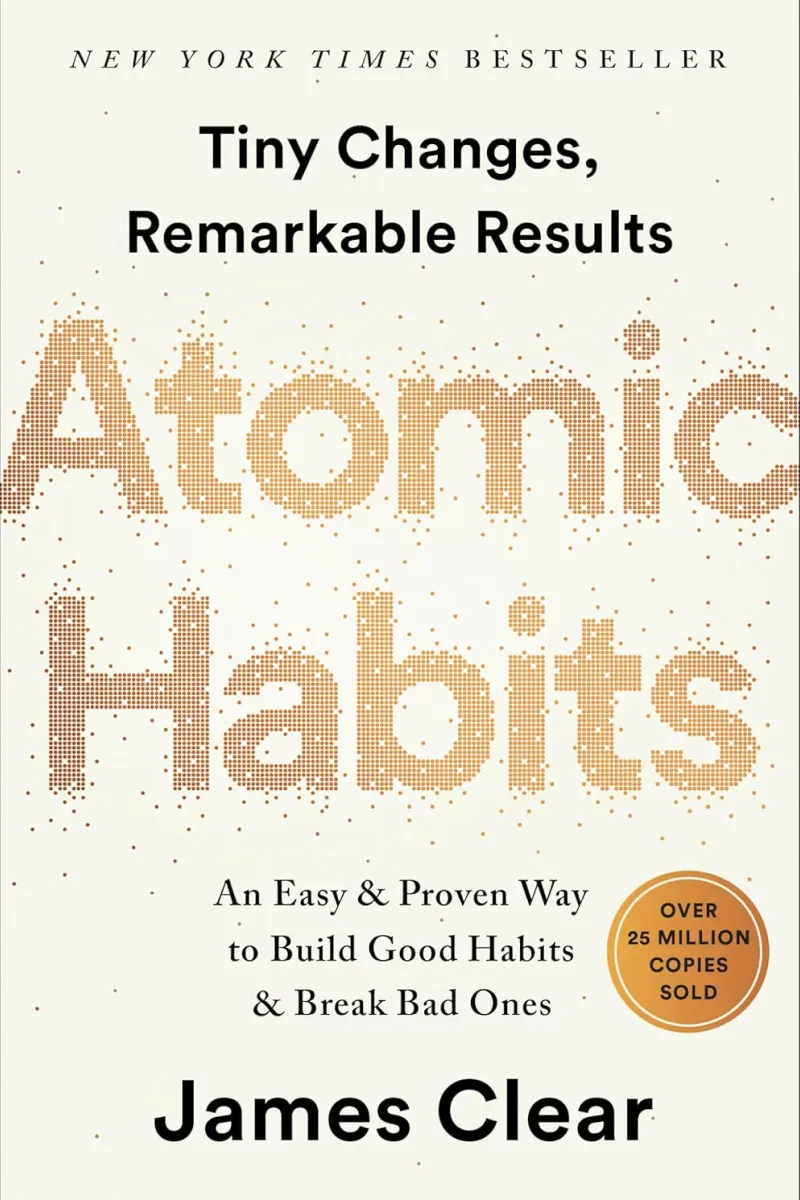
Atomic Habits by James Clear is one of the best-selling nonfiction books of the past decade, with over 15 million copies sold and a rare distinction in the self-help genre: readers who actually change their behavior after reading it. The book synthesizes behavioral science research, cognitive psychology, and practical habit design into a framework that’s both intellectually rigorous and immediately actionable.
This summary covers the book’s core ideas, the practical techniques that flow from them, and — crucially — how to apply them in daily life rather than just understanding them abstractly. Clear himself is emphatic that knowledge without implementation is worth nothing in habit formation; the point of the framework is what you do with it.
Note: this summary necessarily condenses hundreds of pages of argument, evidence, and nuance. For the full depth — the stories, the research, the extended examples — the book itself remains the best version of these ideas.
The Central Premise: Systems Beat Goals
Clear opens with a counter-intuitive claim that runs through everything that follows: goals don’t produce results. Systems do.
The argument is precise. Goals and systems are different things. A goal is an outcome you want to achieve. A system is the daily process you follow. The problem with goal-oriented thinking is that the goal and the process can become decoupled: you can achieve a goal through a one-time effort that doesn’t represent a sustainable system, or you can fail to achieve a goal despite building a system that’s producing real change.
More practically: a goal achieved without a supporting system doesn’t persist. The person who loses twenty pounds through a strict diet and then returns to their previous eating habits has achieved the goal and lost the result. The person who builds sustainable changes to how they eat hasn’t completed a goal; they’ve changed a system. The system produces ongoing results without requiring a goal to sustain it.
The daily life application: Before defining what you want to achieve, define the system you’re willing to maintain. What daily process, performed consistently, would produce the outcomes you want as a byproduct? The system is more important than the goal, and it’s certainly more important than the motivation to achieve the goal.
The Four Laws of Behavior Change
The practical core of Atomic Habits is a four-law framework for building new habits and breaking old ones. Each law corresponds to one component of the habit loop (cue, craving, routine, reward), and can be applied in either direction: the positive form for building habits, the inverted form for breaking them.
Law 1: Make It Obvious (Cue)
Habits require cues, and cues need to be obvious to be effective. Most people try to rely on memory and motivation to initiate habits — “I’ll journal when I remember to” — which produces inconsistent behavior because memory is unreliable and motivation fluctuates.
Making the cue obvious means making the trigger for the habit visible and prominent in your environment. The book on the coffee table rather than the shelf. The journal open on the desk. The running shoes by the door. The phone with the journaling app on the home screen rather than in a folder.
Implementation intentions are Clear’s primary tool for making cues specific: “I will [behavior] at [time] in [location].” Research on implementation intentions by Peter Gollwitzer shows significantly higher follow-through rates when intentions are stated in this form versus vague intentions without time and location. “I will record a voice journal entry after brushing my teeth at night in the bathroom” is an implementation intention; “I’ll try to journal more” is not.
Habit stacking is the second major tool: “After [current habit], I will [new habit].” Existing habits become the cues for new ones. The existing habit is already automatic; the new habit rides its trigger.
The inverted form — Make It Invisible — applies to habits you want to break: reduce cue exposure. Remove the trigger from your environment. The phone charger moved to the kitchen rather than the bedroom. The snacks not purchased rather than resisted.
Law 2: Make It Attractive (Craving)
Habits are more likely to be repeated when they’re associated with positive feelings — when there’s something to look forward to. The craving (the anticipatory wanting of the reward) is what actually motivates the behavior, not the cue itself.
Temptation bundling is Clear’s practical technique: pair the habit you need to do with something you want to do. Only listen to your favorite podcast while exercising. Only drink a specific enjoyable beverage while journaling. The enjoyable activity becomes associated with the habit, making the habit more anticipated.
Clear also discusses the role of social environment in making habits attractive. Habits that are normal in your social group are easier to maintain because they’re reinforced by identity (“this is what people like me do”) and social reward (the approval and belonging that comes from shared practices).
The inverted form — Make It Unattractive — applies to habits you want to break: reframe the habit to highlight its costs rather than its rewards. What does the undesired habit actually cost? What negative outcomes does it produce or prevent you from avoiding? Making the true costs visible reduces the habit’s attractiveness.
Law 3: Make It Easy (Routine)
Friction is the primary determinant of whether a habit happens in the absence of strong motivation. Reducing friction — making the habit easier to initiate — is more reliable than building stronger motivation.
The two-minute rule: any new habit should start as a version that takes two minutes or less. The journaling habit starts as “open journal and write one sentence.” The voice journaling habit starts as “press record and say the date.” The exercise habit starts as “put on running shoes.” The two-minute version is the gateway to the fuller practice; its purpose is to initiate the behavior so momentum can carry it forward.
Environment design is the environmental application of this principle: redesign your space to make desired behaviors easier (lower friction) and undesired behaviors harder (higher friction). The prepared gym bag. The ingredients bought and ready. The journal already open. Clear’s observation: “You don’t rise to the level of your goals; you fall to the level of your systems.” Systems are made of friction levels, and friction levels are determined by environment design.
Decisive moments are the small choices that send behavior down one path or another. Walking past the gym on the way home versus having to drive to it. The phone on the desk versus in another room. Recognizing decisive moments and designing them in your favor is more effective than trying to exercise willpower at each one.
The inverted form — Make It Difficult — applies to habits you want to break: add friction. Delete the apps. Put the television in the closet. Keep the unhealthy food out of the house. Make the default the behavior you want.
Law 4: Make It Satisfying (Reward)
The brain encodes habits based on the reward that follows them. Behaviors that are immediately satisfying are repeated; behaviors with delayed rewards are not, regardless of the eventual outcome.
The challenge for most valuable habits: the rewards are delayed and the costs are immediate. Exercise is uncomfortable now; the health benefits are months or years away. Journaling requires effort now; the self-knowledge it produces is months of consistent practice away. The immediate experience of both habits is cost, not reward.
Clear’s solution: add immediate rewards to habits with delayed natural rewards. The tracking app check-in that produces a satisfying visual completion. The specific enjoyable drink that only accompanies the journaling session. The brief written acknowledgment of having done the thing. These immediate rewards aren’t as powerful as the long-term benefits, but they provide the immediate reinforcement that the brain’s reward learning system responds to.
Habit tracking serves this function specifically: each mark made produces a small immediate reward (the completion satisfaction) that reinforces the behavior. Clear’s “don’t break the chain” principle is habit tracking used as a reward system.
The inverted form — Make It Unsatisfying — applies to habits you want to break: make the costs of the undesired habit visible and immediate. An accountability partner who charges you money for misses. A commitment contract. Visual tracking of the undesired behavior that makes its frequency obvious and uncomfortable.
Identity: The Deepest Level of Change
While the four laws are the book’s practical framework, Clear argues that the deepest and most durable habit change happens at the level of identity — not behavior.
Most people approach change from the outside in: outcomes they want → behaviors that would produce them → trying to maintain the behaviors. Clear argues for the inverse: identity first → behaviors that are consistent with it → outcomes as a natural result.
The practical question is not “what outcome do I want?” but “who do I want to become?” The person who wants to run a marathon can ask “what would a runner do?” and run. The person who wants to journal can ask “what would a journaler do?” and write. The identity question generates behavior more reliably than the outcome question, and the behavior is more persistent because it’s in service of who you are rather than what you want.
Crucially, Clear argues that identity is built through evidence — specifically, through the accumulation of small actions that are consistent with the identity. Every time you write in your journal, you cast a vote for the identity “I am a journaler.” Every time you skip it, you cast a vote against. The identity is not declared and then maintained; it’s built through behavior and then maintained through continued behavior.
This is why the two-minute rule is not just about reducing friction — it’s about casting a vote for the identity. The minimum viable entry made on a hard day is a vote. The streak maintained through a difficult week is a collection of votes. The identity emerges from the votes; you can’t will it into existence before you have the evidence.
The Plateau of Latent Potential
One of the book’s most useful ideas for navigating the inevitable difficult periods of habit formation: the plateau of latent potential.
Clear uses the metaphor of ice. You cool water from room temperature to 30°F, 29°F, 28°F, 27°F — nothing visible happens. Then at 32°F, the water freezes. From the outside, all the work at 33°F appeared to produce nothing. But it was producing the conditions for the change that happened at 32°F.
Habits work similarly. The work of consistent daily practice accumulates in ways that are not immediately visible — neurological changes, strengthening of contextual associations, deepening of reflective capacity — until a threshold is reached where the results become apparent. The journaling practice that seems to produce nothing for weeks or months eventually produces a clarity about patterns that the entries were building toward. The exercise habit that doesn’t produce visible physical changes for the first month is producing cardiovascular and metabolic changes that will show up later.
The plateau of latent potential is the period between starting a practice and seeing its effects. Most habit abandonment happens during this plateau — the person concludes the practice isn’t working because the results aren’t visible. Clear’s argument: the work is accumulating even when it isn’t visible. The only response to the plateau is to continue.
Applying the Framework to a Daily Reflection Practice
The Atomic Habits framework applied specifically to building a daily journaling or voice recording practice:
Make it obvious: Implementation intention: “After brushing teeth at night, I will record a voice journal entry.” The app on the home screen, not in a folder. The journal on the bedside table, not in a drawer. A specific place, a specific trigger, visible and ready.
Make it attractive: Pair the recording with something enjoyable — a specific drink, a few minutes of quiet that’s otherwise rare, the intrinsic interest of hearing your own thinking. The practice should have something to look forward to, not just be a task to complete.
Make it easy: The two-minute version: press record and say one true thing. Nothing more required. The lower the minimum, the fewer the days when the practice doesn’t happen. Reduce friction at every point in the sequence: open app, press record, speak, stop — each step should be as simple as possible.
Make it satisfying: Mark it done. Track the streak. Note it in a daily log. The small completion satisfaction of making the mark is an immediate reward that reinforces the behavior while the deeper rewards of reflective practice develop over months.
Build the identity: Not “I’m going to try to journal” but “I’m becoming someone who reflects on their experience daily.” Every entry, however brief, is a vote for that identity. The identity builds from the votes; the votes come from the practice; the practice is made easier by the four laws applied to its design.
What the Book Gets Right (and What It Doesn’t Address)
Atomic Habits is an excellent book. It’s also worth noting its scope and what falls outside it.
The framework works best for relatively simple, discrete behaviors — habits with clear cues, clear routines, and clear rewards that can be designed and adjusted. It’s less applicable to complex behavioral change that involves emotional processing, values clarification, identity reconstruction, or the treatment of clinical conditions. The book acknowledges this scope in its framing but the popular reception sometimes over-extends it.
Clear’s identity framework is particularly useful but is described somewhat abstractly. The practical question of how identity actually changes — not just through behavior accumulation, but through the deeper work of understanding what you value and why — goes beyond what the habit framework addresses. Reflective practices like journaling are actually important tools for this deeper identity work, which is part of why the two practices (habit formation and reflective journaling) reinforce each other rather than being substitutes.
The book’s treatment of social and environmental factors is excellent; its treatment of the role of purpose and meaning in sustaining habits over the long term is thinner. Habits that persist across years typically have a connection to meaning — to why the practice matters — that goes beyond the mechanical design principles the four laws describe. The design principles get the habit started and through the difficult early period; the meaning sustains it once it’s established.
Common Questions About Atomic Habits
Do I need to read the whole book, or is this summary enough?
This summary covers the core ideas accurately. But Atomic Habits is worth reading in full for the extended research discussions, the stories that make the ideas concrete, and the chapters on advanced topics (the Goldilocks rule for maintaining motivation, the role of genetics in habit formation, the downside of good habits). The summary is a starting point; the book is the depth.
Can I use the four laws to build any habit?
The four laws apply broadly but work best for habits with clear behavioral definitions, identifiable cues, and immediate or near-immediate rewards. They’re less effective for complex behavioral patterns that involve multiple competing motivations, deep emotional roots, or clinical dimensions. For those, the design framework is a support rather than a solution.
What’s the single most important idea in the book?
Different readers find different things most useful, which is part of the book’s success. But the idea with the widest and most lasting impact is probably the identity layer: that the question “who do I want to become?” is more durable than “what do I want to achieve?” The behavior follows from the identity; the outcome follows from the behavior. Start with the identity, and the rest is design.
How does Atomic Habits relate to the two-minute rule?
The two-minute rule is one specific application of the third law (Make It Easy): reduce the minimum viable version of a new habit to two minutes or less to eliminate the friction of starting. The broader principle is friction reduction; the two-minute rule is a specific implementation of it. The rule is both a practical technique and an illustration of a deeper point — that starting is the hardest part, and removing the barrier to starting is more effective than increasing the motivation to start.
What does Atomic Habits say about journaling?
Clear doesn’t focus specifically on journaling, but the framework applies directly. Journaling is a habit with a clear cue (a trigger event or time), a routine (the writing or recording), and a reward (the completion satisfaction, the processing benefit, the identity vote). The four laws suggest: make the cue obvious (journal on the desk, app on the home screen), make it attractive (pair it with something enjoyable), make it easy (minimum of one sentence or thirty seconds), and make it satisfying (track the streak, note completion). The identity framework suggests: the journaler identity builds from every entry, however brief.
Is there anything the Atomic Habits framework misses?
Yes. The framework is primarily about the design of habits, not about which habits to build or why. It assumes you’ve identified valuable habits and focuses on how to build them. The question of what’s worth building — which practices genuinely serve your life, your values, your particular circumstances — requires self-knowledge that the framework doesn’t generate. Reflective practices are one important tool for developing that self-knowledge. The habit framework and the reflective practice reinforce each other: reflection helps you identify what’s worth building; the habit framework helps you build it.
The Bottom Line
Atomic Habits is valuable because it translates behavioral science research into practical, applicable principles without losing the precision that makes the research meaningful. The four laws are genuinely useful — not just catchy phrases, but accurate descriptions of what makes habits form and persist.
The core insight that most changes behavior: small habits compound. A one-percent improvement every day produces a 37-fold improvement over a year. A one-percent decline every day produces near-zero in the same time. The size of the daily habit matters far less than the consistency of it and the direction of its compound effect.
If you read one habit book, read this one. If you’ve already read it, the value is in the application — not in remembering the framework but in using it to redesign the specific habits you’re actually trying to build.
The system is the point. Start building it.
This section contains affiliate links.
Go Deeper
You've been thinking about this long enough.
Ten seconds. Your voice. That's all it takes.
Inner Dispatch turns a single daily recording into something you can actually see - a living reflection of where you've been.
Start free. No writing required. →Related articles

How to Build a Daily Habit That Actually Sticks
A science-backed guide to building daily habits that last — covering the psychology of habit formation, why most habits fail, and the specific techniques that actually work.
The Science of Habit Formation: How Habits Actually Form (and Why They Break)
What does behavioral science actually say about how habits form? The real research on habit loops, timelines, context, and why most habits fail — and how to fix them.
How to Build Consistency Without Willpower
Willpower runs out. Learn the psychology-based approach to building consistency that works even when motivation is low — using environment, identity, and systems.